


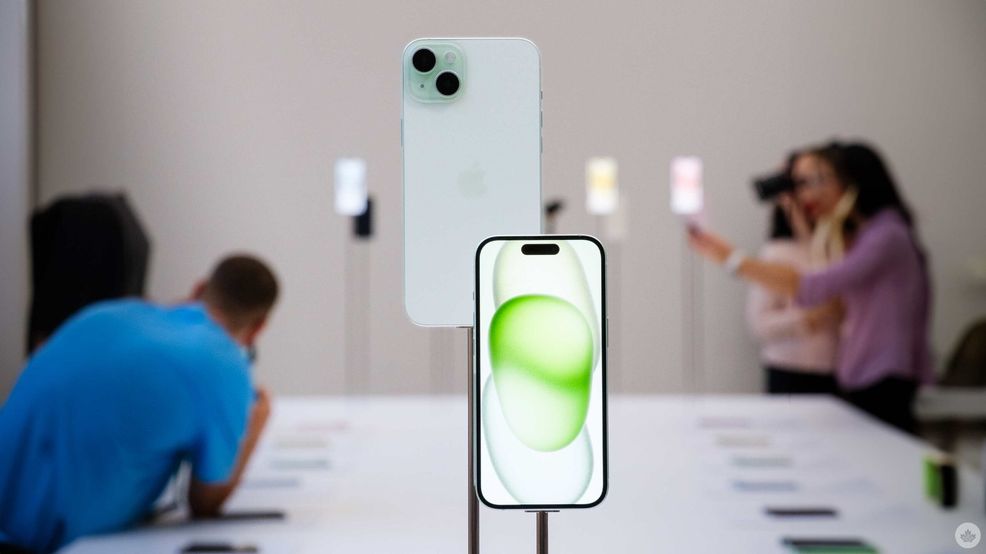
At its ‘Wonderlust’ event, Cupertino-based Apple announced its latest flagship devices, the iPhone 15 series.
We’ve already compared the iPhone 15 Pro series to the iPhone 14 Pro line and found that there are several significant upgrades. The switch to USB-C means faster charging and data transfer speeds, while the A17 chipset and its gaming performance prowess means you can play AAA console games like Assasin’s Creed Mirage and Resident Evil 4 Remake right on your device.
The base iPhone 15, too, boasts several upgrades over its 2022-released predecessor. Here are some of the main aspects to consider when comparing the iPhone 14 and the iPhone 15:


Design and display
The iPhone 14 and the iPhone 15 have a similar design, with a glass front and back and an aluminum frame. However, Apple has given the iPhone 15 a new colour-infused glass back with a matte finish. Apple says that it used superfine metallic ions to embed colour into the glass and formed a contoured edge on the aluminum enclosure for a more premium look.

Image credit: Apple
More importantly, the iPhone 15 now features the Dynamic Island, the reactive notch that Apple introduced with the iPhone 14 Pro models last year, which houses the front camera and sensors. The introduction of the Dynamic Island on the base iPhones means they now look similar to the Pro model iPhones at first look, barring the rear camera setup. With the Dynamic Island, iPhone 15 and iPhone 15 Plus users could control music, track deliveries, keep an eye on flight information and more from their home screen.
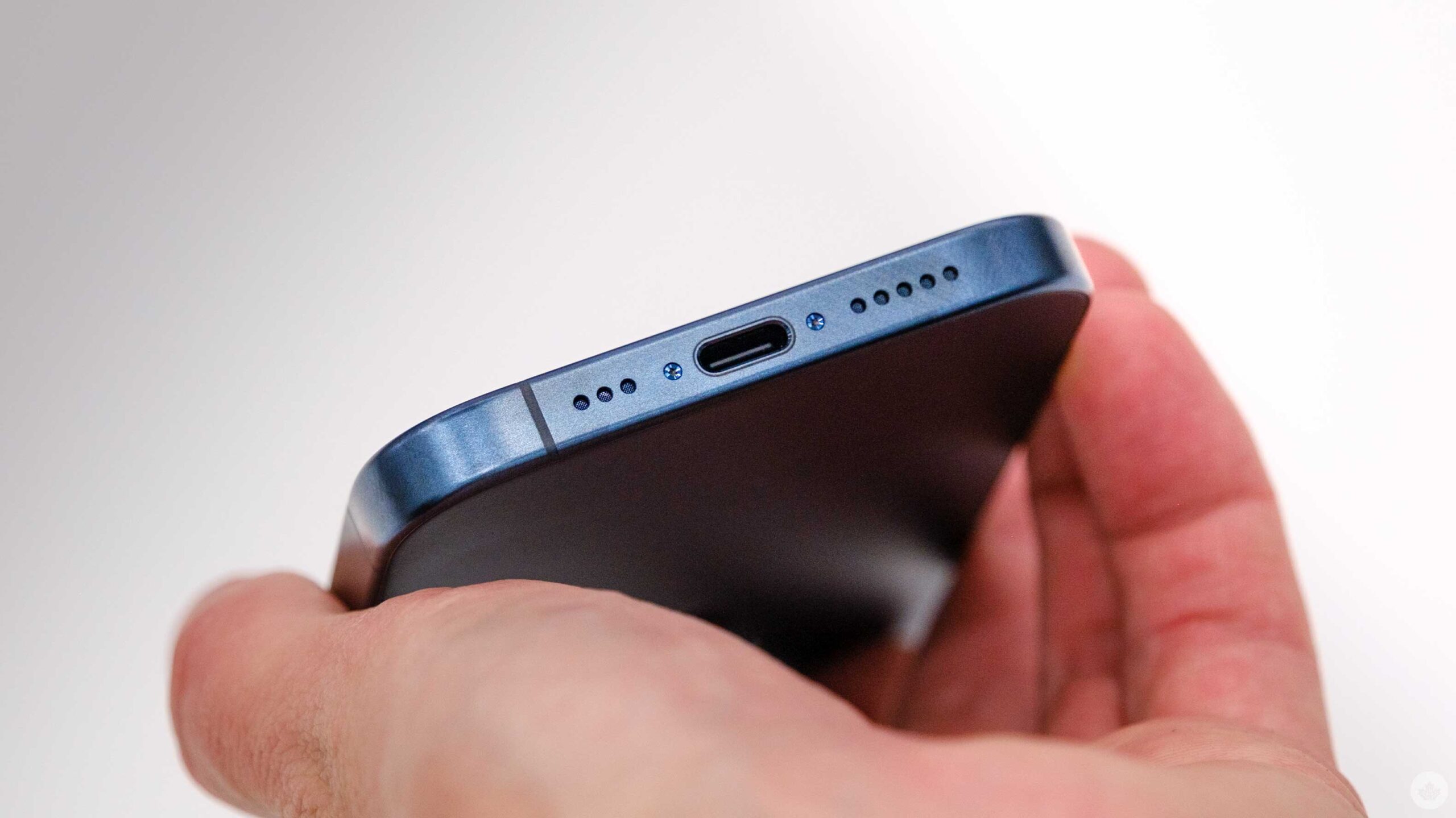
Adding to the list of significant updates is the inclusion of a USB-C port for charging and data transfer and ditching the lighting port. The switch means the iPhone 15 series will be compatible with more accessories and charging cords; however, it will still transmit data at the same USB 2 speed as lightning.
 Dynamic Island aside, the iPhone 14 and iPhone 15 displays are identical. Both devices feature a 6.1-inch Super Retina XDR display with a ceramic shield, though the iPhone 15’s display can get much brighter than its counterpart. The iPhone 15 and 15 Plus have a max brightness of 2,000 nits, while the iPhone 14 and 14 Plus could reach a max brightness of 1,200 nits.
Both devices are IP68 dust and water-resistant (maximum depth of 6 metres up to 30 minutes).
Unlike the iPhone 15 Pro series, the iPhone 15 and iPhone 15 Plus still retain the Ring/Silent slider.
Internals
The iPhone 15 and iPhone 15 Plus both feature the A16 Bionic chipset, the same chipset that powered last year’s iPhone 14 Pro models. The A16 is 4nm chip with a 6-core CPU, 5-core GPU and a 16-core Neural Engine, the same as the iPhone 14’s A15 Bionic chip, except that the A15 chip was a 5nm chip.
The chip features nearly 16 billion transistors and uses includes a ‘Display Engine’ to power Dynamic Island and other screen-related content. With its four efficiency cores, Apple says the device uses one-third of the power of competing smartphones.

Image credit: Apple
Both the iPhone 15 and iPhone 14 lines feature Emergency SOS, Emergency SOS via satellite and Crash Detection with MagSafe case, wallet, and wireless charging compatibility.
Battery-wise, Apple says that its new iPhones feature all-day battery life, but the company says so every year when it releases a new iPhone. Statistics-wise, the iPhone 15 features a bigger battery than the iPhone 14. The iPhone 14 featured a 3,279mAh cell, while the iPhone 15 runs on a 3,877mAh battery. Similarly, the iPhone 14 Plus was powered by a 4,325mAh cell, while the iPhone 15 Plus runs on a 4,912mAh battery.
The RAM and storage options of the iPhone 14 and the iPhone 15 are identical, with both phones offering 6GB of RAM and three storage options: 128GB, 256GB, or 512GB.
Cameras
The camera is one of the most important features of any smartphone, and the iPhone 14 and the iPhone 15 both have impressive camera systems. However, the iPhone 15 has a significant upgrade over its predecessor: a new 48-megapixel main sensor that can capture super-high-resolution photos (24-megapixel or 48-megapixel). For reference, the iPhone 14 featured a 12-megapixel primary sensor. The ultra-wide camera on the iPhone 15 is the same as the iPhone 14: 12-megapixel with a ƒ/2.4 aperture.
While the iPhone 15 and iPhone 15 Plus don’t have a dedicated telephoto camera, the primary and ultra-wide camera paired with the A16 Bionic offers users a 2x telephoto option.

Image credit: Apple
Further, Apple states that Portraits are getting even better with the iPhone 15 line. Users wouldn’t have to switch to portrait mode when clicking photos as the phone will detect humans in the viewfinder and capture depth information.
Both the iPhone 14 Pro and iPhone 15 Pro series have:
- Sensor-shift optical image stabilization
- True Tone flash
- Photonic Engine
- Portrait Lighting with six effects
- 4K video recording at 24 fps, 25 fps, 30 fps or 60 fps
- 1080p HD video recording at 25 fps, 30 fps or 60 fps
- Cinematic mode for recording videos with shallow depth of field (up to 4K HDR at 30 fps)
- HDR video recording with Dolby Vision up to 4K at 60 fps, and more.
The selfie camera remains largely the same, except that it is now housed in the Dynamic Island instead of the notch.
Colours and pricing
The 2022-released iPhone 14 is available in ‘Blue,’ ‘Purple,’ ‘Yellow,’ ‘Midnight,’ ‘Starlight,’ and ‘Product Red.’ At launch, the device came in at $1,099 for the 128GB model, $1,249 for the 256GB model and $1,519 for the 512GB model. The iPhone 14 is currently discounted and available for $999, $1,149 and $1,449 for the three storage models.
This time around, Apple is charging a little extra for the iPhone 15 series. The device is available in ‘Blue,’ ‘Pink,’ ‘Yellow,’ ‘Green’ and ‘Black’ colourways. It starts at $1,129 for the 128GB model, $1,279 for the 256GB model, and $1,579 for the 512GB model.
The iPhone 14 and the iPhone 15 are both excellent smartphones. However, the iPhone 15 has some advantages over the iPhone 14, such as a USB-C port, a higher peak brightness, a faster chipset, and a larger battery.
If you’re running an older iPhone, the iPhone 15 might be worth the upgrade. However, if you are using the iPhone 14, retaining it is a great choice as the phone can easily handle most tasks.
All of our Apple fall hardware event content can be found here.
Image credit: Apple
MobileSyrup utilizes affiliate partnerships. These partnerships do not influence our editorial content, though we may earn a commission on purchases made via these links that help fund the journalism provided free on our website.
[sendtonews key=”P3jZs2BHaB-3004350-14046″ type=”float”]
 News
News  Streaming
  Streaming
  Streaming