


Canada is continuing to improve its national EV infrastructure, adding nearly 100 new stations and 400 new charging ports in the third quarter of 2026.
Paren, a data intelligence company focused on North American electric vehicle (EV) charging infrastructure, released its “State of the EV Charging Industry” report for Q3 2026, which is focused on the current quarterly situation of Canada’s EV Charging infrastructure.
To start, the report notes that Canada added 103 new stations and 391 new charging ports in Q3 2026, bringing the national network to 2,740 stations and 9,615 fast-charging ports year over year. That’s up from 2,275 stations and 7,585 ports in Q3 2025. Of the 103 new stations, 93 were new sites, and 10 were existing stations adding ports, compared with 77 new sites and 24 expansions in Q2 2026.
Interestingly, Paren notes that non-Tesla stations in Q3 averaged 3.2 new ports per site, in line with last quarter. In contrast, Tesla stations averaged 9.8 new ports per site. This is still a wide margin over non-Tesla stations, but significantly down from 16.3 new ports per station last quarter and the lowest since Q1 of 2026, when Tesla added only 10.6 ports per station.
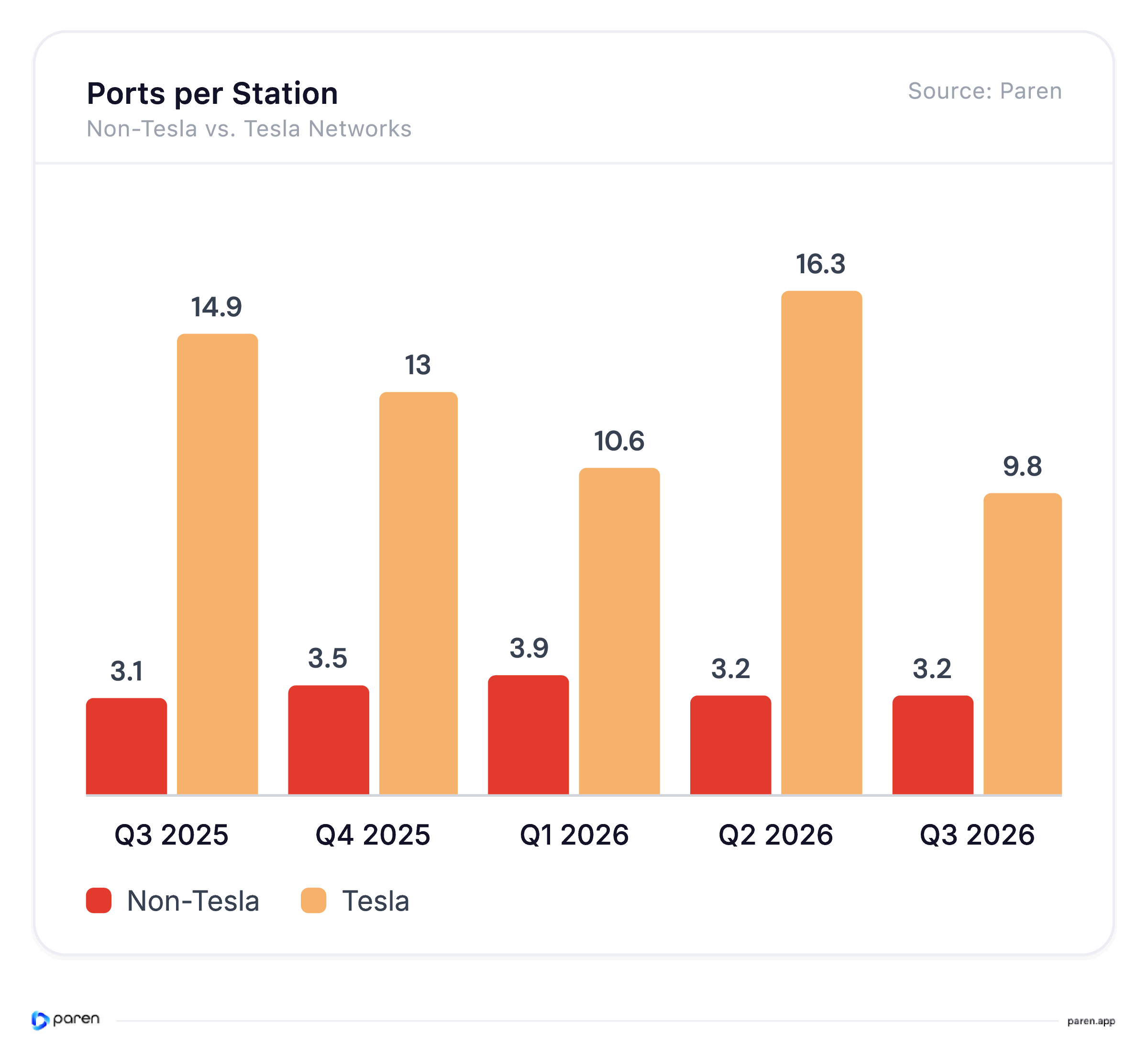
Image Credit: Paren
Continuing with Tesla, Paren notes that the automaker installed 88 of the quarter’s 391 new ports (22.5 per cent, down from 24.4 per cent in Q2), and is slowly losing share of the amount of ports deployed — now holding less than a third of Canada’s DC Fast Charging (DCFC) ports (32.1 per cent, down from 36.0 per cent in 2025) depite its all time amount of ports rising from 2,729 to 3,091.
Rounding out the top three is Circuit Électrique, which added 61 total ports in Q3 to hold 15.6 per cent of the ports deployed, and ChargePoint, which added 41 ports to hold 10.5 per cent of the total ports deployed. Other charging networks, essentially just a combined 27 networks outside of the top 10, hold 1,697 ports total (17.6 per cent of the base) and added 90 ports in Q3 (23.0 per cent).
Provincially, Paren notes that eight provinces and territories have at least added one station in Q3, up from seven last quarter. However, 86.4 per cent of the stations were added in three provinces; Quebec added the most stations with 49 (up from 44 in Q2), and Ontario added 22 (up from 21 in Q2). British Columbia added only 18 this quarter, down from 21 in Q2.
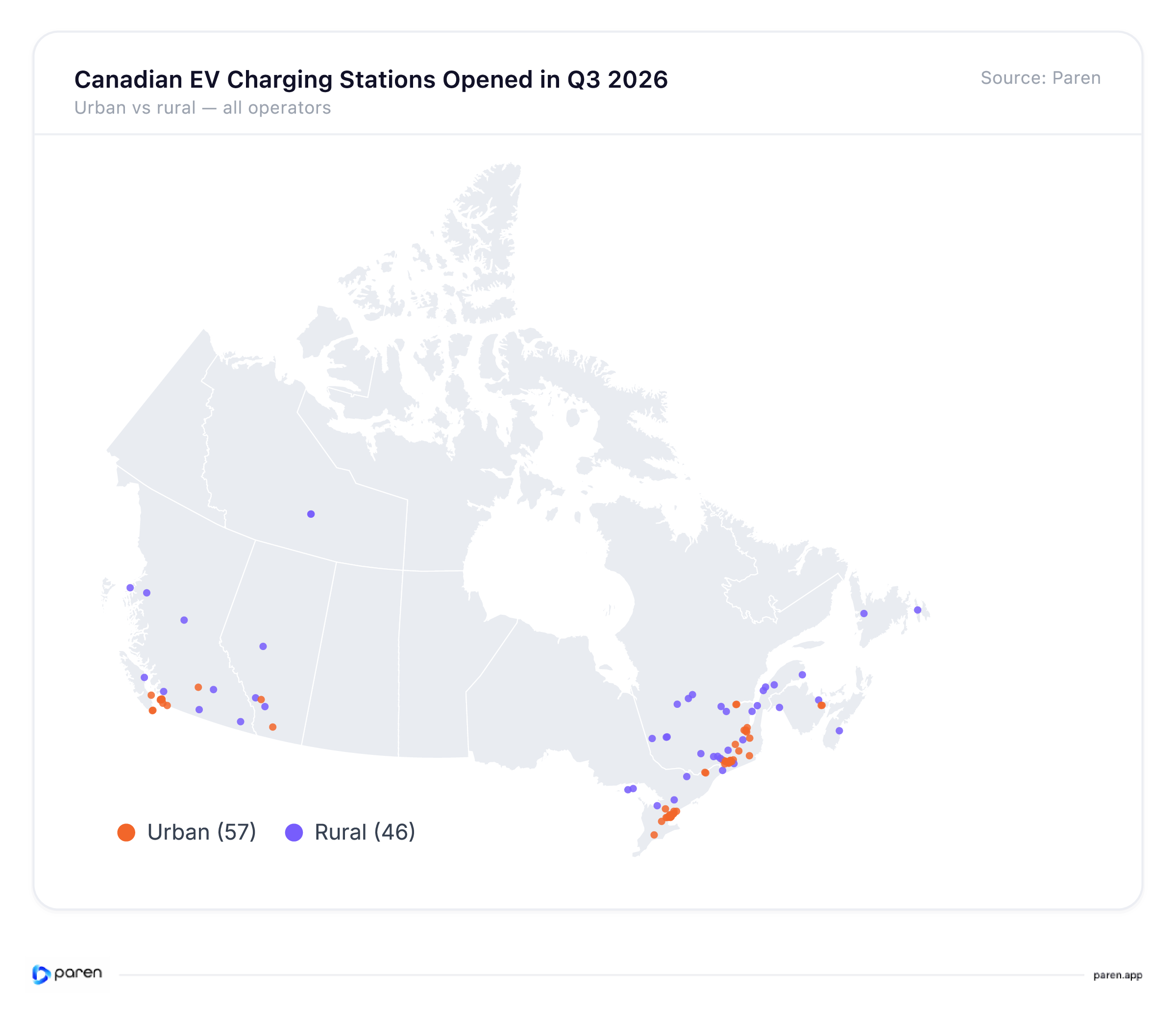
Image Credit: Paren
Interestingly, British Columbia (13.1 per cent) and Ontario (11.5 per cent) have the highest charger utilization, with PEI right behind at 10.1 per cent. Paren also notes that the Northwest Territories have the lowest utilization with 0.3 per cent, with Yukon and Saskatchewan being the next closest at 3.9 per cent.
Source: Paren
 Deals
Deals  News
News  News
News  News
News 