


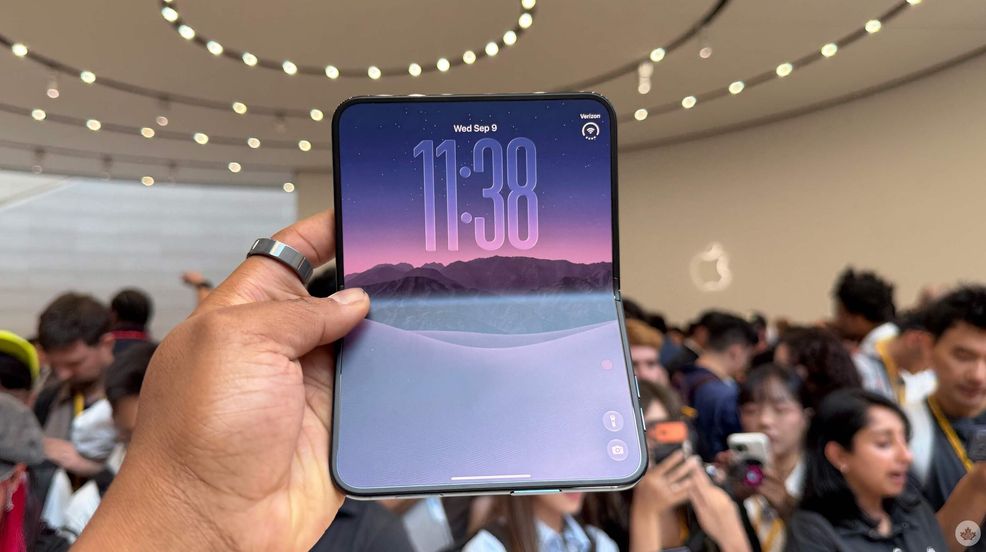
The iPhone Duo is an interesting device. It’s not exactly a passport like Samsung’s Galaxy Z Fold 8, and it’s oddly shaped like a capital ‘D’; but that’s not where “Duo” comes from, and it instead represents the two displays working together seamlessly. (It should stand for Dean, though 😜.)
Duo displays
View this post on Instagram
The Duo looks great, and I like that Apple took a very different approach to its device than Samsung. It doesn’t feel sharp at all in your hand and lacks that perfectly squared aesthetic. Yet the device still just feels great to hold; it somehow didn’t even feel like a new device, but like I was perfectly at home.
I think this comes from my time using the iPhone Air, another iPhone with a similar thinness (when the iPhone Duo is unfolded). Still, when the iPhone Duo is folded, it’s considerably thicker than some of the other foldable phones on the market, but the titanium frame and hinge cover, alongside the Ceramic Shield 2 on the front and the Ceramic Shield on the back, manage to make the device still feel premium.
It’s weird, but weight distribution, size, thiness/thickness, durability — the Duo just feels like an iPhone. Like it’s a new device, so it should feel somewhat different, but Apple did a good job of making the phone feel familiar. And I think that was intentional because it lowers the barrier to entry from a regular slab phone to the foldable.
And the crease says it all. The iPhone Duo has a nano-texture display that feels matte and reduces glare. It’s super cool because it makes it harder to see the crease when holding it at different angles. Believe me, it’s still there; I pressed hard enough on the display to feel it, and you can see it from some angles, but it’s really impressive. If we’re talking about creases among all folding phones, this one might be the best. I really want to put it side by side with the Z Fold 8 to really tell, but going off first impressions, this is the crease to watch.
It’s worth mentioning, I’m right-handed so the Duo felt great to me with that D shape, but I wonder if left-handed people are going to have issues.
The Duo experience
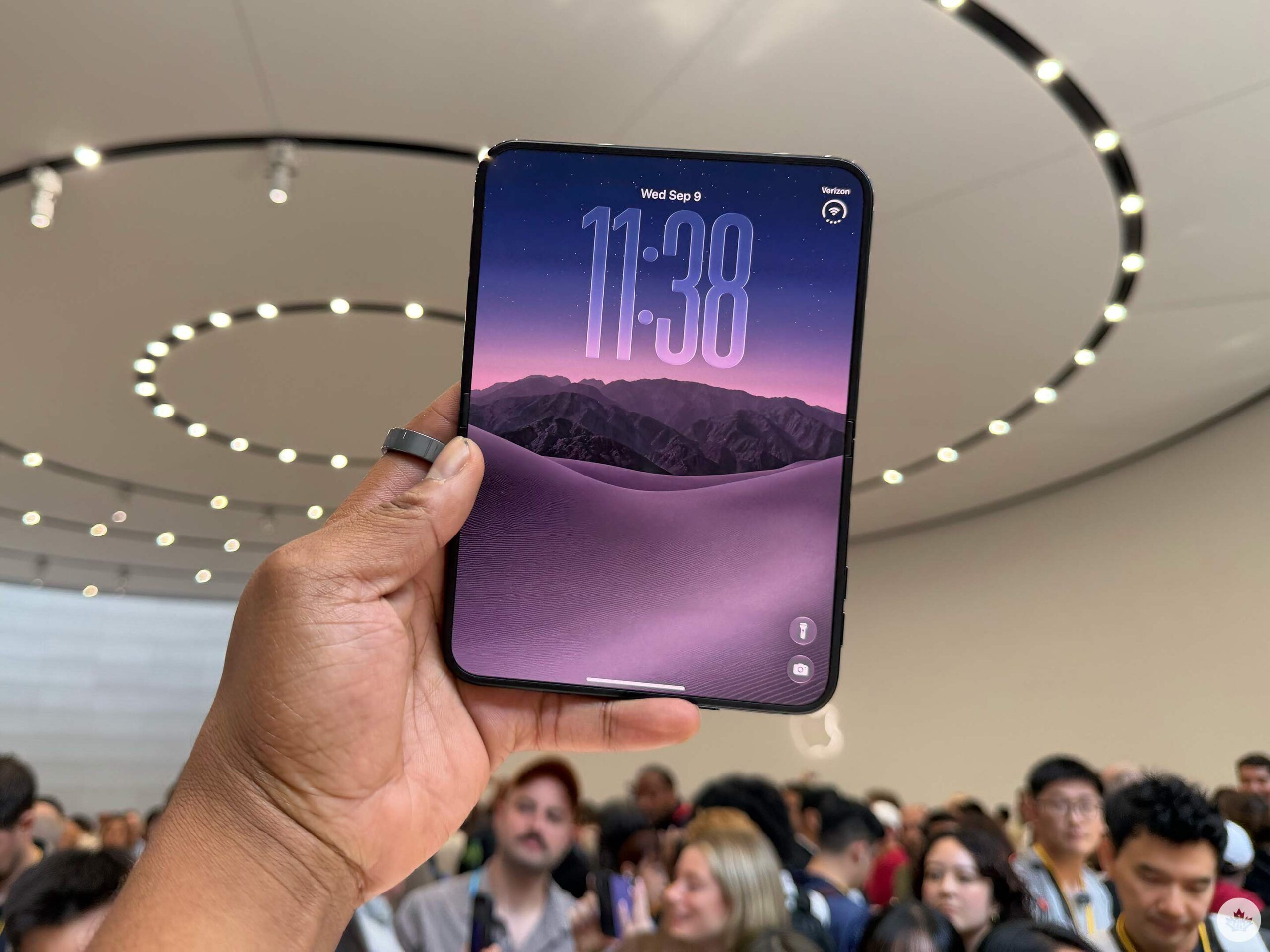
The Duo software is pretty interesting. From the Dynamic Island in the top right corner that changes based on different activities, to the side-positioned dock that’s easy to reach folded or unfolded, to the seamless transition from folded to unfolded, the iPhone Duo is pretty cool.
Apple makes it incredibly easy to multitask side-by-side; I was given a demo of someone dragging and dropping a photo from the gallery straight into the Messages app. Or if you have Chrome open on the left side and tap an address, the Maps app will open on the right side with the address set and ready for you to tap on ‘Directions.’
When you’re watching content, turn the phone vertically and open the Messages app so you can watch a video in the correct aspect ratio, and the Messages app takes up the bottom of the screen. It won’t be half and half, because iOS is maintaining the aspect ratio of what you’re watching at the top, which is impressive and makes a lot of sense.
A lot of testing to come
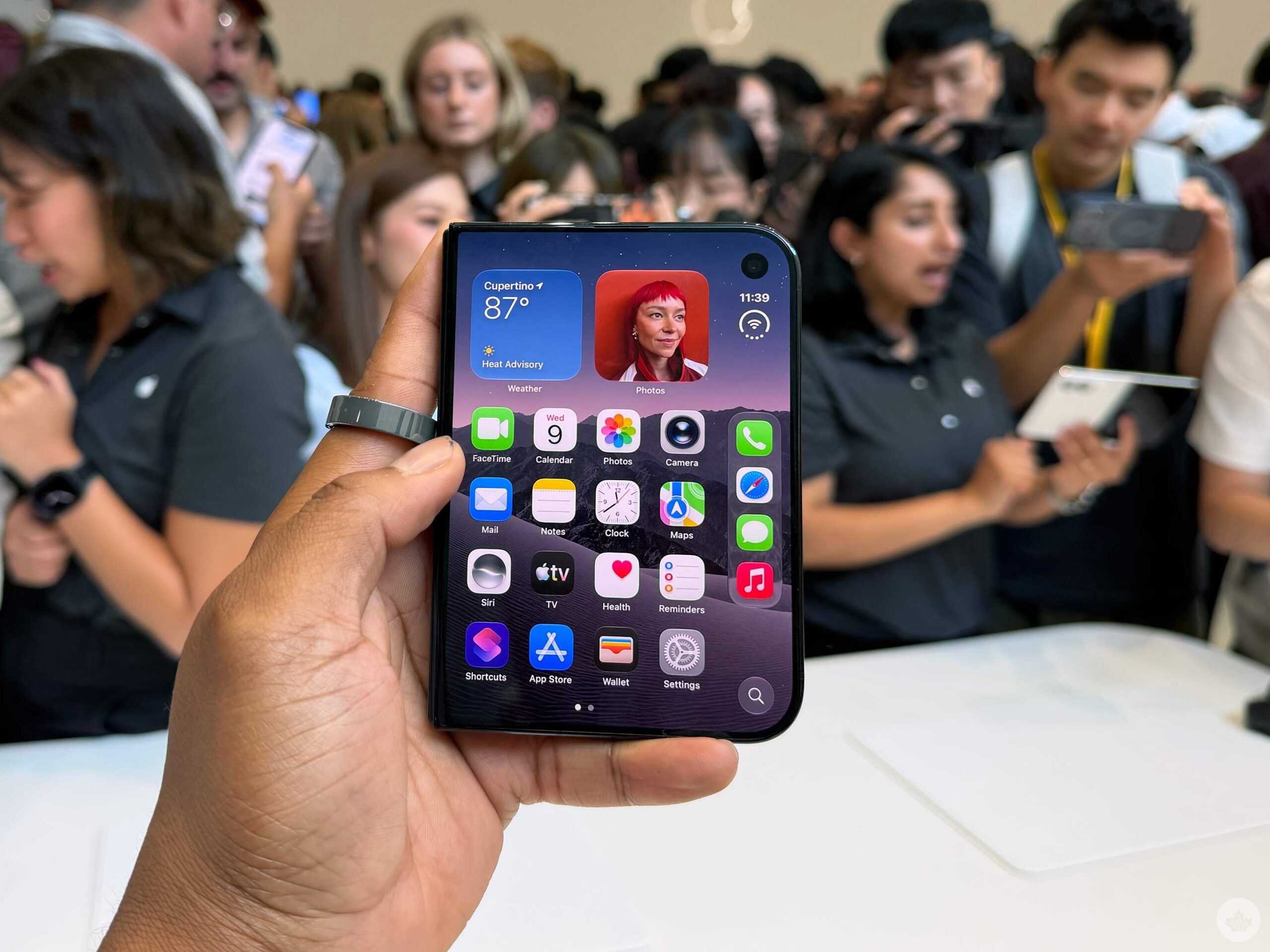
And this is all happening while the inner camera remains nearly invisible with under-display shooter technology — well, it’s harder to see, but under the right light or angle it’s definitely still there. Samsung had this technology on many of its previous foldables, and pictures weren’t always amazing with a 4MP shooter. Apple hasn’t specified the details on this camera, but says it’s consistent with the 12MP camera on the front, so we’ll have to check this out for ourselves when review units are available.
Speaking of cameras, the iPhone Duo has two 48MP cameras: the primary has an f/1.6 aperture, while the ultrawide has an f/2.2 aperture and a 120-degree angle. It’s literally the same on the new iPhone 18 Pro Max, which is pretty impressive. The 48MP camera is also capable of 2x zoom. I did not put the camera through its paces at all, but I’m looking forward to seeing what it can offer.
Speaking of things I need to put through their paces, I also need to put the Apple silicon, the A20 Pro, through the wringer, considering Apple claims it offers a 20 per cent faster experience than the 17 Pro Max. It has an advanced thermal system to help with heat as well, and up to 24 hours of battery life when using both displays. I need to really try this out and see if Apple can deliver on these promises, especially when it comes to gaming sessions — I’ve been really getting into mobile gaming lately.
$3K 🤯
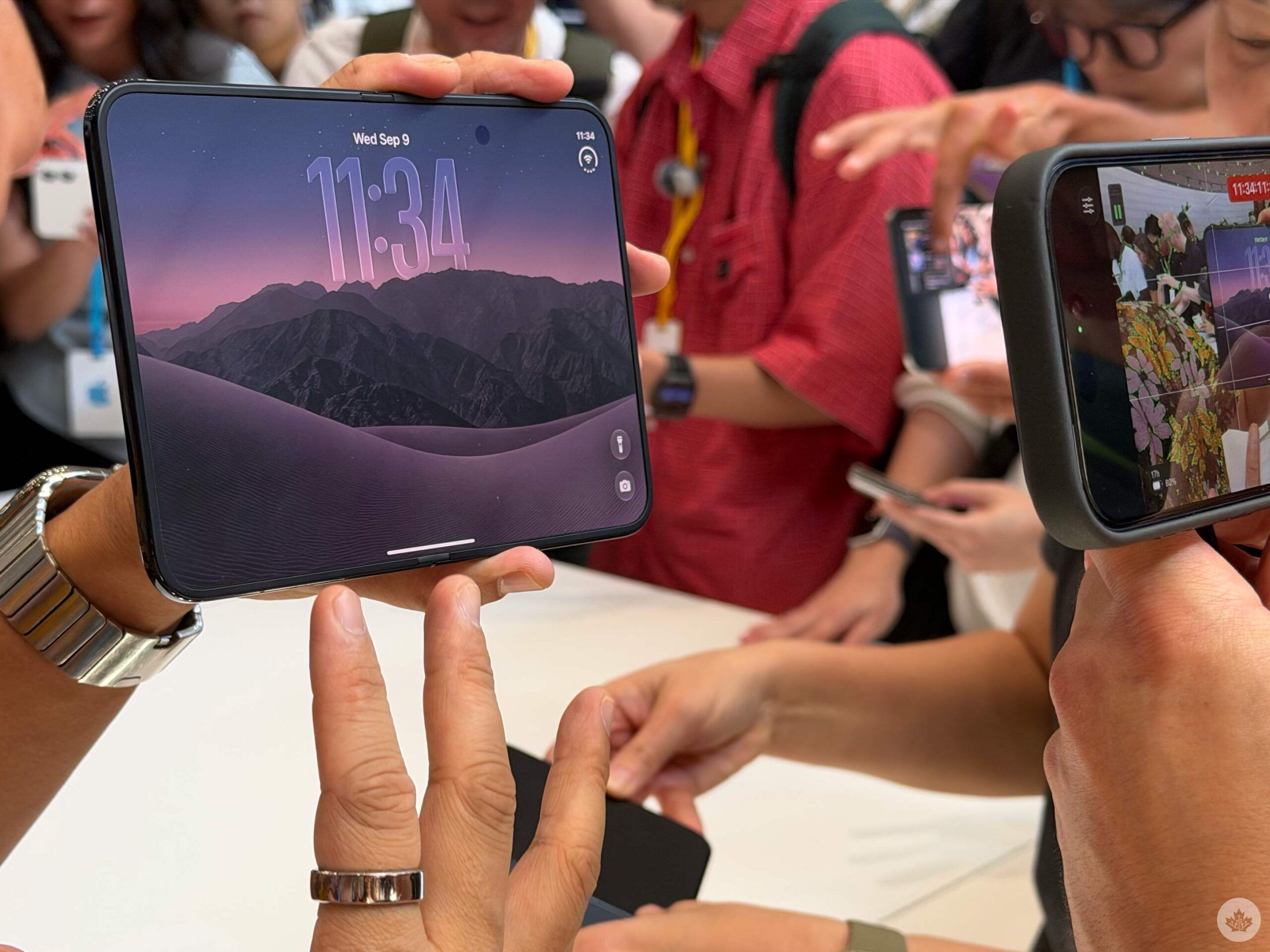
I’m excited for the iPhone Duo; it offers a lot that’s missing from other foldables. IP68 water and dust resistance, a titanium hinge, the Nano texture finish display, stylus support, up to 2TB of storage and Ceramic Shield. Just the titanium hinge and Ceramic Shielding make the phone durable like the iPhone Air (and that device can take some serious drops).
And compared to the Z Fold 8, which feels like it can break easily (though it doesn’t!), the Duo feels as durable as the tech sounds. IP68 water and dust resistance is only found on the Pixel foldables and now on this one. And stylus support is few and far between for foldables. Plus, iOS seems especially designed to take advantage of both of the displays.
I’m not calling this the best foldable yet without further testing, but I’m definitely keeping an eye on this one. And for that price tag, it has to be top-notch. The iPhone Duo starts at C$2,999, making it the most expensive smartphone in the Canadian market, so it better be pretty stellar.
 Reviews
  Reviews
  Reviews
  Reviews