


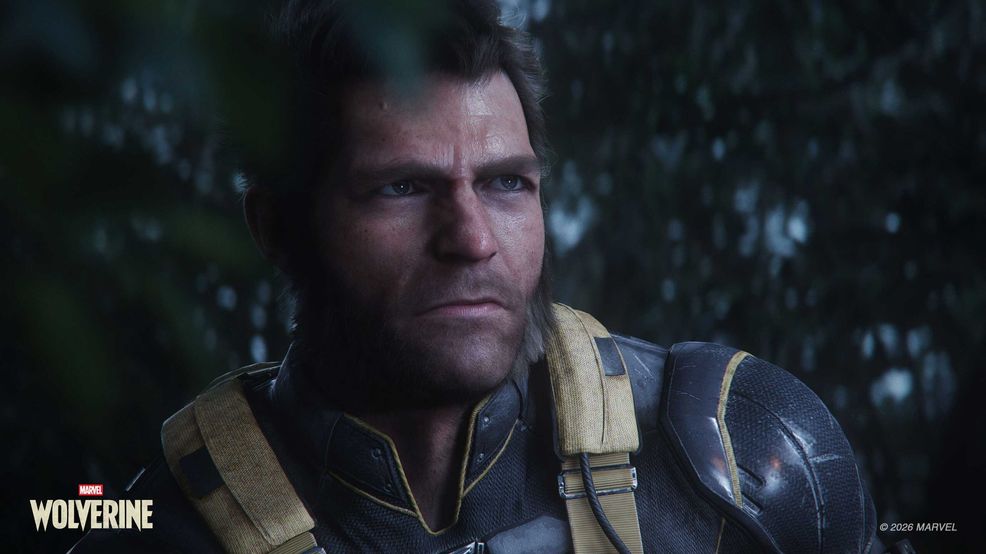
Marvel’s Wolverine is a lot.
Throughout my two-hour demo, I carved up scores of soldiers as almost comically large pools of blood sprayed everywhere. I waded through a pile of mutant corpses to confront a genocidal scientist. I died several times to a fearsome Sentinel. I chased a cabal of clandestine ninjas across the rooftops of the neon-soaked fictional Southeast Asian city of Madripoor. And yet, there’s a particular quiet dialogue scene that I keep thinking about weeks after playing Insomniac’s latest superhero game.
After a traumatic event at the end of Act 1, Wolverine and his mutant allies have gathered at the Princess Bar in Madripoor. At their most shaken and vulnerable, it’s an opportunity for “Team X” — Wolverine’s group of operatives that exists in this pre-X-Men universe — to find solace among their found family. It also allows the player, as Logan, to walk around and talk with a bunch of NPCs. But it was Wolverine’s exchange with Mystique, of all people, that’s stuck with me.
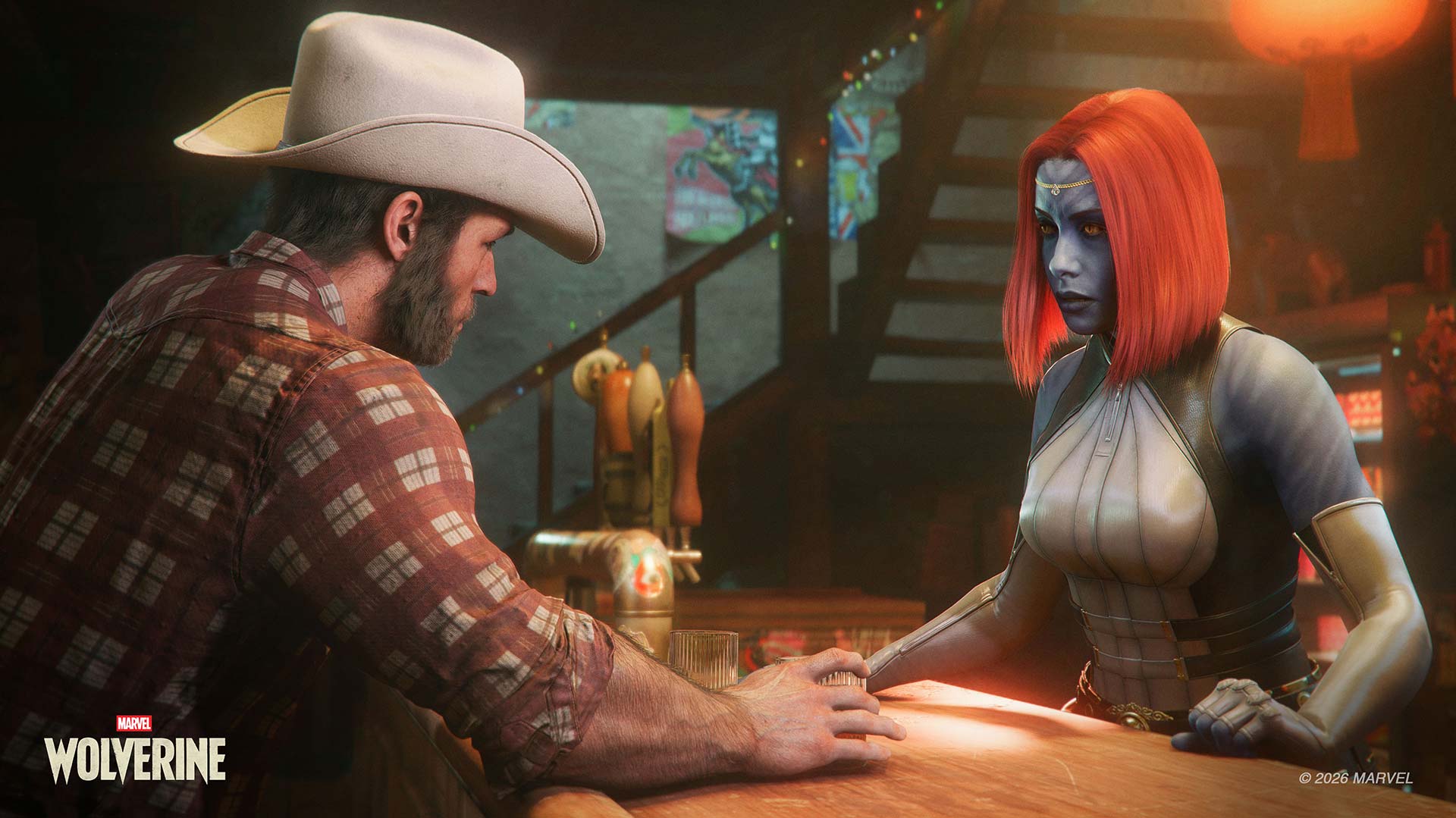
Behind the bar, the shapeshifter challenges me to a game of “Never Have I Ever,” and I, as the ever-grouchy Logan, begrudgingly accept. From there, Mystique asks a series of questions about Wolverine’s past, and I decide the answers based on whether I choose to take a drink. Besides offering an unexpected degree of narrative agency in an otherwise linear action-adventure game, I was impressed by the level of nuance here. When I respond affirmatively to Mystique’s question about whether I’d ever sacrificed to save someone I love, Wolverine hesitates, subtly bristling with discomfort before slowly picking up the glass and downing the whisky as if Magneto himself was bringing the weight of the world down on him.
It’s a simple scene, but it’s such an effective way, through stunningly lifelike animation and a remarkably subdued performance by Liam McIntyre, to let the player truly feel the lingering pain that haunts the immortal mutant. It says a lot without overtly spelling everything out for us.
“Our Wolverine is very vulnerable,” creative director Marcus Smith tells me. “Wolverine is constantly feeling like he’s being manipulated and fighting against it. And in this case, we always need moments where he can reflect, because his moral code is one [where] he questions everything along the way.”
In the case of this tender Mystique moment, Smith credits one of the game’s “amazing” writers, Lauren Mee, who also worked on Marvel’s Spider-Man 2, for the original pitch that she later hashed out with game designer Keith Nakamura.
“You’re given a challenge, which is, ‘We know this is a low beat of exploration, and we know that you want to have a personal conflict conversation,'” says Smith. “And that one, it just works so well. Because no matter what you choose, the sentiment is right. It feels good. And it’s giving player choice. I know people who are like, ‘I just don’t want my Wolverine to drink so much, so I’m just not going to drink and answer it.’ And it still plays out beautifully.”
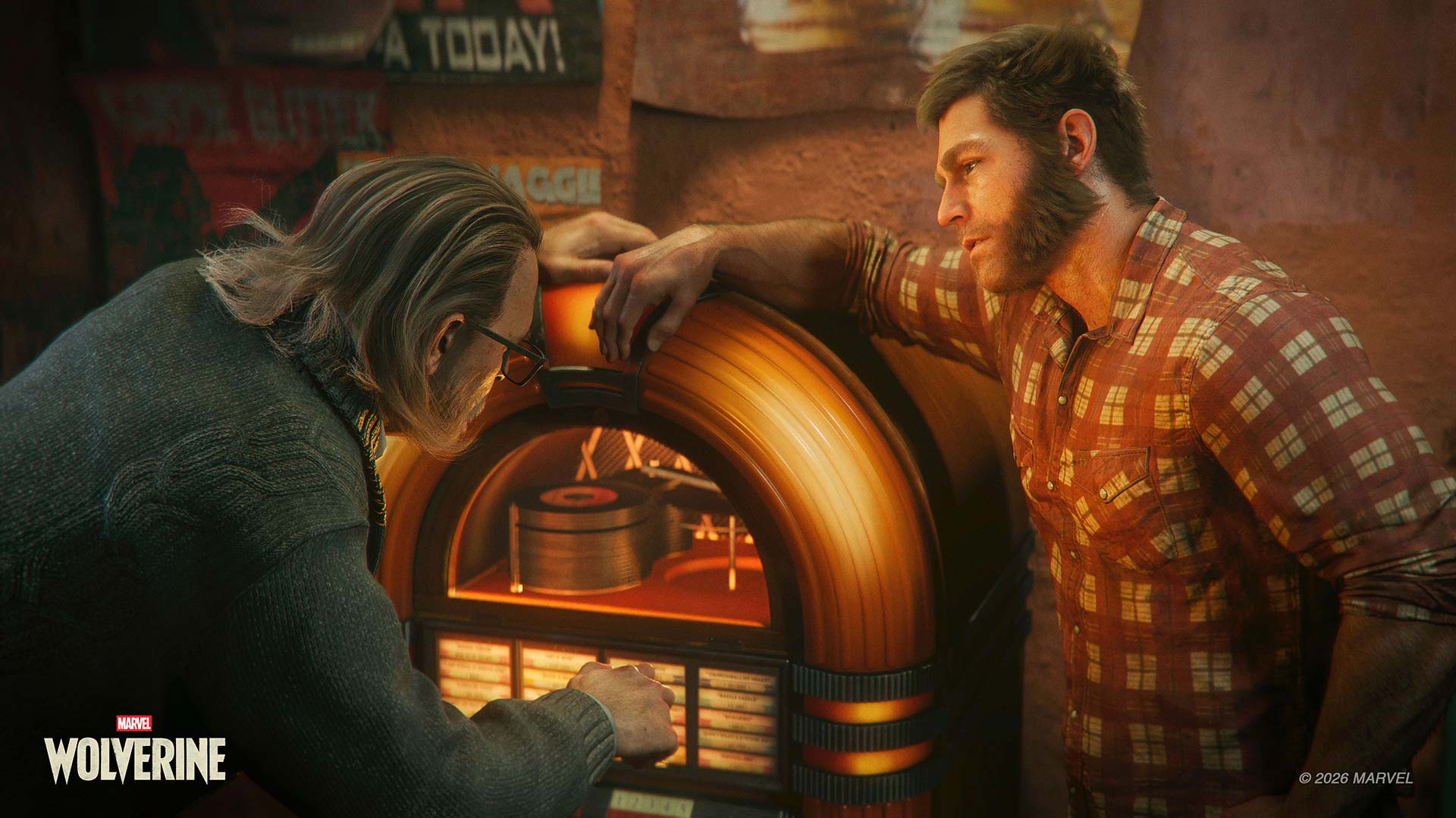
During this Princess Bar section, you also have to speak to Sabretooth, who, in stark contrast to the reserved Mystique, ends up body slamming Wolverine after lamenting that he isn’t “who he used to be” after leaving and rejoining Team X. And in a separate scene, Walter Langowski — the astrophysicist who in the comics becomes Sasquatch, a member of Wolverine’s Canadian Alpha Flight team — tries to cheer up Logan by having him search his office for a vinyl of their favourite song. These are the kind of rich and insightful character interactions that defined Insomniac’s brilliant work on Spider-Man, and it was reassuring to see that they’re absolutely still here in full force, even with a character who occupies a much more brutal and hate-filled corner of this world.
But of course, you also want this violence to feel satisfying, and so far, I’m loving what Insomniac is doing on that front.
The best there is at what they do
Right off the bat, Insomniac has opted for a third-person close-up view of Wolverine, giving the game a nice intimate feeling to enhance the brutality of combat à la modern God of War games. Every elegantly animated slash of his claws, every rugged, almost bear-like shuffle to the side as he dodges, every stylish crash zoom that punctuates fatal finishers — it all feels that much gnarlier with the camera hanging almost uncomfortably near Wolverine.
But I also appreciated how the flow of combat felt markedly different to Spider-Man. Where the Web-Head’s significant agility allowed for faster traversal, more seamless dodges and ground-to-aerial transitions, Logan has to worry more about situational awareness. In particular, he can do a feral pounce at a distant enemy, but that’s not always advised when they cluster together and one has a deadly shotgun or another an electrified melee weapon. On the flip side, Wolverine can use a powerful kick to either knock enemies into walls to stun them or even punt them off ledges entirely. And of course, there are parries you can perform, and some perfectly timed ones can even carry out cheer-worthy executions.
This creates a balletic rhythm to combat, as you can’t just wail on the nearest enemy and have to instead evaluate on the fly where to direct your fury. This was particularly noteworthy in a sequence in a makeshift town created by the villainous Bolivar Trask for one of his sadistic experiments. Some of the interiors of the houses felt almost claustrophobic compared to the preceding jungle environments, and it challenged me to be a bit more cautious accordingly.
I also appreciated how Insomniac incorporated Wolverine’s signature healing ability. While it works rather rapidly outside of combat, it recharges much more slowly mid-battle. What’s more, it feeds into a tiered Rage mechanic that charges the more Logan inflicts damage. Once you’ve filled enough of it, you can go into a Berserker state for visceral executions as the world seeps into a striking red-and-black colour palette. Having enough Rage is the only way to survive otherwise fatal attacks, as they’ll trigger Wolverine’s Last Stand mechanic, which lets him force himself back to his feet to revive, even as his metallic skeleton pokes through eviscerated pieces of skin. It’s a smart system that rewards you with a second chance by being aggressive, which fits with Wolverine’s fighting style.
“In earlier incarnations, we were doing sort of a more standard health increase. But what people were doing was you go away from combat to heal up, and so the model that we fell on was, “How do we promote the ‘always moving forward’ nature of Wolverine?” says Smith. “And that’s how you gain your rage, and that’s how you are preventing yourself from losing health by way of being able to trade the rage in for health in the Last Stand. It all just comes back to, “How do we make a game that actually has stakes with a character that is almost invulnerable?”
At the same time, Insomniac has found a clever way to factor in Wolverine’s heightened animalistic senses, especially in stealth. In the aforementioned fake town where you have to skulk around to find and destroy some of Trask’s generators, Wolverine can get visual wavelength cues towards the machines and ethereal blue highlights of the skeletons of enemies. It enhances the feeling of Wolverine being this bestial predator but in a more natural aesthetic way, rather than an overbearing UI element.
“It’s really hard not to make that overwhelming or just make it a ‘detective mode’ that you’re all used to where I’m going to hit this button. There are certain games that I won’t talk about where I spend all my time spamming because that’s a better view,” says Smith. “So we built all of the different incarnations, making it a passive element that’s more based on camera movement and what you’re focusing on. I think that’s the turning point where it felt unique to this game, and it felt like it wasn’t overwhelming.”
And finally, there’s the superhero setpieces you’ve come to expect. Of course, Insomniac’s Spider-Man delivered those in spades, with many sequences involving Spidey seamlessly navigating streets, skies and buildings as he fights his foes. But of course, Wolverine is comparatively much more grounded, with his game being set in a linear world instead of an open one.
“Obviously, Spider-Man moves very fast, and Wolverine does not move very fast. And so that meant creating something that’s much more intimate, having a lot more detail on local characters and environment, cameras a lot more moved in — just areas of focus that were different,” says Smith.
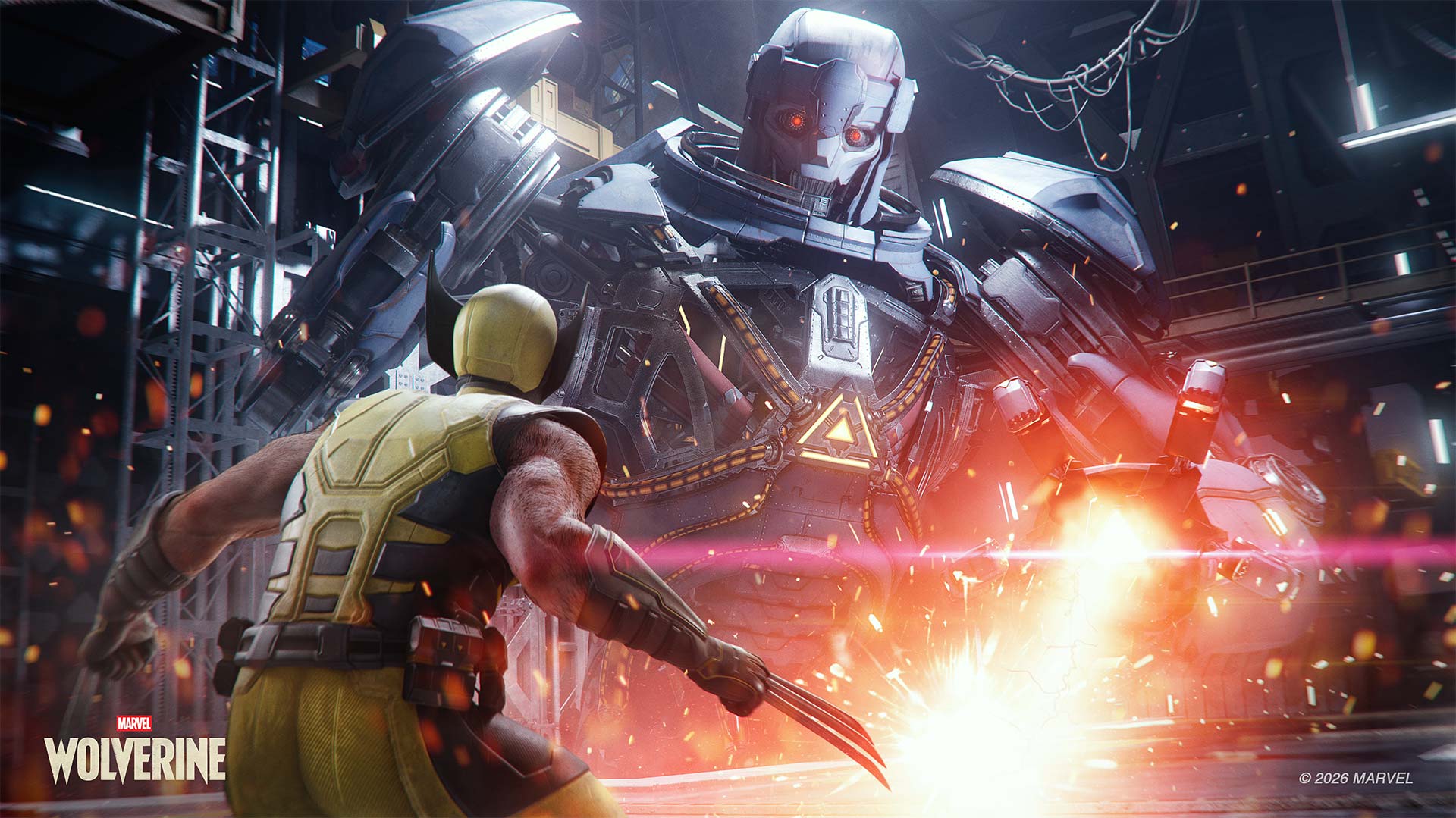
A key example of that was a standout fight against a half-finished Sentinel, which Trask intriguingly said in my demo was an expanded version from one seen in a previous mission set in Vancouver. Even without legs, this towering robot kept me on my toes with earth-shattering ground pounds, scorching lasers and barrages of missiles. With a lot of running, jumping and dodging alongside the help of Mystique and eventually Sabretooth, I was able to beat the machine, and it was an absolute blast.
Equally thrilling is a chase through Madripoor when The Hand ninja clan kidnaps Walter. Leaping over railings, building gaps and onto ziplines as the bustling markets teem with nightlife below us works just as well as any Spider-Man setpiece. And when I have to stop to fight some of The Hand, I’m taken aback by how refreshingly different they are to fight than Trask’s high-tech armada. With their fluid acrobatics, precise projectiles and special blades that can pierce Wolverine and temporarily stunt his healing, there’s an exceptional level of deadly tension as I fight them. All in all, it’s the level of tight and inventive game design that Insomniac brought to Spider-Man, but with an added layer of glorious brutality.
Final thoughts
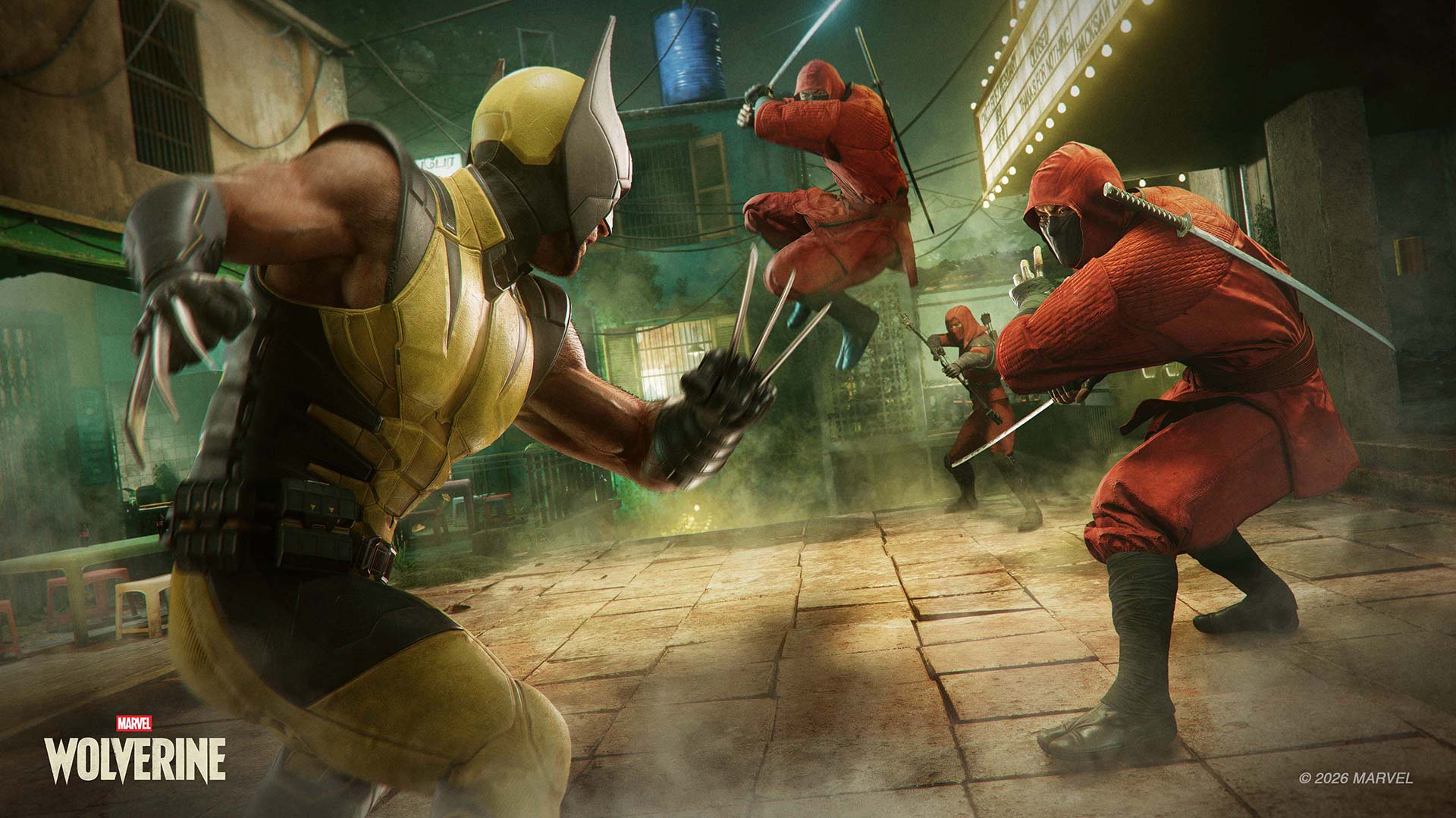
By and large, I was really impressed with my demo. I expected the combat to be fast and hard-hitting, but all of the little nuances in terms of positioning and managing your Rage made it even better than I expected. All the while, I found myself connecting with Logan thanks to some wonderful storytelling choices that humanize him, especially in the moments outside of battle.
If I have any gripes so far, it’s that the optional Nightmare Doors that you can find, while offering worthwhile challenges centred around platforming and combat, feel a bit uninspired in that the insights into Wolverine’s past that they provide are relegated to narrated text.
It’s also hard to say how the overarching narrative will pan out, given the mysterious role of famed X-Men villain Mr. Sinister. In the demo, he’s only ever referred to by his civilian name, Nathaniel Essex, with his larger role of being the leader of Team X only briefly shown. It calls to mind how Marvel’s Spider-Man shocked us with Otto Octavius, who had been hidden from the marketing, by building him up as Peter’s friend and mentor to make his inevitable villainous turn as Dr. Octavius all the more resonant. Hopefully, Marvel’s Wolverine can do something similarly subversive with Essex despite lacking the element of surprise this time around.
Otherwise, I’m much more excited than I already was for Marvel’s Wolverine. With shared DNA with the Marvel’s Spider-Man series as many of its own meaningful narrative, gameplay and structural flourishes, this could very well be the Wolverine game of our dreams.
Marvel’s Wolverine launches exclusively on PS5 on September 15. For more on the game, check out our full interview with Smith.
Image credit: PlayStation/Marvel Games
 Features
  Features
  Features
  Features