


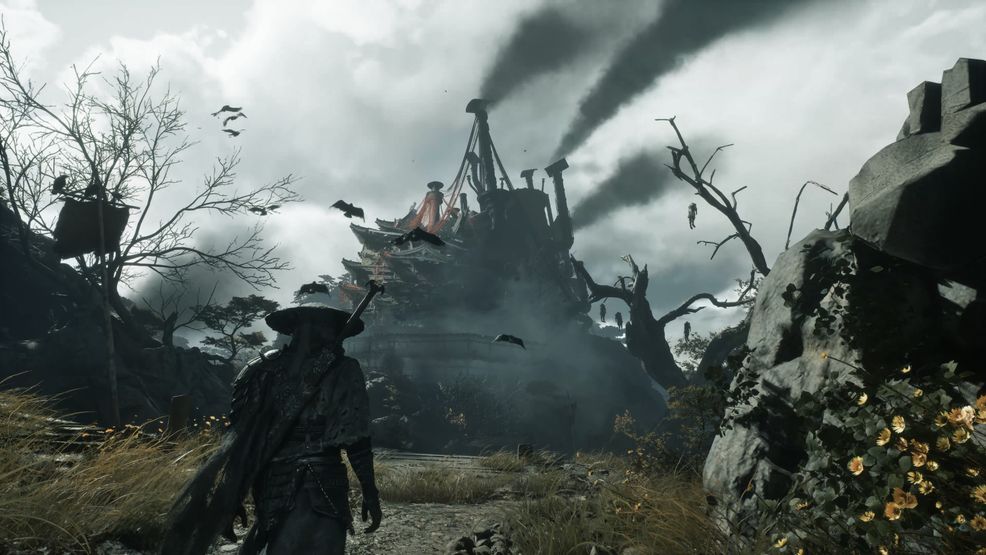
I’m in love, and his name is Phantom Blade Zero (PBZ). Of course, I’m kidding, but somehow PBZ feels like the amalgamation of my favourite games, which include Bloodborne, Pokémon Gold and Clair Obscur 33. I have a love for classic martial arts and Kung Fu films that I would watch with my father when I was growing up. And if you’re a fan of my writing at MobileSyrup, you might know I’m a huge fan of anime with intense combat and compelling stories.
Phantom Blade Zero is my lightning in a bottle
S-Game’s PBZ is a wuxia action-RPG with both Souls-like and Metroidvania elements. The player takes the role of Soul, an assassin who serves an elusive organization known as The Order. Soul gets blamed for murdering the head of The Order. He gets fatally wounded and is brought back to life with a tainted heart and only has 66 days left to live to find out who’s really to blame.
Phantom Blade Zero is a kung fu-punk-style game that takes inspiration from classic martial arts films and the wuxia genre. Soul uses the wulin combat style, which is seen in movies like Crouching Tiger, Hidden Dragon and more recently Marvel’s Shang-Chi and The Legend of the Ten Rings. But S-Game takes the role-playing a step further by having the actions of every one of Soul’s and his enemies motion-captured. It’s beautiful and brings it to a higher level of immersion that isn’t seen in a lot of games. The wulin fighting style is so charismatic, and can be both so serious and unserious, and having Soul’s movements mocapped brings every aspect of combat to another level — it’s hypnotizing. And while the game is more than just its combat, the ebb and flow of PBZ’s fights are so thrilling, and I can’t get over how much I love it.
Immersive Combat
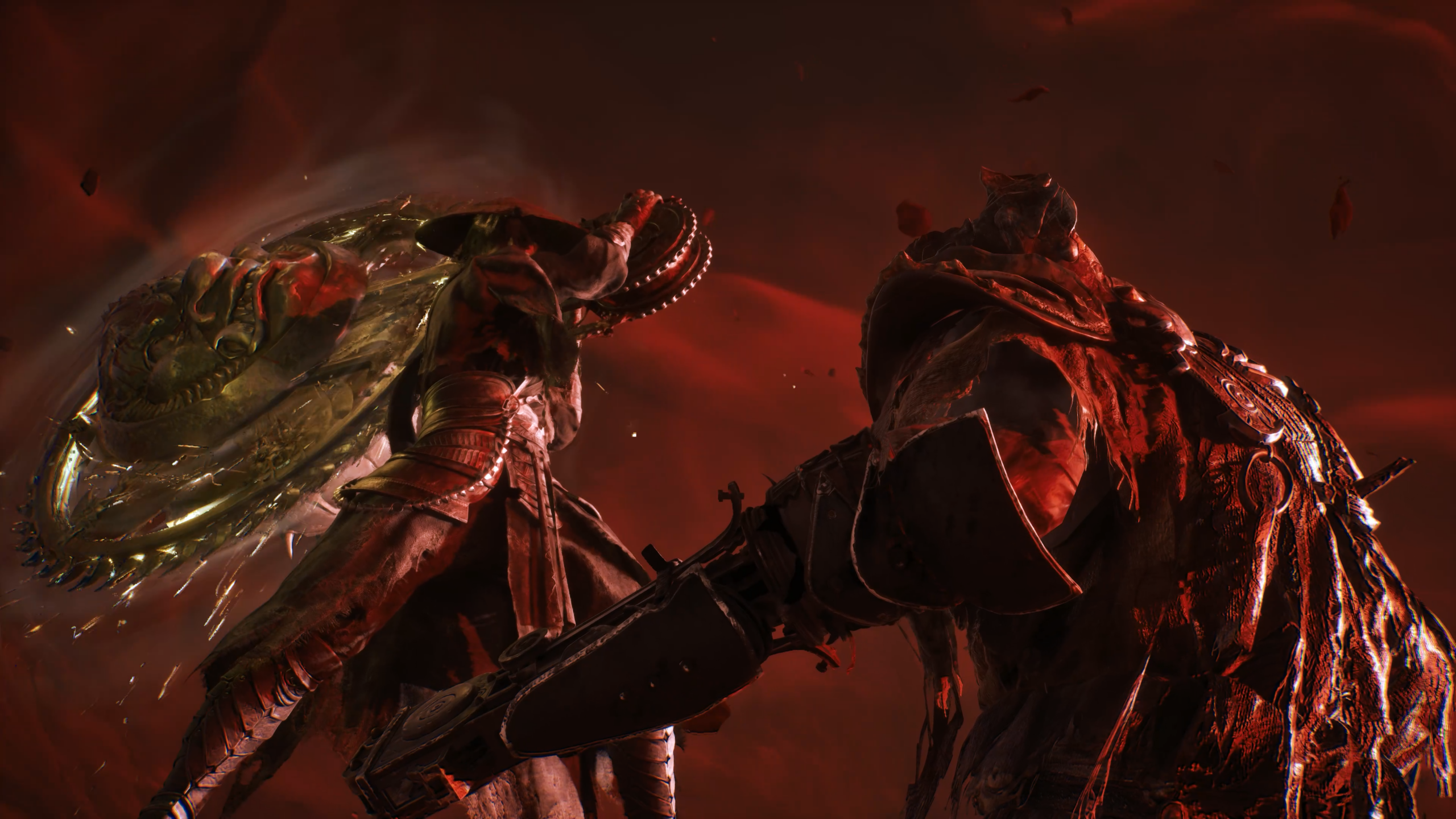
I mentioned earlier that Phantom Blade Zero is like my favourite game, Bloodborne. Bloodborne stood out to me because I had never seen combat like that; it felt so fluid and intuitive, dodging around my opponents and then swiftly cutting them up with my Blades of Mercy trick weapon. PBZ doesn’t have the same combat as Bloodborne, but it has that same feeling of uniqueness and a type of gameplay that only comes around so often.
I struggled at first while playing PBZ. I lost against regular foes, and while I was beating bosses, it would take many attempts. The game’s combat seems familiar at first glance; you use offensive combos, block or parry attacks and dodge others. But Phantom Blade Zero is more complicated than that and adds another element to combat: the art of blocking/parrying/dodging and attacking at once. While playing, I’m continuously attacking with either a standard combo, a Sha Chi enhanced combo or some variation that’s specific to the weapon I’m using. Even though I’m carrying out those combos, at the same time I’m also pressing the parry. Your character, Soul, ends up clashing metal in a fury of attacks while also defending against the enemy. The combination of attack and defend at the same time brings another ingredient to the standard combat recipe, and instead of biding and waiting for my time to strike, I’m always rushing in while keeping myself protected. Of course, these need to be perfect parries or your Sha Chi metre goes down and you suffer damage.
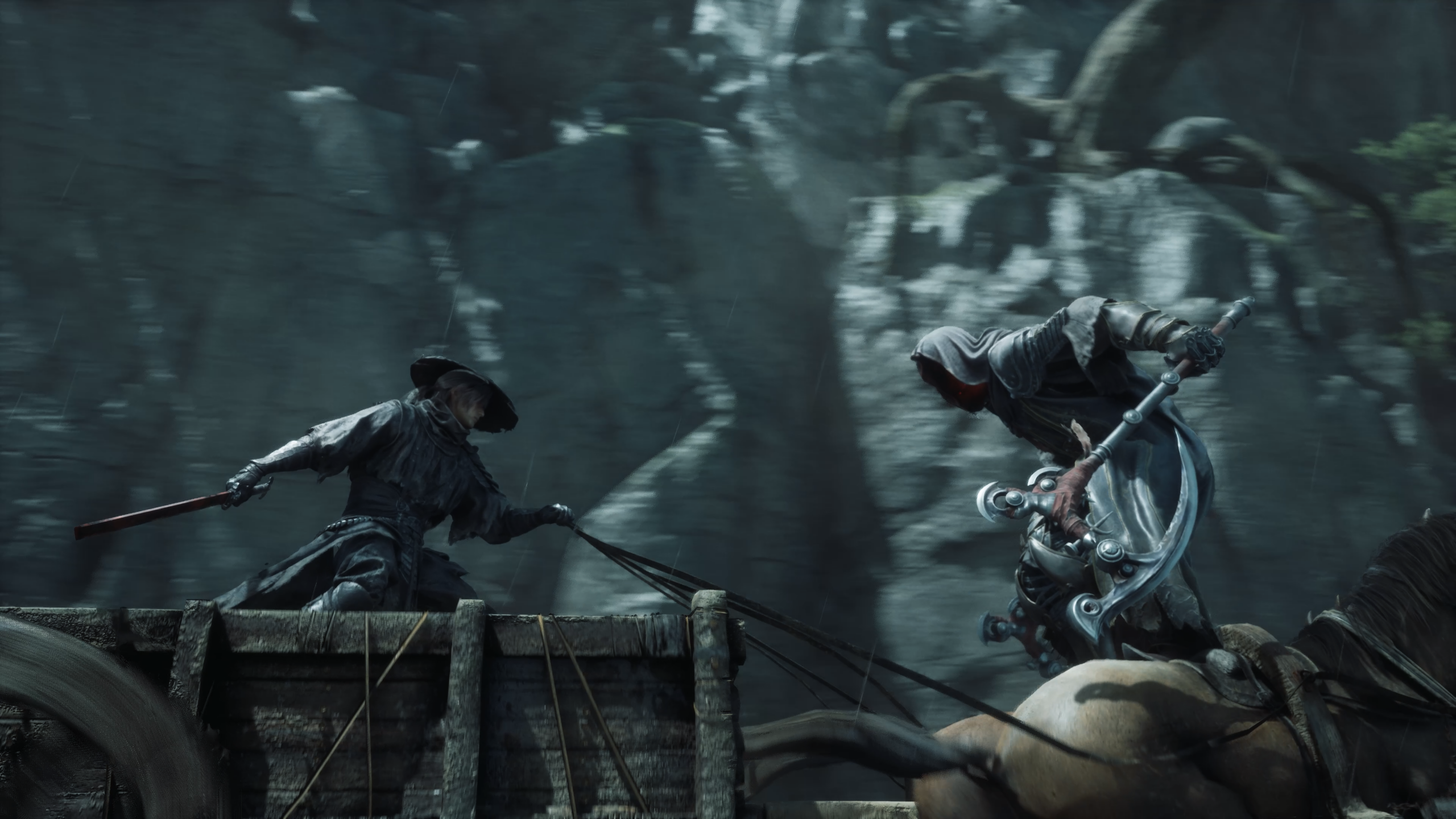
Your Sha Chi gauge is responsible for enhanced attacks and various moves that your specific weapon can perform. While it doesn’t represent stamina and Soul can keep the fight going, if it’s at a nearly empty gauge and your parry isn’t perfect, it’ll break your guard and leave you open to attack. You’re similarly trying to break your enemy’s gauge (though it isn’t impacted by their own actions) so you can get some serious damage in, and each battle goes back and forth like this. Though many non-boss-type enemies have a relatively small gauge and are easy to put down. While fighting, you’re also keeping an eye out for indicators for a dodge or parry that can be initiated when the enemy gives a red or blue indicator (red for dodge and blue for parry); timing this correctly results in a Ghoststep, and you’re able to get extra hits on your enemy. Occasionally, you’ll get pretty cool animations of using an enemy’s weapon against them or a pretty cool dodge that’s incredibly enhanced by the mocap. Sometimes I would purposefully get hit by them, especially during certain boss fights, just so I could see the animation that would happen, and even though in most Soul gets beat up, it was worth it just for the cool choreography. And you have to go for the finishers when possible; each enemy seems to have one or two finisher animations, and each weapon Soul uses has one or two finisher animations as well, resulting in seeing a lot of epic finishers during my time playing.
Pokémon: Phantom Blade
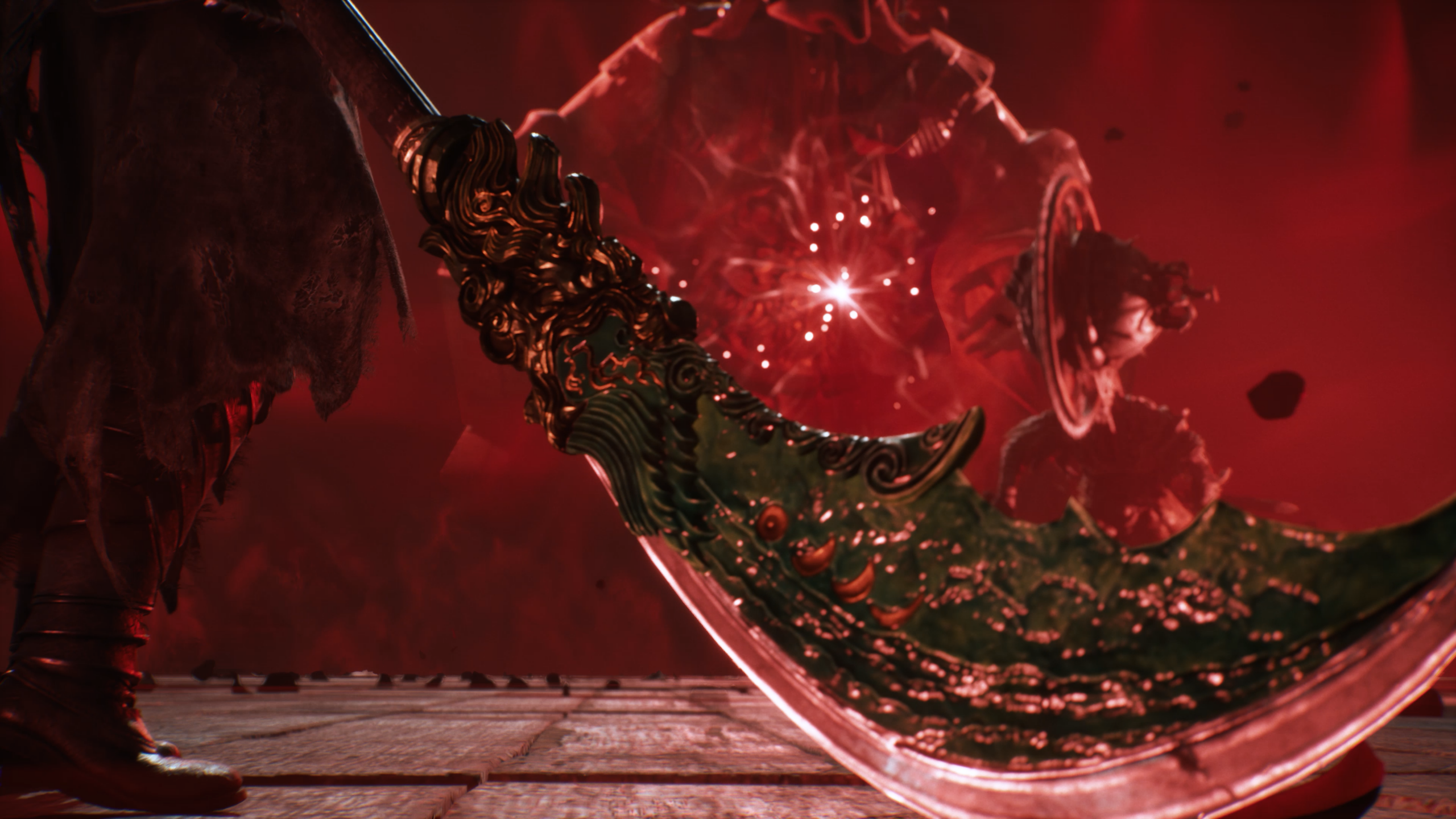
Speaking of weapons, Soul is a master at them and can use all sorts, which he gets from fallen bosses. I mentioned earlier that PBZ is also like one of my favourite games, Pokémon Gold. While that isn’t incorrect, it’d be more accurate to say that PBZ has an element similar to any creature-collecting game, but instead of creatures, you collect weapons and Phantom Edges. Phantom Edges are secondary weapons that can only be used a certain number of times between checkpoints, and can be anything from a cannon to an axe, and some can even summon assistance. You also level up weapons and Phantom Edges by collecting materials for upgrading, and they can ‘evolve’ or Soul Temper after you’ve reached a certain point — though each weapon needs its own specific item to do this, like some Pokémon. This usually adds an effect or ability to your weapon, and some even change physical attributes when tempered.
While these aren’t Bloodborne’s trick weapons, each and every one is distinct from the other, and though you won’t see a sword turn into a hammer, depending on the combo you use and how much you level up the weapon, there’s usually more than meets the eye. A sword that you can control telepathically through the power of being drunk, one that heals you with standard attacks and takes some of your HP to further enhance your enhanced attacks, and another that summons crimson flowers that explode. PBZ throws in 30 unique primary weapons and 25 Phantom Edges, and it’s Soul’s job to master each of them. Throughout the game, I found myself beating a boss and immediately equipping their weapon after. You’re able to respec weapons super easy whenever you reach a bell checkpoint, so I’d steal all the material I used to spec up one weapon for my newly attained boss weapon. Soul can equip two weapons at once, so even if I wasn’t as confident with the new weapon, I always had my go-to equipped too. And you’re incentivized to switch weapons a lot during combat. Whenever your Sha-Chi is near empty, you switch weapons for a fresh new bar. Switching in the middle of combat is seamless; in fact, switching in the middle of a combo was pretty easy too, and you could fluidly go into another combo with the new weapon equipped. Although I’d advise reading weapon descriptions and the advanced pages because you could be missing out on some pretty cool abilities or combos.
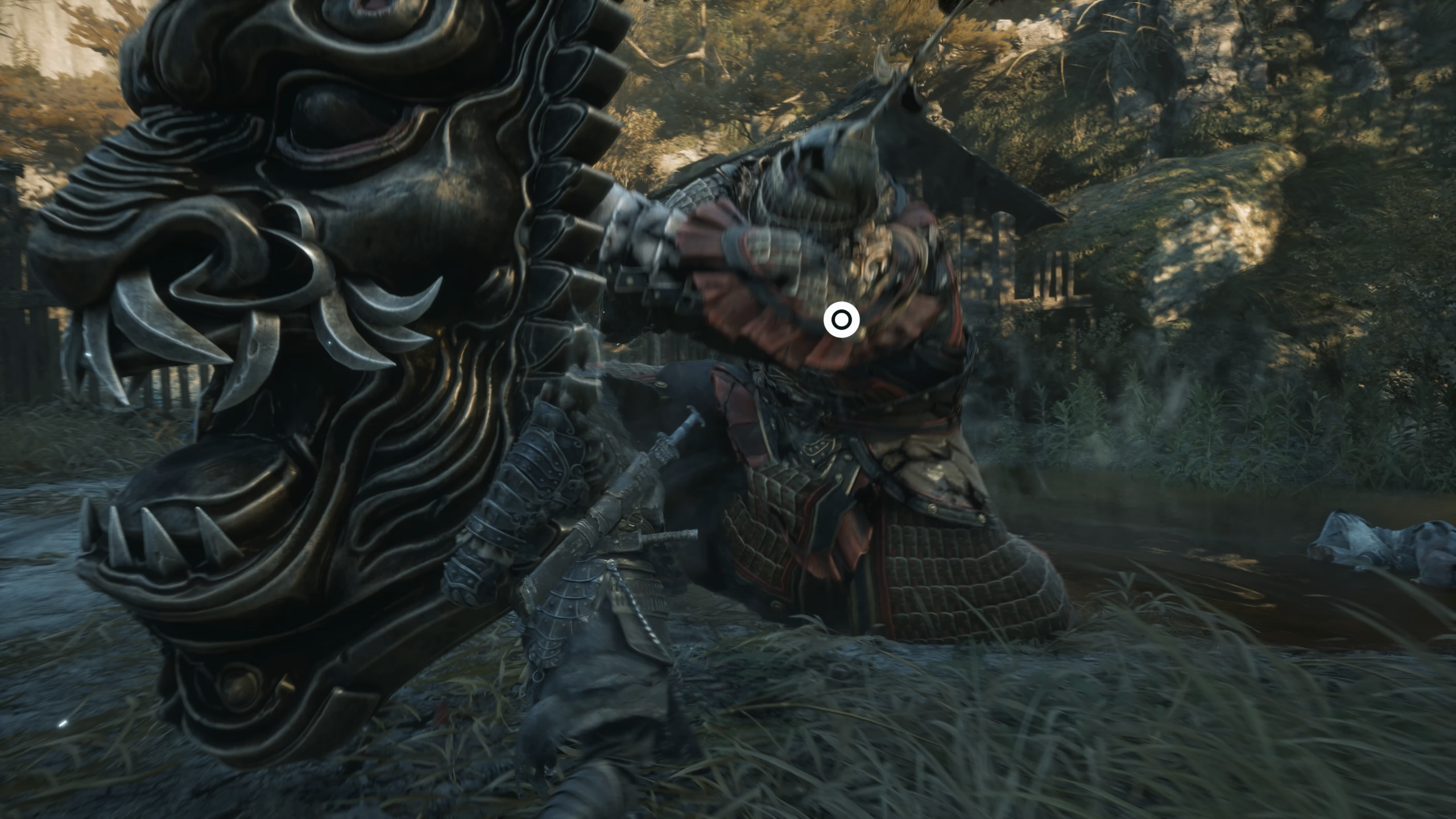
And of course, I can’t forget to mention Phantom Edges, which help you get the edge over your opponents. As I’ve mentioned, they’re weapons you can equip, but you only get a certain number of uses. You can equip two at a time, and often they flow in and out of battle between combos; depending on which you use, they can really turn the tide in battle. Some Phantom Edges fit right into my combat style and could flow in and out of combos, like the Tiger Cannon (seen in some trailers) that can lob a cannonball while in the midst of a dodge.
Certain Phantom Edges can also be used to open new pathways. Phantom Blade Zero combines several regions, and while they seem disconnected, you can essentially walk from one part of the map to the next through its interconnectivity. However, some paths are blocked, and Soul will use Phantom Edges to clear the way, usually unlocking secrets or shortcuts. The world feels sort of like Dark Souls 3 in the sense that maps are convoluted with many twists and turns, locked doors, elevators and more. You often come across a locked door, find another way around, and create a shortcut on the way to the next boss. Honestly, I walked around a little lost sometimes, but mostly because I was looking for every secret the game held.
Epic storytelling
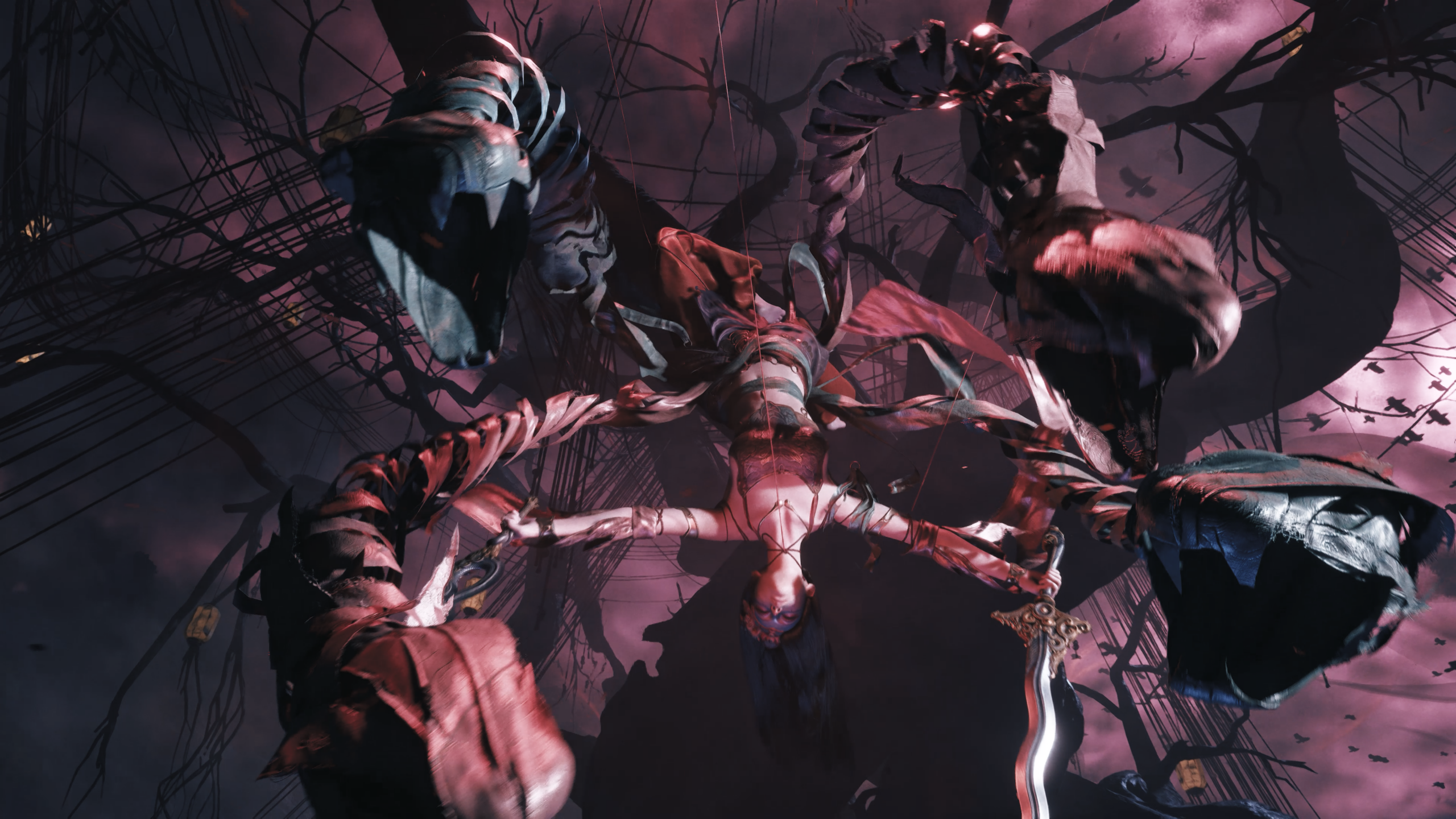
When I’m playing a game like PBZ, I typically don’t pay attention to the story. And while I didn’t read every line of dialogue (there’s a lot), PBZ kept me interested throughout the game. I really liked how S-Game told the story; while titles use in-game dialogue and cutscenes (either cinematic or in-engine) to tell stories, S-Game uses a variety of methods, including varying animation styles, recorded dialogue, items to read and a lot more, but I don’t want to give anything away. This reminded me a lot of Game Science’s Black Myth Wukong, but taken to the next level. Swapping the narrative styles helped keep things interesting and made me want to tune in. I also liked how spooky the title was. The wuxia world of PBZ is filled with many mysteries, including a blight that’s turning people into monsters and a puppet master who can puppeteer both eerie puppets and people. This creates tons of creepy moments that I hadn’t expected in PBZ. I also don’t want to give anything away here, but the story is filled with themes of dread and death.
Unfortunately, while playing in Pathwalker (the normal mode), the whole 66 days to live aspect didn’t really hold any value. When I finished the game, my character still had 50 days to live, as days only progress slowly through the story. There is a 66-day mode where you only have 66 lives. Considering I died 380 times, that mode would have been a bit harder for me. However, I’ve already dived back in and am playing New Game Plus and hoping to beat that record (on a harder difficulty).
I played the game in performance mode, with steady gameplay and without many issues. One enemy sends out musical attacks you have to reflect, and the moment feels bullet hell-like; only then did my game dip in performance, but it was only a slight dip that didn’t impact my gameplay. Visually, Phantom Blade Zero impresses with vivid cutscenes, motion-captured fighting with amazing choreography, and the setting is great, allowing for snow-covered mountains, a tranquil lake, and a bustling Ming Dynasty city (bustling with enemies). And the music throughout the game is crazy, from death metal in grueling boss battles to tranquil tunes when walking through a forest. S-Game uses traditional Chinese instruments with modern elements to get a unique style of music that’s not heard in most games. The visual and musical elements of PBZ reminded me of Clair Obsur: 33, not because they’re similar, but because it’s so distinct that they both stand out from the rest in these aspects and will live rent-free in my mind for the next decade.
GOTY Contender
PBZ is magic, and I guess I’m greedy because I already want a DLC or a second iteration. I no-lifed this game, devouring every minute of it, seeking death for all those that oppose me. And while I love games like Elden Ring, Bloodborne and Dark Souls 3, I so rarely NG+, at least not right away. But even during this busy gaming period with so many other titles on my docket, I can’t help but sink my teeth back into this epic adventure and see if I can beat my 380-death-count record (two bosses down on a greater difficulty and I still haven’t died yet. 😎)
While the world eagerly waits for the next Grand Theft Auto, and even among the titles I’ve played this year already, Phantom Blade Zero is my Game of the Year.
Phantom Blade Zero is available on PC, PlayStation and Xbox.
Image Credit: S Game
 Reviews
 Reviews
 Reviews
 Reviews
