


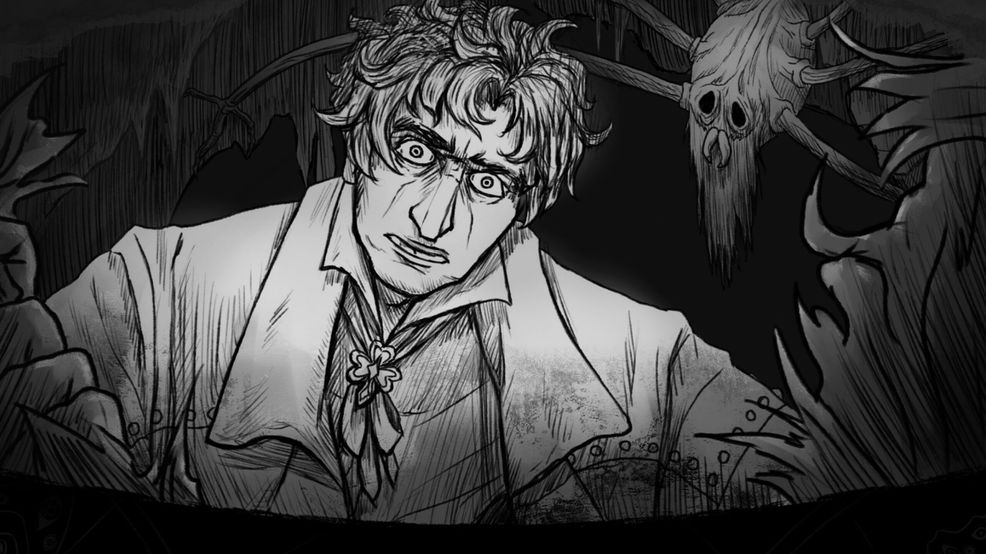
As a fan of Lil’Guardsman, I’ve been eagerly waiting for the next title from Toronto-based developer Hilltop Studios, Curse of Resthaven. Lil’Guardsman is a wonderful and unique indie title with a lot of great writing and even better visual design, especially character art, so I was always going to pay attention to whatever Hilltop did next.
Plus, I’m friends with the studio’s co-founder and Resthaven’s game director, Scott Christian. We’re both based in Ontario’s capital, and we often see each other at one of the city’s many video game industry-related events and monthly meet-ups.
That’s a disclosure I wanted to get out at the top. While you, reader, are free to think what you want of me reviewing a game from someone I know, it goes against every bone in my being as a critic, a journalist, and an artist, who knows you only really do more harm than good to pull any critical punches. So no need to worry about that in this review.
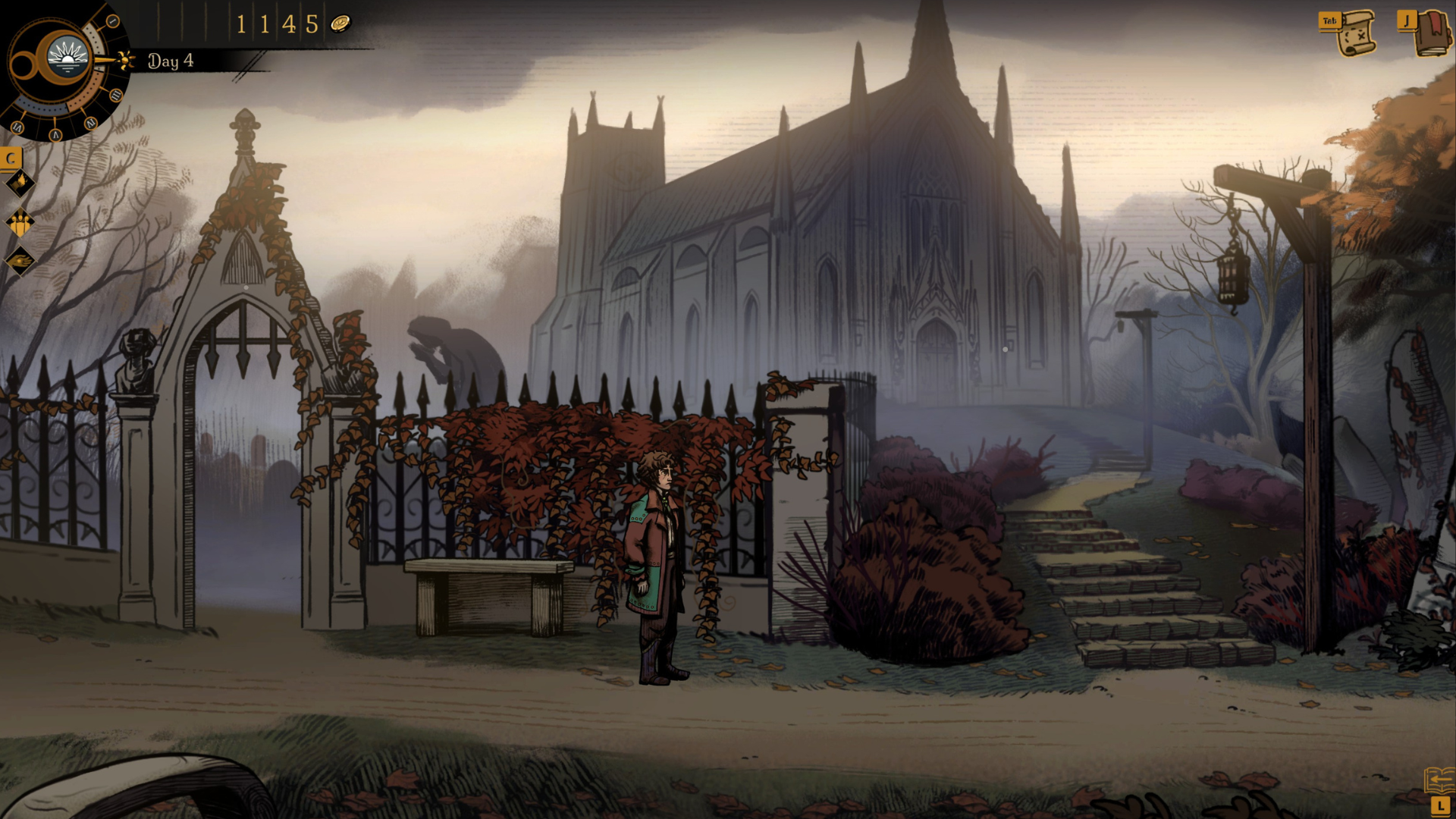
Curse of Resthaven, like Lil’Guardsman before it, is a feast for players that value strong, unique, and expressive visual and written work. The ways in which Curse of Resthaven weaves its best talents from start to credits (and back to the credits multiple times) is what makes the game so engaging and so difficult to put down.
But it’s not without annoyances and elements that feel either incomplete or like they were pulled back on, for reasons that are almost always more complex than they appear when it comes to indie development. The consequences of those choices remain, as does the rough-edged experience the whole game delivers.
Like a dark version of Groundhog Day
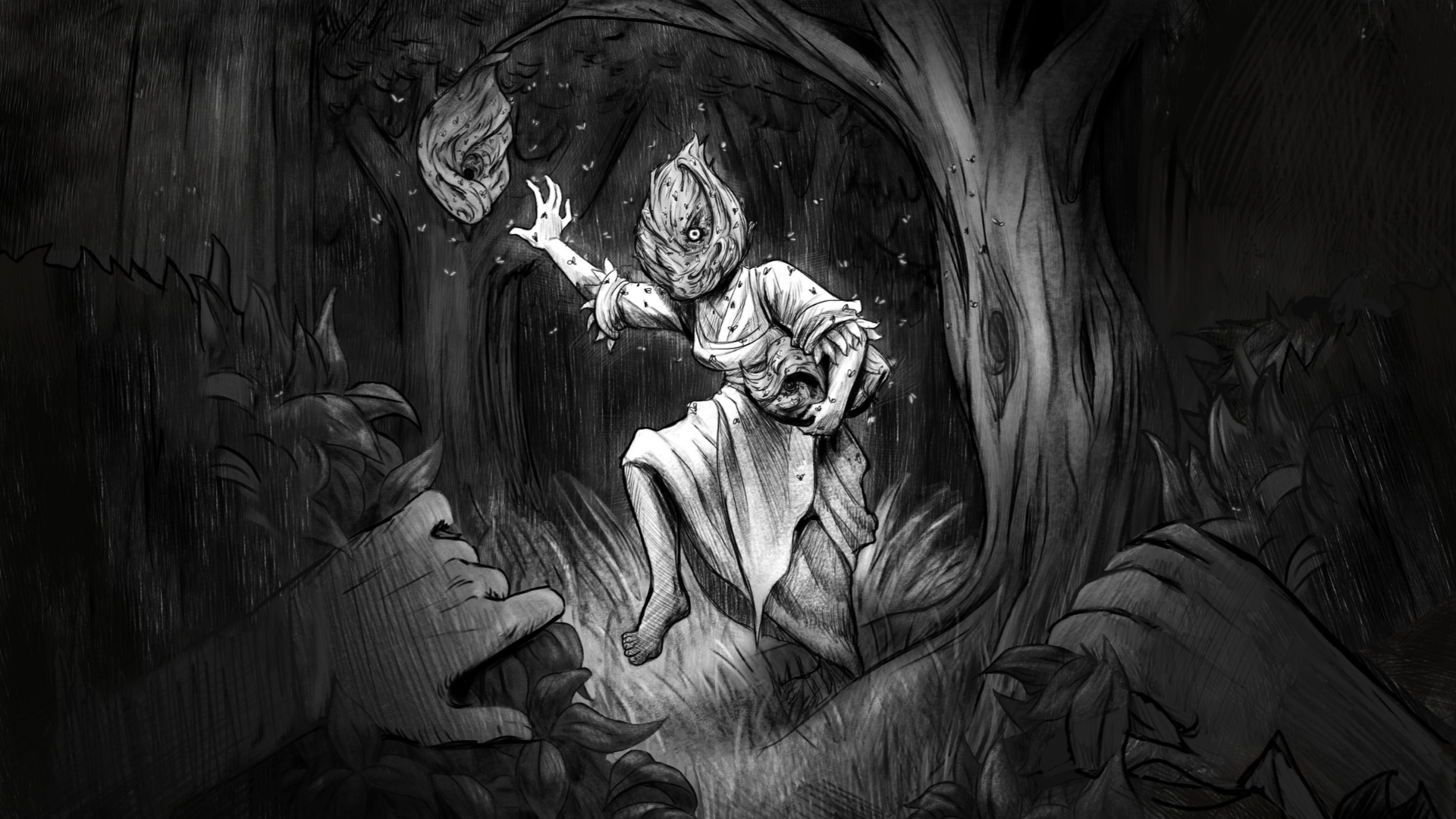
Curse of Resthaven is rough-edged, and I think several of the annoyances I’ve felt across my journey with its protagonist Ambrose and the dutiful purpose that brings him to the titular island of Resthaven in the first place could be fixed in a few patches. That’s where a lot of the observed blemishes lie.
First, Curse of Resthaven begins, like the classic gothic literature whose influence echoes throughout the game, with a letter, or rather the stoppage of them. You play as Ambrose and must investigate the disappearance of his niece Amalia. An upstart gentleman of the Aurelian Empire, Ambrose could’ve been on his way to Parliament but instead pulls political strings to become Governor of Resthaven to find his niece and ensure her safety.
Ambrose ends up on a ship to an island colony that couldn’t look and feel any less like the capital if it tried. Not so much down to how the economy runs or how its residents behave, but because of the insanity that happens every six days, namely the capital ‘G’ Gods rising and destroying the island. But everyone’s back the next day as the whole loop starts anew, like a much more drawn-out and dark version of Groundhog Day.
An engaging story
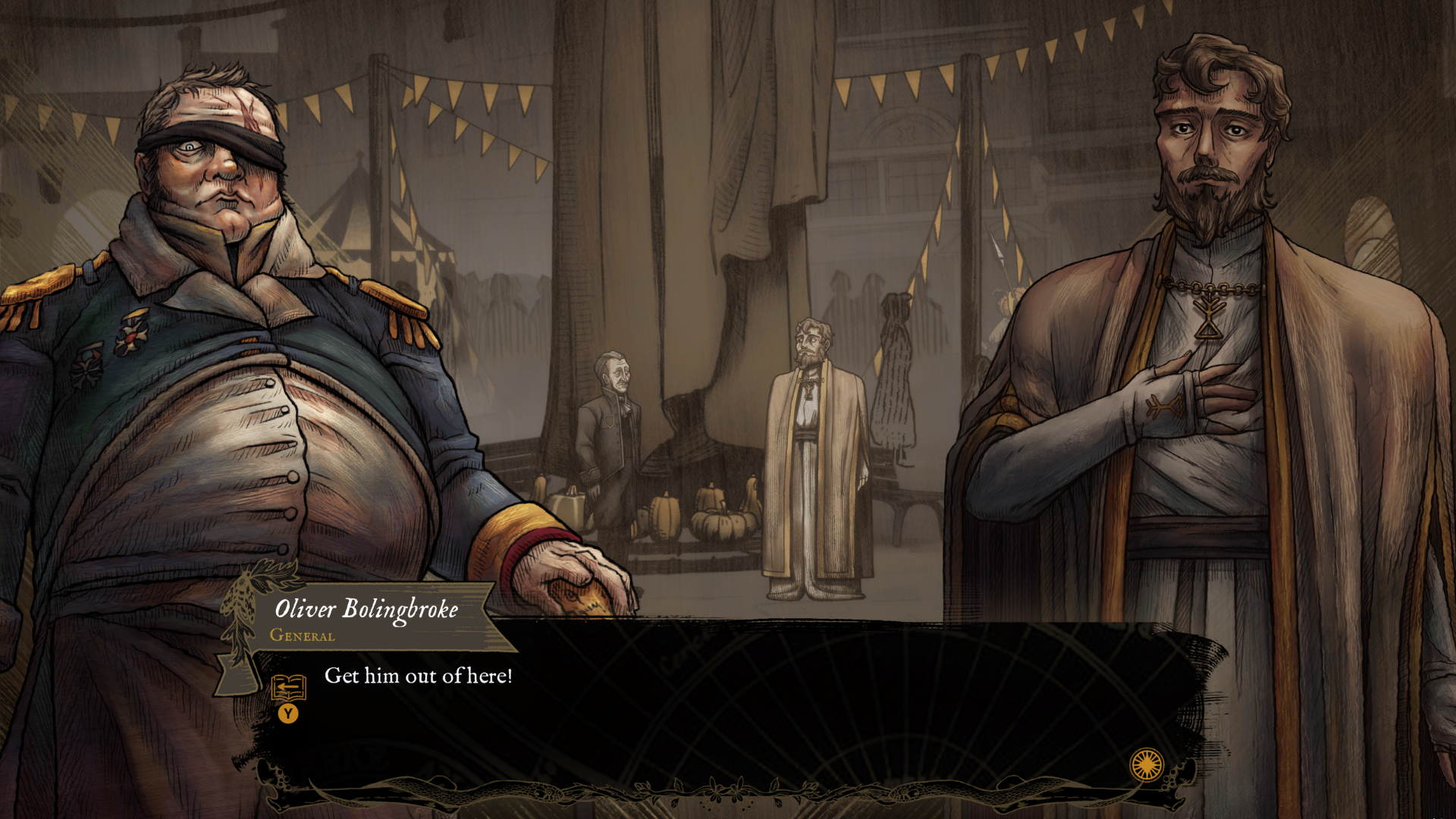
That might sound like a spoiler, but that cycle is central to the game. On top of searching for Amalia, players must take on the role of Governor along the way. It leads you down an ultimately intertwined path of governing and uncovering the island’s deepest secrets in the search for Amalia, as you venture out on expeditions and interrogate the townspeople of Resthaven.
Solving the mystery of Amalia’s disappearance, of the many mythical and eldritch occurrences and creatures on the island, is the core of the gameplay in Curse of Resthaven. It’s like playing through a really fantastical Midsomer Murders tale with a heavy dose of gothic visuals and vibes, classic adventure-style gameplay, and a splash of roguelike and town-governing-sim mechanics.
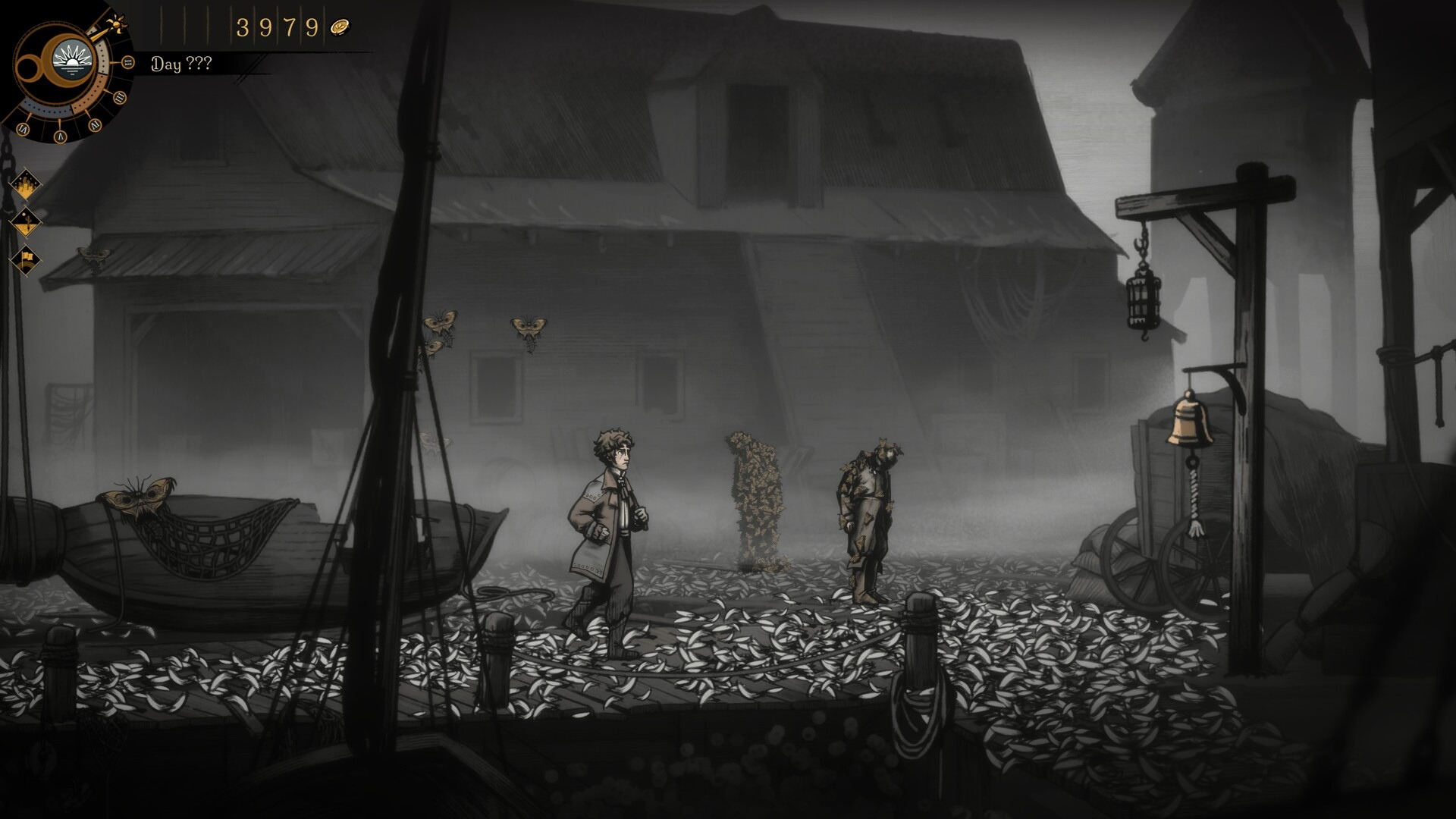
The story you uncover (which I absolutely won’t spoil here) as you solve the many mysteries of Resthaven and its people, the voice acting featured across its many characters, the design of each of them and the many areas of Resthaven you get to explore, are all what make Curse of Resthaven so incredibly engaging. I love mystery tales, and even if some of the game’s turns seemed predictable to me, several more were wonderful (and often wonderfully grim) surprises that made it a delight to play through.
Thankfully, that’s true even when you’re experiencing these surprises over and over again, as you progress through multiple six-day loops to the first of the three endings needed to reach the game’s ‘true’ ending. It’s on the whole very well paced, thanks to the permanent upgrades to your ability to both lift the colony’s financial standing and find Amalia that you can unlock at the end of each loop.
Governance has its issues
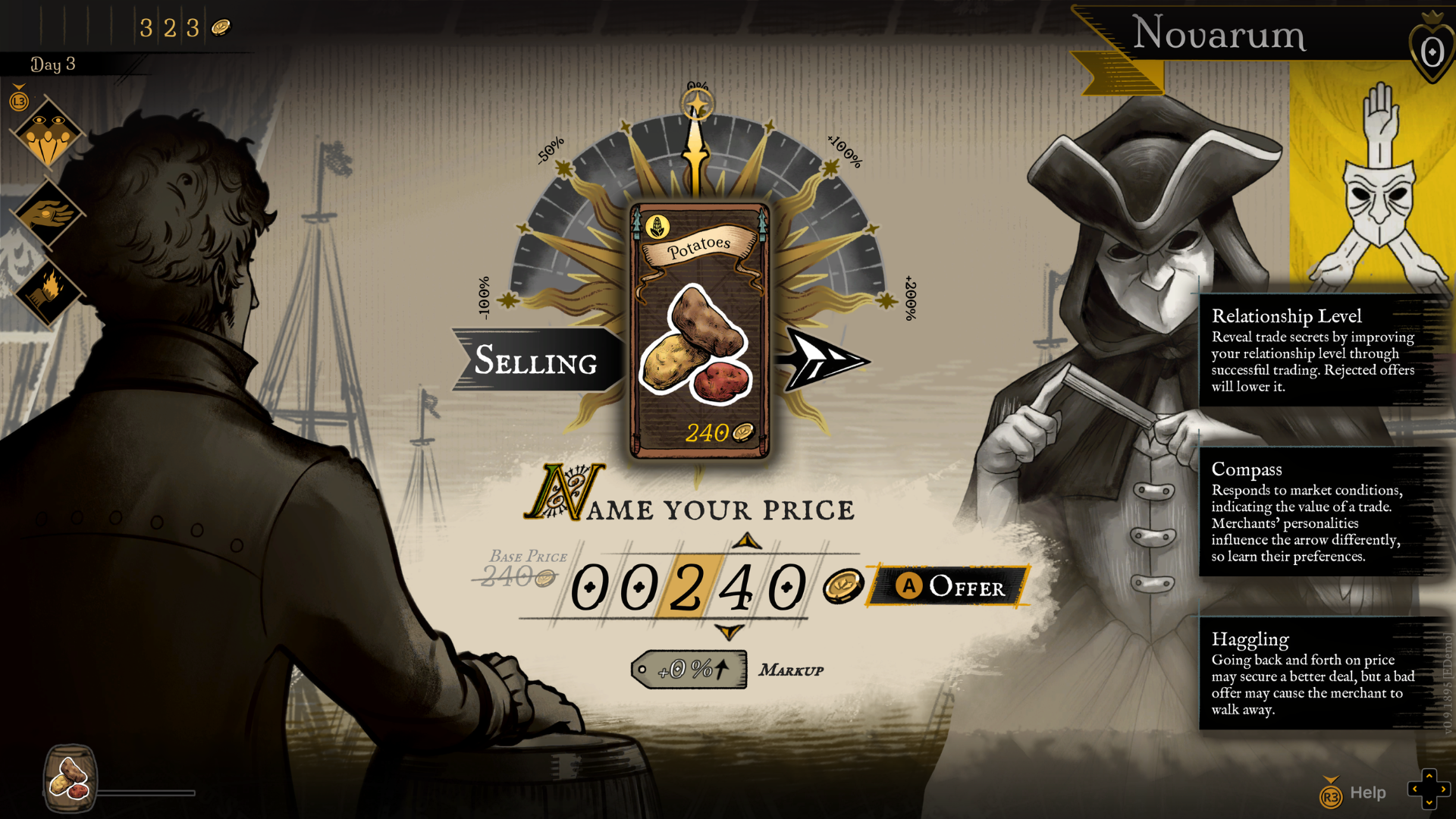
The governing-the-colony-side of the game can be a little slow to start, but once you get the hang of it, you breeze through most of your interactions with it, as it is ultimately much simpler than the narrative, where all of the game’s actual complexities and juicy, interesting bits lie.
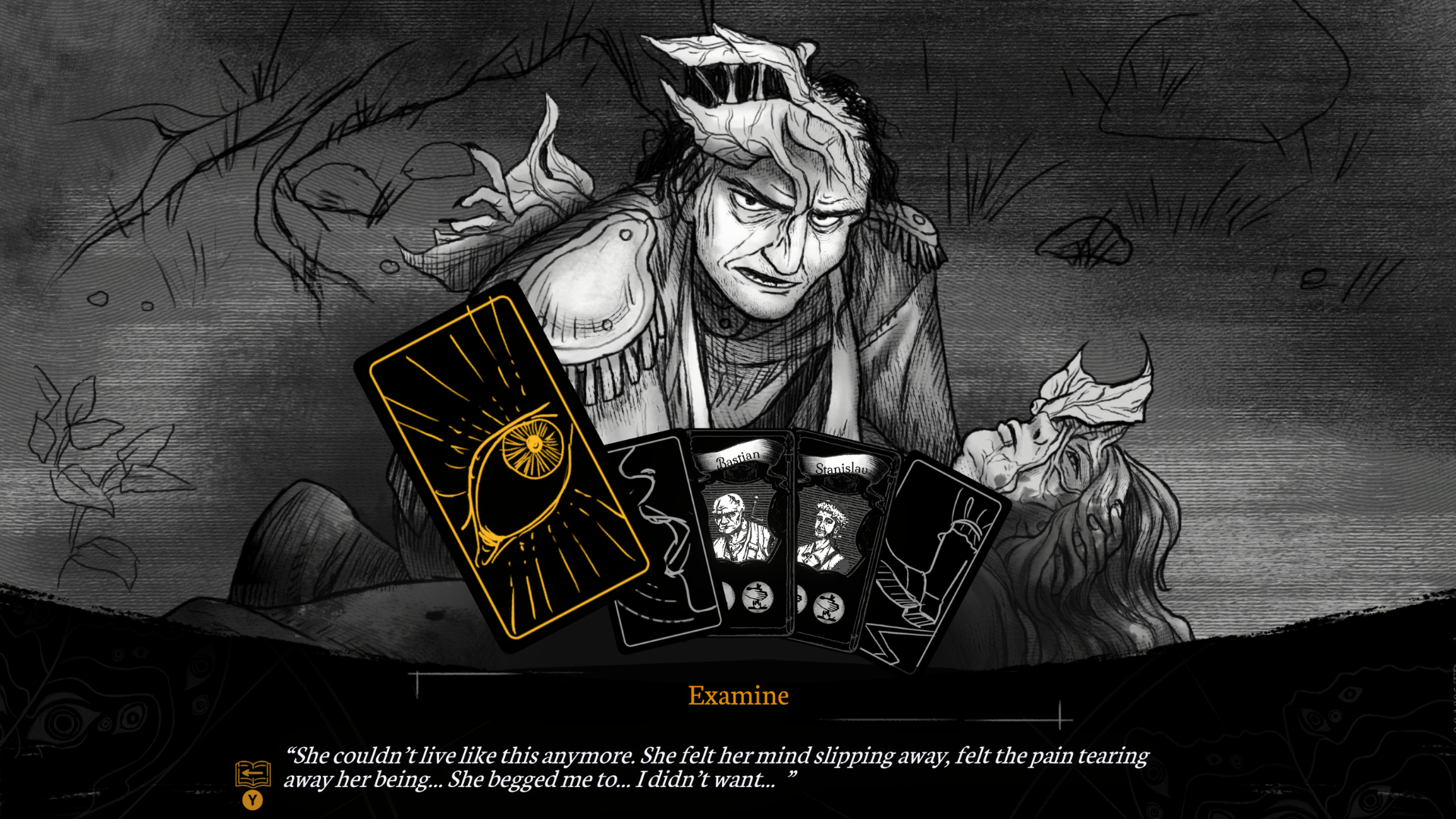
That’s also one of Curse’s larger splotches. The governance is, partly by design in my estimate, never as interesting as speaking to the townspeople or going on expeditions. You collect taxes from the townspeople in the form of playing cards that represent goods like wheat, lumber, sugar, and gold, with each in-town merchant manufacturing various refined and unrefined goods.
Once you’ve made your tax rounds, you then use those cards to trade with the visiting ships in port or to complete expeditions, with both actions aiding towards the goal of getting the colony back on its feet.
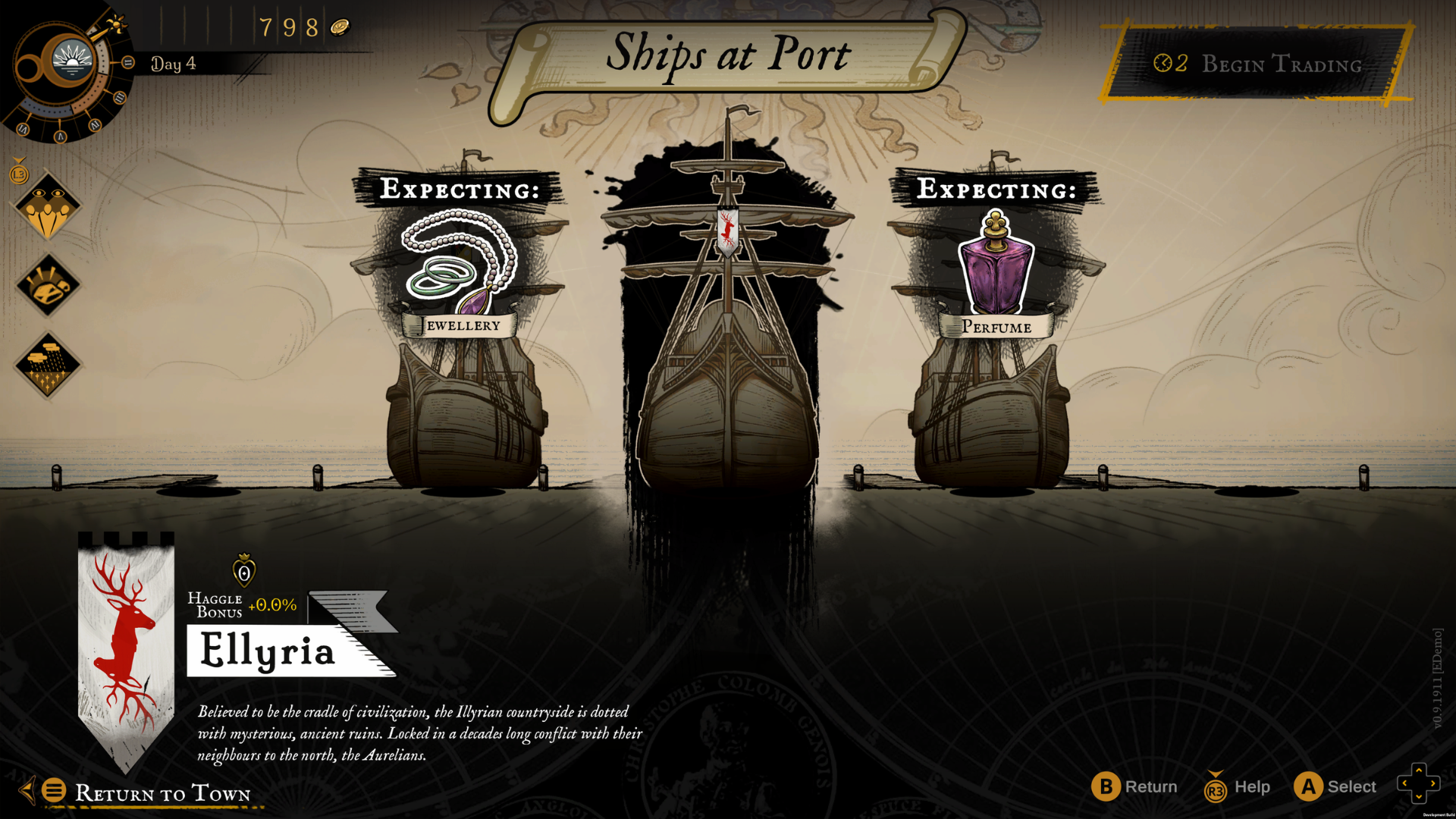
Unfortunately, the trading and town governance never really feels properly intertwined with the narrative. It’s more just a way to facilitate access to the cards you collect each day, something to do in between the real meat of the game, and a way to gate and pace out your progress. It’s never entirely obtrusive and doesn’t keep you from interesting story bits for too long, thankfully, but it’s by far the blandest element of the game.
It also doesn’t help that some of my bigger annoyances came from frustrating menu navigation, as I’d often lose my place when cycling through the multiple layers of menus. Though that’s hopefully something that’ll be cleared with a post-launch patch or two.
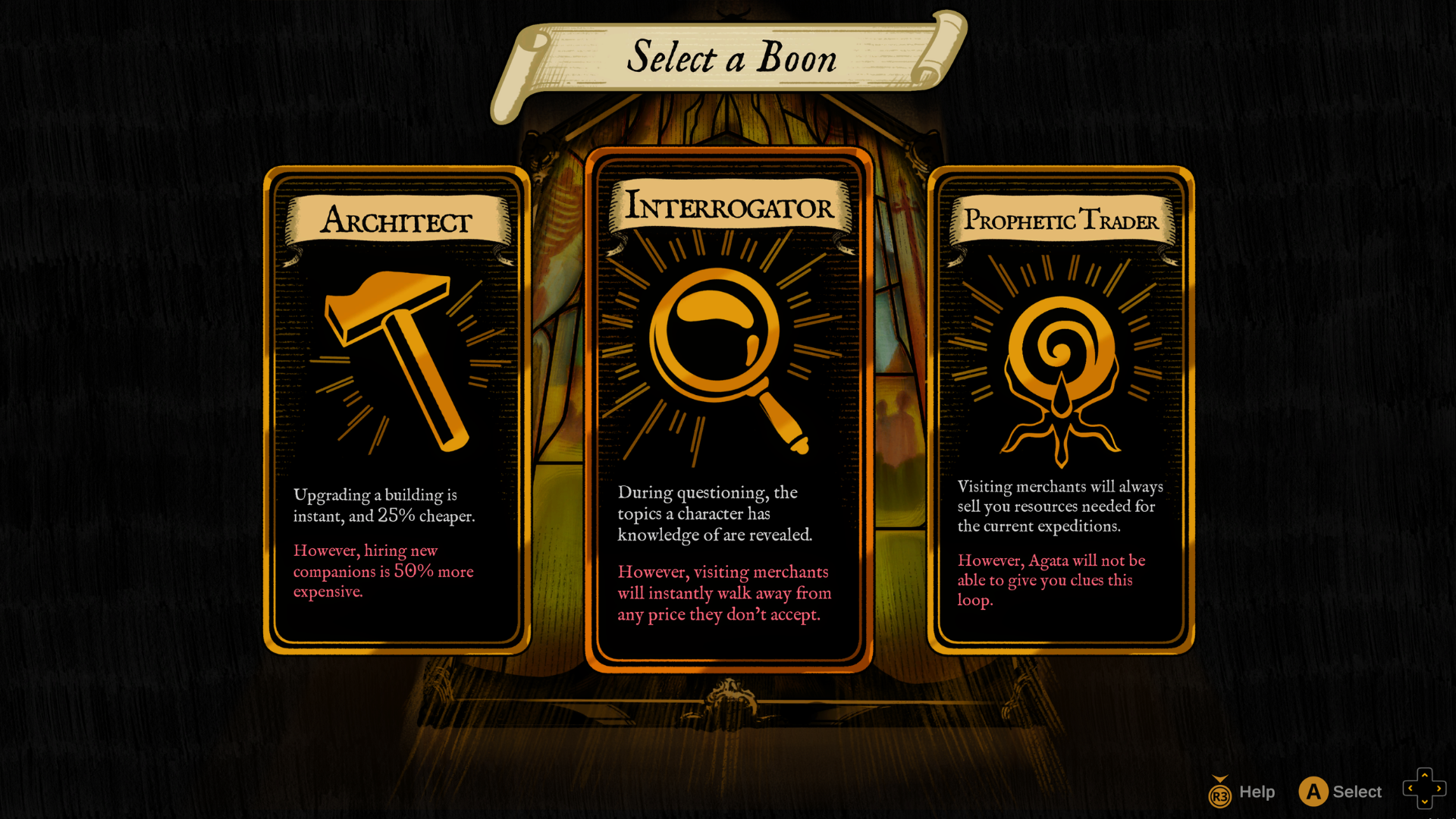
And while the expeditions are more interesting, they also suffer from a lack of evolution throughout. They’re engaging because you get to see more of the island and interact with some of the game’s more comedic moments while also seeing some of the best works of art across the whole experience. Completing those expeditions, however, by simply bringing the right card with you, playing it once, and then watching the rest of it play out, does get a bit stale before the end.
All of that said, I can’t stress enough how much these complaints only amount to ‘rough edges’ by the time you’ve reached the credits. Curse of Resthaven’s storytelling, art, sound design (the music is an incredibly special element of this game as well) and everything that Hilltop put into telling a strong story is why this game is a must-play. Just don’t expect the most intricate colony-sim mechanics on your way through this gothic horror.
Curse of Resthaven launches on Oct. 29 via Steam for PC/Mac, as well as on Xbox Series X/S, and Playstation 5. It will also eventually come to Nintendo Switch, though the release date hasn’t yet been confirmed.
 Gaming
 Gaming
 Features
 Gaming
