


Canada is one of the largest producers of games in the world, and yet you wouldn’t know it based on how relatively few consumer gaming events we have here.
The U.S. has PAX. Europe has Gamescom. Japan has Tokyo Game Show. Canada, however, doesn’t have any sort of equivalent. Toronto’s Fan Expo Canada, our largest pop-culture event, generally has minimal gaming programming, while Edmonton’s burgeoning Game Con Canada, while home to a big indie game showcase, is nonetheless focused more on tabletop games like Warhammer.
That might soon change, though, if Jason Lepine has anything to say about it. As the founder and CEO of XP Gaming, he’s put on numerous successful business-to-business (B2B) gaming events across Canada, including the XP Game Summit and Montreal International Game Summit (MIGS). And prior to starting XP Gaming in 2019, Lepine cut his teeth working at Enthusiast Gaming, which put on the Enthusiast Gaming Live Expo (EGLX) events before COVID permanently shut them down.
Building on all of that experience, Lepine started Video Game Live Expo (VGLX) last year, a fan convention featuring all kinds of gaming programming. After the inaugural show last October, VGLX returns to Mississauga this year on Oct. 24 and 25 at the International Centre. This year’s highlights include playable games (both indie and AAA, including this year’s Modern Warfare 4), guests like Craig Burnatowski (Wesker/Zeno from Resident Evil) and Jon McLaren (Star-Lord in Marvel’s Guardians of the Galaxy), numerous vendors and OverActive Media esports reveals.
MobileSyrup sat down with Lepine to discuss his ambitions with VGLX, overcoming challenging market conditions, the importance of building community, and what makes Canada’s gaming scene so special.
What inspired you to start VGLX?

Jason Lepine. (Image credit: XP Gaming)
So when I got the chance after the pandemic, an old friend of mine who works in events and who’s a partner of mine on VGLX, that’s Mikey [Singer] from MKEM, He does events. He approached me. I was already doing B2B events. He was like, “Why don’t we kickstart a B2C [business-to-consumer] event again? It’s something you’ve always shared you wanted to do.” I wasn’t too willing to do it while I was focused on B2B. Myself, the XP gaming team, were quite busy with all our B2B events. But having a partner that was now offering to come in and help me do the heavy lifting on the event was really kind of the gateway that said, “Yeah, let’s do it.” Pre-pandemic, we were successful. We had built an event that had over 30,000 attendees, and it was the largest video game con in Canada.
But the pandemic made that go away, and there’s not been really any that have come back. There’s a big one in Alberta now that’s set up in Edmonton, Game Con Canada, which I haven’t been to. It sounds fantastic what they’ve built there. But there’s nothing here on the East Coast. So that’s really what kind of triggered the decision to build a new consumer event, and that’s where Video Game Live Expo came from.
You mentioned Game Con Canada. I was actually there this year, it was my first time. That is an interesting show because it is cool what they’re building, especially as a small team. But it is very tabletop heavy, so there’s not as much in the way of video game stuff right now. They’re hoping to expand that. But what you’re doing with VGLX, which is focused specifically on video games, is more relevant to this larger conversation about the lack of gaming events.
Lepine: I will say it’s not easy. I made a LinkedIn post about a month ago declaring this is my vision [with VGLX], what I want to do, and it was a very well-supported post. But there was a lot of valid criticism of the business model for a video game event, “it doesn’t make a lot of sense anymore,” and you hear this in a lot of the circles.
And you see it when you go to events, especially post-pandemic, that a lot of things have changed. You don’t see all these mega booths from the major publishers. It definitely has changed the business model. It doesn’t really make sense for a massive publisher to spend a lot of money to have a massive booth to show a game to, I don’t know how many attendees they can go through in a booth in a weekend, let’s be generous and say it’s 5,000 attendees. You compare the cost to how many people can play that versus getting a demo out on Steam or online and getting that into the hands of hundreds of thousands, and you boost it with a little bit of a marketing boost. The economics are just not the same.
And so it’s important to be aware of that, especially on my team side when we are looking to build a consumer show from the ground up. How do you do that in 2026? Because the budgets aren’t there like they used to be. The publishers are not going to have all these earmarked budgets for “Yeah, let’s build a big booth at VGLX.” And my answer to that is we have to lean on community, and I think that’s always been at the heart of all of our shows.
And when you look at PAX and how they all started — it was through community, and that is very much, I think, a business model for the post-pandemic era where studios are looking to engage with their communities. And one way to do that is in person. There is nothing that replaces the in-person experience. I was at China Joy over the summer, and one of the differentiators there — someone pointed out all these publishers; their games are free to play. So why do they need to be investing money, have booths and physical presence at these shows when you can pick up their game for free on phones or anywhere? And it’s because they’re developing community. It’s all about investing in the community, giving them an experience, a shared experience that you can’t get anywhere else by just being online.
That’s a great point. You mentioned taking this on with your partner. Working on EGLX on the B2C side, and then obviously, your extensive B2B background as well with XP Game Summit and MIGS… What were some of the lessons you took from doing all of those events, and how did that help you organize and execute on your VGLX strategy?
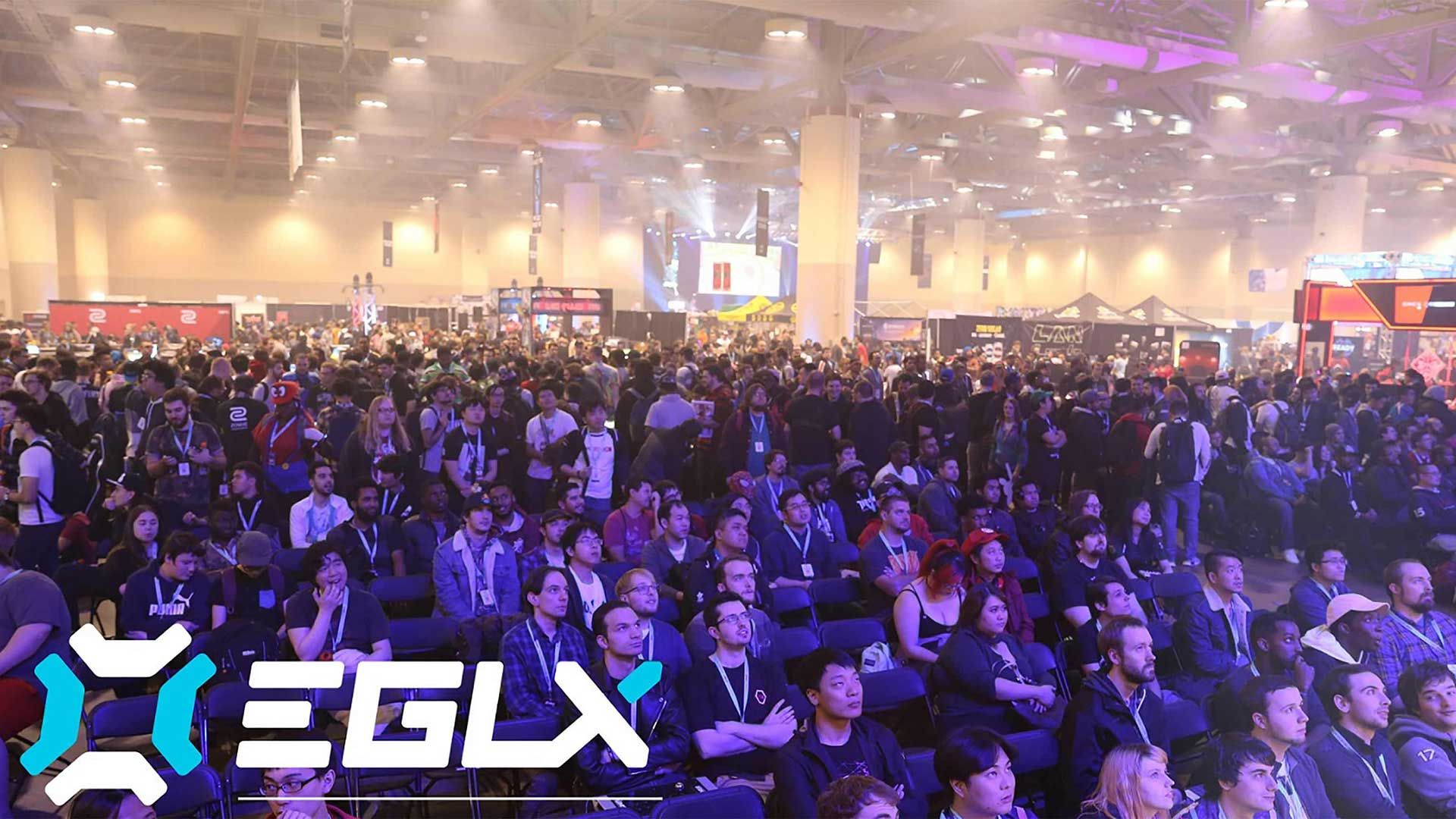
EGLX. (Image credit: Enthusiast Gaming)
Lepine: That’s a very good question, and I’ll be honest in saying that the B2B and the B2C business model surprised me at how different [they were]. For example, one of the simple differences: B2B, the attendees tend to plan well ahead. A lot of the times, they’re international attendees, so they’re planning their hotels, their flights. The programming needs to be up far earlier in advance, and so you’re working with these timelines that are spread out over far more time. And also, the ticket price for a B2B event is significantly higher. It’s hundreds of dollars for a ticket. A B2C event is far more affordable, and it’s far easier to be impulsive about it. You could wake up one morning and say, “Do we have plans this weekend? Let’s go to VGLX.” And it just costs you $20 or $25 depending on what day you go, and it can be a family activity.
So there was a lot of learning to be done there in adapting a lot of our B2B strategies to B2C. For the most part, how things are structured is very similar, where partner onboarding is very similar […] All of that is already built into our company, so fine-tuning it and directing that towards a B2C is a good starting point, because a lot of our B2B attendees enjoy B2C shows as well, but now, it’s all about building that consumer side.
And the third thing is the experiential, which is something I’ve always taken to heart. My conferences, I’ve always approached them from a creative angle. I’ve been a massive gaming fan my whole life, and I’ve always wanted to be a part of the gaming community. And I recognize I have no skill to make a game, or I don’t want to learn how to make a game because I’ve seen how difficult it is. But what I can do is I can build events, and an event is an experience. And so I always look to games. Games evoke these emotions when you play them. And I always think, “How can my events be like a game? How can I evoke emotions from the moment you walk in, from the moment you experience the event? What are these little things that you can take away from as memories with your friends, with your family?”
And that’s one of the things that we take to heart when we design this — not just myself, but all my partners on this event. VGLX is an experiential event. The last thing we want to do is create an event where it’s just a hall filled with vendors, and it’s pretty much what I call the “shopping mall.” We want to create the “theme park” experience where there are vendors, but there’s also experiences, and we look usually for about a 50/50 ratio of when you’re in VGLX, you get all of these experiences included with your ticket, and then of course there’s the vendor experience where you can find stuff in Artist Alley, retro games, cool gaming swag and so on.
Having successfully put on an event last year, what were some of the biggest lessons that you learned that you’ve taken into this sophomore year?
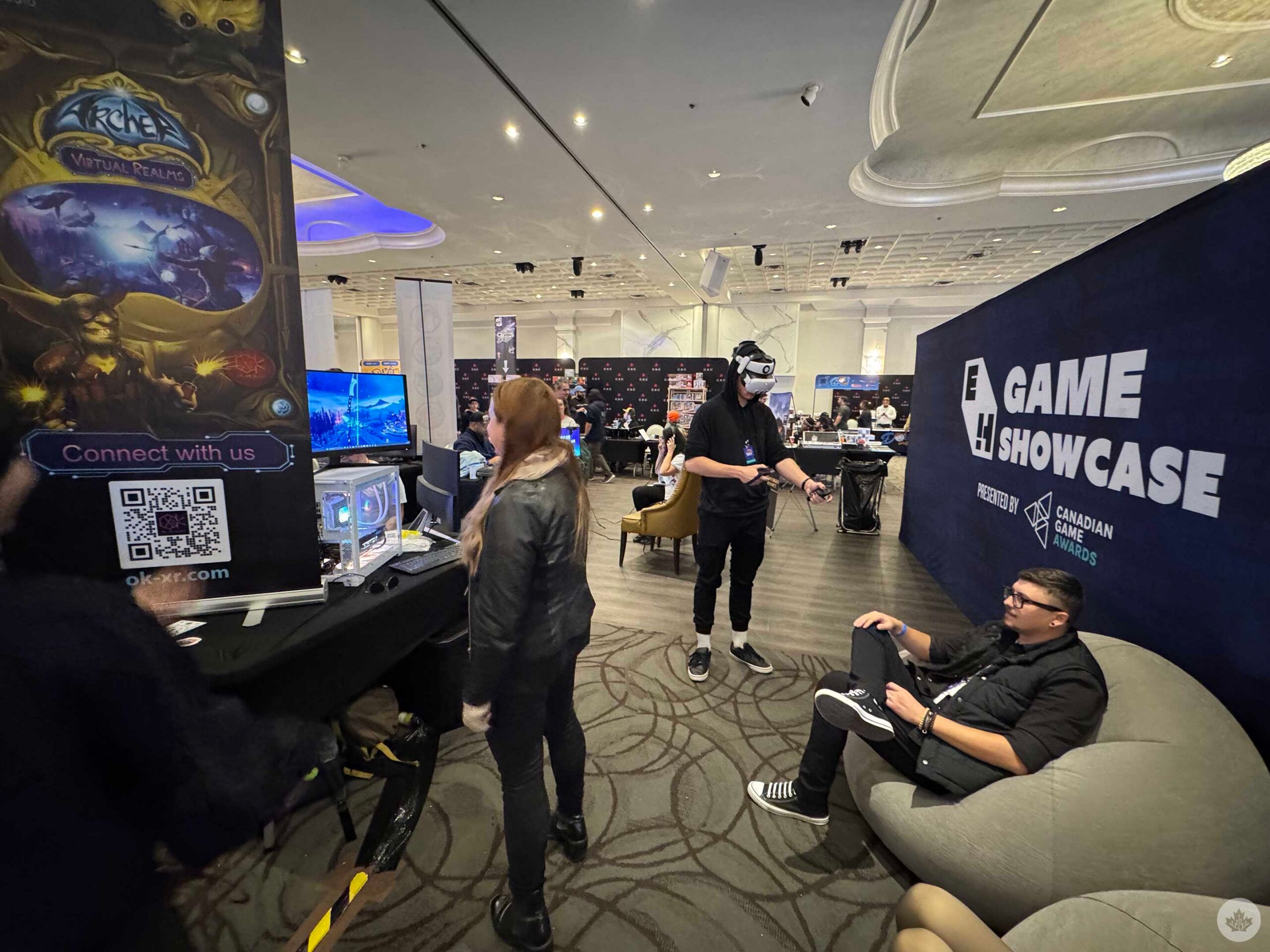
Game demos at VGLX 2025.
Lepine: It was really the fact that the world has changed post-pandemic, and also recognizing that I started XP Gaming five years ago, so I haven’t been at the “build it from the ground up” [level] in a while. It’s been five years, and I remember my first B2B show was XP Games Summit, and that took a lot of grinding. And so VGLX in year one was exactly that. It’s a lot of grinding. Nobody knows about this show. It’s not just a “build it, and they will come.” You have to advertise. You have to hustle, and you have to get out there. But one of the things that we definitely learned from our inaugural show is we leaned into that experiential vision that I shared, where I think our ratio ended up being like 60 per cent experiential. There was a Minecraft zone last year. There was the esports tournaments. There was a lot of like Pokémon mini-games and scavenger hunts throughout the hall. We had a Monster Hunter hunt, which was inspired by a game I love to play.
So that resonated very well with our audience, and it was an indicator that we were on the right track, and so we leaned more into that this year. I remember one of my colleagues actually brought their daughter to the show, and this was a spontaneous decision, and he just came to support. So he came for an hour, and when it came time to leave, Zara’s like, “I don’t want to leave! I have all these things I want to check out.” And they ended up staying for five hours. And that’s just kind of one anecdote.
But it’s something that we heard consistently throughout the weekend that once people were there, they were having fun. They didn’t want to leave. And that, to me, is the biggest indicator of success that we are on the right path of creating an experiential event. Because when you think about it, when you go to a theme park, you don’t go in there and you ride one ride, and you leave; you stay there all day. That’s what we’re seeing early on with the VGLX concept that we’re testing out.
This year, you’re in the International Centre in Mississauga, which is a much bigger venue. As you were planning this second show in a larger space, what were some of the things you wanted to double down on, expand upon, that sort of thing?
Lepine: One of the things that we always felt was an iconic aspect to a show is our esports tournament, and we’ve done it differently this year, where we’ve partnered with Incendium Games, and they’ve been running their tournament Electric Clash every year. And so this year, instead of us saying, “Well, let’s put on this VGLX tournament,” we decided, “Why don’t we give Electric Clash a home and a stage, and we can use the infrastructure and we can partner? You’re already doing this event annually.” And this was kind of the building blocks I saw when we were building EGLX pre-pandemic of working with community members, working with existing communities that are already doing things, and just bringing it together. So that was one of the key pieces.
Another thing that we really wanted to lean more into was to create more gaming experiences. So our indie game zone from last year was very well-received. I think it was the most bustling space in our show in year one. So in year two, we gave it more room to breathe, and we also have attracted a lot more partners, such as [Toronto-based indie] Torn Banner, which is going to be there with their game No More Room in Hell 2, which just launched this year to great success. We have [Canada’s largest independent game developer] Behaviour Interactive [Dead by Daylight] bringing their indie horror titles through their new publishing label, Misbehaviour. So, on top of the indie game zone that features roughly 40 indie games, we have all of these other gaming experiences from larger studios coming into the show. That’s another very exciting kind of indicator of growth and success with the show.
You touched on it a bit. With digital distribution being so big nowadays, it’s easier than ever for developers to reach their audiences. But because of that, people may underestimate the value of being able to connect directly in-person with fans at events like VGLX. From your experience, having talked to developers and put on these events, why is it important for games to have this kind of platform at something like VGLX?
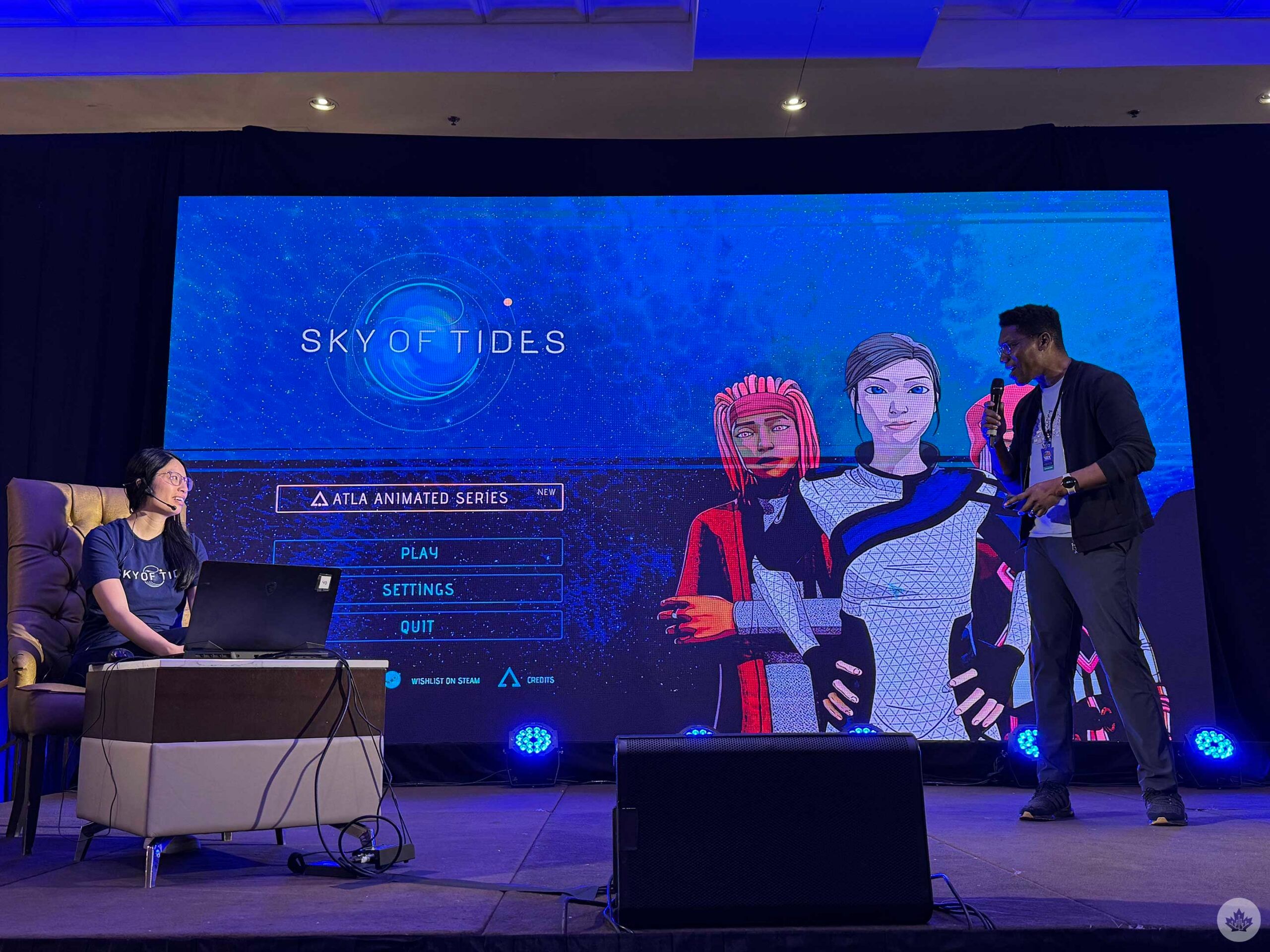
Canadian Game Awards creator Carl-Edwin Michel and Sky of Tides creative director Judith Cheung present a demo at VGLX 2025.
Lepine: I think it really gives that unique value proposition to develop community here in Ontario. I think the gold standard that we can look to is [Warframe developer] Digital Extremes and their TennoCon event that happens every year in London, Ontario. Again, a free-to-play game, but they host this massive event that draws thousands of fans from all over the world, and I’m pretty sure they sell out very quickly of their tickets because it gives them a platform. There’s another event that just launched in Canada earlier this year from Behaviour Interactive celebrating their 10-year anniversary of Dead by Daylight. It was a fan event that, again, drew thousands of fans from around the world. So already, that is a testament to the in-person experience and developing a culture around your game and a community, because when a community loves your game, there’s going to be ROI there because they’re going to tell their friends and they’re going to invite their friends to join the community.
So you know there’s a play to be made in community to invest in community. And not every studio can put on their own TennoCon? Putting on events is very expensive, especially when you start talking about thousands of attendees. So VGLX gives studios the chance to build their community at a very cost-effective price, where the ROI makes a lot of sense. They’re not dropping half a million dollars just to put together an event around their game. They can now be alongside these other studios in a way that makes sense for them financially. And a show like ours gives us a lot of entry points, whether you’re indie and you’re just starting out and you need a table for a few hundred dollars, all the way up to whatever level of partnership makes sense for a studio.
As we talk about growing VGLX and looking at your long-term, multi-year vision. We’re in this unique geopolitical climate right now where a lot of people don’t want to do as much business with the U.S. Based on conversations and trends that you’ve been having and observing, are you optimistic that this might drive more international interest in an event like VGLX?
Lepine: Definitely optimistic. It’s something that we’ve seen on the B2B side of our events where there is a lot more international attention happening just for having events in Canada as people look for new opportunities in all sorts of markets. On the B2C side, I think it’s not just a geographical consideration, but I think it’s a business model consideration. Like I’ve shared, it’s a fairly new shift of what I’m seeing, where it’s not about having a booth to sell your game at the show. It’s about building community. I really think studios like Digital Extremes and Behaviour Interactive are at the forefront of that mindset and are discovering the value.
And I don’t think necessarily it’s caught on as “This is what we need to do.” I think we’re maybe five years away from the bulk of these major studios saying, “We need to be back in events, in a position and a strategy to grow our community.” And as that trend turns, we will be there ready to accept them at a show like VGLX. And maybe there will be more than one show. So right now, we’re building one show in Toronto, but there’s a lot of room for shows like this all over the world and all over Canada. We’re a very large country! So my hope is that we would attract more international publishers to be developing community, to engage with community here in Canada and North America, and be a destination for these community-focused events.
You’ve mentioned a lot of gaming events of different sizes and formats. You have something like TennoCon or the DBD event which hit a few thousand people. You did EGLX, which reached 30,000. And there’s larger events like PAX and whatnot. As you envision and build upon this idea for VGLX, in terms of scope, where do you envision this fitting into all of that? Hypothetically, 5 years out, 10 years out — is this more like “Canada’s PAX?” Is it something smaller-scale? Is it more like “EGLX 2.0?” Where do you see it heading?
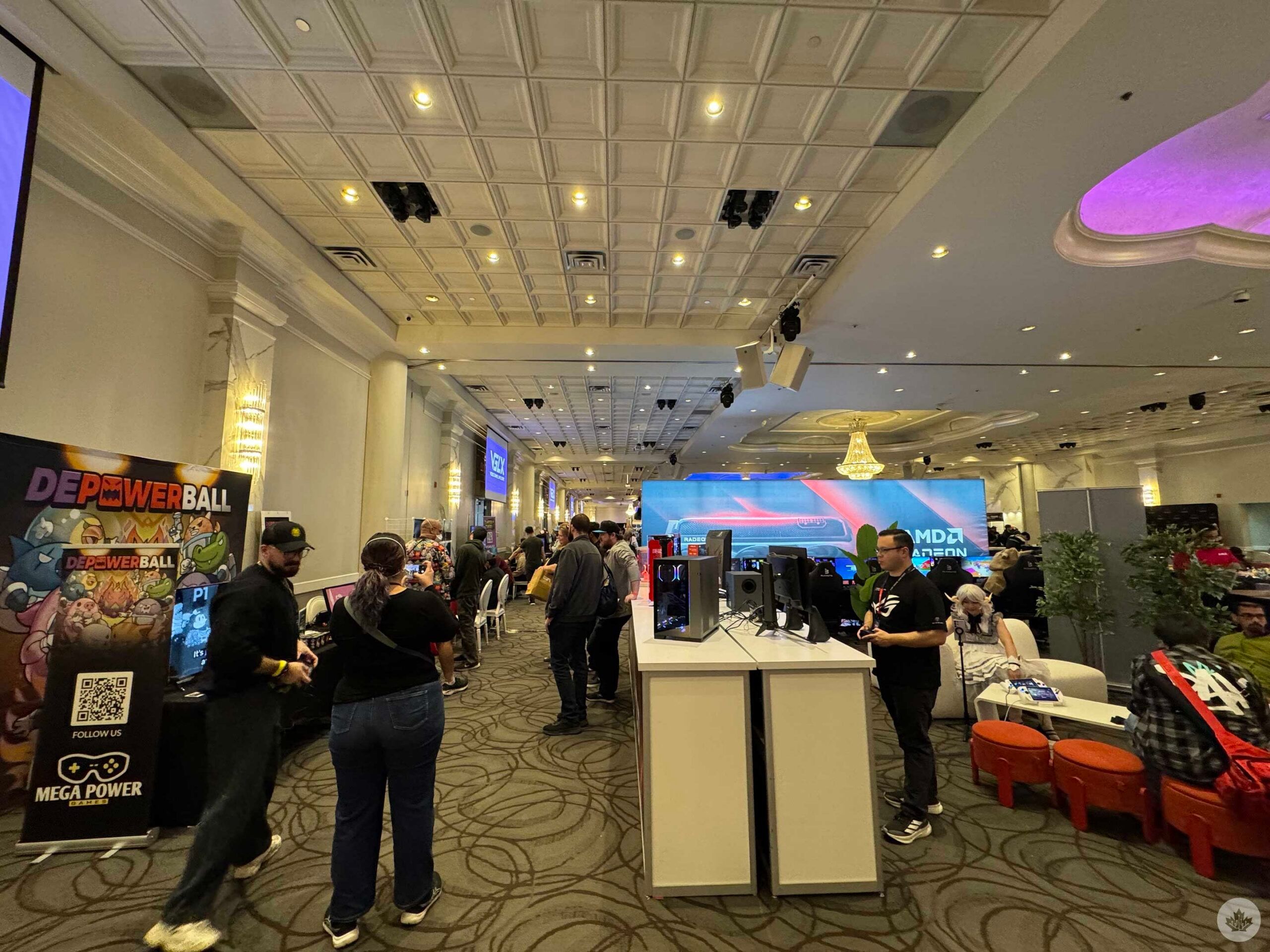
VGLX 2025 show floor.
Lepine: It’s a great question, and the simple answer is: time will tell us. I’m very receptive to the market. I used to build my B2B shows with the vision of, “I’m going to build GDC on the East Coast.” That was my original pitch, only to discover that the mid-size B2B events I had made were actually what the industry wanted as the alternative. They wanted these smaller spaces to connect and do business. I’m seeing a trend where these massive conventions of hundreds of thousands of people have their drawbacks. They’re very difficult, to some extent, to scale to that size, and there is definitely a market for a more mid-size event, anywhere from, let’s call it 5,000 to 50,000 people, where you’re not being slammed into a crowd. That is not a great experience if you’re spending your whole day wedged in a crowd, just shuffling between tables.
That goes counter to what we’re trying to build as this vision of “a theme park for gamers.” So I think we need to be very receptive and listen to what the community wants, while at the same time assessing what makes sense to the business model. But I would say it’s not an easy answer of “we just want to be the biggest with the biggest crowds.” I can tell you that is not the intent right now. It’s “how can we build the richest experience?” And maybe that means at one point it becomes exclusive to a set number of tickets, and once they’re sold out, they’re sold out. But I think having the ability to make that decision and control is very important. It’s not about just reaching max capacity all the time.
I think that’s a great answer, and a very honest and mature answer. This year, especially, Fan Expo Canada got a lot of criticism for that. It’s always been packed, but this year, there were many overcrowding concerns and complaints. So, approaching VGLX with the right sort of mindset and managed scope is very smart.
Lepine: I believe in thinking long-term for the consumer. They trust us with their time. They trust us with their money. If they’re coming out for a weekend or a day at VGLX, it’s saying, “We trust you, we’re going to give you our time and our money.” And we have to reward that trust and, hopefully, build a long-term loyalty and relationship with the attendees that they can continue to trust us in building what the gaming community here wants to see in Toronto and the Greater Toronto Area.
This interview has been edited for language, clarity and length.
VGLX runs Oct. 24 and 25 at the International Centre. Tickets start at $20 and are available on the official VGLX website. You can also use our community discount code MOBILESYRUPVGLX26 to get 15 per cent off.
Header image credit: VGLX
 Features
  Features
  Features
  Features