


One of the gaming’s largest communities gathered once again in London, Ont., last week.
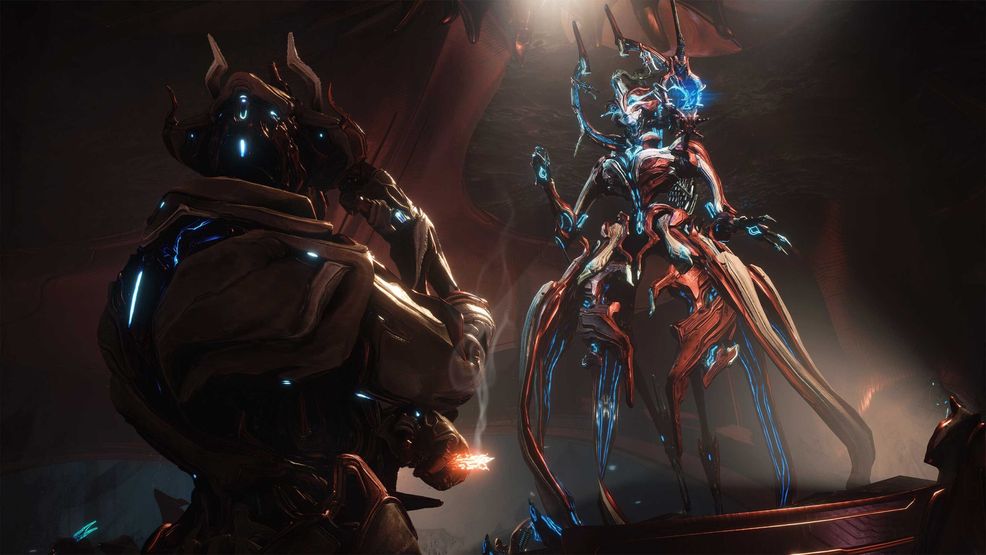
At the 11th annual TennoCon in the city, local developer Digital Extremes (DE) unveiled the latest updates to its popular and long-running sci-fi multiplayer game Warframe, as well as its standalone sister fantasy action-RPG, Soulframe. For the former, DE showed a big gameplay demo of this year’s noir detective-themed Tau expansion starring Critical Role‘s Matthew Mercer, while the latter’s huge showcase focused on Clair Obscur: Expedition 33 stars Ben Starr and Jennifer English as the villainous Tempest Bayor and mysterious Empress of Eldveil, respectively.
In total, more than 4,000 fans from around the world flocked to London for TennoCon, while hundreds of thousands more tuned in online. The fact that DE still commands so much global interest is impressive, especially as many other live service giants — including, most recently, Destiny 2 — have either wound down or gone offline entirely.
To learn more about how Warframe and Soulframe continue to go so strong, MobileSyrup sat down with DE president Sheldon Carter. He talked about how DE keeps Warframe going, the team’s measured approach to building out Soulframe, what it actually means to focus on community, fun Canadiana across both games and more.
What excites you most about this year’s TennoCon?
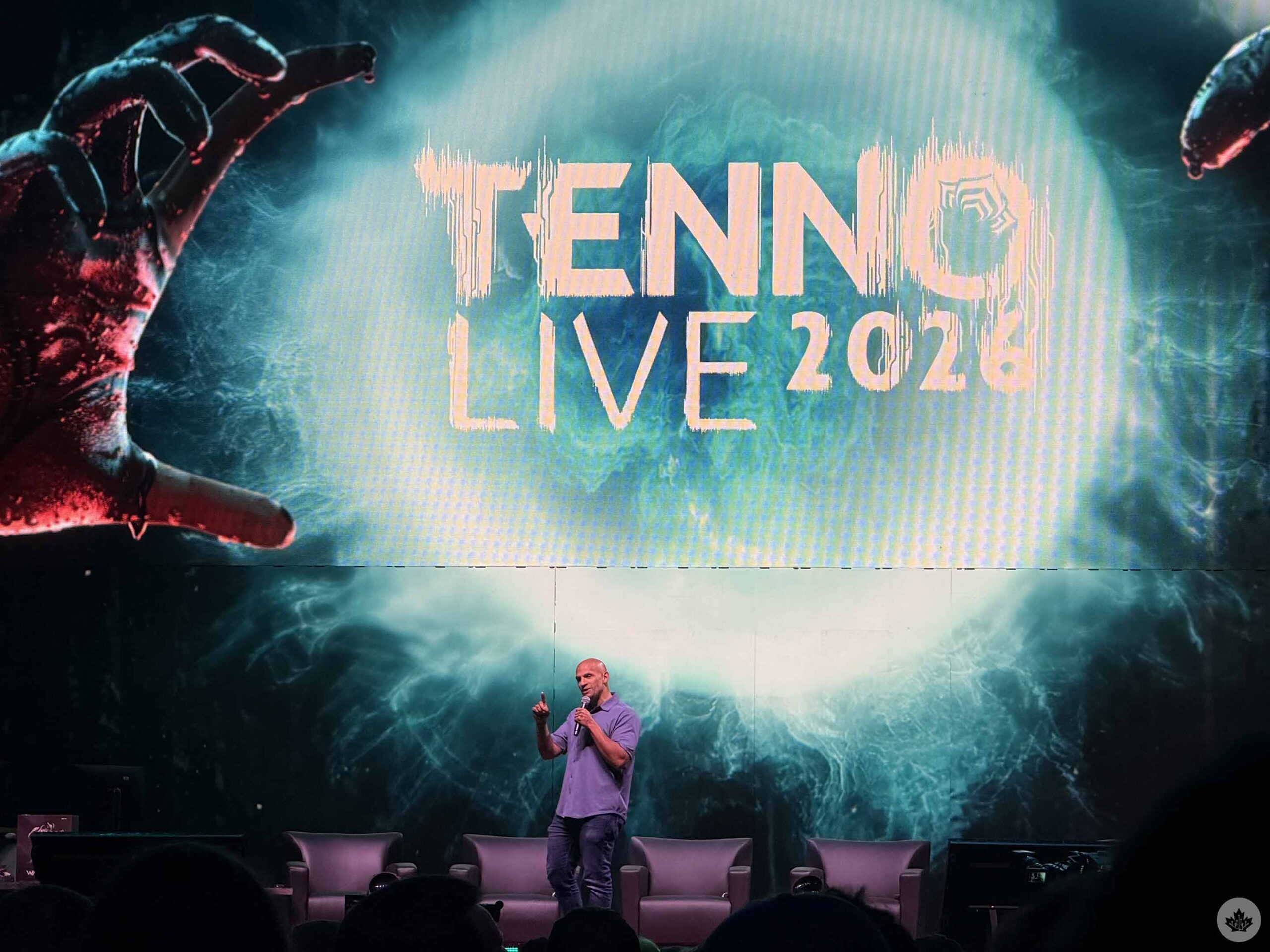
Sheldon Carter opens the big TennoLive presentation at TennoCon 2026.
Sheldon Carter: Honestly, at this point, it’s really interesting from a studio perspective, having the two games, having full-length demos. I know we’ve done demos before for Soulframe at TennoCon, but I think having the two of them — it’s a coming-out party on both sides because one, we’re introducing a new solar system to the players on the Warframe side, and then we’re kind of letting people know the stakes and the real story of what the journey is for the player for Soulframe. So it feels like — if I can say it, [as] both games have been around for a little bit now — a new beginning for both. So it’s kind of cool.
On the Soulframe side, you mentioned showing more about what it’s really about. Messaging is obviously such an important part of game development. And what’s notable about Soulframe — I can’t really think of another example of a game that’s in early development in that pre-alpha state that is still so actively being promoted and built out publicly. Often, we’ll see a game announced and maybe it goes dark for some years, or even something like Deadlock — Valve kind of acknowledges it, but it’s largely just this private thing. How have you settled on this measured approach and rhythm with Soulframe in terms of what you put out in the world with it every year with Preludes and slowly building all of that out?
Carter: I think part of it is that for the team, we feel like we’re already a real live service game that’s going. It has a heartbeat and a pulse. People who are playing it are getting used to the fact that they get an update every few months that expands it. There’s tons of hotfixes. And so for us, it’s so important to be linked with a community, building a community around the game, and [giving] the people that are playing it that feeling and rhythm of, ‘this is a game that you’re going to play forever’ comes with not going dark. It’s challenging for sure. We just released update 15 — that was only in the last month, and now we’re doing TennoCon. For the team, it sometimes feels like a bit of a breakneck speed, but at the same time, it lets them kind of get familiar with what the pace of the game is going to be when it launches.
So when we launch, I hope — you never know; every plan is good until you get punched in the face or whatever — the plan is basically once we roll it out, we’re going to continue this. It’s not going to be some brand new way of developing the game. It’s going to continue the way we started. And that’s important. It’s important that players who are playing it get these big cinematic demos at the midpoint of the year, just like we’ve done with Warframe, so they have stuff to look forward to and get hyped for as well. And then, when we feel like the timing’s right, we’ll push it out and make a bigger release. But at this point, we’re really happy with the way it’s kind of slowly catching, and people are understanding it. And it’s letting us build it with them, which is great.
And obviously, you have Warframe going throughout all of that, which really helps. And what’s really impressive about that success story is the longevity. It’s been going strong for coming up on 15 years now, and that’s particularly rare, as we’ve seen a lot of live service games struggle or shut down — most recently Destiny 2. DE even did some really lovely tributes to that game. Given all of that and this tough landscape that we’re in, how do you continue to navigate those headwinds and keep Warframe going strong?
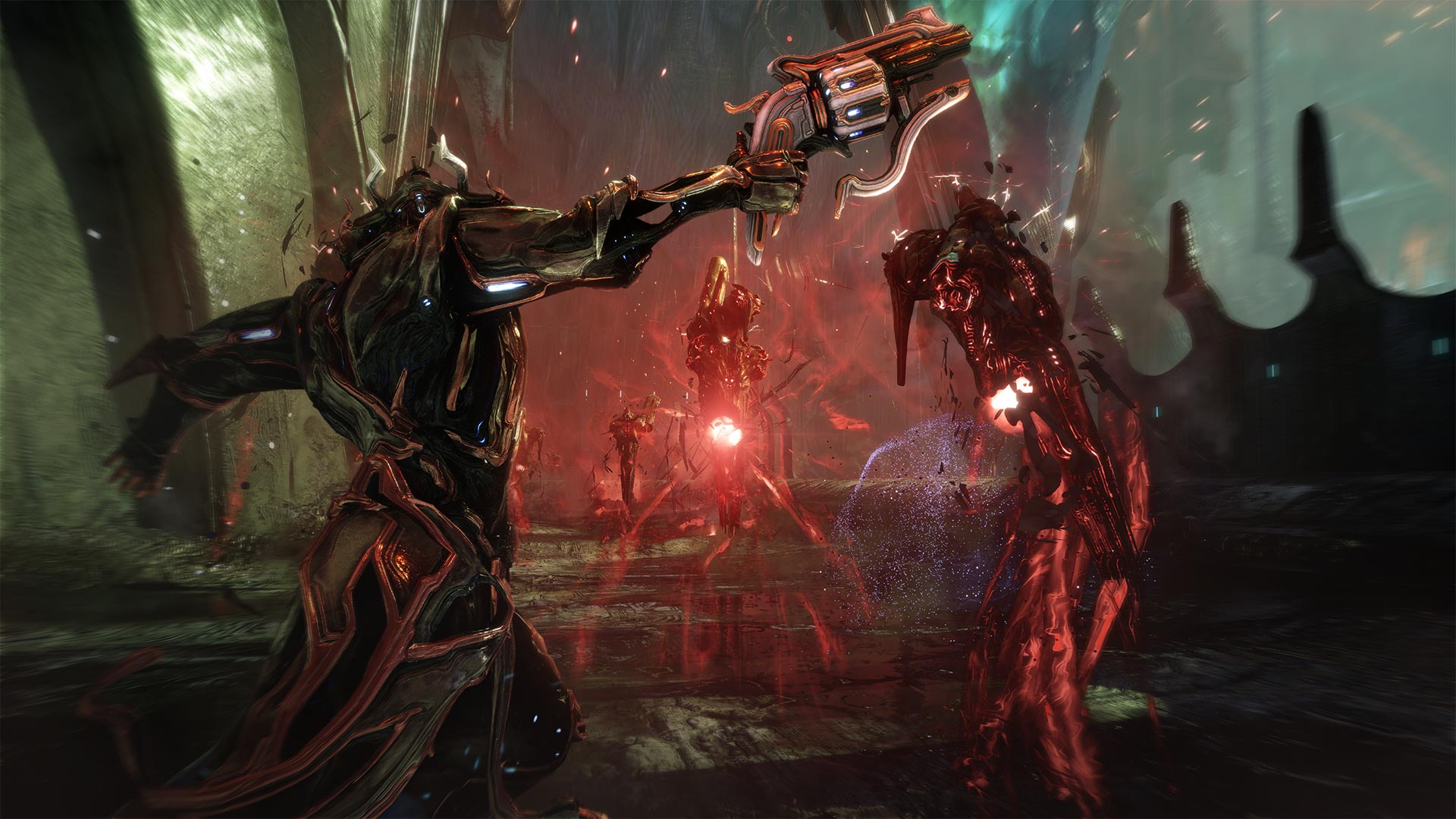
Warframe: Tau. (Image credit: Digital Extremes)
Carter: Yeah, that’s a good point. It’s funny — the games industry is a small industry, really. It feels huge, but it’s small. And it’s because so many people that we have working on our games came from either maybe the Destiny community or came from our community, but they’re in this looter shooter live service. So for us, it was a kind of mourning when we heard that update. But I think it’s also a great reminder to us to keep our audience as our focus, to do things like TennoCon, to continually push what the game is and never let it stagnate. That’s kind of fuel for us as developers, but also for us as people that really value the community aspect.
And we get so much from TennoCon, too. When all these fans come — there’s this amazing part of it, of course, that has hundreds of thousands of people that watch online, which is fantastic. But the live part for us is getting to interact with fans, getting to talk to people about what they’re doing, what they’re interested in, what they’re excited about. That’s what gives you the fuel, for the whole next year. So it’s definitely a mutually beneficial relationship. The fact that we get all the fans going and they help us to continue the game and keep them in our sights at all times.
With Warframe going on for so long, there’s just so much content there. And I know every time you do a TennoCon or these kinds of reveals, people are like, “Oh, there’s so many cool things in there, I want to get into the game,” but maybe it’s a little daunting for them. And I know you introduce features over time to help ease players in, but obviously, that’s a longer, ongoing process. What else do you hope to continue to do going forward to ease in more players?
Carter: Yeah, it is something that we kind of, in a way, ebb and flow with, where it’s one year, we put a really huge push on onboarding, the next year, we put a much bigger push on mid- and endgame. And I think where we’re starting to get now is we have enough systems in place in the [early] game that players, if they attach — and hey, we get it, we have something like 90 million registered players — there are people who are going to hit it, and they’re going to say, “Okay, wow, this is for me,” or “I don’t have the time right now, I’m going to come back later.” Whatever it is, we see the cohorts, we see the groups that make it through, and we have the systems that can bring them along. So we feel confident in that, which is cool. We had a quest last year, the teacher quest, that really helped bring players in.
And I think sometimes, there’s also a really cool aspect to seeing what’s new further along the journey because that’s a huge carrot to be like, “Hey, I want to get into this game to try this new content. Well, I’m going to play through and see.” And we have a really welcoming community, so they like to bring players along for the journey. They get to help them, so right now, I think we’re in this really healthy spot where we have a great combination of stuff that you can do in an endgame as a longer-term player. But there’s still enough for the new players that they’re excited about it and they get the onboarding.
Another important thing with all this growth is DE has done a really good job of keeping up with all the different platforms that have come out. Now, you’re on pretty much everything. I remember you were even one of the earliest ones to go, ‘We want to release for Switch 2, send us a dev kit!’ You also just came to Android recently. What were some of the challenges in getting the game across all these platforms and to this point where you have updates coming across everything? I know that wasn’t always the case.
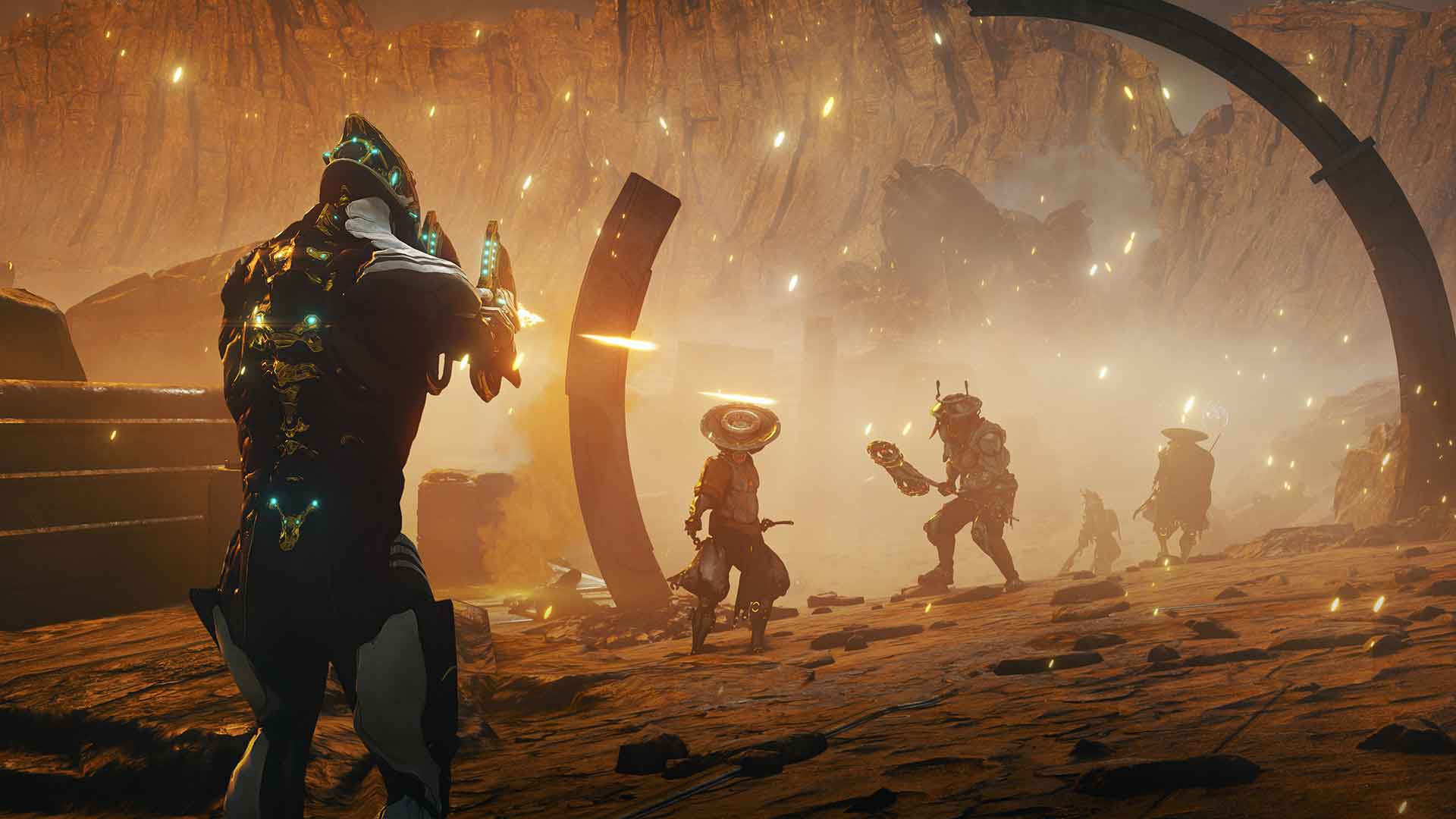
Warframe on mobile. (Image credit: Digital Extremes)
Carter: It’s a big change. We had consoles for a long time, which is great. But then [there was] the whole new aspect of having, first of all, it was iOS, and now it’s Android. Those have their own challenges because, of course, not only are they not in that same ecosystem, but they’re also touch, so there’s a lot of work to do that. And you see a lot of the games that come out that are mobile games, they don’t cross-play, they don’t cross-save with the main [platforms]. We’re like, “No, we can’t do that. This has to be something that every player that plays Warframe gets the same experience.” And so I think that’s why Android took a whole other year on top of it. I think a lot of games when they come out, they come out for one thing or both at the same time, but they’re mobile-first. We had to really take our time building it out, and we really had to figure out with the team the right way to do it so that the performance was amazing.
And I think that’s one of those things that when you’re doing it, it seems hard, but the benefits of doing all these great performance optimizations to work on mobile — that’s going to serve the game for a long time because it means Warframe can run on a lot of different specs, and I think as we hit this hardware crunch that I think we’re all heading into as gamers, in terms of our rigs and in terms of consoles, the ability for a game to run on anything that you might have… If you have the cutting-edge, great — it’s going to look awesome, it’s going go screaming fast on that system. But because we’re at those other specs, you can still grab a computer from a couple years ago if that’s something more affordable to you. Or the older consoles — as long as those console makers want to support them, we’re still on them, and you can play there, too. So I really like the idea that you can play Warframe on anything, and so anybody who wants to get into the game, the barrier to playing it is practically zero. You just have to have one piece of hardware.
A lot of what DE has talked about is having that focus on community. That unifies everything you’ve done with Warframe and what you’re doing with Soulframe. But of course, it’s one thing to say that. A lot of companies will say, “It’s important to listen to the fans, it’s important to focus on community.” But DE obviously puts in that work, and it shows. So what exactly does that entail for you on your end in having that open dialogue with fans? Because it’s easier said than done.
Carter: It really is. Because yeah, I’m sure every game says that they’re going to do that at some level, which obviously I would encourage. But the hard things are, I think, making sure that the community team that works at your company is just as important as all the other teams in your company. It’s not like there’s tiers of developers. And I think Warframe is a really great example of that because the creative director of Warframe is Rebecca Ford, and Rebecca came up through community. That tells you the mentality that we’ve had as a team to make community. [Editor’s note: Ford unfortunately couldn’t attend TennoCon due to a medical procedure, but Carter got the crowd to wish her well through song.]
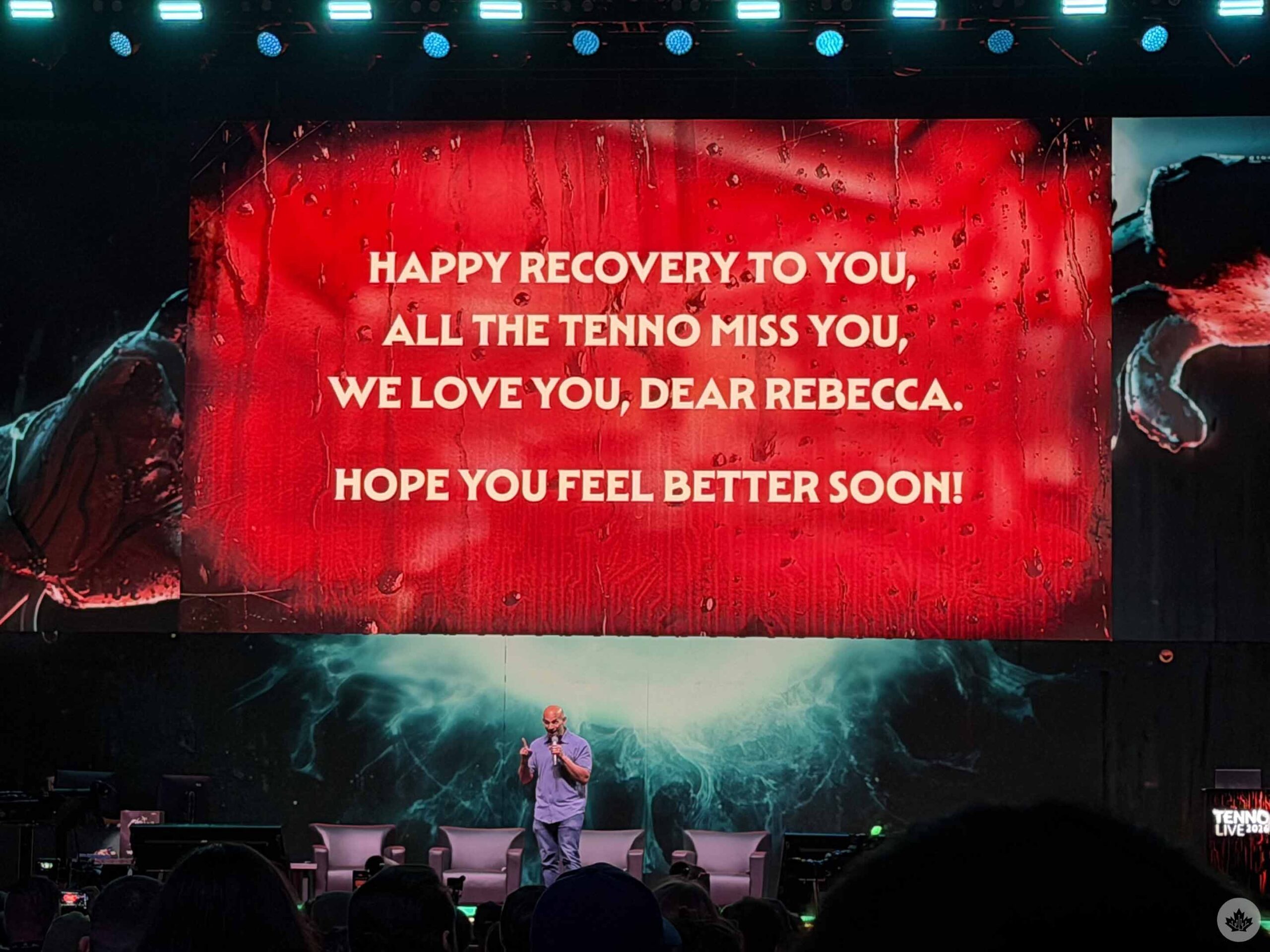
Carter leads the TennoCon 2026 audience through a song to pay tribute to Ford.
And we understand that that is such a valuable aspect of what we do. Now, obviously, not every community person can be Rebecca. She’s a force of nature in her own way, and she’s special. But I still think the fact that she is the creative director talks to how much we care about what the community relationship is. And it’s not just embracing that; it’s about having people on your QA [quality assurance] team that are just community focused. Because it’s one thing when you have all these consoles and all these different SKUs. Every time you make something, you have to have a huge QA team run through it to make sure it’s going to pass the certification process.
But there’s another aspect which is: now it’s out, the development team is developing the new stuff, so who’s QA-ing the stuff that’s actually live with the players? The players are doing it in their own way. But when you have people engaged, you have these community QAs who are with them and who are really experiencing exactly what the players are experiencing, and they’re also corroborating with the players on the feedback that they have, then it’s kind of another level. Because it’s like inside the team we’re having that. Of course, we all play the games, too, but everybody says that it’s really hard to play your own game when you’re playing the new stuff that’s about to come out. And so, you get caught in this loop. So we’ve tried to really work around that by using community-focused people.
I put together this big feature earlier this year about games set in Canada from Canadian developers, and it kind of blew up, which was fun. There’s this sort of wider conversation about Canada playing itself in media. And I know the Soulframe team has been very open about how London being the “Forest City” helped inform a lot of the design of the wilderness in that game. But I’m curious, beyond that — are there any specific sort of nods to Canadiana across either Warframe or Soulframe, either currently or maybe in the works?
Carter: Yeah, it’s really hard not to see it in Soulframe. With Warframe, with the way it is, I think it’s more about our cultural sensibilities and through some of the stories we tell and the types of things that we do. So I think Warframe has that in its DNA.
Soulframe has it in its actual in the world that you’re seeing. You just saw the beaver sequence [in which the wounded animal saves a magical baby], for example, in the Soulframe demo, which is fantastic. I love that you get to play it.
And it’s funny because earlier this year, myself and three other people from the team, we were backpacking up in the Queen Elizabeth Wildlands, just south of Algonquin. And it was funny because I was sending all these pictures back of these beaver trails. I couldn’t believe how much there was there. You kind of have that feeling of nature — and so many parts of what we have in Soulframe that are little slices of Canadiana. And it’s not just Ontario. We have some great developers from the East Coast who show us back to what they grew up with. And so, there’s the cultural DNA of the stories, and then in Soulframe, you actually have the environment as well.
Springboarding off that — I had a colleague who was curious. If there was ever a Canadian, Canada-themed Warframe, what would that look like?
Carter: Oh my god, what would that be? I’m trying to think if we’ve ever even concepted something, “the Captain Canada” version for Warframe. I’d love to see… It would be like this crossover between the two games, and you’d have some of the casting of Soulframe with the stampede of deer, and then the other side would be this, like, politeness, where every time you just say “sorry” and dodge all of the bullets. [laughs]
I know you’ve been in the Canadian gaming industry for a long time. You were at BioWare before and DE for around 20 years now. With all that experience, what would you say makes the Canadian gaming industry special?
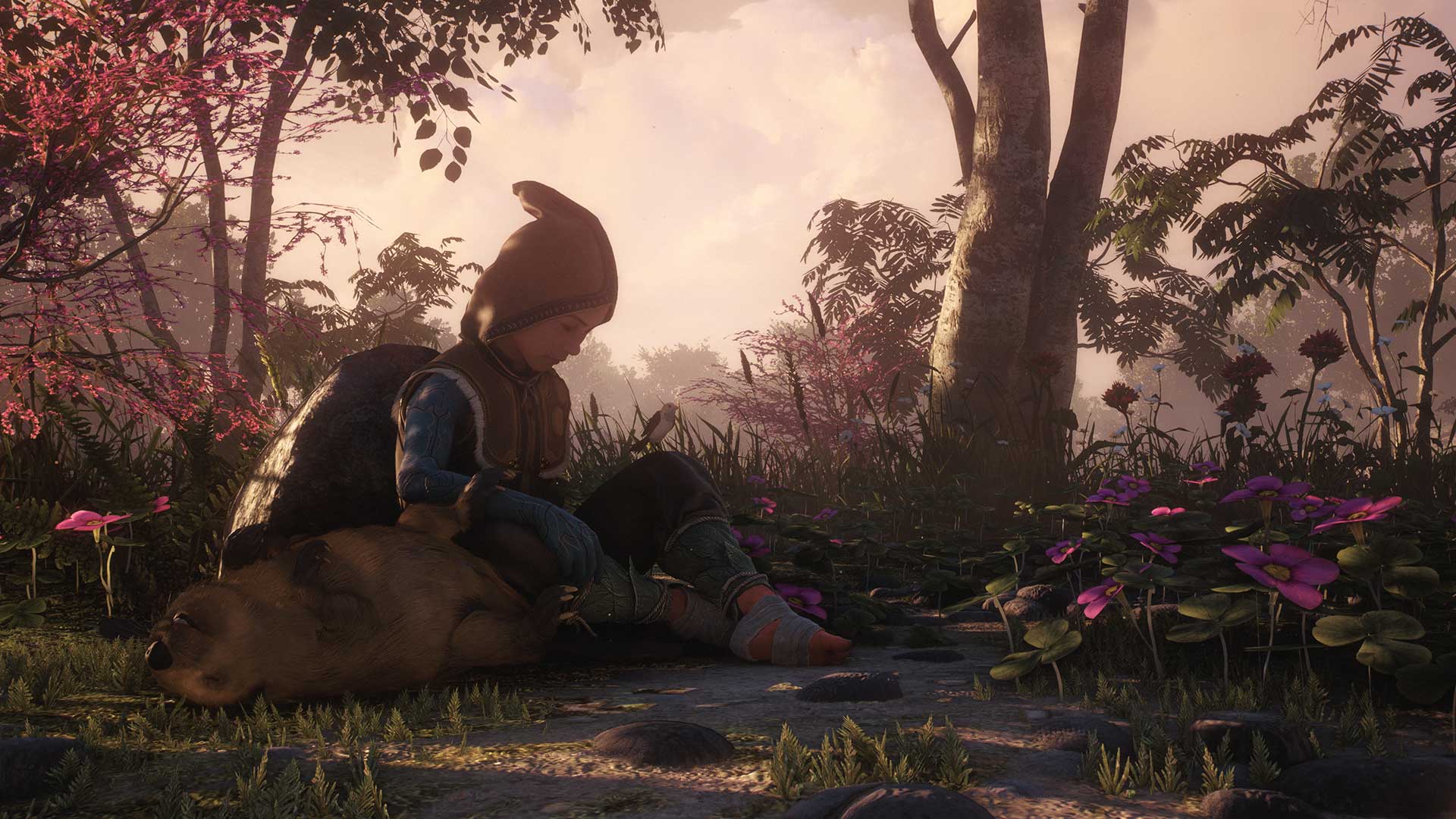
The beaver and child from the Soulframe demo. (Image credit: Digital Extremes)
Carter: It’s interesting because we have a perspective. The large Western gaming audience, of course, is the United States. That’s the biggest segment. That’s a huge segment. But I think with Canadian sensibilities, you get this kind of blend. You get some of that, but it’s not all that. It’s a shift away from that, and then also an influence of European sensibilities. And then for us, of course, I think that happens with a lot of developers — I don’t want to paint the whole industry. But we also have this huge influence — and you can see it in Warframe, of course — from Japan as well. So I think it’s this ability to take all these different cultures and integrate them, and then create without being something that the main audience ever kind of really understands, that big segment. It’s always something a little different than what they’re used to growing up with or what they see in their media. So I do think there’s something really unique about us for sure.
You hold TennoCon in London every year, which is such an awesome way to give back to your hometown and spotlight some of the devs that you have there as well. And obviously, you bring fans from all around the world to London, Ontario. Now that you’ve been doing that for years now — what are some of the sorts of things that people respond to when they come all the way out to London? Are there particular things that surprise them or that they’re really excited to see?
Carter: I think the parts that I’m kind of excited about is that the local community really has now embraced TennoCon. If you go to some of the establishments around town, you’ll see during TennoCon Warframe-themed cocktails. [laughs] They know that there’s fans coming and that’s what they’re interested in. So from the local side, it’s neat because they’re trying to build on that excitement. And then from the players, I think they’re always so interested in the other things that happen around the city because it does feel like, “Oh, I’m in a small town in Ontario, what could there be here?” And they start to see that we have a really vibrant cultural scene. It’s usually the Sunfest weekend in London, or it’s Rock the Park, which is a huge concert that is a multi-day event. So a lot of people end up staying, and they get to see all these little things that happen through our city. So I think it is a really good showcase for us.
Warframe is free-to-play on PS5, PS4, Xbox Series X/S, Xbox One, Nintendo Switch 2, Nintendo Switch, PC, Android and iOS. Soulframe is currently in Preludes closed pre-alpha testing, and you can register for a chance to take part.
Image credit: Digital Extremes
 Features
  Sponsored
  Features
  Features