


When you think of esports, you probably imagine someone sitting in front of a fancy, high-end gaming PC surrounded by the most premium peripherals. And certainly, that is true for many professional competitive gaming tournaments, including Counter-Strike 2, League of Legends and Canadian-made Rainbow Six Siege.
But what you might not realize is there’s a similarly massive scene for mobile esports. Indeed, large-scale venues around the world regularly sell tens of thousands of seats, alongside drawing in millions of additional viewers at home, to watch people take part in high-intensity tournaments right on their smartphones.
This was on full display in Paris in August at the PUBG Mobile World Cup (PMWC). As part of the Esports World Cup, itself a gargantuan seven-week affair hosting dozens of esports competitions, PMWC is one of several annual tournaments for developer PUBG Corp’s mobile battle royale game.

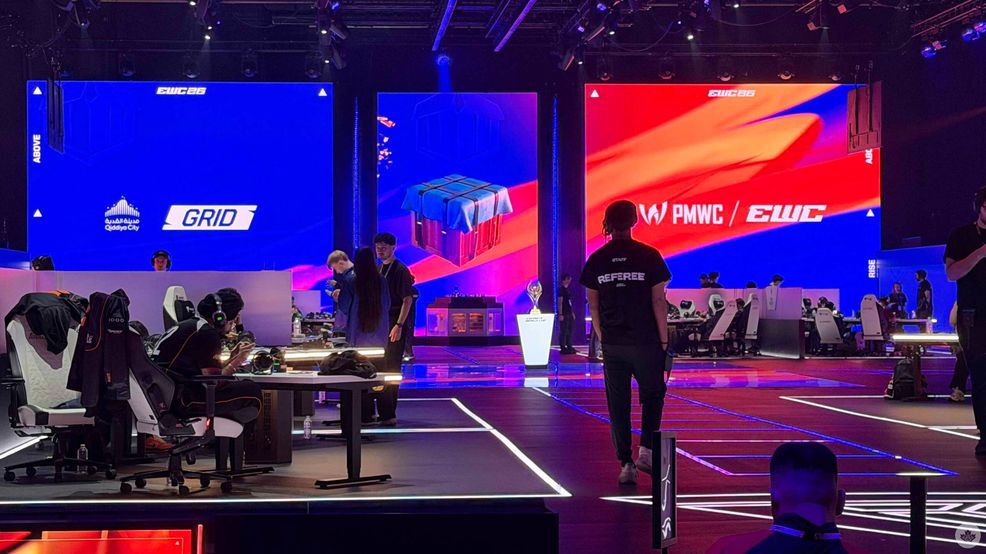
PUBG Mobile competitors prepare for a match.
In fact, PUBG Mobile has been the most-watched battle royale esports title — console or mobile — for five consecutive years, reaching a peak of 3.8 million concurrent viewers. Over the past year alone, pro gamers from more than 200 countries and regions have been competing in over 100 tournaments across the world. In total, over $10 million in combined prize pools are up for grabs in the 2026 PUBG Mobile esports season, including $3 million at PMWC in Paris, among the highest in mobile esports.
These figures are notable because there’s a lack of mainstream understanding of gaming in general, and that’s undoubtedly only more pronounced in a subset of the industry like esports. But in many ways, esports are indeed like their namesake, from the major prize pools and significant viewership to global reach and big-name sponsors.
It’s this colossal scale that Sivan Chen, publishing director of PUBG Mobile, says is so often misunderstood in the public eye.
“Some still have the idea that esports is somehow less impressive or less ‘real’ than traditional sports. Of course, for the average person, they don’t see the behind-the-scenes of the qualifiers, the finals, the team organizations, support staff, and all the rigorous training players and backup players go through. There’s an entire infrastructure behind the scenes that mirrors, and in some ways exceeds, what you’d find in traditional sports,” he says.
He also notes that people tend to believe the scene is “small and under-invested,” which also isn’t the case. “That’s just not true anymore, at least not for PUBG Mobile. Our two flagship events, the PUBG Mobile World Cup (PMWC) and PUBG Mobile Global Championship (PMGC), each individually carry a $3 million prize annually, and that’s on top of strong prize pools running through local and regional tournaments. What we’ve built is a full, extensive ecosystem, from grassroots all the way up to a global championship.”
“I don’t blame people because it’s an industry that if you’re not super involved in it, if you don’t watch streamers, if you don’t watch esports or understand it to its fullest extent, then maybe you wouldn’t understand the scale,” notes English esports host Barney Banks, who has worked on tournaments for the likes of PUBG Mobile, Call of Duty and Fortnite.
“[But] we have players who are on salaries and we have players who have these incredible deals with companies outside of esports as well, endemic and non-endemic within esports. So I think that’s something that a lot of people misconstrue — these are ‘athletes’ that compete at esports events.”
Look no further than this year’s PMWC winners, the Turkish team S2G. In the final of the 16 matches, the quartet actually died pretty early on, but they’d played strongly enough that they’d secured a leading point placement that ultimately proved insurmountable for their opponents.
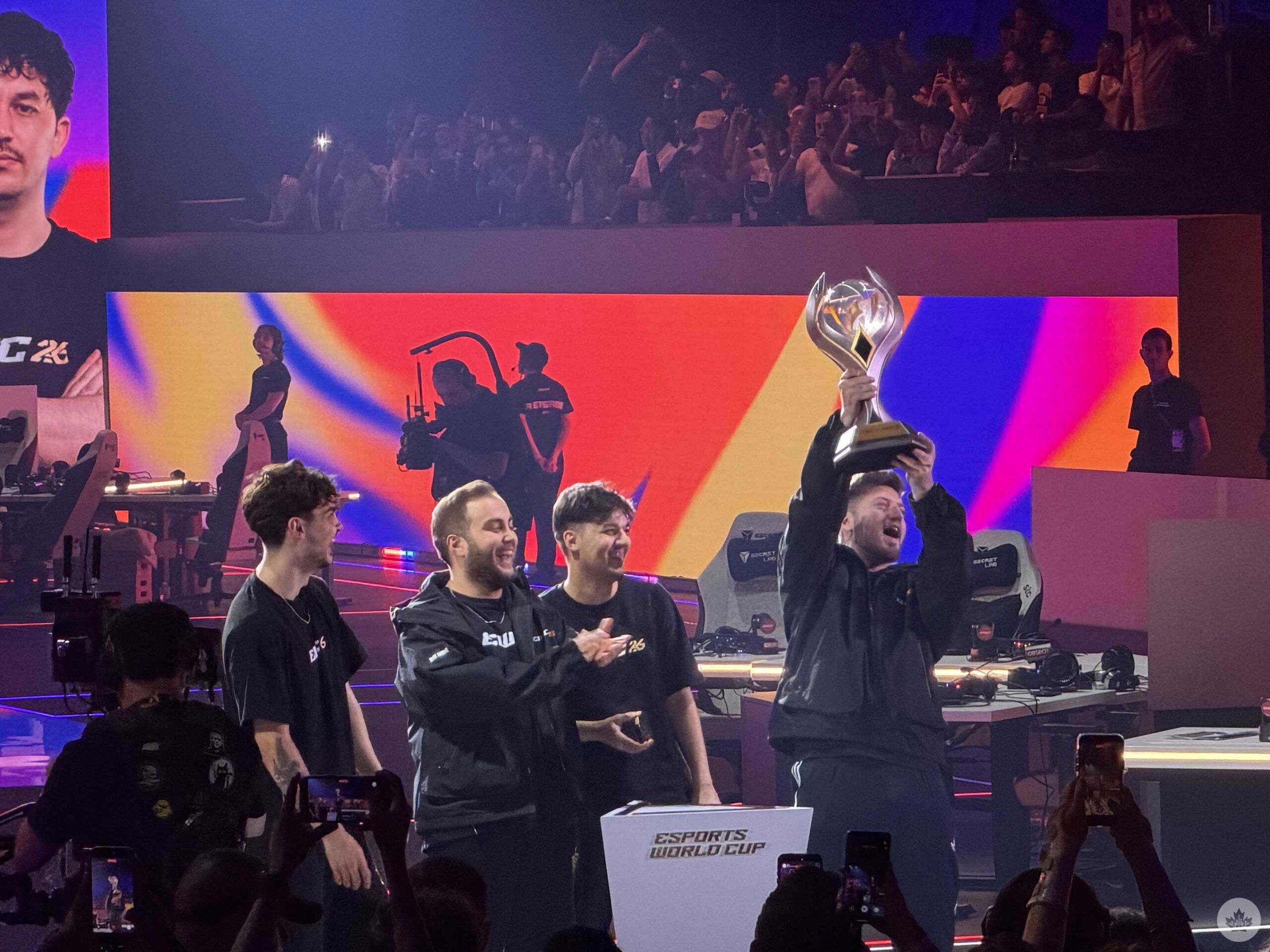
S2G wins.
“Basically, this is our whole life,” says S2G’s Faruk Hamsici, who goes by the player name HamsiG. “We wake up and we start gaming. We discuss games. Sometimes we get in arguments. So it’s all about playing the game and practicing together.”
“Esports is a career,” adds teammate Erman Topal, also known as Kamikaze. “It’s just like any other work. I know it’s not known that much among other people, maybe, but for everyone that gets into it, they know it’s a real job that you have to get up and work for it for your dreams and work hard for it.”
What helps with the popularity of PUBG Mobile, especially, is that it’s a particularly dynamic experience. Because it’s a battle royale game that supports up to 100 players (64 in official tournaments), matches can play out in radically different ways.
“Even if a circle ends in the same area, the way you get there is different,” explains French-British commentator Maximillian “Maxman” Barraud. “So the way it unfolds in the late game is different. For example, I really like [Counter-Strike] esports, like CS2. I think it’s fun, but it’s the same map every time, and it doesn’t have any iterations, which you do have that iteration on battle royale.”
He adds that the chaos of battle royale, and the chatter it can generate online, only deepens the appeal.
“You get so much wacky stuff happening in-game. It can be for any reason, like car drive-bys crashing into each other, weird shots… anything can happen in a game. And it’s the content that comes out of it. Daily memes, really, for this tournament — memes every single day!”
Certainly, there is a level of passion here that can rival traditional sports. Throughout the venue, scores of fans could be seen representing their favourite teams with colourful attire and props as they screamed loudly for them in the stands. Indeed, the passion was so intense that Maxman and his fellow commentators were often drowned out by the sounds of cheers and one fandom’s consistent drum banging. And when S2G was crowned the winner and took to the nearby Esports World Cup podium to pose with their trophy, a flurry of fans rushed to get as close as possible to observe.
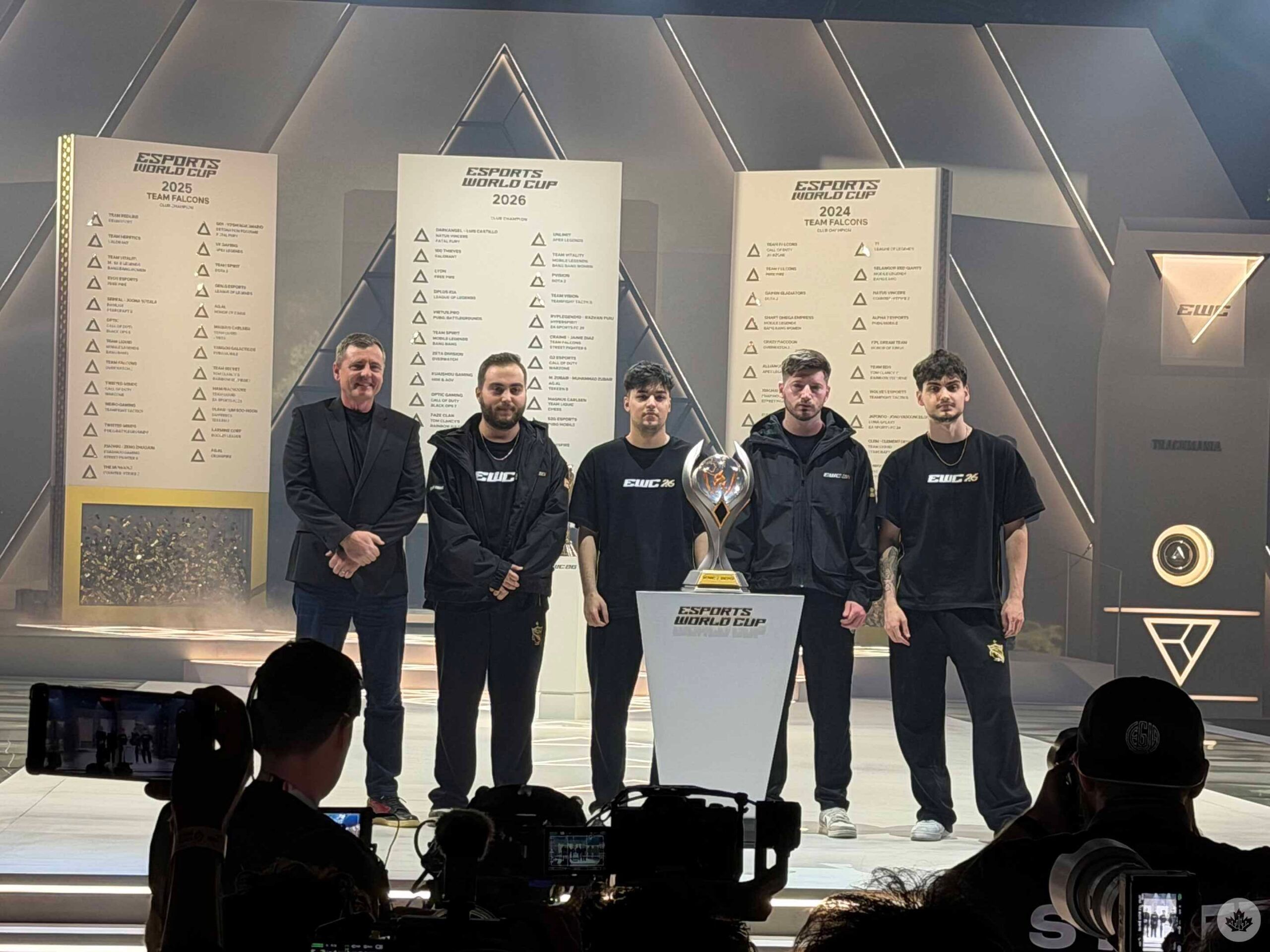
Everyone rushed to see S2G on the EWC stage.
For Banks, who has travelled to many countries for esports events, he says this fervour is both common and indicative of the larger global interest in competitive gaming.
“The thing that I’ve noticed the most has been the different regions and how the balancing act has slowly almost levelled. At the beginning of PUBG Mobile esports, we had certain regions dominating, and then that pivoted into other regions,” he says. “No one knows which teams from which regions will pop off. There’s a really cool balance there right now.”
“Preparing and running mobile esports tournaments takes a significant amount of preparation, with even more potential players feeding into the pro scene due to the lower barrier to entry,” adds Chen. “Managing this and ensuring that hopeful amateur and grassroots players have the chance to break into the scene has been a key focus for us, which is why we’ve consistently developed our approach to account for the road to pro play that players walk.”
He points to an “accessible and dedicated platform” to support grassroots PUBG tournament initiatives around the world. This includes the third-party Tournament Program, which launched late last year, that makes it easier for grassroots organizers to complete licence applications, multi-language support, access PUBG Mobile assets, and even potentially receive promotion on PUBG Mobile social channels. This program also created a more direct line for players to engage in Online Qualifiers, local competitions and direct qualification for PUBG Mobile Global Open.
“This has been a long journey that PUBG Mobile Esports has been embarking on for years, and we’re still introducing new ways for players around the world to get involved with the competitive experience,” he says.
Maxman says he hopes these kinds of efforts to welcome in new players will help dispel the common misconception that esports is “only for nerds” and anyone else will have trouble following along.
“For some more complicated games, I feel that does make sense. If you watch StarCraft, a new person might be like, ‘What the hell is going on?’ It’s a bit complicated. But if you watch simpler games, it’s a very good entry point into esports,” he says. “It’s super easy to get into if you watch the right title […] It’s a lot easier to get into than people might expect.”
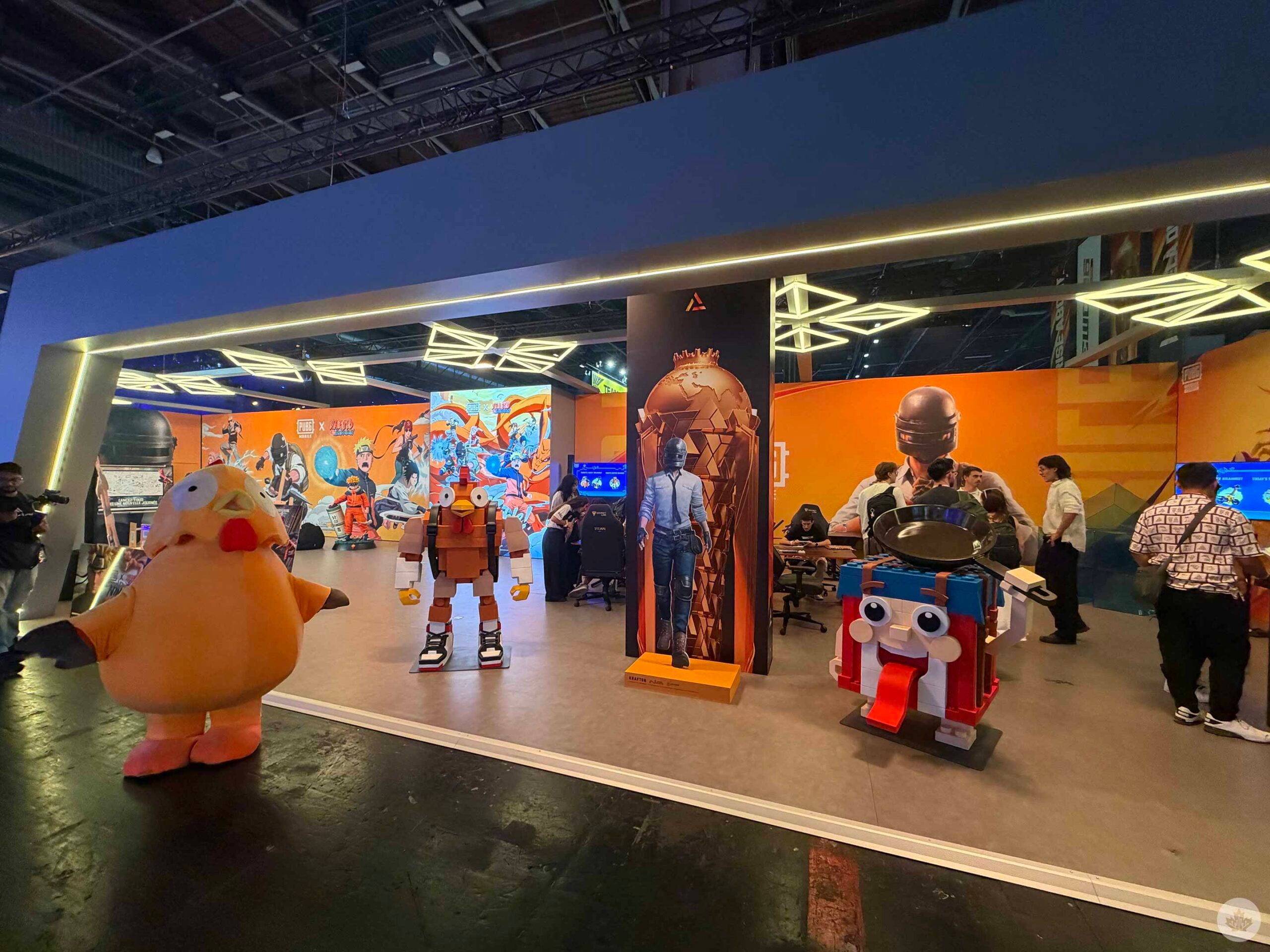
PUBG Mobile booth at EWC 2026.
Banks, meanwhile, says another reason he’s grateful for getting to work on games professionally is that it’s helped better prepare him for when his son gets older.
“It’s taken a really interesting perspective on seeing my son grow up and seeing how he interacts and sees me play video games and enjoys watching over my shoulder and asks me about things. He’s four now, so he’s in a really inquisitive time of his life,” he says.
“I have a better understanding of esports as a whole, so I know which games are relevant for him to play as he grows up, and which games that I could see him getting more involved in. And I think when you have more of an understanding of something, whether it’s a sport or an esport or a certain sector of the world, you can introduce [kids] to the right things at the right times. And so I really look forward to a time where I can play video games with my son.”
Evidently, there’s a lot that can be learned from the world of esports, whether you’re an avid gamer or simply a parent. And with PUBG Mobile, in particular, the game’s status as a free-to-play game for smartphones and tablets makes it incredibly accessible.
“A big part of it is simply that mobile phones are already in everyone’s pocket across the region. We’re not asking players to buy expensive new hardware; it’s a completely free app, meaning we’re simply offering a quick download to access everything PUBG Mobile has to offer. On top of that, we have an upcoming update that will further address accessibility on devices, so keep an eye out for that,” says Chen.
“Beyond that, accessibility is really the foundation of everything we do on the esports side. That’s everything from making sure the game runs well and is easy to pick up on any smartphone, to building in-game registration systems that make signing up for tournaments simpler and quicker. We’ve seen players of all abilities pick up their phone and engage with the action-packed ecosystem we’ve crafted over time, which speaks to the work we’ve done behind the scenes.
 Features
  Features
  Features
  Features