


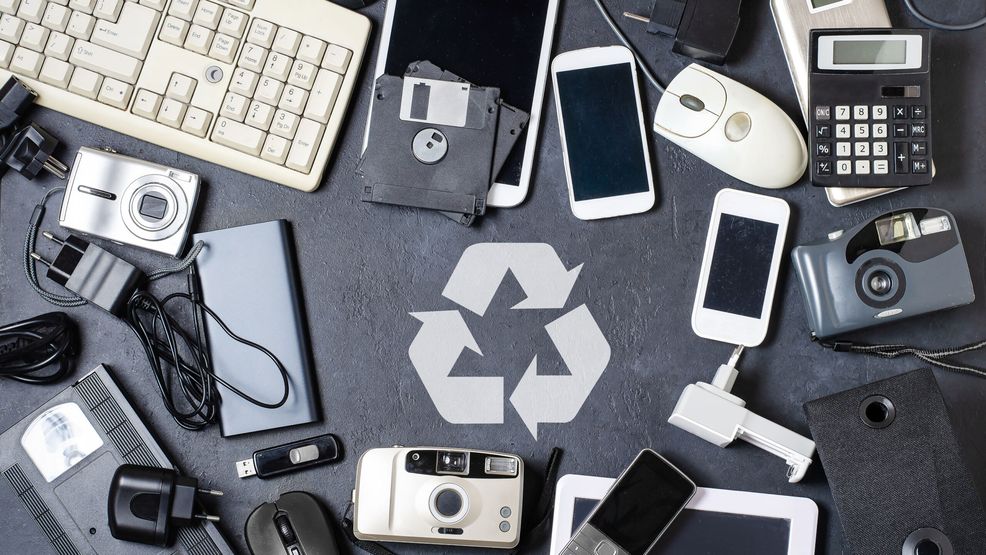
You’re probably underestimating just how much e-waste is put out by companies using AI.
That’s according to new analysis from environmental non-profit Basel Action Network (BAN). In the first of a four-part white paper called The Coming AI Waste Wave, BAN found that by 2030, an estimated 8.6 to 13.1 million tons of AI-driven electronic equipment could be retired each year, between 40 and 60 times the “most widely cited academic projection.”
For context, BAN estimates that by 2050, AI could yield enough e-waste to fill 23 million shipping containers — enough to circle the world six times if placed end to end. Meanwhile, the Global e-Waste Monitor estimates that the world manages only a fifth of its e-waste responsibly (i.e. recycling instead of other forms of removal like burning), so adding exponentially more to that total doesn’t exactly bode well.
Of course, e-waste is only one consequence of AI. As BAN notes in the report, there’s a projected cost of US$7 billion (about C$9.8 billion) to build AI infrastructure like data centres between 2025 and 2030. Put another way, this is the estimated cost of what it would take to end world hunger for the next 75 years.
“We cannot ethically manage the e-waste we produce currently,” said Jim Puckett, BAN founder and chief of strategic direction, in the report. “Technology companies must take steps now to develop a budget, new infrastructure and a plan to mitigate the AI toxic waste wave. The time to prevent toxic waste is before it is created, not 20 years from now, after hundreds of millions of tonnes of equipment are pushed out of the thousands of data centers across the globe to vulnerable communities.”
Image credit: Shutterstock
Source: Basel Action Network
 Gaming
  News
News  News
News  News
News 