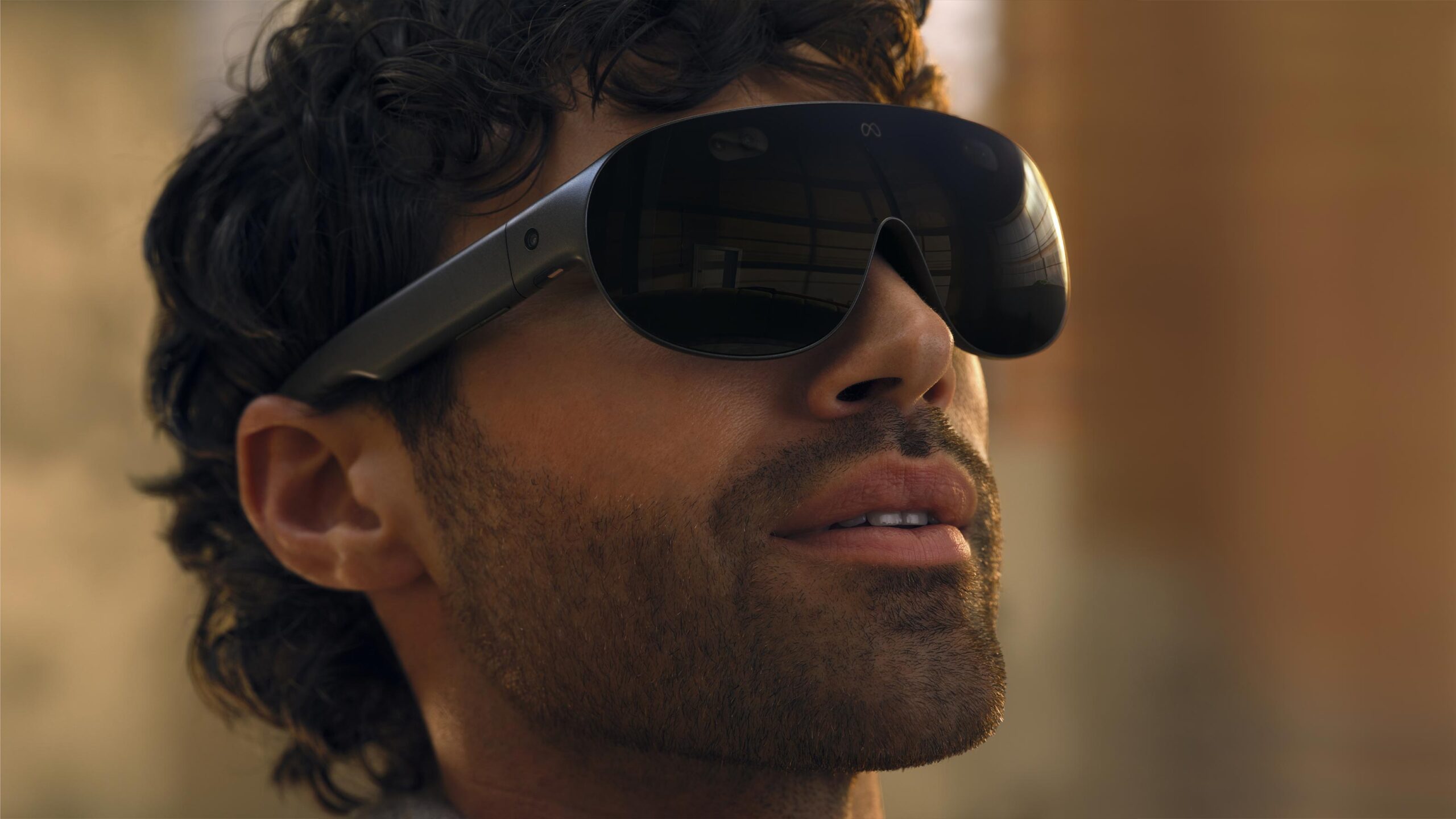
It was a big week for Meta.
During its annual Meta Connect conference, the company unveiled a suite of new products, including the VR Glasses, the camera-less Ray-Ban Meta Audio, a Canadian launch of the Meta Ray-Ban Display and more.
But naturally, Meta’s first-ever VR glasses garnered a particular amount of attention, and they were certainly my favourite thing that I saw at Connect. It’s pretty impressive tech, honestly, offering the full VR experience across entertainment and personal computing in a cozy 100g package and small tethered puck.
After my hands-on demo, I also got to attend a media roundtable with Angela Chang, Meta’s VP of product management. In a wide-ranging conversation, we learned a lot more about the making of the glasses and Meta’s long-term ambitions with them. Here are some main takeaways.
It’s built on the Quest architecture

Impressively, the small, lightweight VR Glasses use “the exact same OS underneath” as the much bulkier Quest, according to Chang. Not only does this mean that developers will be able to more smoothly develop products across Meta’s entire line-up of VR devices, but it means that the thousands of titles already in the Quest library will be available on the Meta Glasses. These join the dozens of experiences that are being crafted specifically for the VR Glasses, including around 75 games that can be played simply with hand gestures.
Of course, this also means that anyone looking to upgrade could carry over their catalogue as well. For someone like me who’s spent hours across both the Quest 2 and 3 over the years, that should help make for a more seamless transition.
No compromises, technical challenges be damned
Of course, it’s one thing to have these experiences be compatible, but it’s another to have them look and run even better thanks to beefier specs, including 2.4K micro-OLED displays and Qualcomm’s Snapdragon Reality Elite chipset.
But Chang says one of the biggest challenges actually pertains to point of view.
“Trying to find this perfect sweet spot between the field of view [being] wide enough, big enough to be compatible with the traditional Quest content, immersive content, not feeling like you have to basically cut off all the years of content that we have invested in, while small enough to fit in this glasses form factor,” she explains. “We tested many different fields of view, sizes, resolutions, shapes and whatnot, and pushed our team very hard to try to innovate around the display, the display and optical stack to really get to the sweet spot.”
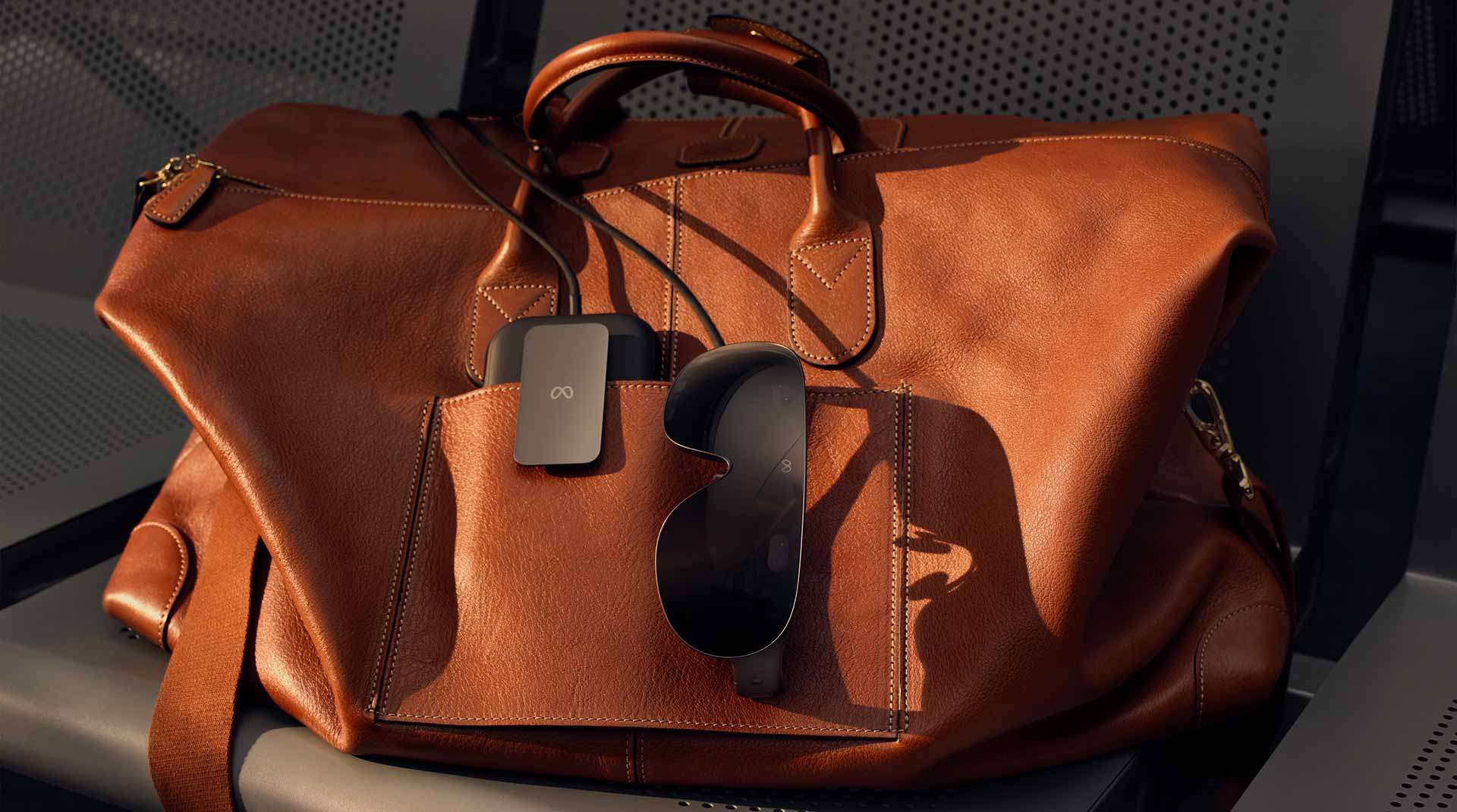
Image credit: Meta
Another big challenge, she says, was figuring out how, exactly, to connect the puck, given that it handles battery, storage and compute.
“There’s concerns around whether that’s going to get in your way, and so we have to really think through the user experience, both in seated experiences, but also when you’re walking around on mobile,” she says.
“How do you get the wire to be malleable enough, soft enough, even though it’s a custom optical cable with lots of data bandwidth going up and down, to just be like smooth enough so that it doesn’t tangle? But at the same time, gracefully be able to drape behind your back, so you can clip the puck onto your pocket and have the fan vents face up, so we’re not causing it to heat up in your pocket or in your bag?”
(It should be noted that my demo was at a stationary chair and desk, so outside of standing briefly to try out the new hand-tracking Beat Saber Flux, I didn’t get a feel for how intrusive the optical tether could be.)
It’s been specifically designed with airplane use in mind
As someone who travels a lot for work, I’m always looking for a variety of things to do on flights, especially when I get restless. For that reason, I was really intrigued to see Meta specifically citing being on a plane as a major use case for the VR Glasses.
Right off the bat, the puck will help with portable use since it serves as the power source, no outlet required. And, of course, its tiny form factor compared to something like the Apple Vision Pro is a huge benefit. But it’s the other features that are particularly promising.
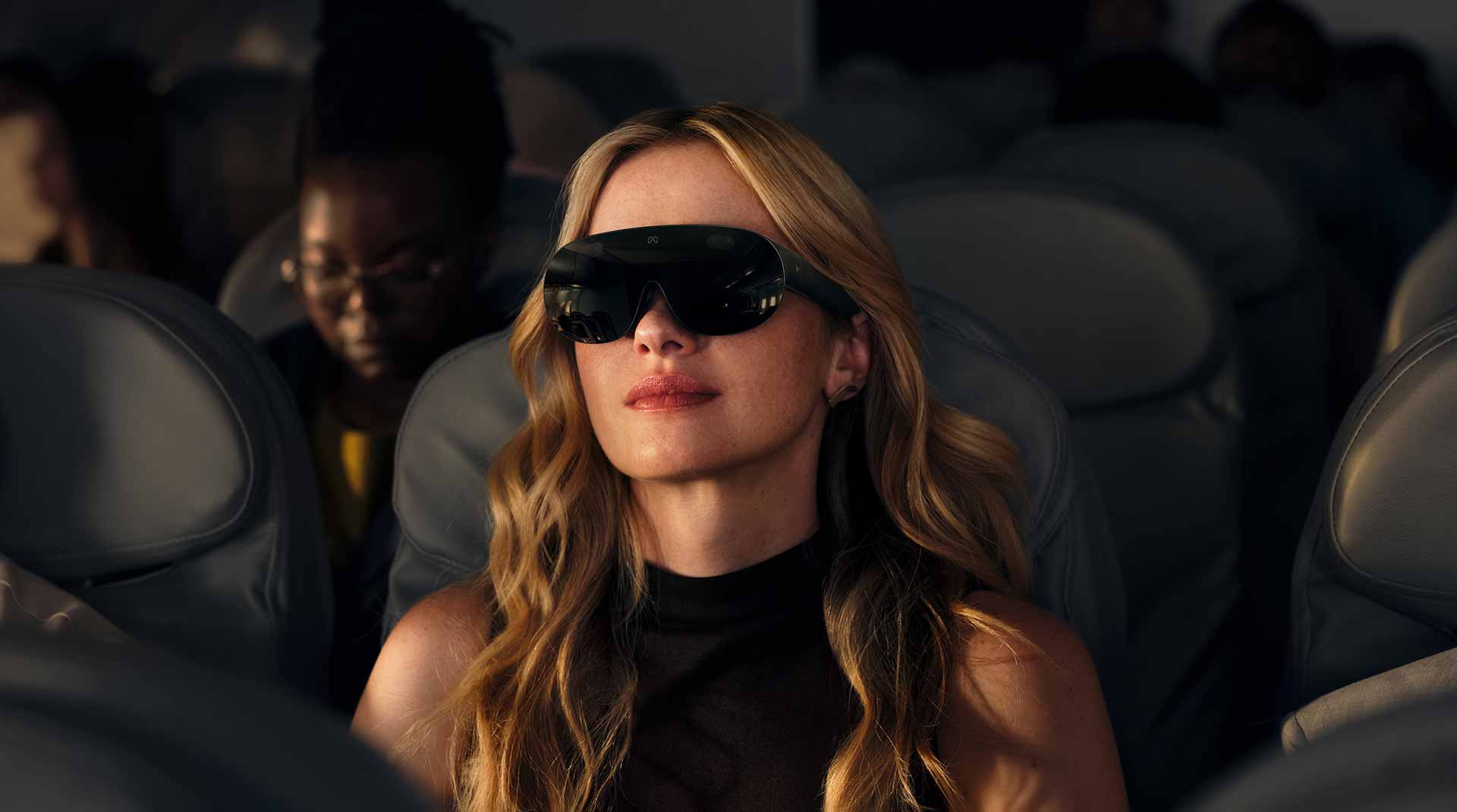
Image credit: Meta
For one, the virtual private movie theatre functionality is a nice change of pace from the often small (and sometimes completely absent) in-flight entertainment systems. And for another, the productivity features, which include a fully interactive virtual keyboard that lays out on a flat surface in front of you, provide an alternative to using your laptop on the painfully small sliding table on the back of the seat. (Or, in another example I posed to Chang, those classroom-type chairs with a mini table attached.)
As Chang explains, the size of the surface doesn’t really matter, but rather the positioning of your hand for calibration. She adds that the surface’s material and contrast are also important, with higher contrasts yielding better results. “But in general, we’ve trained even for white tables so that it works well,” she says. However, she did acknowledge that hand-tracking becomes difficult in low-light situations, so you might run into some issues if it gets dark on the plane.
Lots of opportunities for refinements
Obviously, any first-generation product like this leaves a lot of room for iteration. But something that’s particularly unique about the VR Glasses is that they’re fuelled by the puck, not the frames themselves, which suggests the possibility of swapping it out with different models of varying power levels. In theory, that could be a way to help offset the fact that this debut model costs US$1,299 (about C$1,800), as it’s easy to imagine giving customers more flexibility down the line.
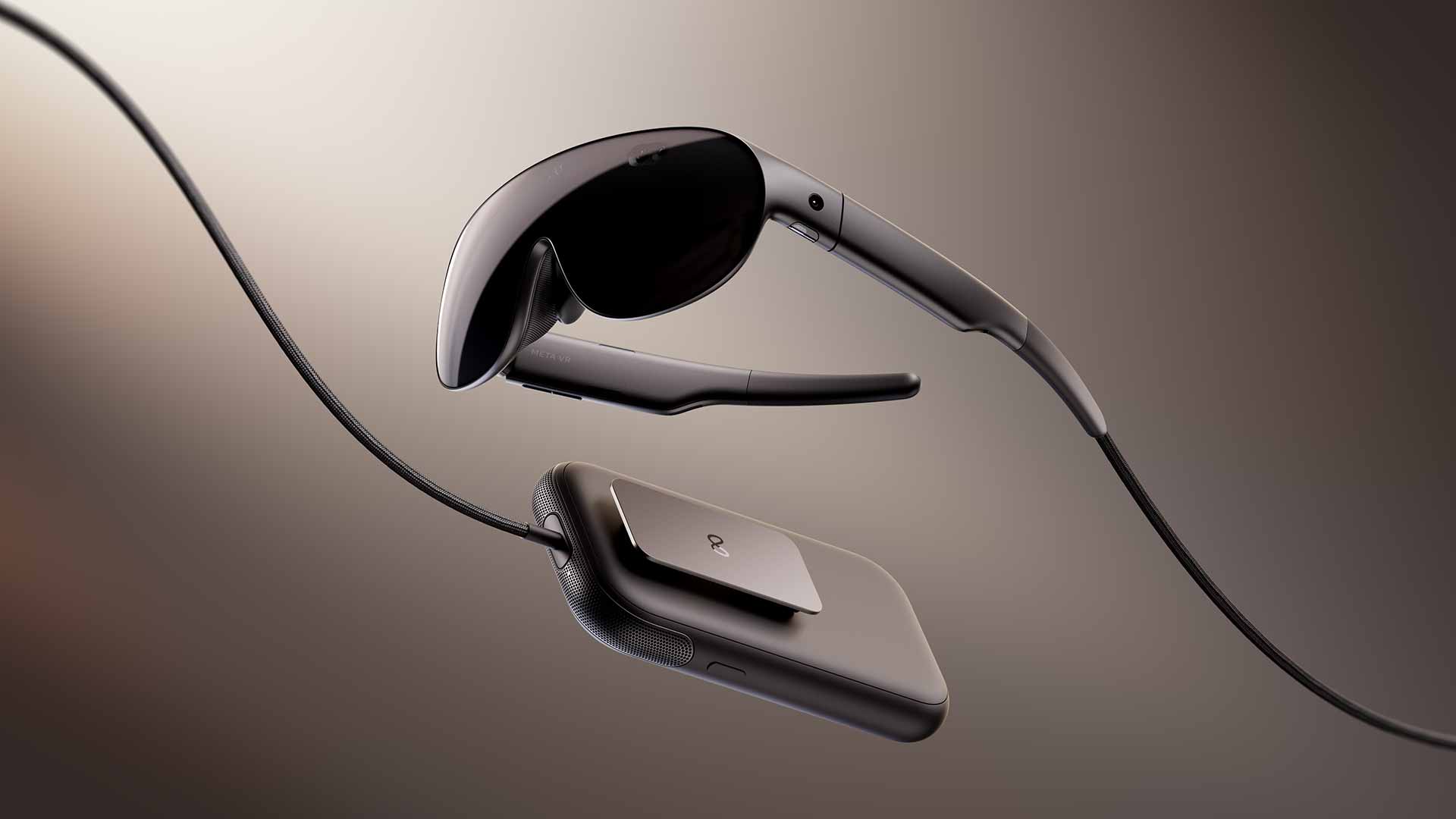
Image credit: Meta
When another journalist asked about this during the roundtable, Chang smiled knowingly.
“I like where you’re thinking. It’s certainly something that’s been on our mind. I think for this first generation, given that it was many leaps of innovation all in one go, we had to use a pretty proprietary interconnect on both the glasses and the puck side,” she says. “So it’s not easily interchangeable with other types of standard interconnects. So in future generations, that’s certainly our aspiration, to be able to have more standard interconnects between the puck and the glasses, so you can actually mix and match.”
Meta VR, including Quest, is here to stay
Given that Meta was all about the metaverse and Quest headsets not that long ago, it would be easy to assume that the company is largely moving away from VR. While these new glasses obviously feature that technology prominently, the company is also merging it with the smart glasses format that’s become such a focus of its business.
That begs the question: what does this all mean for Meta VR in general? According to Chang, it signals the future, which is paying off longer-term work.
“We’re pretty proud of the fact that, earlier this year, we basically transitioned to a sustainable business model for the VR business. Because we want to be in this business for a very long time,” she said.
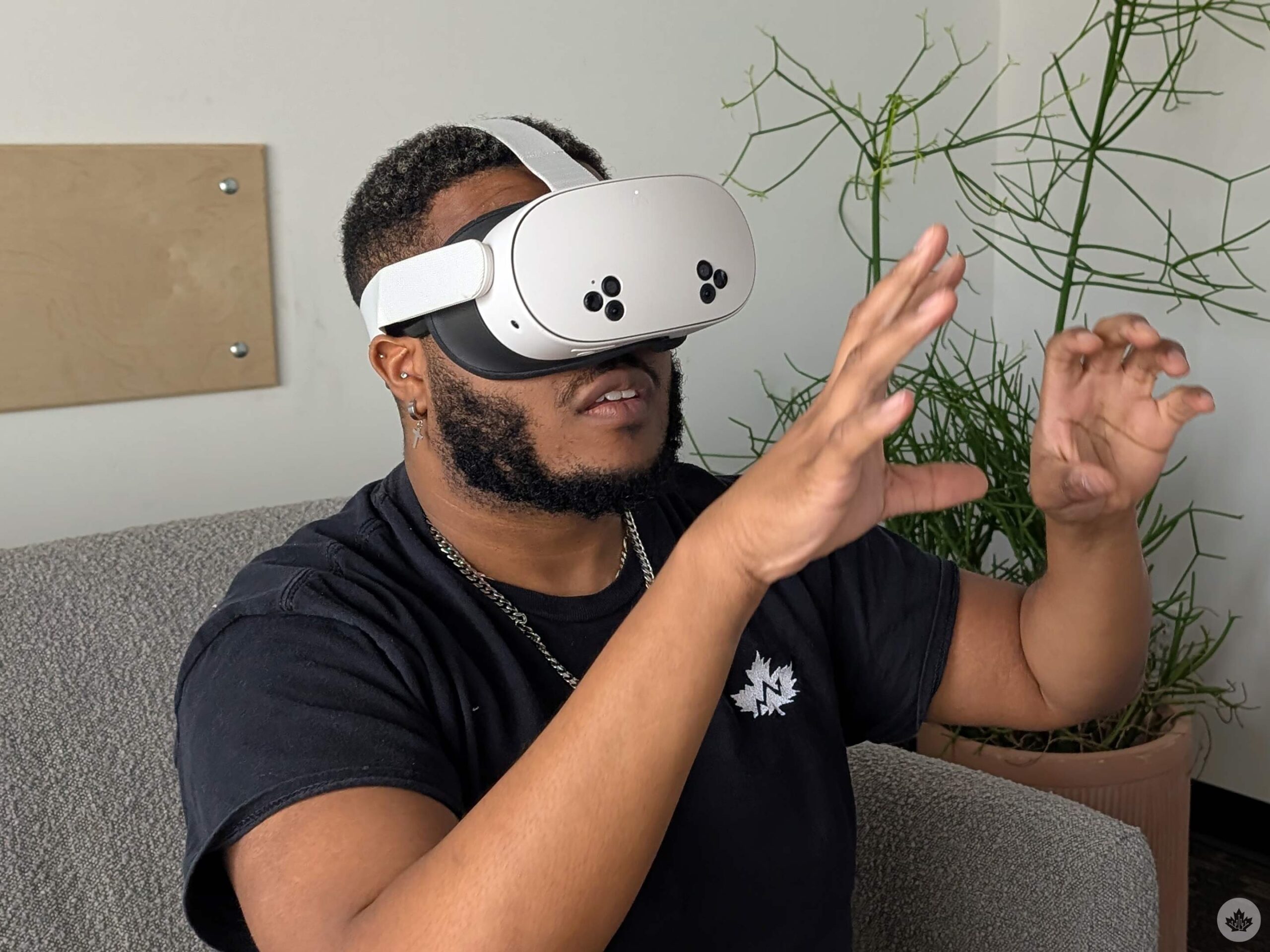
She also notes that the Meta VR Glasses aren’t meant to replace Quest because they serve different purposes.
“The Meta VR Glasses is our vision for many years, working towards that general purpose computing platform where you can do many things on it. You can do many things really well on it [now], but it’s not particularly optimized for any singular use case,” she says.
“We just want to make sure if you like to do work on it, you can do that. If you like to watch movies on it, you can do that. If you like to take it away with you anywhere you want to go, you can do that. Whereas the Quest is truly more of a bespoke product for specific audiences, gamers, and for specific use cases, [like] gaming, fitness, dynamic motion type of immersive experiences. So that’s how we think about it.”
The Meta VR Glasses are set to launch sometime in spring 2027. Specific Canadian pricing and availability have yet to be confirmed.
Image credit: Meta
MobileSyrup may earn a commission from purchases made via our links, which helps fund the journalism we provide free on our website. These links do not influence our editorial content. Support us here.