


I’ve thought a lot about Ambrosia Sky ever since I first played it at Summer Game Fest 2025.
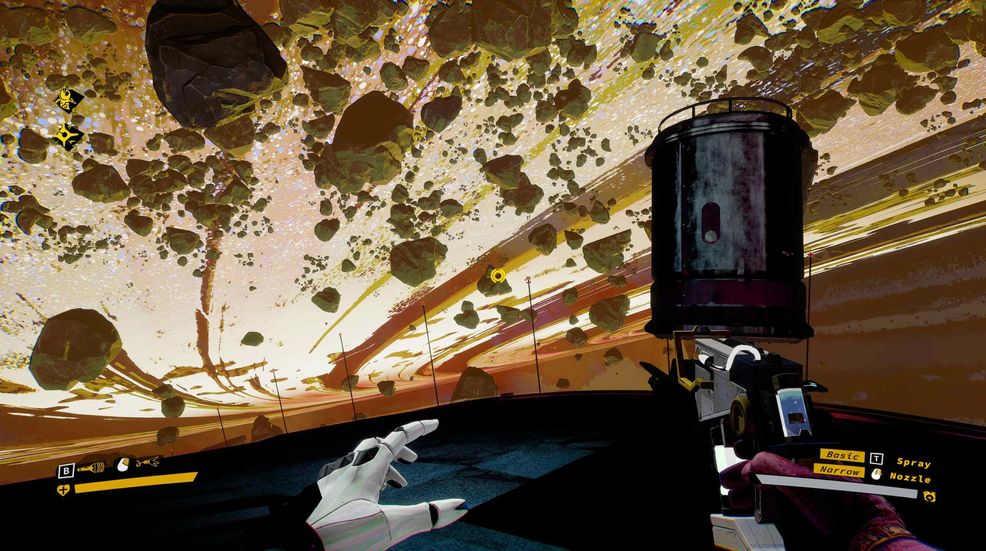
While so many sci-fi games are focused on fighting aliens or machines (or both), Toronto-based Soft Rains, with the help of Vancouver-based co-dev partner Blackbird Interactive, has been pursuing something far more intriguing with its debut title. Mixing the first-person water spraying mechanics of PowerWash Simulator and the rich atmosphere of Metroid, Ambrosia Sky follows a woman named Dalia who must return to her asteroid colony after leaving 15 years prior to investigate a deadly fungus that’s destroyed it and salvage what she can from the dead. Despite that heavy subject matter, though, Soft Rains has been clear in its desire to explore the positive aspects of mortality by having Dalia perform rituals that honour the lives of the fallen colonists.
We got a taste of all of this last year in Act One of the game, but now, the second and final episode has released to give us a complete picture of the experience that Soft Rains has been going for. Having replayed Act One before immediately jumping into and completing Act Two, I’ve come away remarkably impressed with what the nascent Canadian studio has built. From stem to stern, Ambrosia Sky is a beautifully humanist sci-fi tale with a thoughtful “clean ’em up” gameplay loop.
First and foremost, Act Two really capitalizes on the seeds that were planted in Act One, which understandably dedicated a lot of time to establishing the larger colony and the world they inhabit. This was crucial context to have, but it also meant that the payoff to the central narrative thread, Dalia’s search for her ex-girlfriend Maeve, was being saved for Act Two. As a result, this second act feels much more intimate and emotionally complex, with Dalia having to reckon with how Maeve has changed amid the passage of time and her lingering feelings of abandonment. The women also pursue radically different methods of tackling the fungal outbreak, which only enriches their already gripping conflict.
But the real highlight for me was, surprisingly, Act Two’s greater focus on Hale, Dalia’s overbearing step-mother who ultimately drove her to leave the colony in the first place. As someone with an estranged father, I saw myself in Dalia’s struggle to process the complicated swell of emotions — all of the hurt and resentment and reluctance to admit any positive qualities — that one feels towards a parental figure with whom you hold a deeply strained relationship.
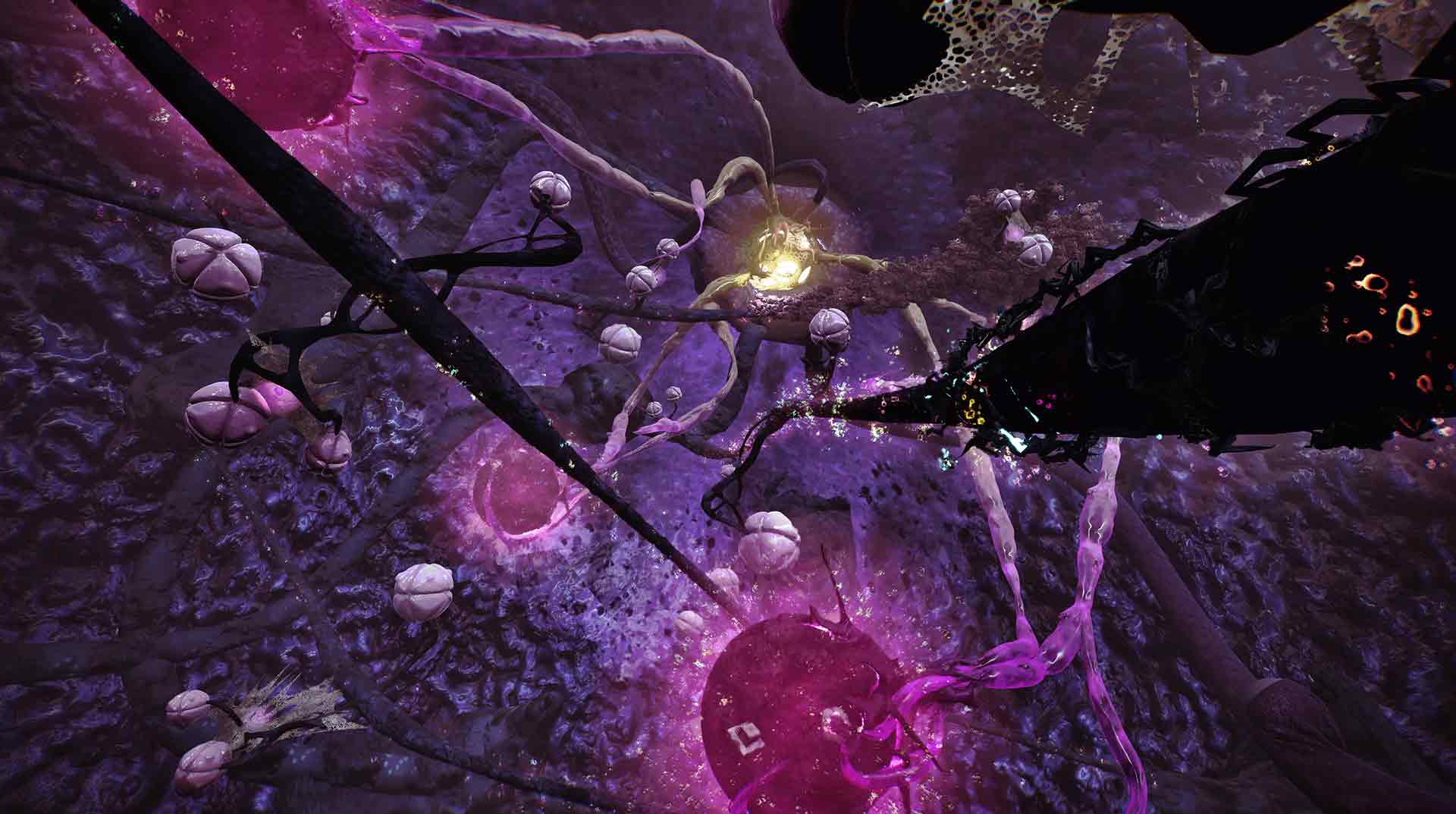
And by the time Dalia has to visit Hale’s once-opulent estate, I found myself on the edge of my seat, sharing her trepidation over what she’d discover there. It’s a testament to art director Adam Volker’s hauntingly beautiful fungal aesthetic, co-founder and narrative director Kait Tremblay’s measured, introspective prose, Dalia actress Bailey Wolfe’s believably raw performance and composer Greg Harrison’s melancholic score that this surrogate mother-daughter dynamic — which is primarily only depicted through monologues and environmental storytelling — ended up resonating with me as much as it did.
In fact, the game design in general feels like it got an upgrade in Act Two. With levels being even more expansive this time around, Dalia’s ever-satisfying grappling hook-esque tether is incorporated into more intricate puzzles that play with the layered verticality of a given area. This is most prominent in a handful of outer space missions that have you flying around an entire station, clearing fungus, activating switches and navigating different fields of gravity as you go. While the camera sometimes has trouble keeping up during these dizzying sequences, they’re still a welcome change of pace from the predominantly interior environments.
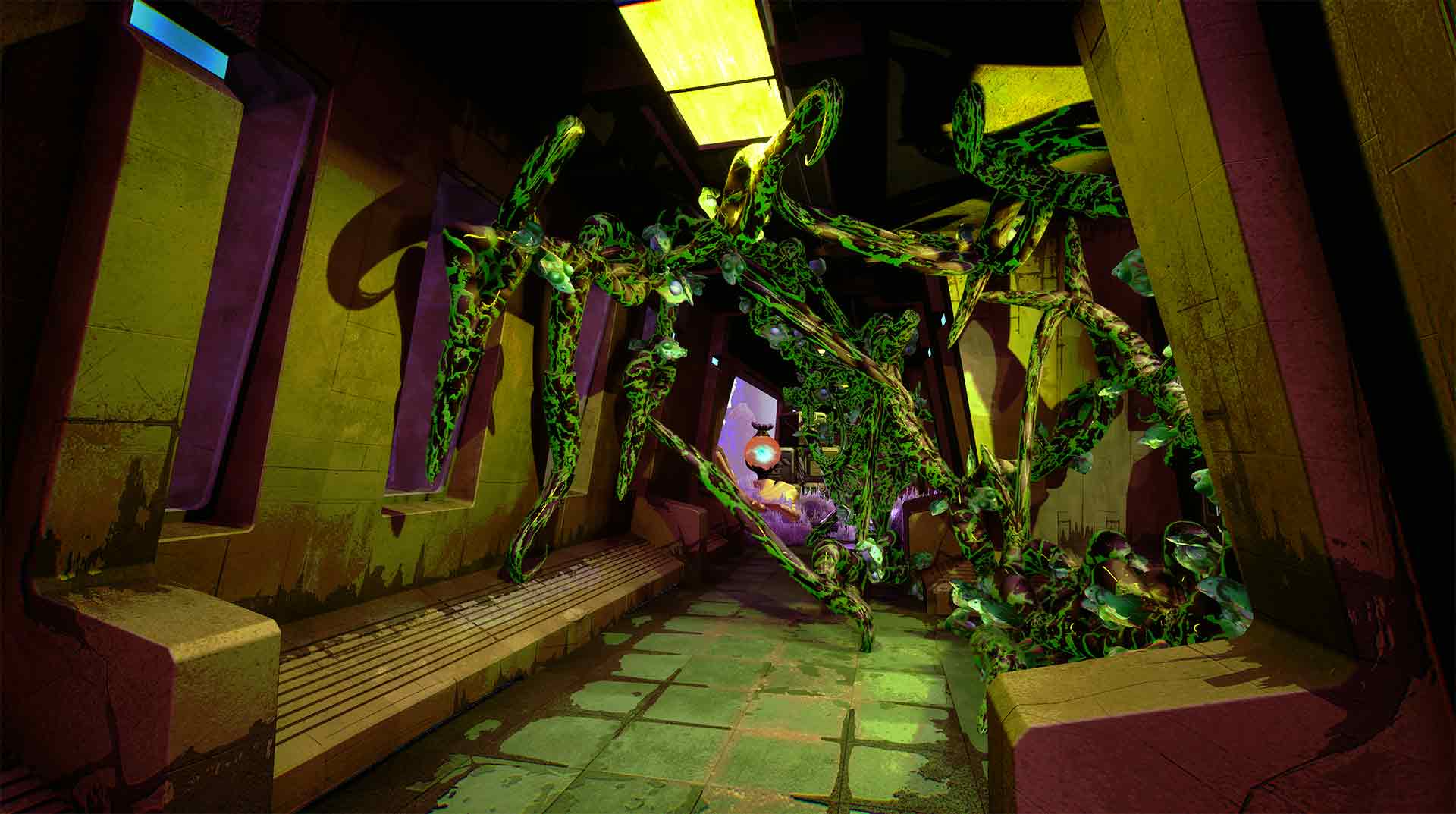
That’s not to say that those are bad, though; far from it. In fact, they’re better than ever thanks to a new fungus type that meaningfully shakes up the core gameplay loop. This type of plant causes Corruption, which simultaneously slows Dalia while inflicting damage. What’s more, its malignant green vines are immune to your sprays, so you’ll have to carefully study environments and use special Wyrdlight generators to reveal their few weak points and properly destroy them.
Despite all of these narrative and level design improvements in Act Two, there are a few other issues, including one that persists from the last episode. In particular, the skill tree that uses special alien fruit still feels perfunctory. While there are a few helpful upgrades, like enhancements to Dalia’s health and resistance to corruption, most of them involve different elemental spray types like fire or electricity that are unneeded because they don’t offer any meaningful functional difference compared to the fungus-clearing capabilities of your base water spray. Operating some of the Wyrdlight generators can also be finnicky, resulting in a few instances of Dalia getting injured or even stuck between regenerating vines because the beams didn’t do what I had intended.
These are minor gripes, though, and they didn’t detract from how much I loved the experience as a whole. I came for the satisfying relaxation of hosing down fungus and stayed for the unexpectedly cathartic exploration of estrangement. Throw in the somber yet ultimately uplifting “death positive” tributes to Dalia’s lost colony and you have one of the most refreshingly original indie games in recent memory.
Ambrosia Sky is now available on Steam. Those who already own Act One will get Act Two as a free update at no additional cost. The full game is available for $19.49 at a 20 per cent launch discount before a price increase on August 14.
Image credit: Soft Rains
 Reviews
  Reviews
  Reviews
  Reviews