A huge selling point for me with technology is convenience. If something is pretty easy to set up and use, chances are I’ll stick with it. That’s why consoles have long been my gaming platform of choice; you can certainly do more with a PC, but it requires much more work.
Similarly, this is why I also fell off VR. While I was a big early adopter in the technology, the work to put on a relatively heavy headset and engage with a virtual display eventually grew tedious, especially after a long day when I just want to relax. (That’s to say nothing of dwindling to non-existent support for VR from once-major figures like PlayStation.) Even as the technology improved by becoming fully wireless, as we saw with the likes of the Meta Quest, I just found myself uninterested in engaging with these kinds of devices.
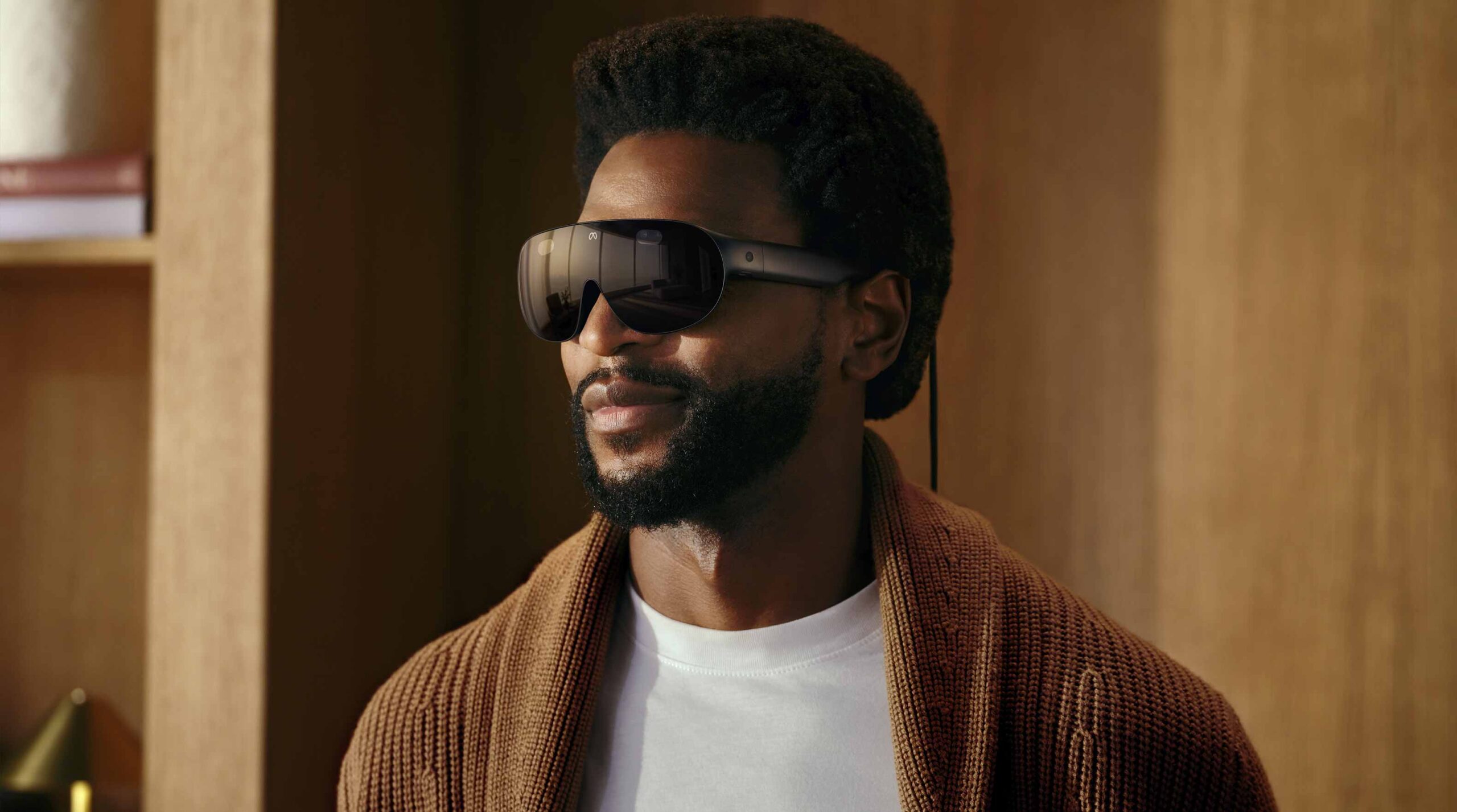
But Meta’s latest VR device has me genuinely intrigued. Enter the Meta VR Glasses, which take the Quest infrastructure and puts them into the familiar framework of a pair of Meta’s AI-powered smart glasses. It’s a brilliant idea, retaining the same VR functionality while making it even easier to use, especially as smart glasses grow in popularity. And after getting to go hands-on with the new glasses at Meta Connect 2026 ahead of a targeted spring 2027 launch, I’ve come away remarkably impressed, albeit with some concerns regarding its US$1,299 (about C$1,800) price tag.
Snug as a bug
Above all else, the VR glasses won me over with their comfort. While I’ve appreciated how the Meta Ray-Ban glasses mix high-end tech with snazzy, classic designs, I’ve found them rather clunky to wear in practice. Chalk it up to having stopped wearing glasses in 2021 once I got LASIK, but my Meta Ray-Bans (Gen 2) just feel heavy. As a result, I soon stopped wearing them, despite travelling to cool places like Barcelona and Berlin where I tried to actively use them.
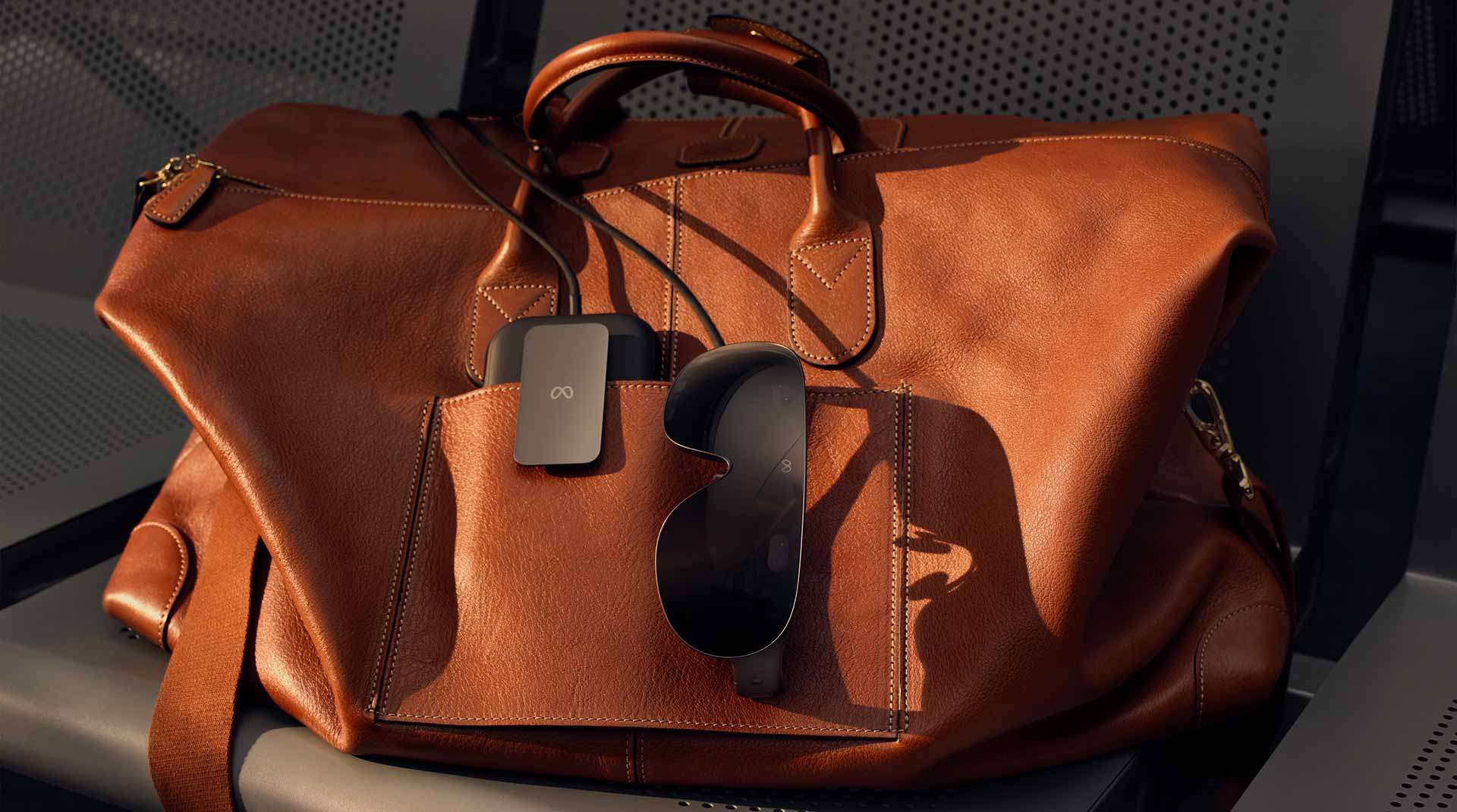
The Meta VR Glasses, however, are incredibly lightweight, measuring in at 100g. While this is actually almost twice the weight of the Ray-Bans, they still somehow felt more comfortable and less bulky on my face. And unlike the Meta Ray-Ban Display, there’s no band you have to wear. Instead, the VR Glasses simply connect via a single cable to a clippable puck that handles compute, storage and battery. My demo had a makeshift setup for Meta reps to follow along and control on their end, so I didn’t get to test how it would feel walking around with it clipped onto my pocket or bag, but in theory, it shouldn’t be cumbersome.
Once you put them on, you can appreciate the impressive specs, which include a 5K micro OLED display, Qualcomm’s new Snapdragon Reality Elite processor for high performance and up to three hours of high-res media playback. It also doesn’t require a phone or controllers, just like the Ray-Ban Display, instead allowing you to pinch and swipe with simply your fingers to navigate the virtual screens. When I tried the Display last year, I found these hand gestures to be a bit finicky, but here, they were satisfyingly responsive.
Lots and lots of entertainment

Beat Saber Flux.
Part of the benefit of expanding its VR wearables lineup is that Meta can leverage the sizeable catalogue it already has on Quest. And sure enough, the VR Glasses support the entire Quest library of thousands of games, as well as around 75 titles at launch that are playable entirely with hand gestures.
One of them that I got to try is Beat Saber Flux, a variation on the popular VR rhythm game that has you moving your hands not only to smash incoming targets, but pulling them apart as if you’re holding a piece of string to cut long, thin targets. It felt both familiar yet different in the best way.
Meta also teased an Ace Attorney game, which I’m most excited about; the idea of getting up to Phoenix Wright’s wacky courtroom hijinks and yelling “Objection!” in VR sounds like a hoot.
And as with the Meta Quest, there’s also support for Xbox Cloud Gaming to let you stream all kinds of Xbox Game Pass titles. I tried Forza Horizon 6 with a connected Xbox controller, which looked sharp and ran surprisingly well outside of brief latency even as I barrelled down dense Tokyo streets. It was honestly wild to be experiencing this high-end experience from something as tiny as a pair of glasses. (It should be noted, however, that Xbox recently announced plans to start capping streaming in November unless you pay for more hours, so this would be in effect by the time the VR Glasses hit the market.)
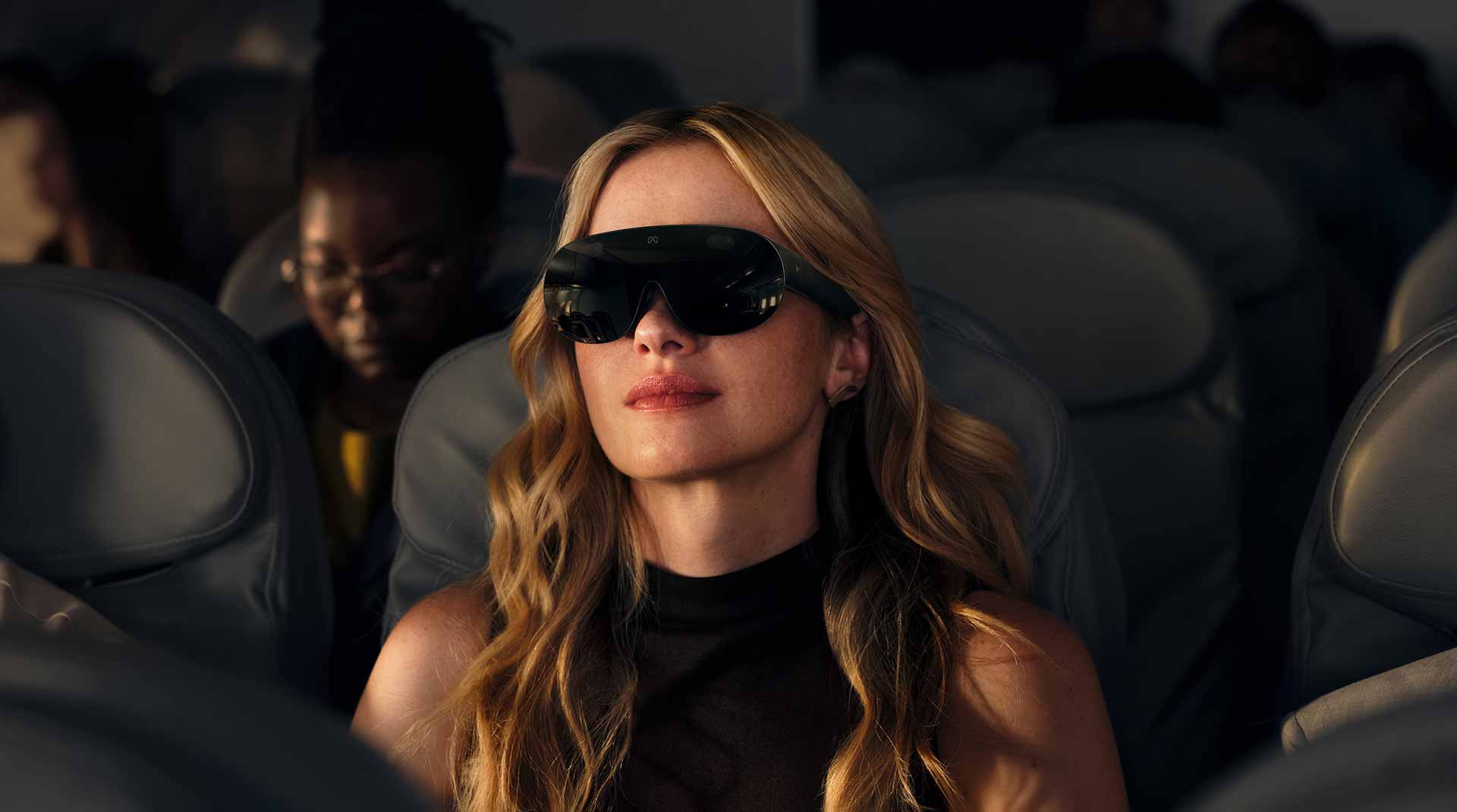
While gaming is obviously of the most interest to me, the glasses, like the Quest, support film and TV show playback. Truthfully, I’ve never cared much about streaming video in VR; I’d rather watch on my higher-end TV than some smaller, lower-quality screen within a display. In the demo, I saw the scene from Avengers: Infinity War where Thor is crafting Stormbreaker, and the virtual theatre changed its surroundings to match the imagery from the forge. It’s a cute gimmick, which Meta refers to as “VR Enhanced Cinema,” but it doesn’t truly add anything. That said, one of the use cases that Meta brings up for this private screen is being on a long flight, and that certainly has some promise to me. (Anything’s better than the in-flight entertainment system.)
Besides, the more event-focused entertainment is much more tantalizing. I saw a clip of Canadian James Cameron’s Billie Eilish – Hit Me Hard and Soft: The Tour (Live in 3D), and while I’m not a fan of the singer-songwriter, I can see how that sort of intimacy, crying fans waving their flashlight-enabled phones and all, would be appealing to her fans.
Similarly, I’m not a sports fan, but I got to see a snippet of an NBA game, and getting court-side and behind-the-net views afforded a novel perspective. I had tried streaming these kinds of events on the Quest, of course, but the resolution was much better here, which, alongside the novel immersive perspectives, makes it actually worthwhile.
Indeed, Meta is promising front-row seats, 8K streaming, and 180-degree views across more than 100 live sports events in partnership with ESPN. It’s unclear if all of these will be offered outside of the U.S. given different licensing agreements, but there’s undeniable promise here. Throw in support for platforms like Disney+, Prime Video, YouTube, Paramount+ and more, as well as hundreds of movies available for purchase at launch, and there’s a lot of choice here.
Private productivity
The final major use case which really caught my eye was how the VR Glasses can serve as an alternate computing device. In my hands-on, I asked Meta AI to launch Virtual Display, which opened three tabs in front of me. For the purposes of the demo, I had a website set up for a business I owned in one tab and the code for the page on another. After typing in that I wanted to change the colour of a button to red, I saw the update happen in real-time on the adjacent tab.
In another scenario, I had Instagram open and was prompted to type a comment. As I sat at the demo table, I launched a virtual keyboard that lay flat on the surface, and from here, I could simply write away on digital keys. Admittedly, this was the spottiest part of the demo, with me having to take a few tries for the keys to register, although this is an earlier build, naturally, so there’s lots of time to iron out these kinks.
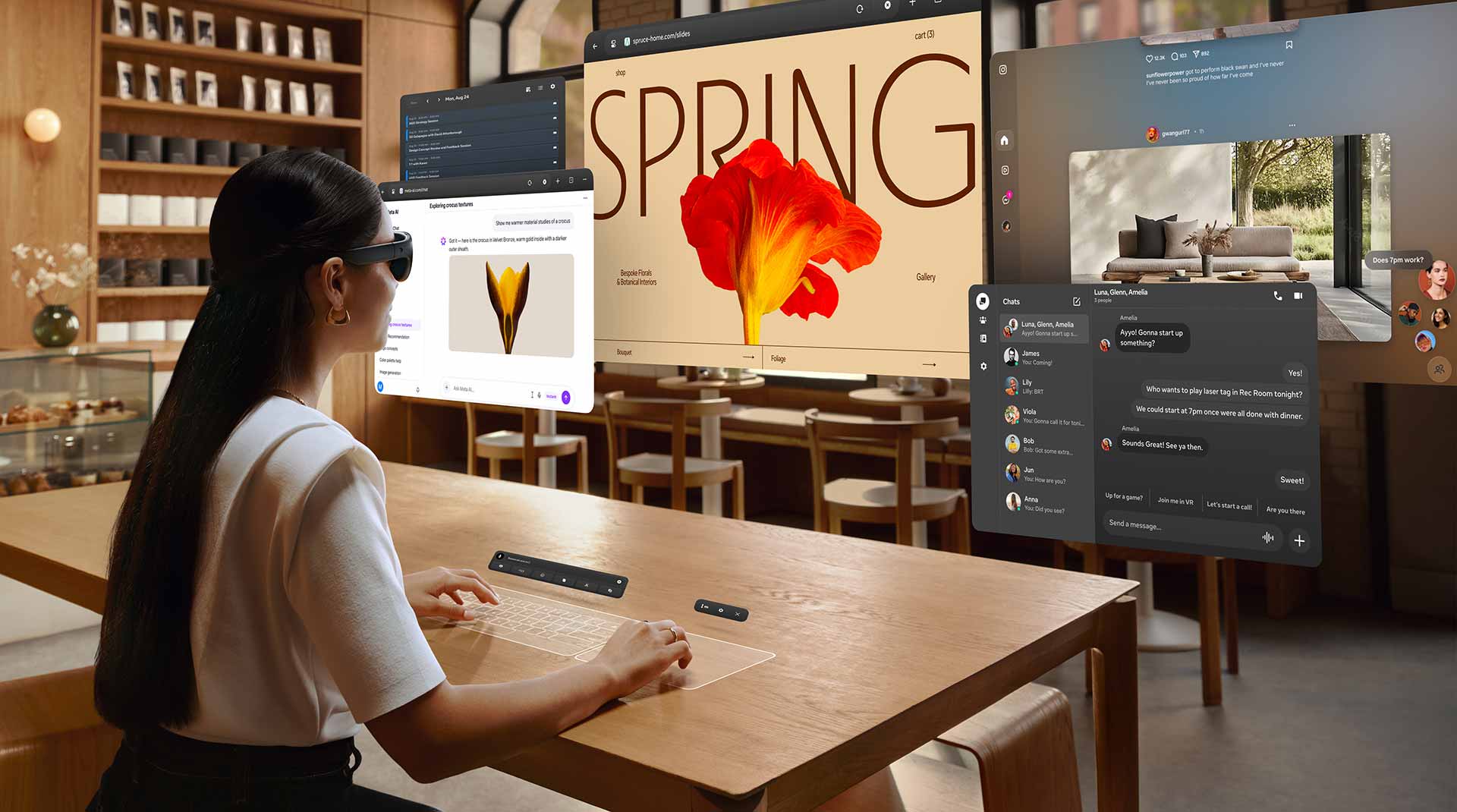
On the whole, though, these productivity features had a lot of promise. As someone who travels a lot, I could see myself using this virtual display to work on a flight (assuming the tiny tray would suffice), which is much more convenient than using my laptop in the claustrophobic seat. The Meta rep also brought up an example of being in somewhere like a coffee shop and being able to connect wirelessly or via USB-C to your laptop to transfer everything to the glasses, which is useful if you don’t want someone to, say, see a sensitive document. (As a journalist, this would also be handy for embargoed documents.)
Closing thoughts
All in all, there’s a lot to like about the Meta VR Glasses so far, from its wonderfully light and simple form factor to its plethora of high-end entertainment and productivity features. My only major concern is pricing. At US$1,299 (about C$1,800), the cost to try out this new era of VR is steep. I’m still trying to confirm exact Canadian pricing with Meta, but either way, we’re talking in the ballpark of roughly $1,000 more than the C$829 Meta Quest 3, which is already itself a luxury product.
With such a high asking price, I’m not sure who the Meta VR Glasses are for outside of someone who’s already in Silicon Valley. If nothing else, I’m glad to see Meta still trying to expand what we’ve come to understand as VR — traditionally, sitting or standing in your living room with a headset — through a promising new form factor. Hopefully, this lays the groundwork for future, more affordable iterations.
The Meta VR Glasses launch in the U.S. in the spring. A Canadian release window has not yet been confirmed.
Image credit: Meta
MobileSyrup may earn a commission from purchases made via our links, which helps fund the journalism we provide free on our website. These links do not influence our editorial content. Support us here.