


I have conflicting feelings about Stranger Than Heaven.
After playing around three hours of the game in New York City earlier this month, I find a lot to like and also be apprehensive about. On the one hand, I see a lot of promise in the sprawling narrative and world that developer RGG Studio is building here. But on the other hand, some of the broader gameplay mechanics, as well as specific creative decisions, aren’t working for me so far.
But first, the positives. In terms of pure ambition, the story hook of Stranger Than Heaven is certainly one of the most impressive I’ve seen in a while. In 1915, Japanese-American orphan Makoto Daito stows away on a ship to Japan in search of a better life, and from there, the game follows him on a 50-year journey across four additional time periods. It’s also a standalone prequel to RGG’s Like a Dragon series, chronicling Makoto’s formation of the yakuza organization Tojo Clan that features prominently in those other games.
Allowing you to play through this progression, rather than simply watch it unfold, definitely holds a great deal of potential. And on a personal level, I love that Makoto is half-white, half-Japanese. As someone who is also biracial, it’s a bummer that we don’t often see such characters in media, so I appreciate how this identity serves as the backbone of Makoto’s story. After all, being mixed can further create a sense of isolation, as you don’t quite belong to either half, teeing up a particularly strong emotional core behind Makoto’s journey to find a place to call home.
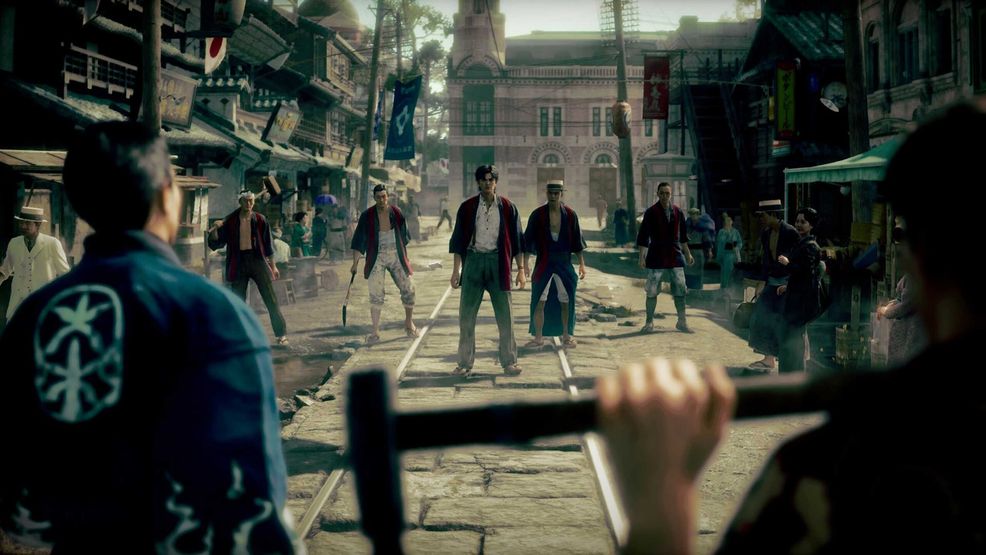
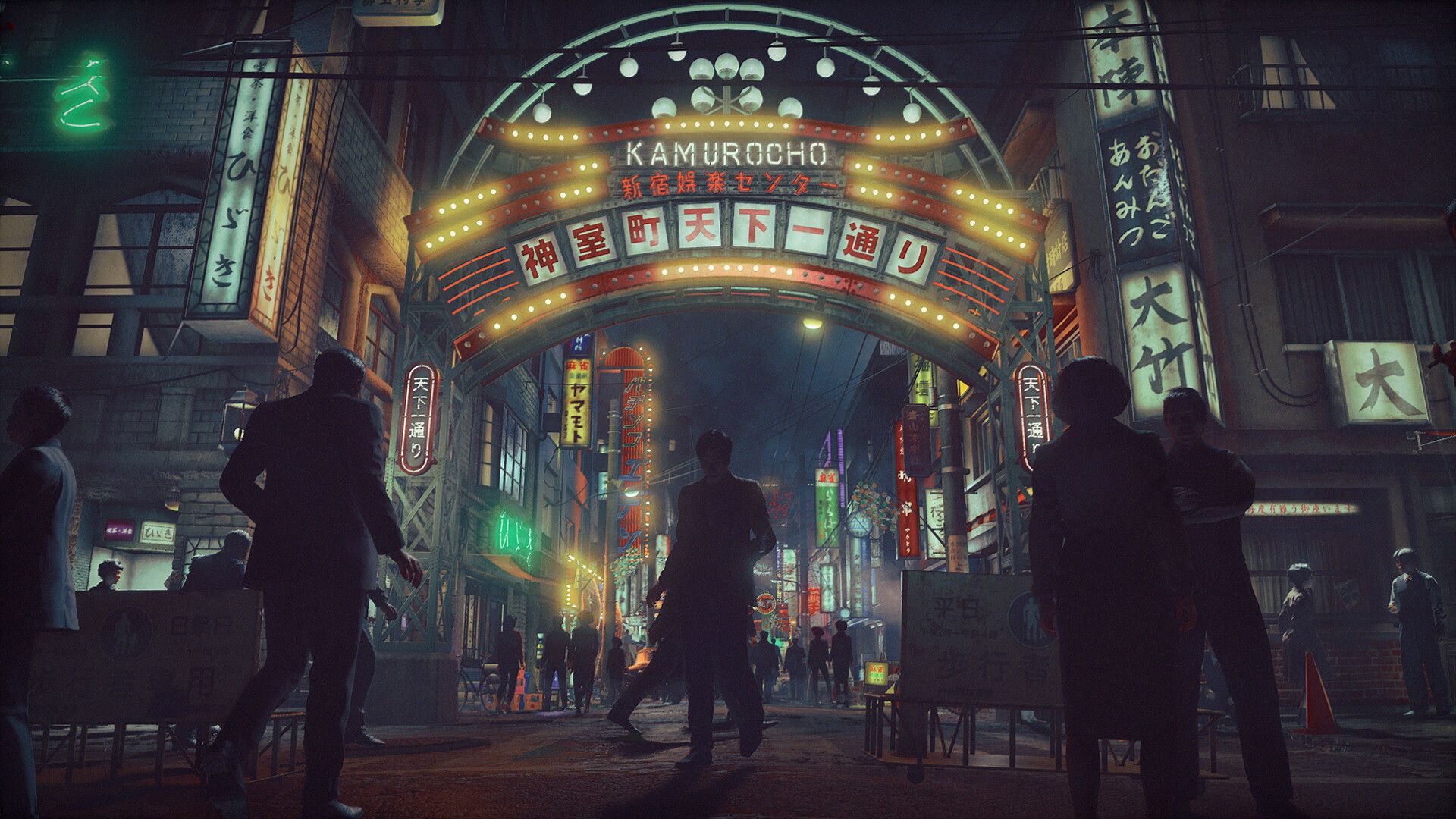
Admittedly, though, I didn’t experience too much of that in my decidedly structured demo, which was carefully split between story-driven sections and world exploration. For the purposes of our demo, we got to see the 1915 opening in San Francisco and Kokura, as well as Kure (1929) and Osaka (1943). Across these sections, RGG’s skill at creating richly detailed settings is on full display. The beginning stretch in Kokura is your classic small, tranquil town, while Osaka is a far livelier and comparatively modern locale thanks to its neon-soaked canals illuminated by electronic displays and loud cars zipping around.
I also appreciated how the ever-evolving world reflected own Makoto’s progression, with the earlier levels featuring NPCs who yelled derogatory terms at me for being a foreigner, while the end of my demo saw me getting lavished with compliments and well-wishes as I sauntered through the streets all swagged out. I also got to play through a minigame involving recruiting, promoting and carrying out QTE-lite musical performances, which added to this feeling that I’m a bigwig in Osaka. Even in my limited demo time, I could really feel the passage of time throughout both aesthetics and NPC chatter.
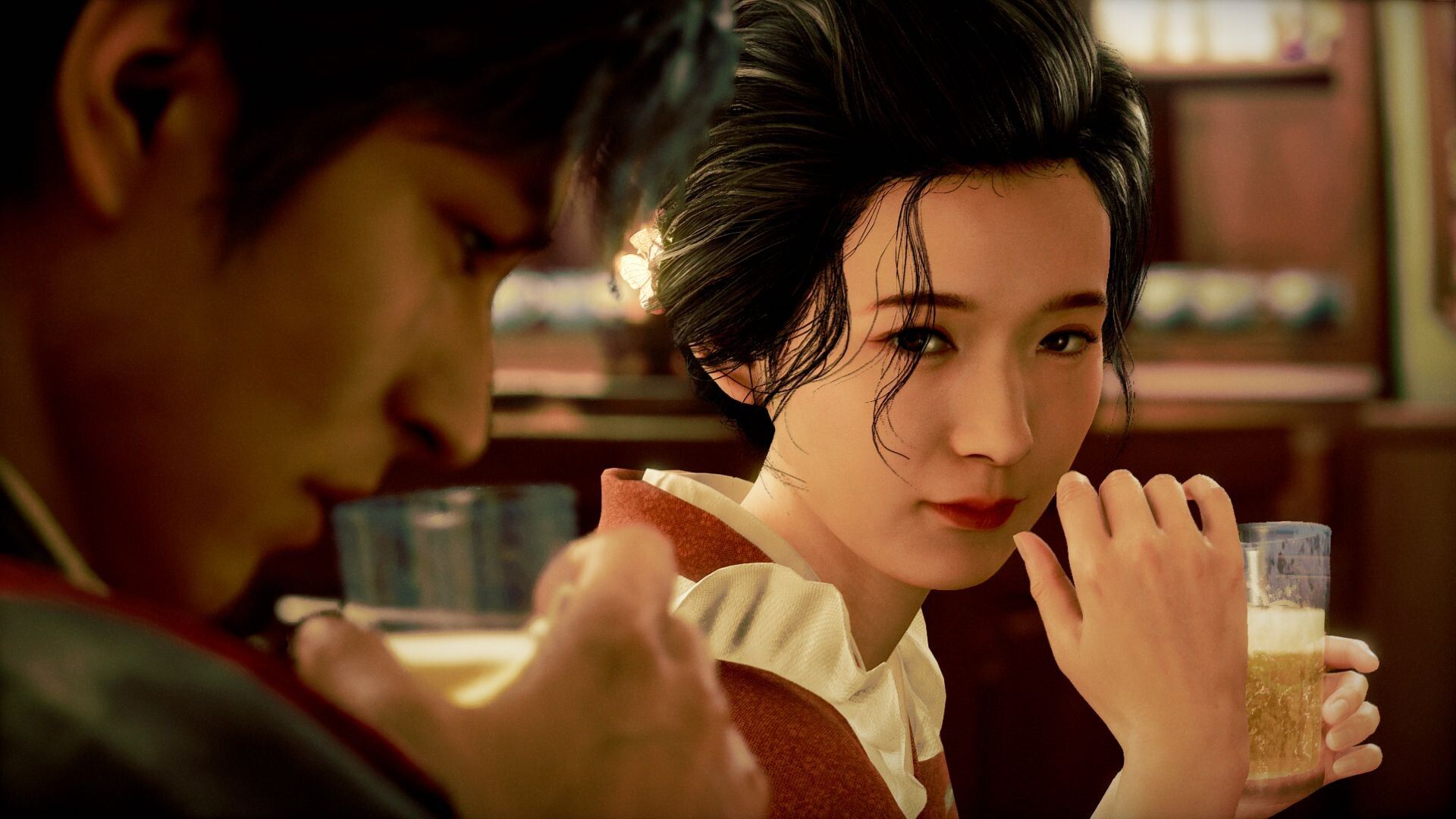
And while I wish I could have gotten a better feel for Makoto’s character in the later, narrative-free sections of the demo, I very much enjoyed what I saw of him in earlier cutscenes. His feeling of being unmoored rings true, especially during his interactions with a gang lord’s mistress, Tae, during a mission. When they meet in a bar, he stumbles his way through the conversation before she calms his nerves through down-to-earth chatter and booze. She mentions coming from a huge family in a small village being being sold off at 12. Sensing his pity, she tries to play it off optimistically, noting that she just would have been “another mouth to feed” for among her nine siblings.
And when they go back to her place, he confesses that he’s been deceiving her about who he really works for, which she admits she saw through right away. She teases him for being young and naïve but understands why he’s doing what he does. And when he asks about her long-term aspirations beyond this life of criminality, she looks momentarily stunned, almost as if nobody has ever bothered to ask her that, before admitting a “fool’s dream” of becoming a singer. He insists this is a legitimate pursuit and says he’d like to try again with her in the future once he’s grown to become a man worthy of her. It’s this sense of awkward earnestness that, when mixed with his aforementioned identity struggles, makes Makoto easy to root for. And when Tae is kidnapped later on, we get a glimpse at his fiercely loyal side take root as he angrily rushes through a gang lord’s iron works hideout to save her.
With all of that said, it’s the game’s larger narrative focus on rap, of all things, that proves distracting so far. For one, there’s the highly-publicized inclusion of “Tupac,” or rather, a character featuring his likeness who’s voiced by a human actor. RGG says this decision was made to explore where Tupac might be if he was still alive to today, but naturally, it drew significant criticism given that the iconic rapper was killed decades ago. Personally, I find any sort of digital resurrection without someone’s consent absolutely abhorrent, so I don’t care whatever justification RGG gives. I didn’t actually see Tupac’s character in the demo, but simply knowing he was looming in the background somewhere left a bad taste in my mouth. There are so many ways you could pay tribute to him without this pseudo-deepfake nonsense.
But the other rapper I did see in my demo, Snoop Dogg, also rubbed me the wrong way. At this point, Snoop’s larger-than-life persona is so prevalent in pop-culture that it honestly took me out of Stranger Than Heaven once he’s introduced as Makoto’s boss Orpheus. Truly, nothing ruins the fantasy of living in these luscious Japanese settings more than a gang lord featuring Snoop’s voice and likeness as he teaches me how to roll a cigarette. (Get it? Because Snoop likes weed???) It runs counter to the otherwise genuinely grounded and human story that Stranger Than Heaven is seemingly trying to tell.
Likewise, I found the combat to be less-than-impressive. To differentiate itself from the fast-paced, arcade-y fisticuffs of the Yakuza games, Stranger Than Heaven emphasizes a slower-paced brawling system in which you alternate triggers to control each of Makoto’s arms. Besides striking, this includes directional parries and even fending off groups when one of your arms is being grappled by an enemy. You can also get knocked to the ground, forcing you to dodge, kick and parry to avoid attacks in your vulnerable state.
On paper, it’s a clever combat system, challenging you to make full use of Makoto’s body while carefully studying enemy patterns and reacting accordingly. But in practice, it feels too clunky, with the wind-up of Makoto’s attacks being painfully slow and having a lot of end lag before control fully returns to you. I’m all for adding weight to each attack so you don’t mindlessly mash, but the speed feels too laborious, especially when enemy behaviour could be inconsistent. For instance, sometimes I’d charge up a hammer swing but it wouldn’t stun the enemy, leading their attacks to continue and stun lock me for a while. Other times, they’d pull me into a multi-hit knife combo that left me sitting there waiting for it to complete. Makoto’s responsiveness is so glacial that I often felt discouraged from experimenting with different weapons lest I get stuck for several seconds in either my drawn-out animations or the enemy’s own prolonged attack.
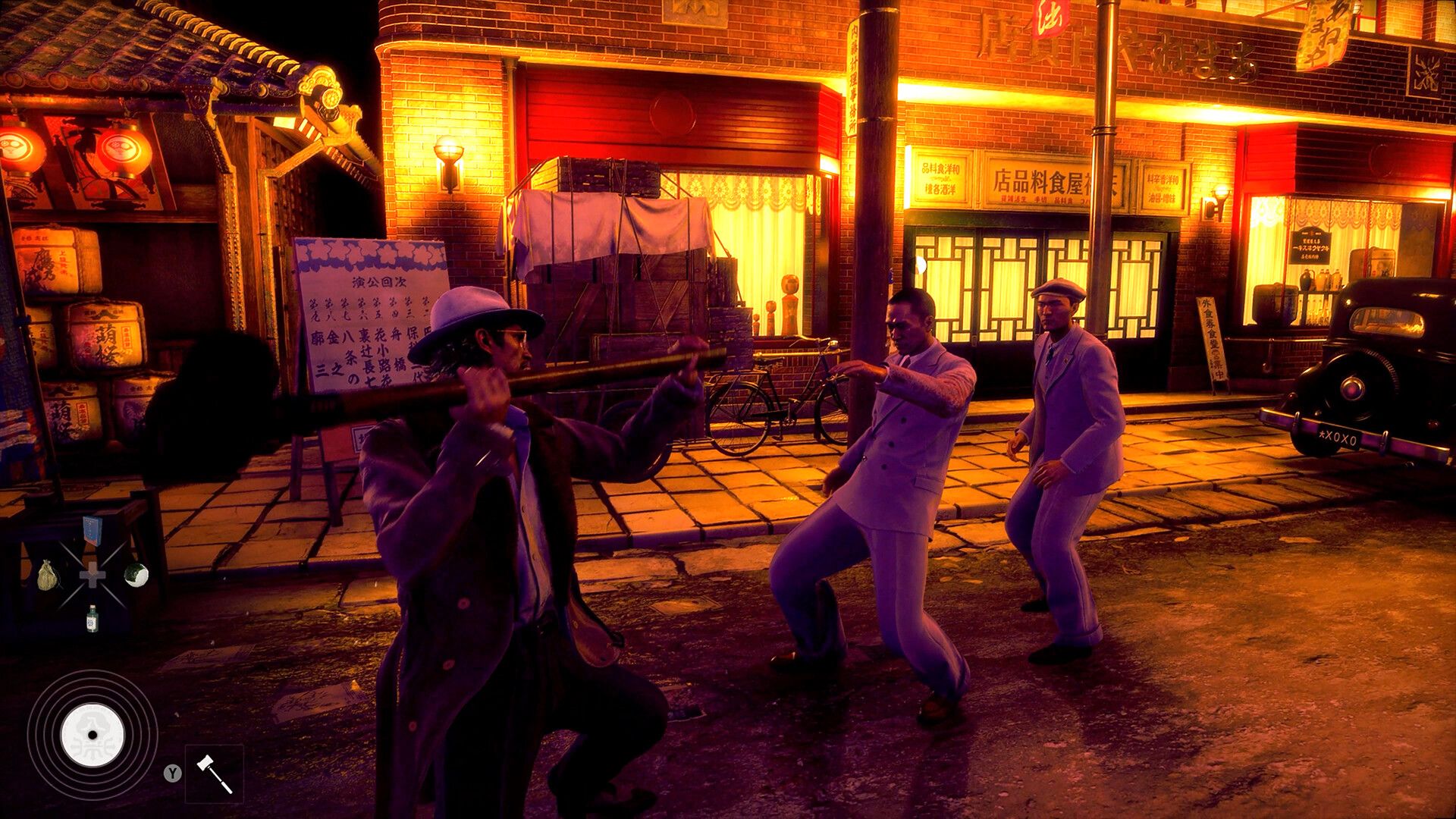
Bizarrely, it also didn’t feel like there was any fundamental difference between playing as Makoto across the different time periods, with his moveset and animations being the same throughout. Deliberately having him control more sluggishly in his later years could have been a fascinating way to mechanically illustrate how he’s aged while gradually ramping up difficulty, but that didn’t seem to be the case here. During a post-demo Q&A, director Mikinobu Abe even mentioned that the intention during the prologue was to show a less experienced Makoto, but even going back and watching B-roll I captured, I couldn’t really tell you what variations, if any, there were between how he fought then versus in later demo sections.
If nothing else, there’s a few months to release still, so I’d love to see RGG play around with fine-tuning the speed and flow of combat, given that it’s conceptually quite sound. And beyond that, I am genuinely intrigued to see more of Makoto’s lifelong journey, even if Tupac and Snoop bother the hell out of me. For now, I’m gonna be bopping to the incredible banger theme song.
Stranger Than Heaven launches on PS5, Xbox Series X/S and PC on January 15, 2027.
Image credit: Sega
 Features
 Features
 Features
 Features
