


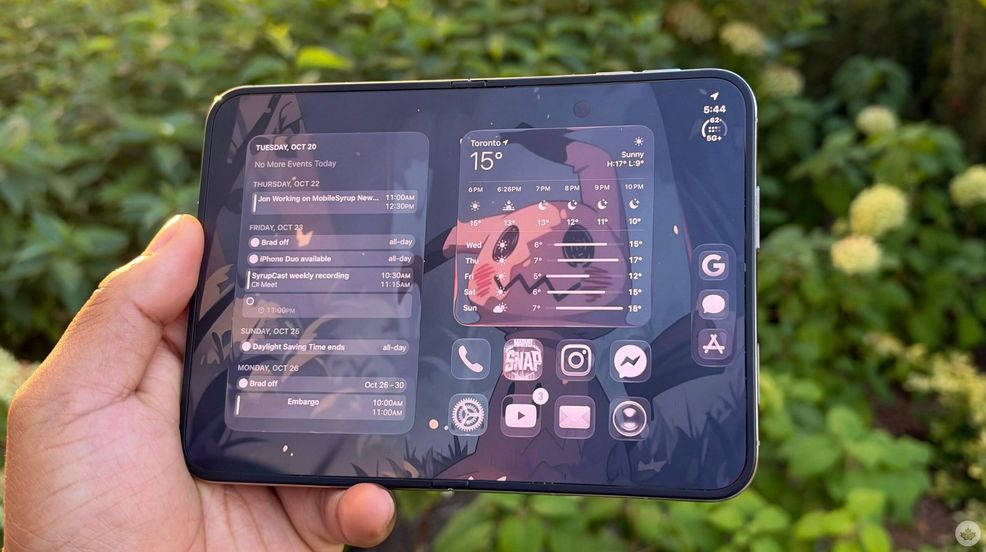
Apple’s iPhone Duo costs $3,000 in Canada, making it the most expensive smartphone in the country. All the good, the bad, and whatever else I say, keep in mind this is a pricey device and definitely not for everyone. But let’s move past this incredibly steep price tag and talk about one of the coolest smartphones ever made.
TL;DR: This is an incredibly impressive first-generation product. You can wait until a second-generation or third-generation device, but even this first-gen is great for tech enthusiasts and early adopters, and will only get better over time.
The app situation
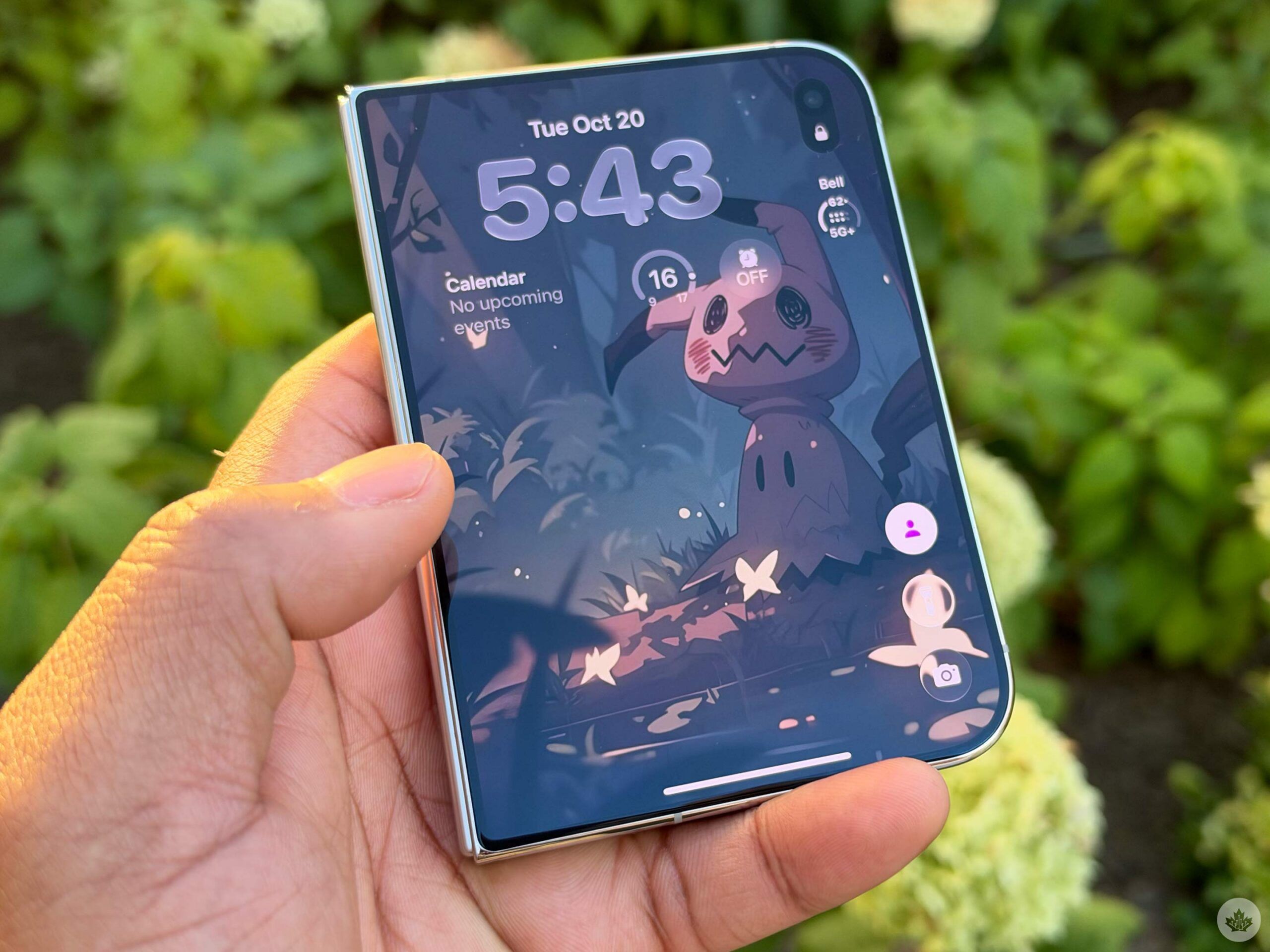
Apple is known for devices that stand out from the others. The Cupertino tech giant pushed the notch, the Dynamic Island, and now the iPhone Duo has a reimagined iOS that moves the status bar to a vertical layout along the right edge of the device.
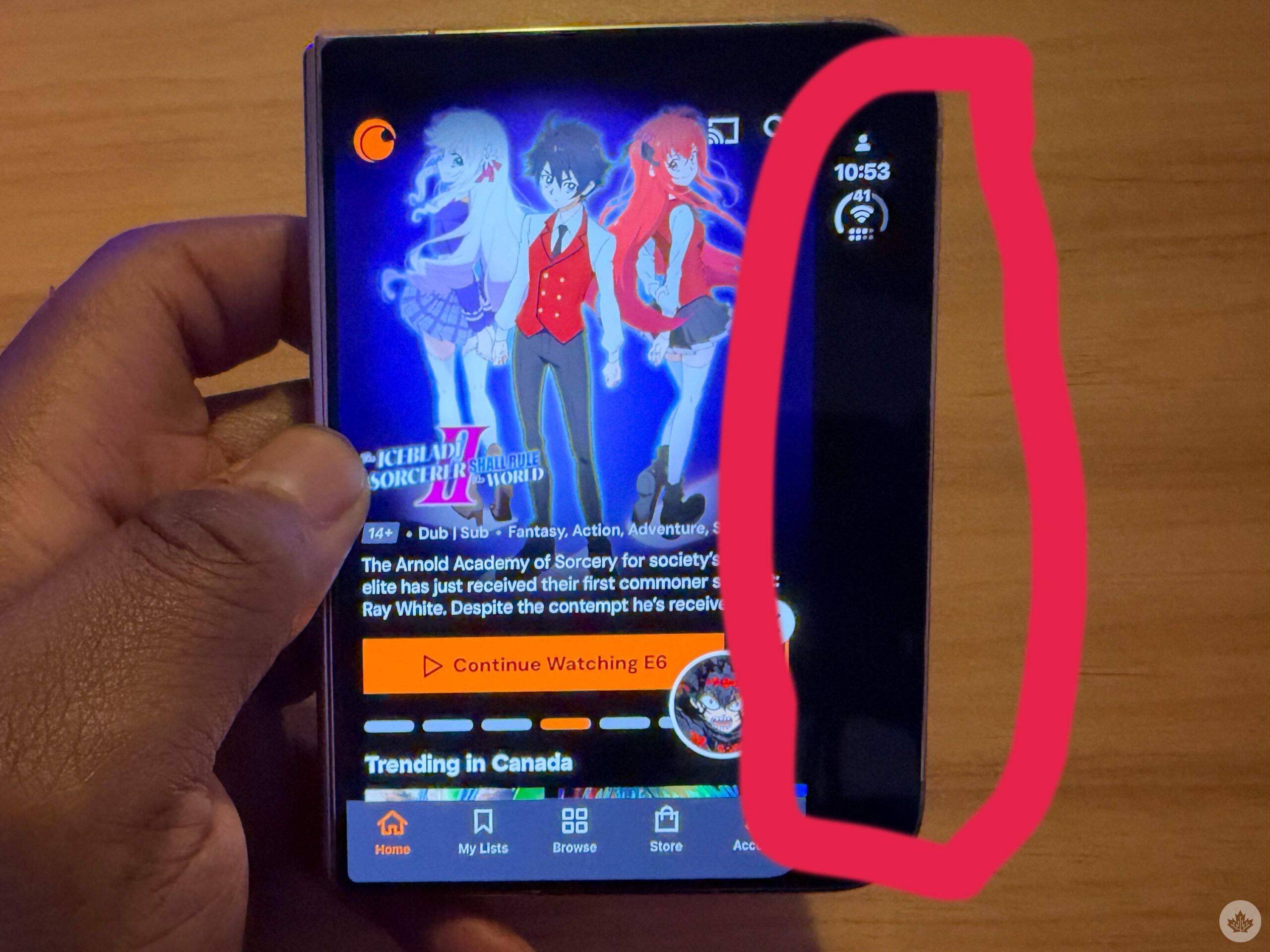
In the top right corner below the selfie camera, you’ll see your Focus, battery, time, Wi-Fi signal, and carrier services. The battery, Wi-Fi and carrier 5G all combine into one icon. Your Duo dock will appear below these icons, but further down. Because of this switch-up, not every app is ready for the iPhone Duo. Many apps have an ugly black bar on the left side of your screen, like Messenger, Gmail, and Chrome, but developers are working on it. Even throughout the review period, apps like Instagram and Facebook were updated to work better with Duo.
This was my biggest gripe with the iPhone Duo: ugly-looking apps. These apps are more obvious when the iPhone Duo is closed; when you open the phone, the black bar is still there, but less egregious. Apple makes its devices seem perfect and highly optimized, the golden standard, but in cases like this where the company makes a big change, it can take time for developers to catch up.
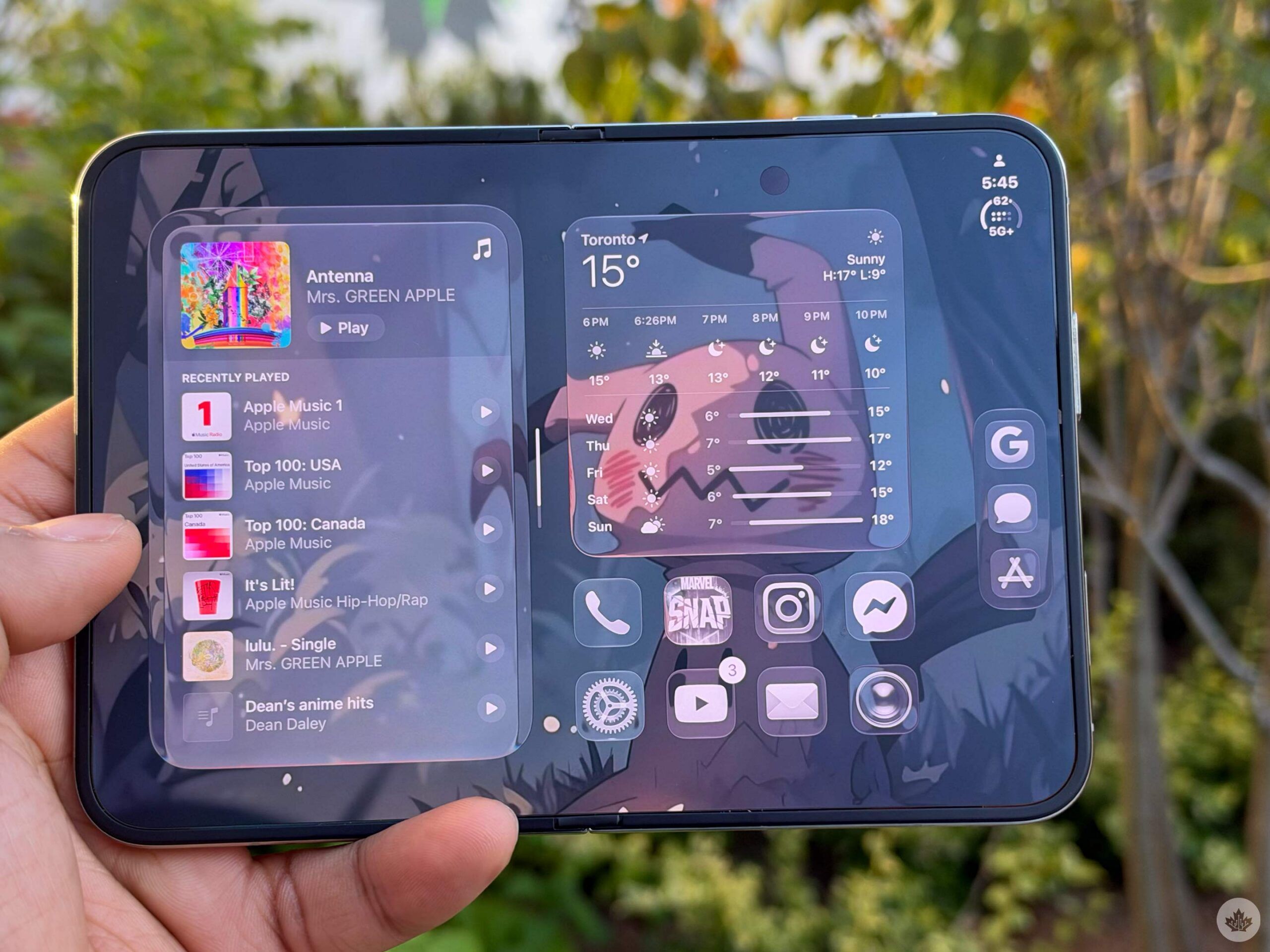
This period wouldn’t be so bad, though, if not for the hype around this new folding phone and its price tag. However, developers are working on it, and before long the right side of your screen will have Liquid Glass controls for every app. On Instagram, you can tap your profile icon to see options for likes, create new content, and check your homepage, reels, messages, and profile. Apple Music has Home, New, Radio, Library, and Search, and the Google app has Gemini, Notifications, Home, Tabs, and Profile. I like that these controls are dynamic and change the layout and actions depending on the app and the page you’re on; you can usually find the back button when you leave an app’s homepage.
On some apps with few controls, the blank spacing looks a little awkward and feels like an extra-large bezel. I think it fits best on apps with many controls; it looks better when it takes up the space, especially with the Liquid Glass icons. In portrait, the Duo icons sit at the bottom; in landscape, the buttons sit on the right. I like that Apple is placing the icons near your fingers, so you don’t have to stretch across the larger display, or even the smaller screen when it’s closed.
I also like how the software responds to the Duo’s physical state. When the handset is open and slightly folded, as if you were holding a book, the interface shifts so the crease becomes similar to a book’s spine. I like this and find myself using my phone this way more than I’d thought. Apps like Gmail that haven’t been updated will bind to one side of the display or the other, so even with a lot of black space, the app is still easy to reach.
Revamped iOS
And while the iPhone Duo doesn’t have the typical Dynamic Island, it has one of its own. The selfie camera dynamically changes, sometimes showing your focus whenever you unlock your device, or Live Activities. You can have up to two Live Activities at a time, which is great if you’re doing multiple things on your phone.
The best part of the iOS experience is opening the handset. You’ll see the Liquid Glass animation, which makes it look like you’re getting a glimpse of the inside screen from the outside, while the left half of the display stays frosted until the foldable lies completely flat.
The animation is super crisp and the type of thing only Apple would think to include. The iPhone Duo’s system experience is very cool and intuitive, and it took no time to get used to. I’ve used a lot of foldable smartphones, but they’ve all been Android. While Android makes some changes for foldable phones, Apple revamping the iOS experience for the Duo really shows what you can do when you both make the operating system and the hardware.
And speaking of hardware, the iPhone Duo is impressive and functional. The Duo sports Ceramic Shield 2 glass on the front, Ceramic Shield on the back and a titanium frame. This is very similar to the iPhone Air, which I noted is one of the most durable smartphones on the market. The Duo has a matte, interior nano-texture OLED display. While this might not be as strong as Ceramic Shield 2 glass, it still seems sturdy, and the phone’s screen is protected when it’s closed. This means the iPhone Duo should handle serious drops, which is great when you’re spending $3K. I haven’t dropped mine or anything, so I can’t say for sure, but I’m far less worried about the Duo dropping than some of my other foldables.
An iconic, reliable design
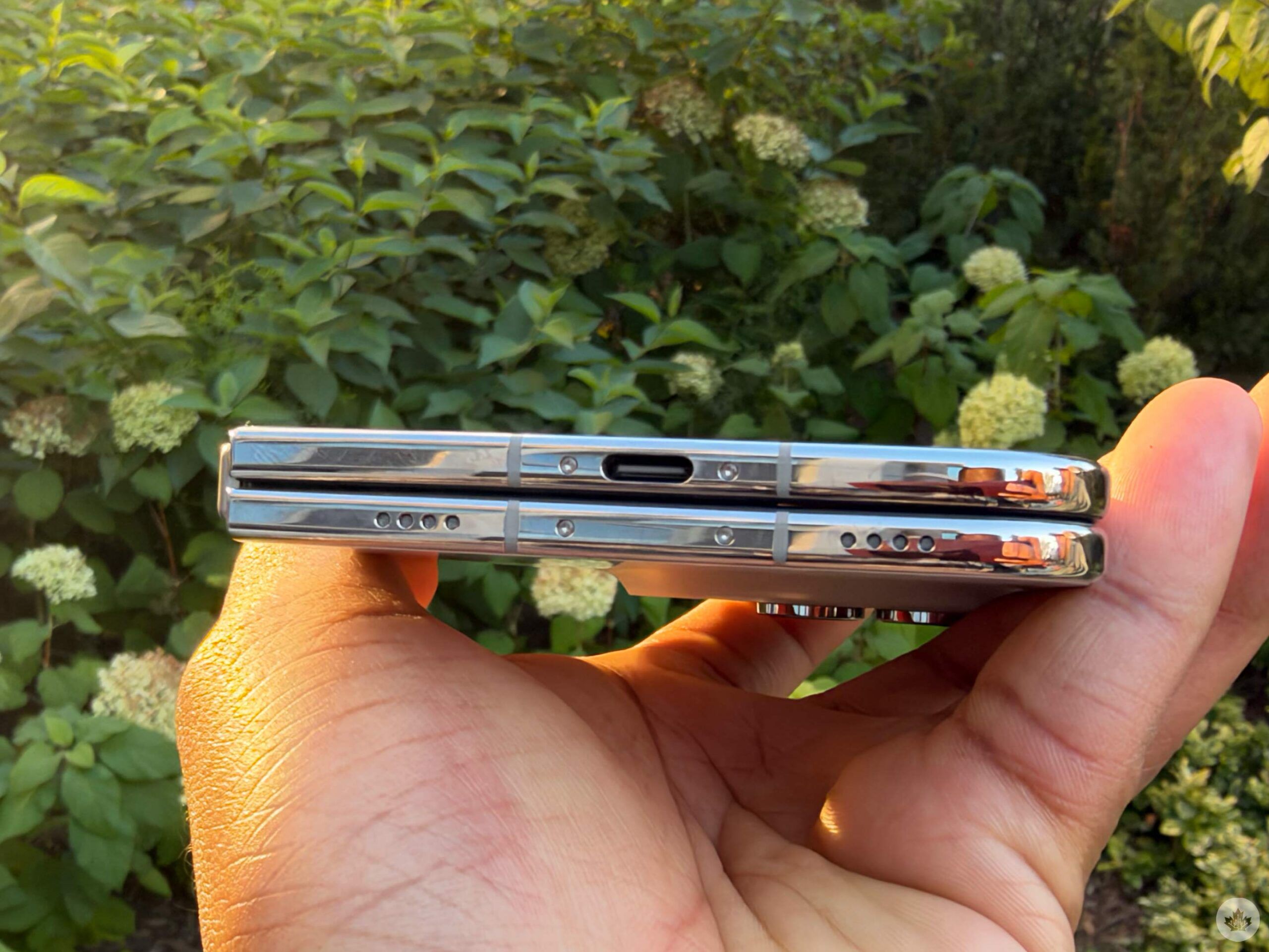
When closed, the iPhone Duo is shaped sort of like a ‘D’, with the camera in the top right corner. It looks so cool and premium, but it is an odd choice. I have to compare the iPhone Duo with the only other similar foldable in Canada: the Samsung Galaxy Z Fold 8, which has a square design. The Fold 8 looks more practical than the iPhone Duo, but the iPhone Duo stands out and feels iconic.
I also think Apple could have made the iPhone Duo thinner and lighter. When folded, the Duo is 11.3mm thick, compared with the Galaxy Z Fold 8 at 9.7mm; when unfolded, the Duo is 5.2mm, and the Fold 8 is 4.5mm. Reducing the weight would have helped the Duo feel a bit less awkward in my hands.
The handset feels sturdy and dense; compared to the Fold 8, this makes the Duo feel more like a regular smartphone. The Fold 8 feels almost fragile compared to the Duo, like it was sculpted; the Duo doesn’t and feels like a foldable iPhone Air, which is probably good for first-time buyers. While most have heard of folding phones, many haven’t held one before, much less owned one.
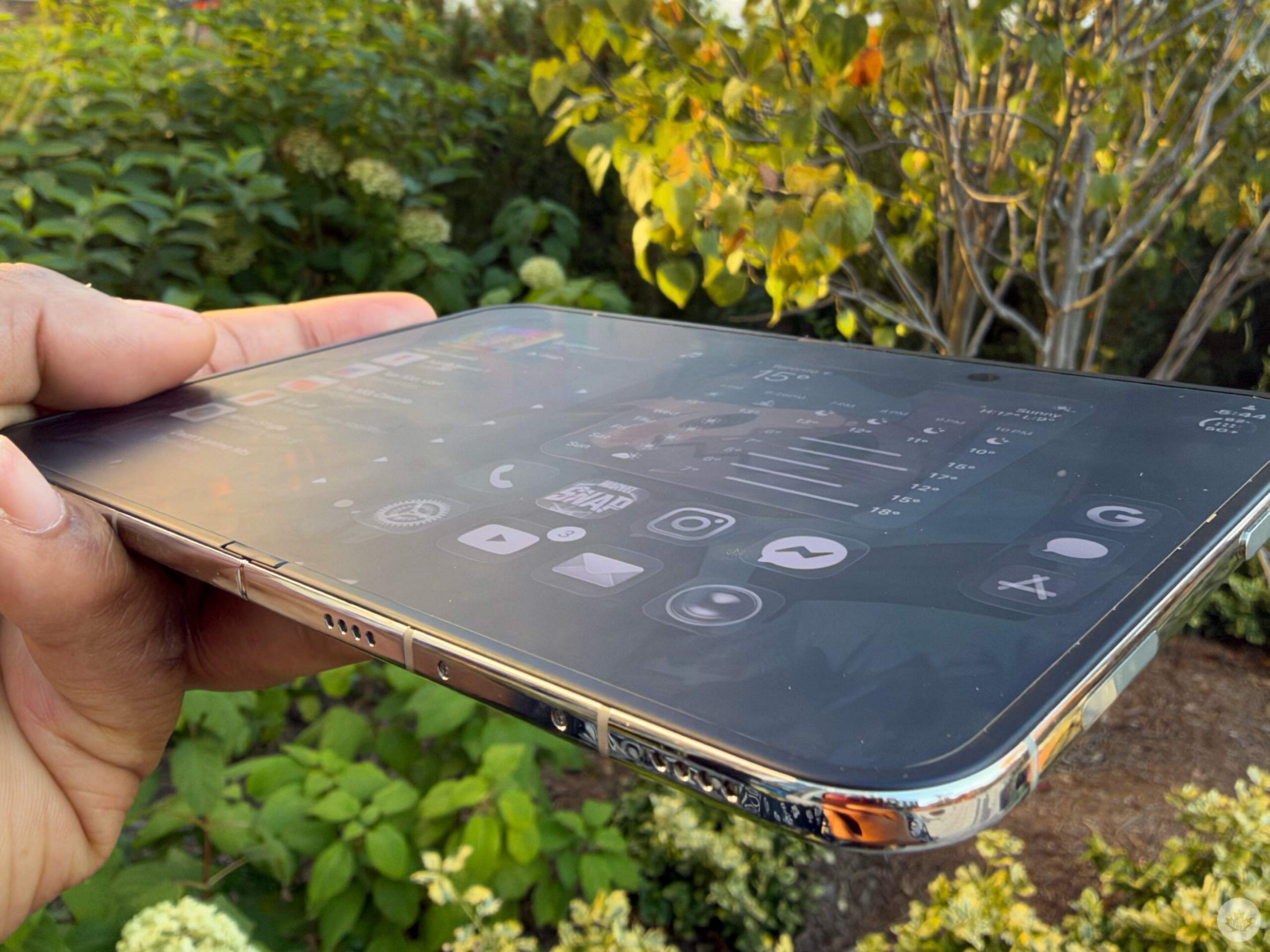
I think having this build feels good for first-time foldable users, which would likely be most people buying the iPhone Duo. Many have waited for Apple to release its first folding phone, and just as many will want it to feel sturdy, so Apple likely made a smart move. But the Fold 8 might look more premium or futuristic on the outside, while the Duo is probably what iPhone customers expect right now. Maybe we’ll see a fancier package on the Duo’s successor (perhaps the Duo Pro?).
This is only from the outside, because when you open the iPhone Duo, you’re greeted by the best folding display on a smartphone I’ve ever seen. The anti-reflective nano-texture display does a great job of hiding the crease. It’s not completely invisible; you can see it when your phone is off and the screen is black, but otherwise it’s hard to spot. The display has a 120Hz refresh rate, which makes scrolling buttery smooth. The matte panel makes my wallpaper look like a painting, and videos look fantastic too. When I’m home in bed, I keep the iPhone Duo open and use it more like a foldable iPad mini. Surprisingly, typing isn’t that bad when the device is opened either.
Through its paces
Now, I’ve been using the iPhone Duo for only a week, and I expect that as the weeks pass, maybe the crease will be more evident or the app experience will be more complete. I’m calling this a review in progress, and I’ll follow up in a month to see whether this experience has changed at all.
While I haven’t had much time to put the A20 Pro chip, the two 48-megapixel cameras, or the battery through its paces, I’ve been forming some initial thoughts.
The iPhone Duo handles any task I’ve thrown at it without much issue, and it can multitask, which is new for iPhones. Multitasking is easy: just drag apps to one side when it’s unfolded and in landscape, and the app will snap into place. Oddly, you can’t do this in portrait, which is a bit annoying. If the app you’re using has picture-in-picture, like Netflix or YouTube, you can pin the video to the top of your display, which is great if you want to watch a video while you’re texting.
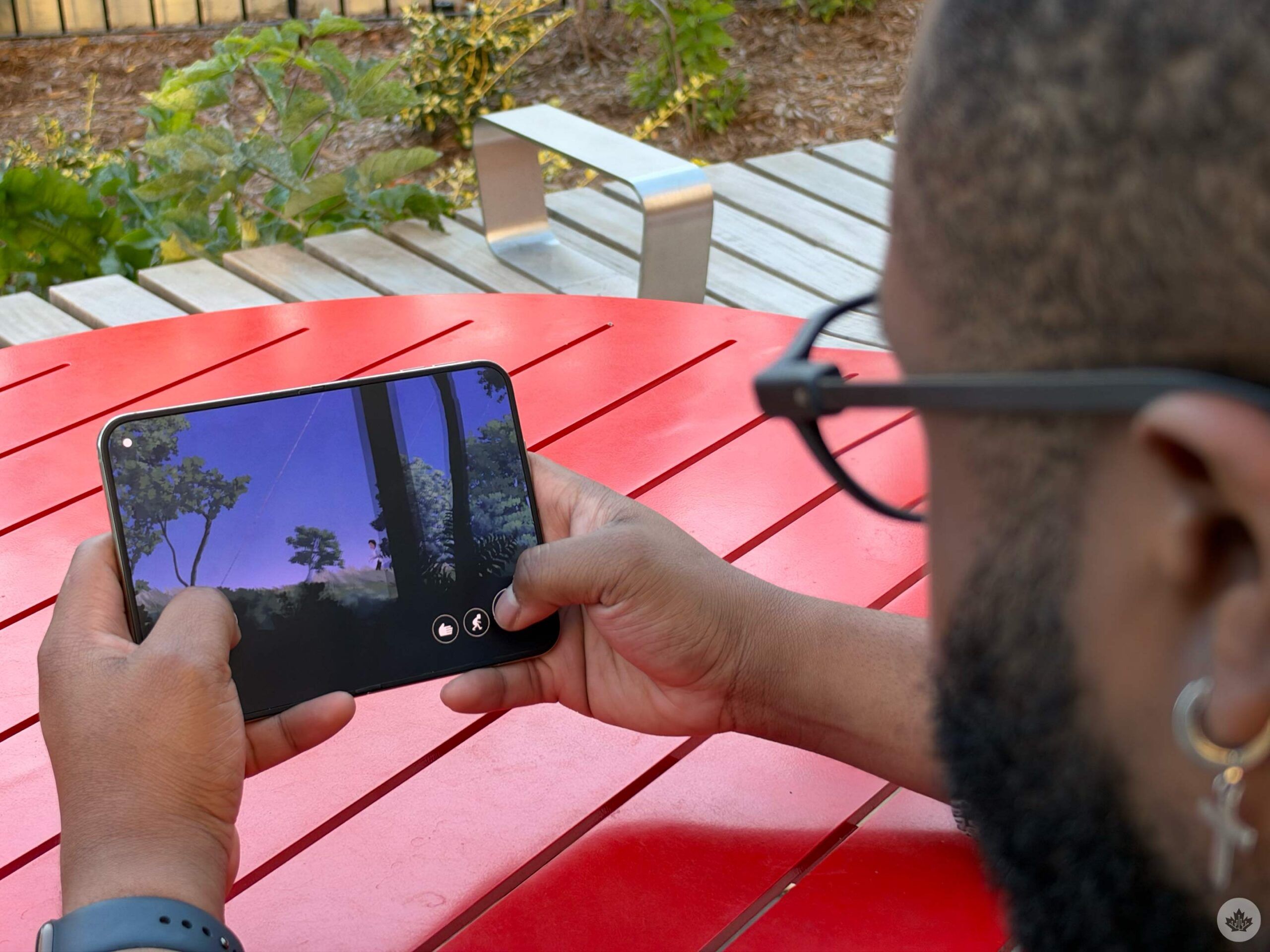
I have noticed that when I’m gaming, the Duo always starts slightly warm, whether it’s Planet of Lana or Marvel Snap, but then it cools down as I keep playing. It’s odd; I would expect the device to stay consistently warm, but it doesn’t. It’s like the heat starts on one side and then disperses. I haven’t noticed the device warm back up yet during my testing, but I need to keep putting it through its paces.
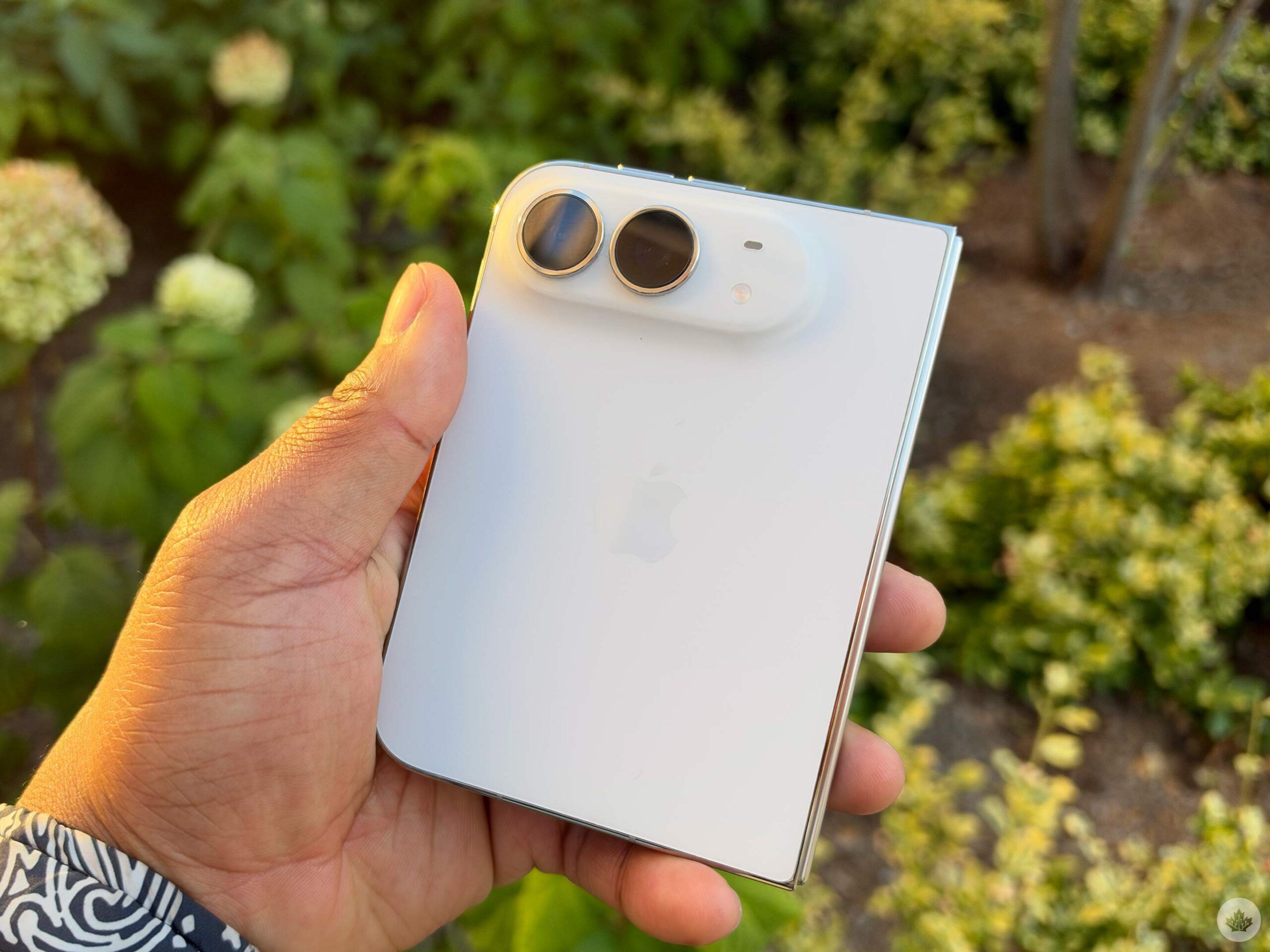
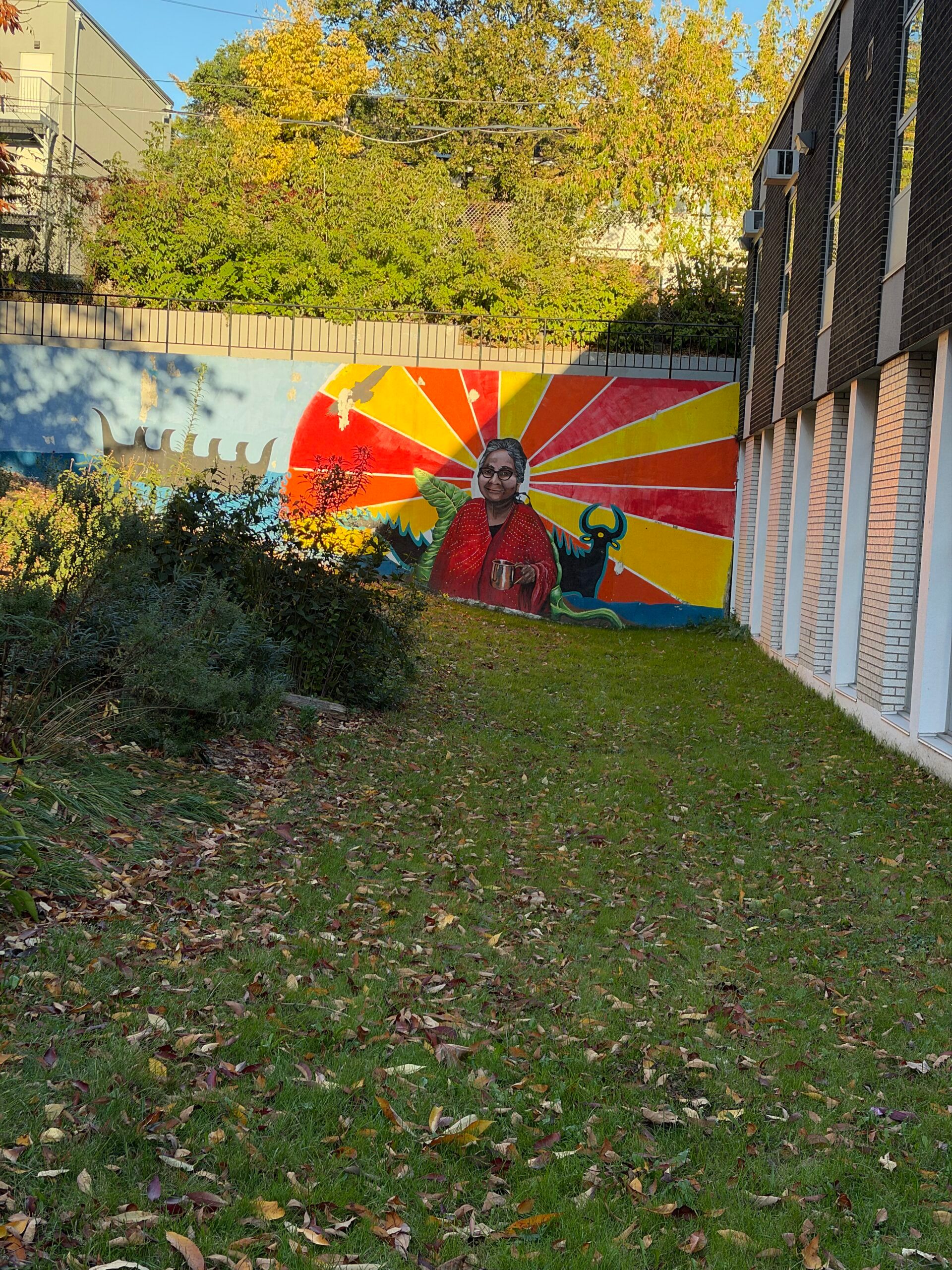
The Duo’s battery is quite capable and can get me through the day. Some days I might even have battery life to get me to the next morning. It’s a solid battery experience and very similar to Samsung’s Galaxy Z Fold 8. It’s definitely not as good as the iPhone 18 devices, but good enough for most people. The iPhone Duo has two 48-megapixel primary cameras; one of them is the same ultrawide as the 18 Pro. Both perform very well, capturing lots of detail and accurate colour. The quality is good, but it doesn’t match the iPhone 18 Pro’s variable-aperture shooter. Take a look at some of the photos below, but I’ll keep testing out the iPhone Duo’s camera over the next month.




















23 images
The iPhone Duo looks iconic from the outside, has a very strong frame and the best unfolded experience on a foldable. Inside, the phone has a capable processor, a great battery, and takes solid photos. But not all apps have been updated yet, and the phone is thicker and heavier than the Fold 8, which some may consider a con. For a flagship smartphone, you’d want the telephoto camera as well. I want to spend more time with the iPhone Duo before forming concrete opinions, but I’ve really enjoyed it so far. I think the Duo is so cool, and I love using the handset as my daily driver.
Hard to recommend, but it’s so fun
The iPhone Duo is $3,000 for the 256GB model, so it’s hard to tell someone to spend that much money on a phone. But if $3K doesn’t hurt your wallet much, I’d give it a shot, or wait a month or two for more up-to-date apps.
 Reviews
 Reviews
 Reviews
 Reviews
