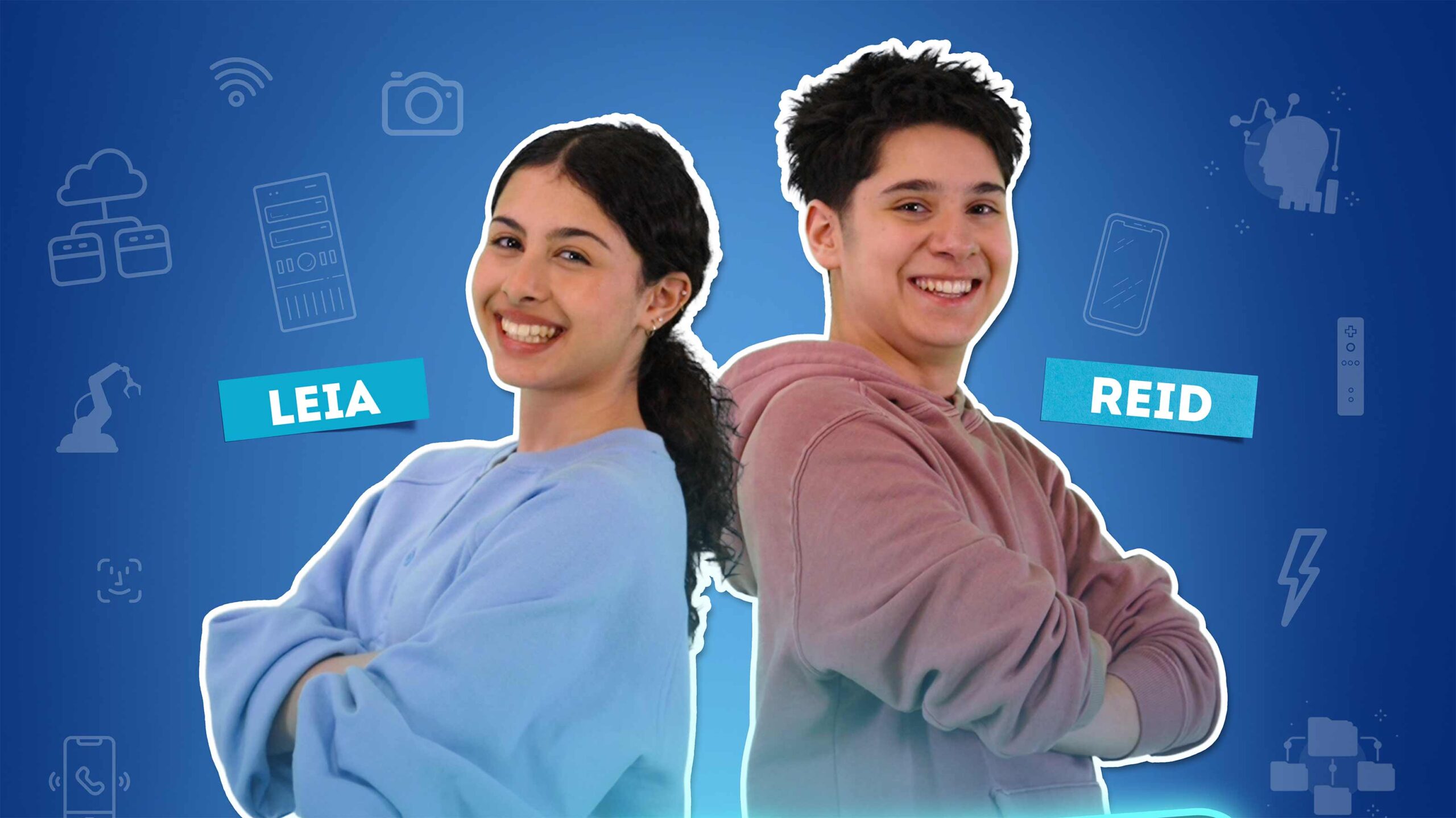
Keeping up with the ever-evolving world of technology can feel like a full-time job. A new TVO series called The Screen Team hopes to make that a little easier for kids and adults alike.
Premiering in October, the series follows tween hosts Leia Maharaj and Reid Almeida as they help kids aged 8-12 learn more about everyday technology, including AI, robot helpers, search engines, 3D printers, data storage, self-driving cars, and undersea internet cables.
Created by Toronto-based academic researcher and writer Christine Mitchell and produced by Fifth Ground Entertainment, The Screen Team aims to inform through an inventive mix of live-action and animated segments featuring insight from Canadian experts like scientists and engineers.
Kirsten Hurd, TVOKids commissioning editor, says the show was first pitched to the network at a particularly relevant time as ChatGPT had fully hit the mainstream and AI-generated images were floating around everywhere.
“Everybody felt like it was like kind of fun and sort of a new frontier, but very quickly, I think people started to realize, ‘Uh-oh, there’s like a bigger picture here and what does this mean long-term?” she explains. “And I always think about these things from my kid’s perspective, in a kid’s lens. And I thought, ‘Well, these are our big topics, the world is changing [with] dramatically new technological advances — what does that mean for kids?”
“I love the idea,” says producer Raj Panikkar on the Toronto TVO set of The Screen Team earlier this year. “We haven’t yet tackled technology for kids in any way, and there doesn’t seem to be any programming out there that fills this niche. So to me, it’s exciting to be able to teach kids a little bit about what goes on behind that invisible wall inside that black box of technology and how it all works.”
Panikkar notes that Mitchell, who’s been teaching technology in Vietnam, drew from her extensive educational background, which includes both a PhD dissertation on the history of computer translation and writing for kids programs like The Guava Juice Show. On top of that, he says the production works with educators to vet scripts and ensure there’s an “educational value” in the material.
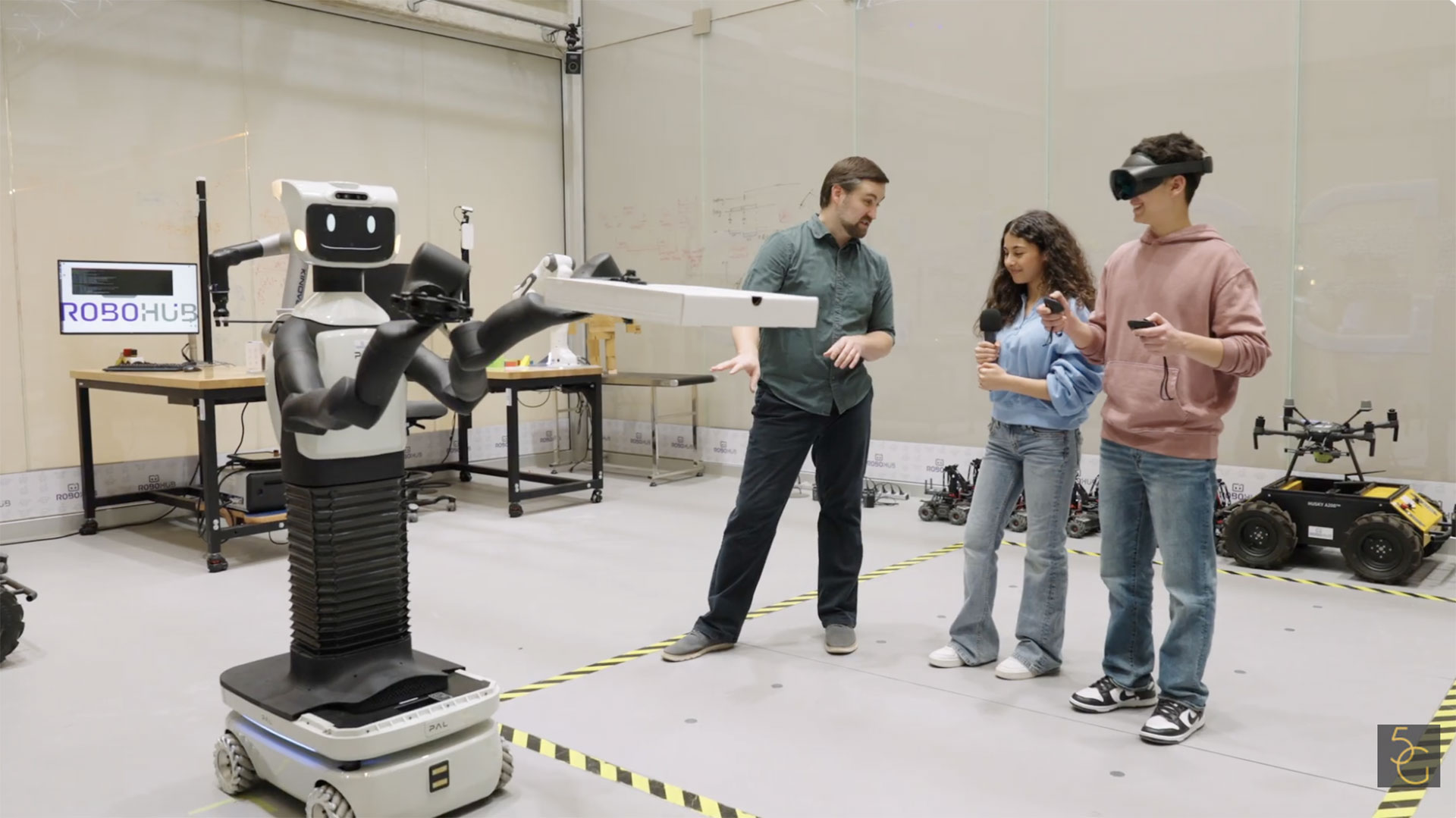
It’s all of this, he says, that helps make The Screen Team informative for both children and adults alike.
“From a personal standpoint, I want to learn while they’re learning, too. And putting it in simpler, less complicated terms is helpful for adults as well. Any adult that hears that we’re doing this show for kids, they inevitably say, ‘Oh, I want to learn about that, too.’ So it really speaks to all generations.”
Hurd agrees, highlighting topics like self-driving cars, which aren’t fully legal in Ontario, and AI, which is ever-evolving and still not widely understood.
“It’s part technological awareness,” she says. “There’s also the media literacy piece, which I think is really important. So, knowing that or understanding that not everything that ChatGPT tells you is actually true. It’s quite easy to get ChatGPT or other AI services to pump out misinformation and tell you things you want to hear or things that just might not be true. And not everybody realizes that.”
Tech decoded
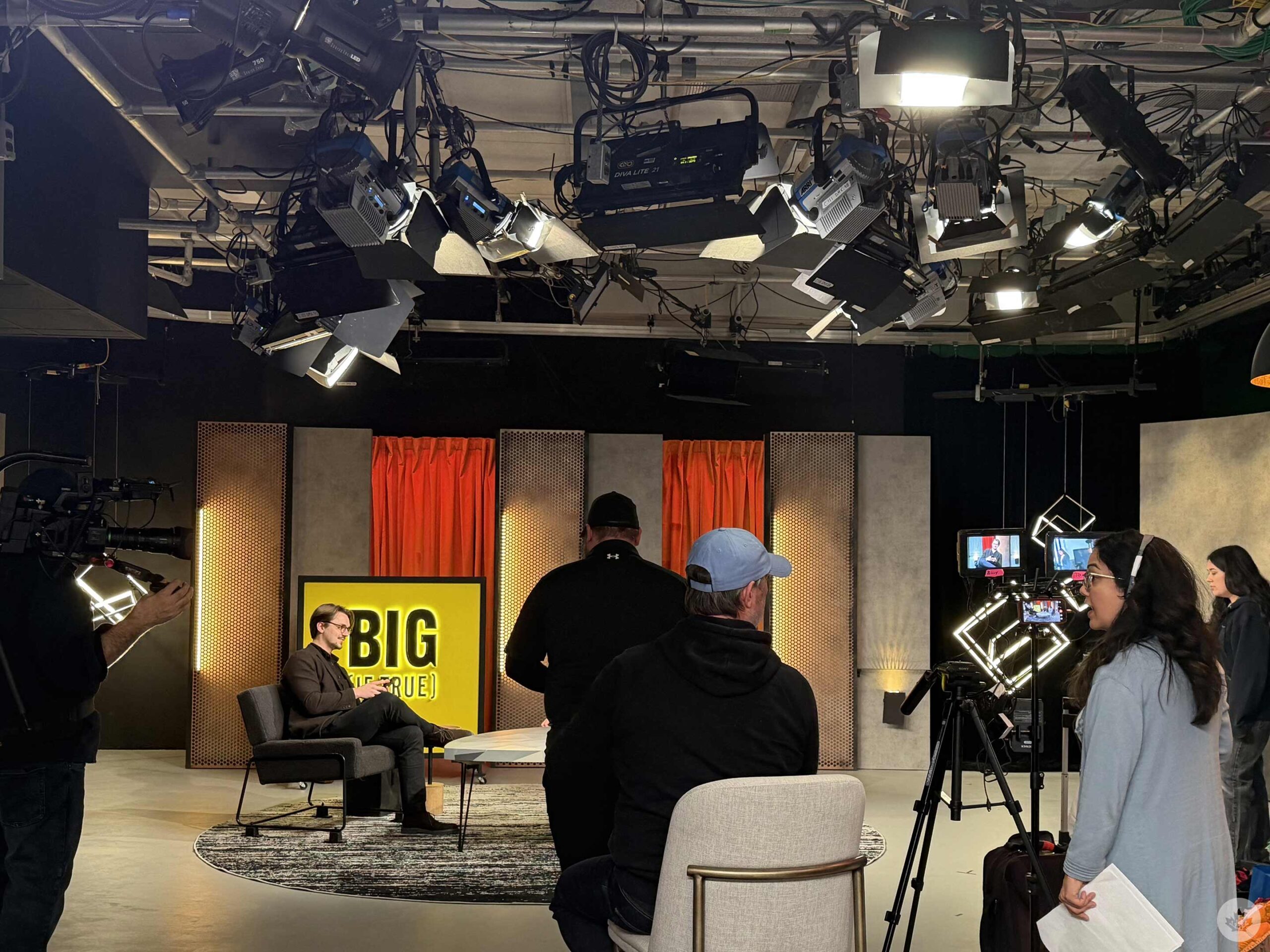
On the set, I got to watch Maharaj and Almeida film a segment for an episode about deepfakes. The pair walk into the TVO studio, with Maharaj excitedly pointing out, “Wow, this is like a real TV journalism studio! If anyone’s going to know what’s true and what’s false, it’s these people!” They then sit down to speak with an expert in a talk show-style setup to the backdrop of a square yellow-and-black sign, “Big (If True).”
Speaking to the tweens in between shooting, it quickly becomes clear how their bubbly personalities create an endearing back-and-forth.
“I love working with Reid, but he can’t go five seconds without touching his hair,” teases Maharaj. “And you can’t go five seconds without mentioning lunch!” he quips back, before the two of them laugh and talk about how much they “loved” working with one another.
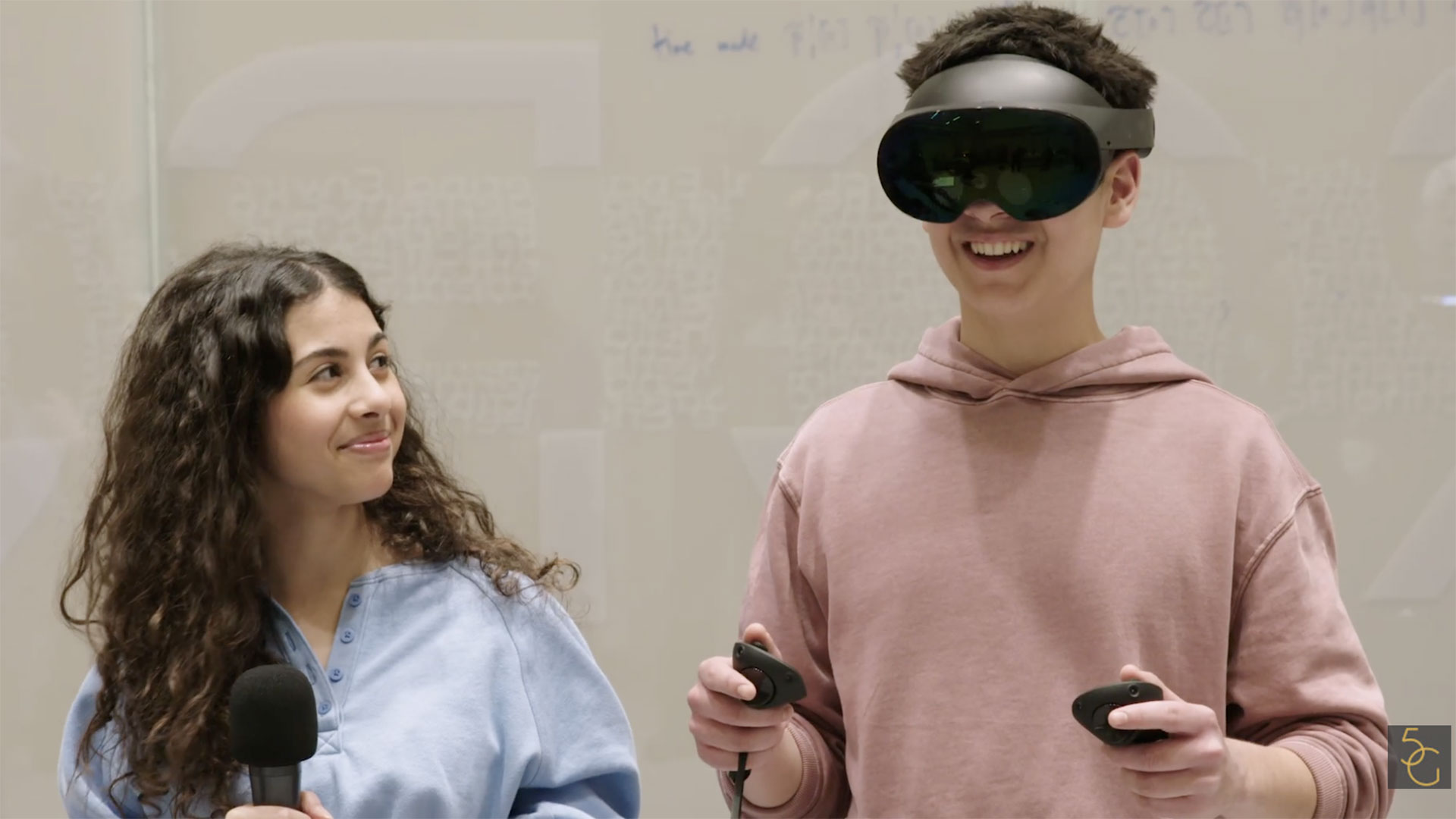
“We went through a pretty intense casting process, and they just spoke to us in terms of their openness and excitement to learn, and just how engaging they are as young people,” says Panikkar. Maharaj and Almeida’s enthusiasm extends to their experiences of making the show, which they both say has taught them a lot.
“I think that it’s really cool to see behind the scenes of technology that we use every day. And every time I use them now, I’m like, ‘Oh, that’s how it works!'” says Maharaj.
“Especially since technology is kind of invisible — it’s everywhere,” adds Almeida. “It’s in the oceans. It’s in space. So The Screen Team helps make it visible.”
And on the subject of visibility, Almeida is quick to point out that the animated pop-up graphics in the episodes are social media-inspired to help further welcome kids.
“It’s not like we’re lecturing people; it doesn’t feel like homework. We’re just talking, and, genuinely, we are learning,” he says. “I didn’t know anything about 3D printing, but with the experts that teach us everything, we’re learning. And even sometimes when we don’t know something, we can be like, ‘Okay, so confirming [how] this does that is a way to simplify for audiences.'”
This accessible, conversational approach is particularly important given how complex and even malicious technology can be. Nowhere is this truer than AI, which is a hot topic in society right now for everything from its heavy environmental impact to theft of human art.
“In each [episode], we talk a bit about the dangers and the bad, but without it being a wagging finger or ‘doom and gloom’ about it. So, the overall message that comes across in each episode is generally fairly positive, anywhere from neutral to positive, with some of the the dangers threaded throughout,” says Panikkar. “Sort of like, ‘This is one of the missteps that could happen, but if you handle it this way and this way, these are some of the wonderful things that can come out.'”
As an example, he points to the deepfake episode that is in production around us.
“We’re actually teaching them how to spot fakes online and learn about, anytime any information is presented to them online, taking a moment to pause and think more deeply about what it is that they’re seeing or reading and to question it,” he says. “We’re hoping that one of the big takeaways of the show in general is an ability to question, to poke holes in things, to figure out what is behind the messages that are coming across. So, online safety is super important to the overall message that we’re having across.”
Maharaj agrees, saying she wants one of the key lessons of the show to be that AI “doesn’t know everything” and, consequently, shouldn’t be fully relied upon. “I think it’s important for kids to know what they’re using when they’re really asking AI and that it’s important to know that AI can get things wrong,” she says.
Nearby, one of The Screen Team episode directors, Kara Harun, is prepping for cameras to start rolling. For Harun, the series has been a full-circle moment as she actually used to be a TVOKids host 10 years ago before eventually writing for both kids and adult programs.
“I’ve always really liked hosted kids lifestyle programs that are educational because I used to be a host, so it was an easy transition for me, and I’ve always learned something and have a really good time, too,” she says. Naturally, that gives her a particularly personal connection that can inform a more unique approach.
“I know the shows that have aired on this network, and I’ve directed other TVOKids shows, so it was kind of a filter that I’m able to put on almost in order to make sure that it’s appropriate for this audience,” she says.
With that prior experience as both a host and writer of kids programming, Harun says she’s tried to keep everything both light and informative.
“We try to make games for them, like little challenges — ‘Spot the Deepfake,’ I think, is in this episode,” she says. “But the challenge is finding the angle that’s fun for the kids. So, ‘Where does a photo go when I store it? Can AI do my homework?’ Making it very focused through their lens, I think, automatically takes a heavier subject and makes it a little lighter.”
Beyond the screen
Of course, tech being such a broad subject means that there’s only so much that can be covered in 20 eleven-minute episodes. But that doesn’t mean The Screen Team can’t lead to further learning.
“I really hope that after watching the show, that information that we teach stays in the back of their mind. So when they see something, they’re like, ‘Oh, I know how this works,’ and maybe branch off what they learned from us to other people,” says Maharaj.
“We can also probably hope that they may want to find a job in this field because the experts are showing their really cool jobs, and it could serve as like, ‘Hey, mom, this guy builds planes, I want to do that!'” adds Almeida.
Reflecting on her own time as a student, Harun likens it to when kids were urged to be “discerning” when using the internet for research purposes.
“I think talking about what’s behind the technology — where, when, and why to use it, but really digging into the nuts and bolts of like how this stuff works,” she says. “Because I think when you don’t realize how it works, you’re going to abuse it, or you’re going to use it too much. But if you understand how it all works and why we use it, I think that’d be an interesting thing for them to take into the education system instead of just saying, ‘Don’t use AI for your homework.'”
Panikkar, for his part, hopes that the series can help start a dialogue between kids and adults.
“I’m hoping it sparks a conversation about healthy ways to use technology. I hope it sparks conversations about losing any fear that is based in a lack of understanding about what technology can do,” he says. “I hope some of that fear is eliminated, and that through conversation with their parents, they learn whole new ways of interacting with the technology.”
“I think a lot of parents are also feeling overwhelmed by the amount of technology that their kids are using and seeing and encountering in their daily life,” adds Hurd. “If your kid watches a few hours of YouTube every night, I think it’s worth the conversation about, ‘Hey, how did they discover the people that they watch on YouTube?’ I’ve had those conversations with my own kids and I think this a great conversation starter for families to talk about all those pieces of technology that they might be touching throughout the day.”
The Screen Team premieres on October 9 at 11 a.m. on the TVOKids YouTube channel, website and app on Android and iOS. It will also debut on the TVO cable network on October 10.
Image credit: TVO
MobileSyrup may earn a commission from purchases made via our links, which helps fund the journalism we provide free on our website. These links do not influence our editorial content. Support us here.