


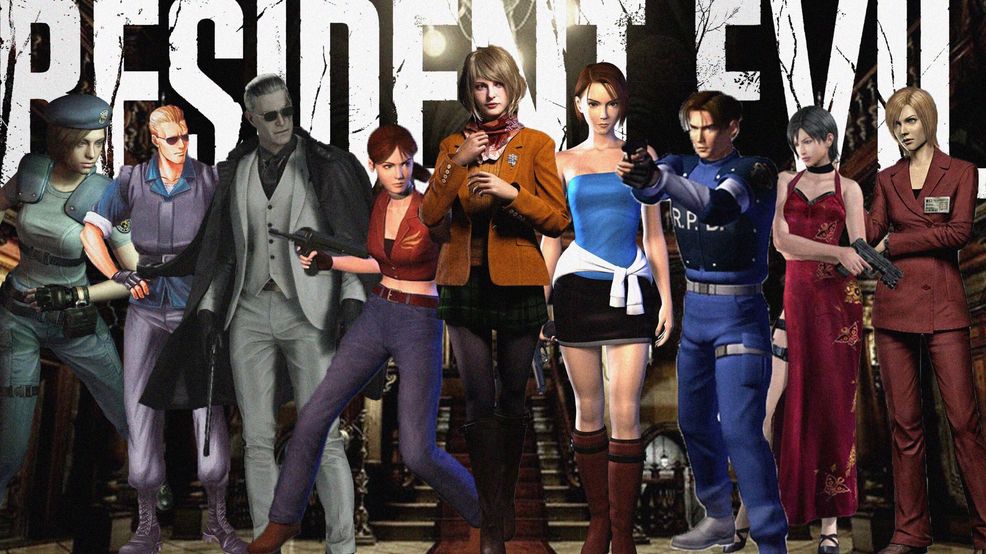
There are few video game properties as beloved and iconic as Resident Evil. Since its debut way back on the original PlayStation in 1996, Capcom’s survival horror series has left an indelible mark on the medium through its signature mix of haunting atmosphere, tense gunplay, thoughtful resource management systems and ample B-movie charms. With over 200 million copies sold to date, it’s one of gaming’s biggest series, and that success paved the way for numerous high-profile multimedia adaptations, not the least of which being Constantin’s franchise of eight live-action films, including Zach Cregger’s recent eponymous hit.
But despite all of that fame, a lot of people don’t realize just how much of an impact Canadians have had on the Japanese series throughout its entire history. Indeed, from the very first game all the way to its most recent release, actors, directors, models, and other artists hailing from across the Great White North have played pivotal roles in shaping the look, sound, and overall feel of Resident Evil. (That’s to say nothing of the fact that most of the movies were shot in and around Toronto, including multiple from Milla Jovovich’s series and 2021’s oft-forgotten Welcome to Raccoon City, with many Canadian actors featured throughout.)
And so, for the 30th anniversary, we wanted to celebrate Canada’s many contributions to Resident Evil. To do that, we spoke to over a dozen series veterans who worked on everything from the early PS1 games all the way up to the modern photorealistic entries. Along the way, they gave rich insight into the recording and localization processes, the evolution of technology, the vast pool of artistic talent in Canada and much more.
This is the Canadian legacy of Resident Evil.
Wow, what a mansion!
1996’s Resident Evil is one of the most iconic and influential games of all time. It pioneered tense survival horror action. It presented, at the time, incredible 3D graphics. And its setting, the Spencer Mansion, was a masterclass in labyrinthine game design. All of this helped elite S.T.A.R.S. officers Jill Valentine and Chris Redfield’s journey to escape the zombie-filled mansion become an instant classic.
Equally as famous, though, is the voice acting, but not necessarily for the same reasons. In the early days of what would become its biggest series, the company tapped a group of English-speaking expat actors in Japan for both the live-action segments and voice dubbing. But even years later, much of this group would remain in relative obscurity, whether it was due to miscrediting (such as with Jill’s voice, who has often — but never officially — been linked to Alberta actress Una Kavanagh), people not wanting to be associated with the roles, or some having passed away, as was the case of Chris’ actor, Victoria, B.C.-born Scott McCulloch. As a result, this made it difficult to find the right people from this seminal game to include in this feature.
But there is one Canadian who was part of that very first RE who actually openly embraces the project to this day: Pablo Kuntz, who played the villainous S.T.A.R.S. captain Albert Wesker. After graduating from the University of Western Ontario, the Rosemère, Que. native moved to Tokyo at the age of 22 to become an English teacher. However, he soon got bored with that job and tried his hand at modelling and acting, taking on numerous gigs around Tokyo. Along the way, he met Hollywood actor Sergio Alarcon, who was also modelling in Japan, and through him was introduced to a production manager who was casting for a little Capcom game about zombies.
Pablo Kuntz: It was a mixture of wanting to see the world, having a little bit of a glimpse into the culture [from a
childhood friend]. I got a visa, so I could go there legally, and it just seemed like a good fit […] You don’t think too much when you’re like 20. [laughs] You’re like, “Okay, let’s do it, what have I got to lose?” […] Growing up in Quebec, being English first language, I always felt like it was like some sort of handicap. It’s like, if you’re not fluently bilingual, which I’m not […] you learn pretty young that you’re not likely going to get any sort of high position in Quebec if you don’t speak French perfectly. Unless you’re French Canadian, it’s kind of a clique there.
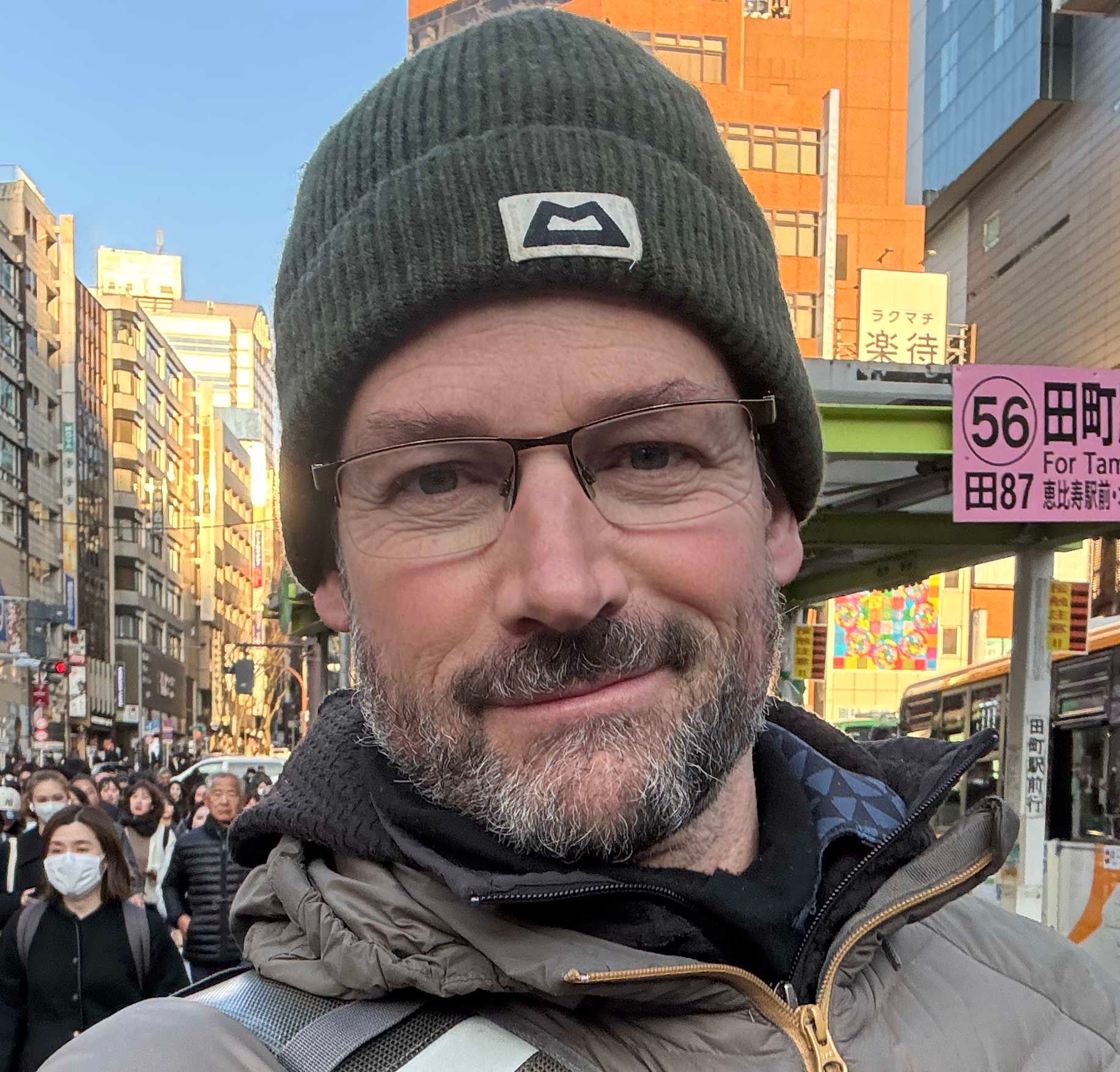
Pablo Kuntz. (Image credit: Pablo Kuntz)
[…] I joined about five or six different modelling agencies [in Tokyo], and I got work right away, pretty much. It was just hustle, hustle, hustle, hustle […] And I remember making friends with this guy named Sergio Alarcon […] Literally at 2 or 3 o’clock in the morning, I was recording. I remember stealing some line from Q107, actually, when I was doing it, and I put this voice tape together because it was so cheap to rent the studio at that time of the hour, and I gave it to Sergio.
I don’t think they had a pool of 200 people. I really think it was maybe 20, 30 voices. I have no idea the number, exactly, but they knew what I looked like. They knew how old I was. Because Barry [Kjerde] looks like Barry [Burton]. In fact, his name is Barry. He’s Barry! So the Japanese mindset was more like, “Well, if that’s what he looks like, if that’s the height, and then he must sound like that.” They wanted to pair [these attributes]. So when I looked at the picture of Wesker, I was like, “Yeah.” Not that it looked like me, but it wasn’t not me. I started to see [it]. […] It was a small group, and it was hard to get into that voice group. It was tough because they all knew they got paid well, and there wasn’t massive competition. So I was really glad.
While the acting is infamously campy, Kuntz’s recollections of the recording process shed some light on why that came to be.
Kuntz: I remember just being by myself in the recording studio, just one mic. No real direction, that is for sure. I had the mindset of what they needed and what they wanted from TV commercials, which I had done a good year-and-a-half of. A lot of commercials, they’re not long; they’re sometimes eight seconds, and it’s this big emotion, like angry and then sad at the end. You had to overemphasize everything, because when you did that, it translated in a commercial setting. They always said, “More overaction, Pablo, more overaction!” So that was ingrained in us.
That’s just Japan. If you go to Kabuki or you go to see any other live show, they’re always doing that. So we just felt that was the right thing to do. Plus, the dialogue was very obviously just funny translation. Like, why don’t I just say, “Stop, don’t open that door!?” It’s “Stop it!” Why is that “it” there? It’s just totally weird, right? But there was no direction, so it was just, “Stop it, don’t open that door!” And I try to remember that one line why I did it the way I did it. Did I realize that I actually had a couple extra words? “Stop it, don’t open that door!” [laughs] Because the delivery is so corny!
I don’t know what I was thinking. I had the script beforehand, so it wasn’t like I was just going from zero right there. But I didn’t take it that seriously. I’m going to be very honest. I didn’t like read it on, going like, “Okay, I’ve got to get into persona now.” There’s no way. I was just thinking, “Okay, two-day job, I got my lines, see if I can isolate it.” In some situations, I remember doing a couple takes, if it was a long take. You know that last scene in Resident Evil, or close to last scene, where I’m in the hallway and I go [puts on deeper voice] “So, Jill!” That time, I’m kind of getting more warmed up. Because in almost any voice recording, the first few lines are often redone later on. You just get into it, and all of a sudden, “Can we do those first four again? Because it doesn’t sound so good.” But I never had that chance.
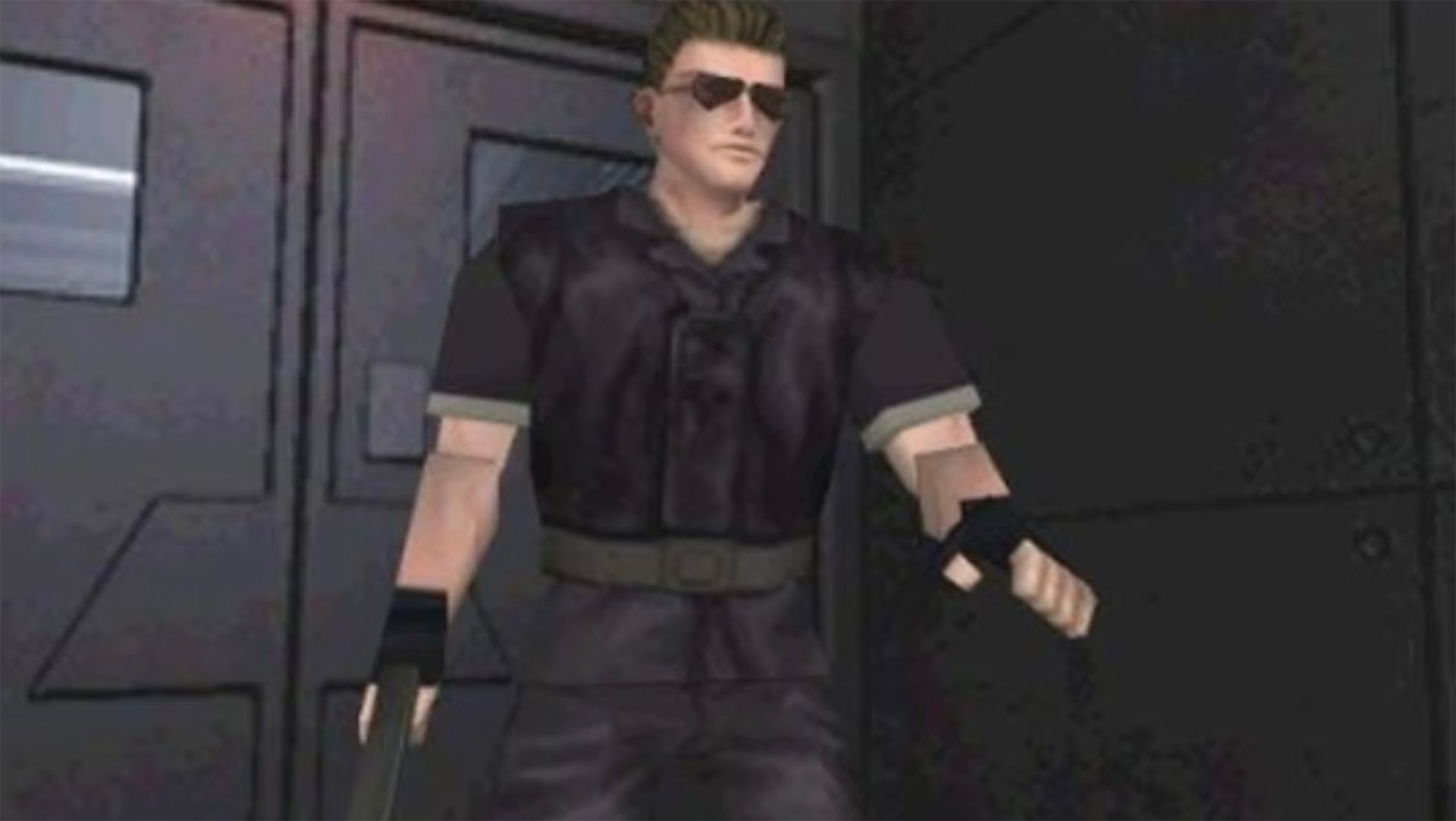
Wesker in the original Resident Evil. (Image credit: Capcom)
[…] It wasn’t like, “Pablo, this time, please….” Nothing like that. It’s nice when a director [does that]. Because in the TV stuff, we often got some direction. “Okay, Pablo, lips a little bit slower this time.” But not [on Resident Evil]. It just felt like one giant experiment. But it was a happy accident. Everything kind of just worked. I think the graphics themselves mimic the voices. They’re all pixelated, and somehow, because the characters are a little bit awkward on screen, the voice being a little bit awkward — it’s somehow a nice marriage there. [laughs] It was so honest.
[…] One person said the reason why your [Wesker] worked […] He didn’t sound necessarily like an evil guy. And I think that’s what was special about Wesker. Because I don’t think I really spent that much time realizing, “Oh shit, I’m actually kind of bad!” [laughs] So that kind of naiveté, the whole thing sort of worked in my favour. There was no hint of me being a bad guy from the onset of Resident Evil. Nobody thought I was a double agent at all […] Because as one person said in the chat, Wesker doesn’t think of himself as being evil. So why do you have to sound evil?
Because it was a brief gig among many, Kuntz never thought much of Resident Evil again and, after a couple of decades, had pretty much forgotten he’d even done it. He would later hold a number of jobs, from building websites for Japanese companies Nissan and Pasona to Unique Japan, his own business that sells certified high-quality Japanese swords. One day, during the COVID-19 pandemic, someone commented on one of his sword videos asking if he was Wesker from the original Resident Evil game, sending him down an internet rabbit hole to rediscover something he had done over 20 years prior. This led him to ultimately embrace the role and the community through interviews, videos and even streamed playthroughs of Resident Evil games with his son on his YouTube channel, Lexonal. But Kuntz admits that he wasn’t always sure if this was the right approach.
Kuntz: My first reaction was like, “Maybe I shouldn’t, because everybody’s making fun of this stuff.” […] I had every reason to just ignore comments and say, “I’m not gonna, what are you talking about?” But there was just a kind of sense of almost taking responsibility. There’s one thing I’ve actually taught my kids, and they know this straight up: if you make a mistake, you fess up to it and don’t run away from that […] That played a role. I think I just said, “Well, I did it!”
Plus, it bothered me a little bit that Sergio was credited. It’s like, “It’s not Sergio!” It still niggles me when I see a video. [laughs] I haven’t seen one in a long time; I think people have come around the fact that it’s me. It’s like, “I could say nothing, and then I’ll live with the fact that it’s always Sergio on here, or just take this time to go and say it’s me.” But I can honestly say I had no idea what that would lead to just by saying it’s me. I really had no clue that people were going to go, “Whoa!” And all of a sudden, I felt this tsunami of interest. I was all of a sudden doing interviews for a while there, Residence of Evil and a few others. But everybody was like, “Yes, we got him! We finally figured out who the guy is!” And some people were still going, “No, no, it’s still Sergio!” And I’m like, “No, it’s not Sergio! Stop with the Sergio crap!” [laughs]
From Tokyo to Toronto
Resident Evil 2 is notable for many reasons. Where the original game focused on the elite S.T.A.R.S. members, this 1998 follow-up stars two scrappy, fresh-faced protagonists: rookie cop Leon S. Kennedy and college student Claire Redfield. The sequel also introduced the ingenious “zapping system” in which decisions that players made as one character, such as taking certain guns or defeating specific enemies, would affect how events transpire in another campaign. And if that wasn’t enough, the sequel marked the debut of the classic RE “stalker” enemy that constantly pursues you, realized memorably here with the towering trench-coat-and-fedora-clad Tyrant, affectionately known as Mr. X by fans.
But it wasn’t just the game design that levelled up — so, too, did the voice acting. As it turns out, that was all thanks to a team of marvellous mutants. In the ’90s, X-Men: The Animated Series recorded in Toronto after Fox Kids had great success in the city with Beetlejuice and Dan Hennessey, the late voice director on both shows. Because all of the X-Men vocal talent was already in Toronto, Capcom opted to record X-Men vs. Street Fighter in the city as well. Susan Hart, a local voice director who had already worked with Hennessey on several X-Men episodes, ultimately took on X-Men vs. Street Fighter and, through that, Resident Evil.

Susan Hart. (Image credit: Susan Hart)
Susan Hart (voice director, Resident Evil 2, 3, Code Veronica and many other Capcom games): The scheduler at the studio said, “I’ve got the person for you — just call Susan, she’ll help you.” So when I got the email — “Can you cast this for us?” “Yes.” “Can you produce it?” “Oh, yes!” “Can you voice direct this?” “Of course!” [laughs] It helped because I’d been in the studio before, and I’m comfortable being in the studio, both prior as a performer and being in there working with Dan. It also really helped that I was in casting, so I knew how to direct. I had done many feature films and animated series, so I was very comfortable working with actors. So I knew what a script looked like. I knew the process, and I understood the studio, how that worked, as far as working with the engineer, et cetera, et cetera. So we got started, and I was able to hire a lot of the original cast, and it just kept on coming.
Alyson Court (Claire Redfield, Resident Evil 2, Code Veronica and others, Jubilee in X-Men: The Animated Series): “[Fox] really liked the entire team that they were working with in Toronto, because Dan Hennessey directed Beetlejuice and then went on to direct the X-Men cartoon… They used the same studio, which back then was called Sounds Interchange, and then became D.A.V.E., and then Technicolor. It’s been through a bunch of different names. And it just recently got bulldozed, so that’s very sad. Very similar in a way to Capcom, where they went there for something specific. Beetlejuice was being done there because Nelvana was making it. Nelvana is a Toronto company, but then Fox took it over, and they really liked the team, so they wanted to continue.
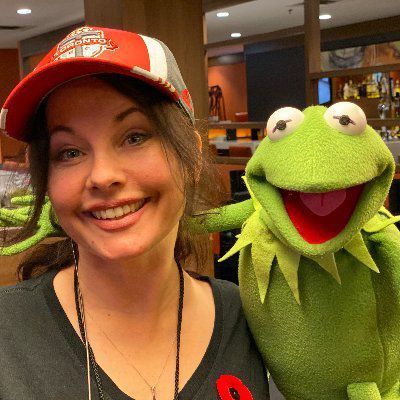
Alyson Court. (Image credit: Alyson Court)
And then there’s the fact that the Canadian dollar was lower, and our union fees are cheaper than SAG rates, so it was more economical. And at that time, X-Men and Fox and just the Saturday morning cartoon in terms of superheroes — that was not a thing. It was not popular, and Marvel was in the tank. So doing the X-Men cartoon was a huge leap of faith by the team that put it together and they didn’t really have much of a budget. So economically, I think that played a huge part in the decision to continue in Toronto. And also, the fact that they really loved the talent pool coming off of Beetlejuice. They were like, “No, this is going to be fine.”
They went through several rounds casting for X-Men, and there were a lot of people that were cast in the first place, and then they were replaced. Most of us were replacements, actually — I think after they recorded the initial pilot episode. They were all clearly very passionate about it, and a lot of the replacements were theatre people. They were like, “No, we don’t want people who just have a ton of cartoon experience because that’s not the tone that we’re going for.”
Susan Hart: Toronto has got a plethora of everything. We have film schools. We have theatres. We have improvisational houses. We have so much that the actors can experience and train in all different disciplines. So they’re not just in theatre. They’re also doing some film work. They’re also doing narration. We’ve got Shaw. We’ve got Stratford. We’ve got Soul Pepper. We have production companies from all over the world coming here and shooting. Our actors have got a huge amount of resources to satisfy all their acting itches, and they can perform in a multitude of different disciplines. That is what makes our talent in Toronto, specifically. I know in Vancouver there’s great talent, in Montreal, et cetera, there’s great talent. But right here in Toronto, we’ve got so many platforms for our actors to delve into and grow and become better and better at their craft.
Dawn of the dead
RE2 would be the first of several RE games that were recorded in Toronto. Naturally, this meant that it was a big learning process for all involved. The Canadian and Japanese teams navigated language and cultural barriers. Dealing with the technical limitations of ’90s hardware. Minimal communication about what the project even was. All of that is to say: having this veteran Canadian cast and crew proved invaluable to Capcom.
Susan Hart: They would send out what they needed, cast breakdowns, and so I would do all of that. At that time, when we first started, I think it might have been cassette tapes, not digital audio tapes. We would just do the casting. They’d give me the script. They’d send me the scripts — or sides, pieces of the script — and the character description. And the actors would come in, and they would have the script ahead of time, and I’d audition them, and then we’d send two tapes separately, just in case one got lost. And we sent them via FedEx. So they would get it, they’d listen to it, they’d get back to me if they didn’t hear what they wanted… If they wanted more, I would do it again. And then we would coordinate hours, days, that they would be flying in so I’d book the studio.
The scripts would arrive, but initially, none of the lines were in order. None of the scenes were in order. And initially, the scripts were not allowed out of the studio, so the actors would have to come a day before their booking and sit in the lobby and read the scripts and familiarize themselves with them, just because you didn’t want any of that stuff out there. So we did this for years, and it really was a great system. Initially, we had quite a few people from Capcom come out. I’d say about eight, and there was an interpreter there. And they were just so giving and just so pleased with how organized it was. And the actors coming in were just so kind. There was some broken English going on, but the laughter and the clapping and the camaraderie that was happening — it was really, really nice. And that happened for every game that we did. As the games went on, we started getting to digital audio tapes, less and less people came, and then, for a while, it was just a producer and R&D, probably, that were there at the end of it, when I stopped working there with them.
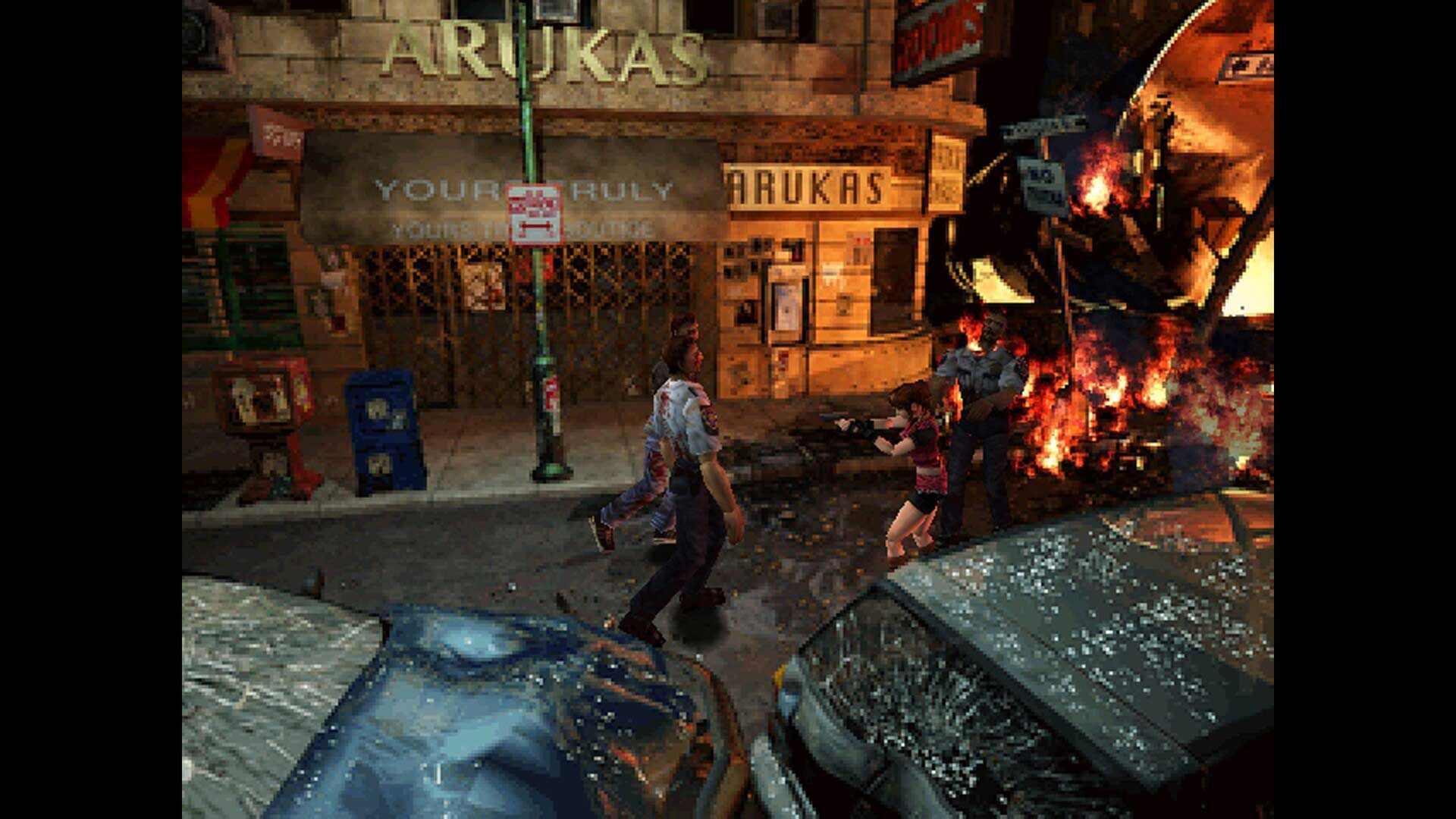
Claire in the original Resident Evil 2. (Image credit: Capcom)
Alyson Court: They didn’t share really anything about [RE2]. It was the same people that had done the Marvel vs. Capcom game, where I met them to do Jubilee’s voice, but there wasn’t a whole lot beyond that. Even our contracts initially didn’t have the name of the game on them. That was something they did with all of their games. They came here and they came to Toronto and they did a bunch of games, but they were always very secretive on the contracts, which, really, you shouldn’t be. You do have to say what the job is. [laughs]
[…] At the audition, I was told that this character I was reading for, “Think of her as serious, it’s kind of scary, she’s looking for her brother. She doesn’t know anybody, and she’s sort of like Jubilee’s older sister.” [That’s] how it was described to me. “But it’s more adult and serious and that kind of thing.” And what was nice is doing X-Men: The Animated Series definitely gave those of us who had prior animation experience a whole different world to play in in terms of voice acting. Because they didn’t want Saturday morning cartoon characterizations. They didn’t want it for kids, they didn’t want it goofy; they wanted it with some gravitas and serious stories with consequences and people being killed.
They wanted that drama and that level of performance to come through, so I think that’s a huge part of why Capcom chose to sort of set up shop in Toronto for a number of years for so many AAA titles, because they had been introduced to a talent pool. We were all theatre trained, so we had this huge wealth of different mediums behind us and under our belts. So they had a really good talent pool to pull from.
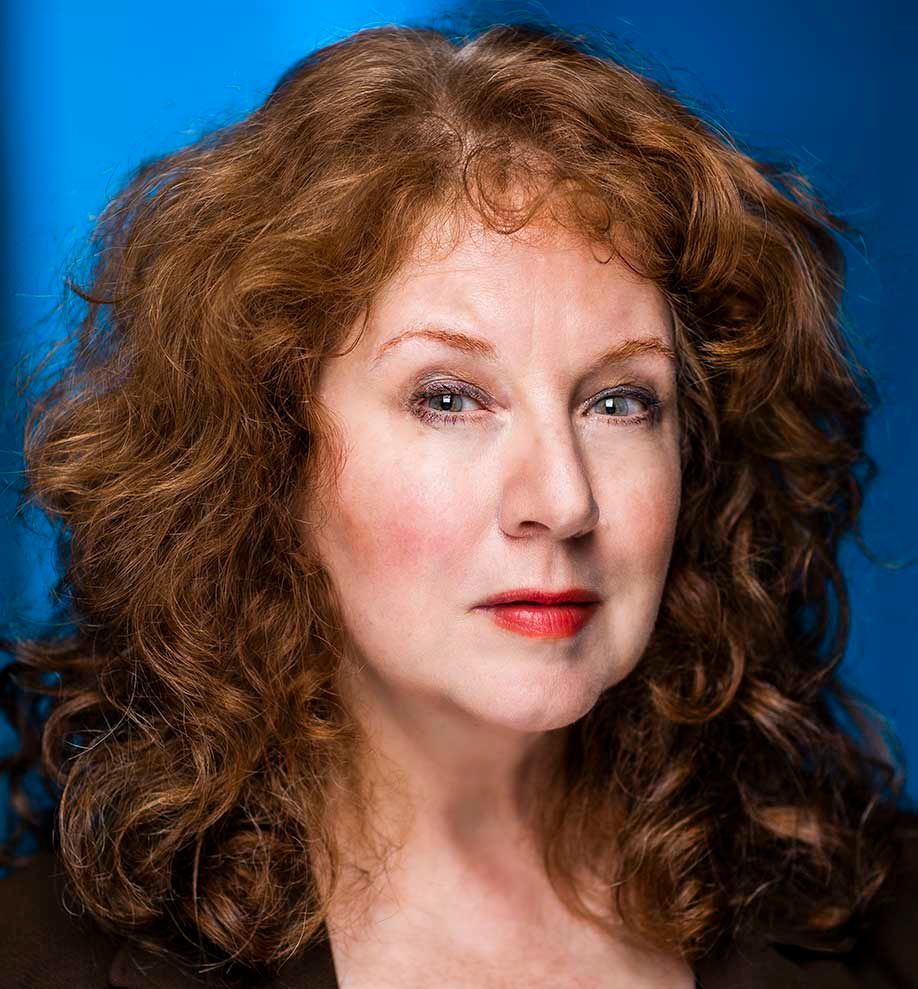
Sally Cahill. (Image credit: Sally Cahill)
Sally Cahill (Ada Wong, Resident Evil 2, 4 and Darkside Chronicles: It wasn’t so much that there was a lot of secretiveness regarding Resident Evil; there wasn’t a lot of buzz or talk in general. I think perhaps because it was still sort of in development. Things are likely very different today when actors hear there are auditions for Resident Evil! I was attracted to the project because though I had done cartoons and other voiceover work, this was my first major role in a video game. It was different, too; it was intriguing and fun.
[…] I remember meeting the creative team from Capcom at the initial audition and at the recordings. I think it really helped having Susan Hart there. Since there was usually a Japanese interpreter, it was often Susan I could see behind the glass in the recording studio in animated conversation with them. She was very good at communicating back and forth, and then coming on the mic and giving me short, clear direction. Susan Hart was great at that. She left room for our own interpretation as well. Actors love that kind of director.
Alyson Court: It was all very odd. I certainly had never played a game like what we were making, so I didn’t have that conceptually in my brain as to that’s what it could be. And we were pretty isolated during the recordings. We might pass each other, either [Leon actor] Paul [Haddad] and me, or occasionally [Sherry Birkin actor] Lisa [Jai] — I might see them out in the waiting room at the studio. But we were mostly alone in the booth, and there wasn’t a lot of communication because the bulk of the people who came over from Capcom were all from Japan. They spoke Japanese, not English. They had a translator there, but they were very quiet about things. They didn’t like to share information […]
It felt like this impenetrable wall. There was the language barrier, but there was a translator. But it’s just culturally so different, and the idea of sharing information, or why you don’t need to know, or whatnot — it was sort of like, “Why would we need to give information?” Down the road, I think they learned it’s important; you need to give as much information as possible to help [us] understand the nuances. Because for a lot of it, it felt like we were recording the same sections of script over and over again — or certainly the same scenes and dialogue, even though it would have a different scene number. And Paul and I just couldn’t understand what was going on.
[…] I think it got to a point when I would be like, “Hi, so is there a performance note? What is it that you want here?” And they’re like, “Why are you asking this?” I’m like, “Well, because we’ve done this five times already, so clearly you’re not happy with it!” [laughs] “So tell me what you want done differently.” And that was the one time during Resident Evil 2 where they all sort of chit-chatted and they’re like, “Oh no, this is a different scenario.” That was the most I could get out of them, and I was like, “Okay, whatever you say.” And by the time Code Veronica came around, I was like, “Now I get what you mean by ‘different scenario,'” and there was this level of understanding, and we could kind of joke about things and [be] more forthcoming with information.
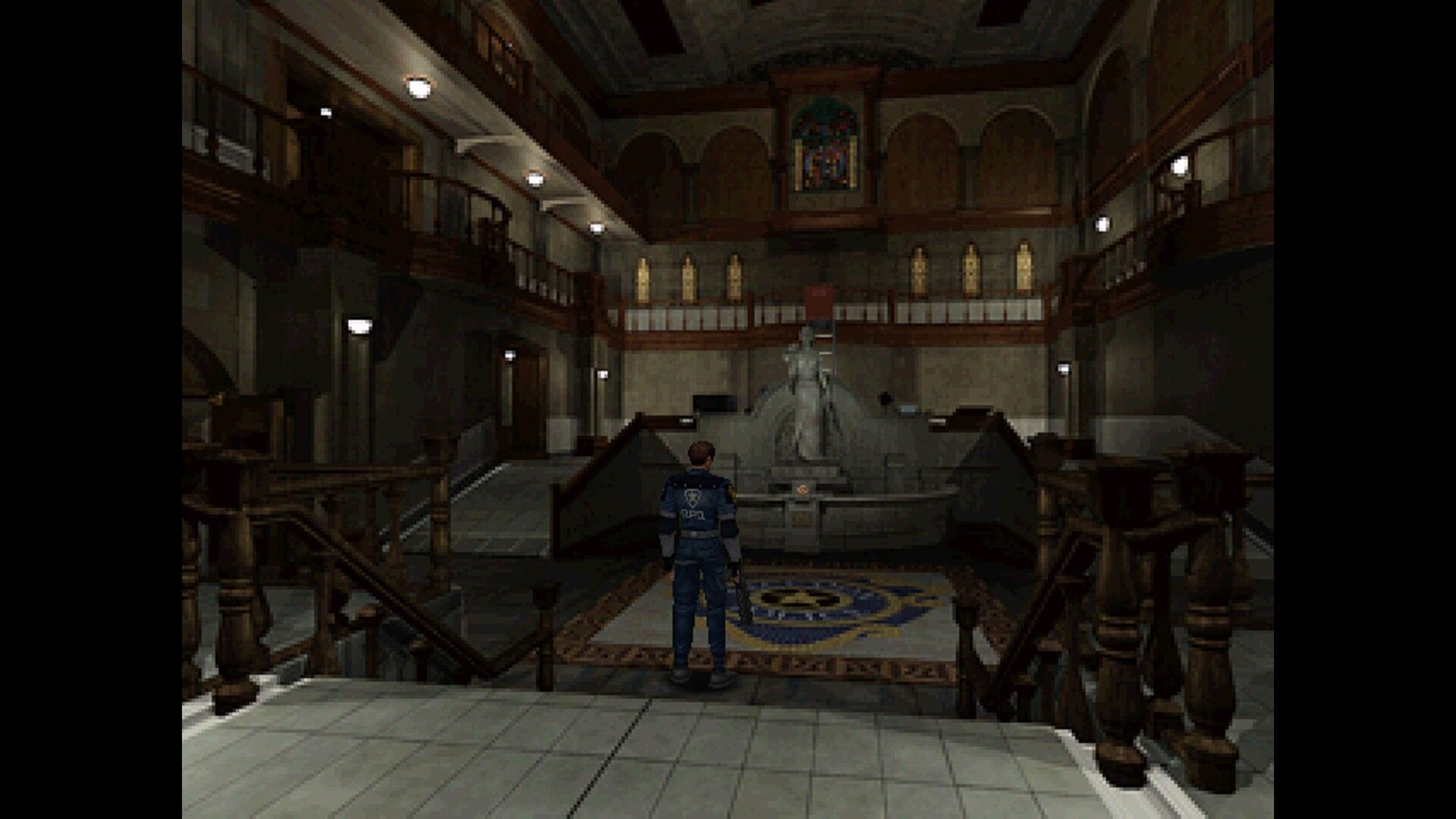
Leon in the original Resident Evil 2. (Image credit: Capcom)
Sally Cahill: There was nothing to reference it to. We were creating the people we were playing as we were recording with very little background or history. I had to make up my own secrets and ideas about [Ada] — at least that was what it felt like for me, which, looking back now, was actually a great gift.
Susan Hart: There was a process for a lot of the games. We would do the voices first, just the voices, that would go back to Japan. They would do their motion [capture] and their blocking. Then they would figure out, “Oh, we need that voice louder because we’re going to put the enemy further away, or we need that person softer. We need the voice faster.” So then we would come back with those. They would come back with those notes. So we would record the second time — “pickups,” if you want to call them that, or just change of script. And then that would go back, and then they would start working on their animation, and then in the animation, they would find that they were needing more “panic” because they had more explosives, or they needed more “despair” because they had more killings, or the guns were heavier, the equipment was heavier, so they needed more exertion.
So then they would come back a third time, and we would record those. And then a lot of the time, what we would do is they would come back after the game was completely finished, and we would just record the lips, so they would get the proper lip flaps. That happened a little later on, but I liked, initially, how we used our imagination for those things. And we had the creators there, so we used them to get started. And we had borders, of course, but we had a little bit more self-expression. We weren’t tied down to, “Well, it has to be this way because it’s like this and this and this and this in the picture and in the story.” We had a little bit more girth. We had a little bit more room. Not to say how they do it now is worse. It’s not. It’s just a different way of recording. And I liked that format, how we did that.
And then, as the years went on and the games went on, only some of the games did we do lip flaps. Other times they had it down pat. And in different recording systems than what they do in Japan. Like a lot of times, when they’re doing dubbing or records, they just have a big room with all the actors. They’ve got seven or eight microphones set up, and the director’s sitting there, “Go!” and they run up, do their line, they sit down, they run up and do their line and sit down. That’s a different way of doing things. They do that now here for a lot of dubbing jobs where they get the whole crowd in and they just get up for their line, which is good because then you can hear what the other actors are saying and so you can feed off of that. So it worked for everything. It worked for years. The new [way] works as well, so no sadness. [laughs]
Remembering Paul Haddad (1963-2020)
No conversation about the legacy of Resident Evil would be complete without Leon S. Kennedy. With his hunky good looks, lovably corny one-liners and penchant for riotous, over-the-top acrobatics, he’s easily one of gaming’s most beloved heroes. But while American actor Paul Mercier would provide perhaps the most iconic take on Leon in Capcom’s 2005 magnum opus, Resident Evil 4, the man who first gave voice to everyone’s favourite suave, roundhouse-kicking badass was the late British-born Canadian actor Paul Haddad.
He would only portray Leon in the original RE2, but the vulnerability and earnestness that he brought to the rookie cop proved enduringly popular. In his final years, Haddad fully embraced Leon and the Resident Evil community, who fondly remember him to this day. And when he tragically passed away in April 2020 at the age of 56, countless fans paid their respects, including Nick Apostolides, the main Leon actor since 2019’s Resident Evil 2 remake and a lifelong fan of the series. Decades later, Haddad remains a true RE icon.
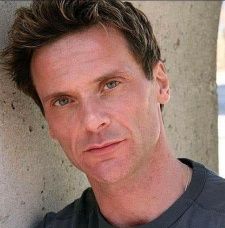
Paul Haddad. (Image credit: Paul Haddad)
Alyson Court: I was working with Paul since I was 14, 15. If people go digging through the “Paul Haddad Files,” there’s lots out there. You should look up a TV series called Road to Avonlea, he was on that. Just a beautiful, beautiful young man. We also did a cartoon together called Free Willy, he was the lead in that. [I had] tons of time in the studio working with Paul. Just a gem of a human — just a very, very sweet guy. I think you can hear it in some of the interviews that he did in the last years of his life. There’s that deep appreciation for the Resident Evil fanbase in particular. He was always lovely to work with. And then, when he got throat cancer, that was actually several years before his passing, and he actually went through it and managed to come out the other side. He went through so much because of what a strong, beautiful voice he had, and the idea of that being taken away from you… He went through a lot. But he was always a very kind and generous person to work with.
Sally Cahill: When I was first introduced to Paul Haddad, it was in a dark recording booth with a single light on my script and blackness all around. And then this very intense and amazing voice filled my headphones. It came very naturally for me to work with his Leon because his voice was very committed and compelling. He was always referred to, while I was working in the booth, as “Leon,” as I assume I was likely always “Ada” for him — not “Paul” or “Sally.” And we never met in person. Years later, we did speak on the phone. It was a strangely sweet moment to be chatting as Sally and Paul, but also a little poignant. He was not well then, but I had no idea we would lose him so soon. That’s why Resident Evil 2, besides being the first game I did, will always have a special place in my heart. Because when you play it, Paul is in the room again. And he always will be.
Susan Hart: Paul was very grateful. Paul was very talented. He researched his character, he felt his character. Paul had a real knack for taking the lines and just bringing them to life. And the energy — I will always remember his energy in the booth. I will always remember how grateful he was, and how humble he was, and how he just wanted to keep on learning. And that’s a good actor. When an actor is always open to learning new things, new ways of approaching and listening — those are all good attributes for an actor to have. And Paul had all of those, all of them. That’s what you’re feeling. You’re feeling his insides. You’re feeling that he cared, and that goes a long way with the character. And look where the character is now.
I’ll give you S.T.A.R.S.
Alongside Code Veronica, Capcom was toiling away at its third and final Resident Evil for the original PlayStation. And like Code Veronica, it directly picked up threads from the original game, with Jill and her fellow S.T.A.R.S. members being hunted by a deadly bio-organic weapon (BOW) known as Nemesis. It led to a more action-oriented premise while presenting a stalker enemy that was significantly more frightening than RE2‘s Mr. X. To bring Jill’s harrowing journey to life, Capcom once again looked to both X-Men and its own fighting games, ultimately casting the voice of Jean Grey.

Catherine Disher. (Image credit: Catherine Disher)
Catherine Disher (Jill Valentine, Resident Evil 3): They were here in Toronto, Capcom, doing the Marvel vs. Capcom fighting games, and they wanted the original voice actors from X-Men on them. But it’s funny, because when you hire an actor for a principal role, and then you give them a secondary role, you get a big discount on the secondary role. And so, instead of hiring more than one female actor at the time on those fighting games, I did Jean, Jill, Psylocke, Spiral… I did Storm because Alison Sealy-Smith wasn’t on it yet. I did a whole bunch of those, and then obviously, not Jill at the very beginning. So that was their first foray in Toronto doing these games, and they stuck around.
And what they said to me [about Resident Evil] was, “Here, listen to this.” And it was the voice actress from the very first Resident Evil. All I heard was a recording of her voice, and they said, “Look, she was a non-professional actor in Japan at the time.” I think she might have even been in high school or something. And so they said, “Can you voice match this? Because we want to shoot it here.” And weirdly enough, I listened to it, and I was like, “Yeah, we sound enough alike. And I’ve done voice matches before. This is no problem.” And so they said, “Great.” And I gave an example, and they were like, “Perfect.”
And so when we started it, I was so aware that they might want an exact voice match that I kept stopping because when I do those kinds of jobs, they have a reference on file, or I make sure they do. And every once in a while, I go, “Hey, can I hear the reference?” And after like the fourth or fifth time, they were like, “You’re fine. Just do whatever you’re doing. That’s great.” So then I stopped worrying about that and just played the part. Because that intrigued me. Those other video games I’d done had all been fighting games, which are mostly grunts or like a few key phrases being thrown out. And this one [RE3] with the diary entries felt like much more of a fully formed character in an interesting situation, so that really appealed to me. And it sort of continued to appeal to me all through the recording. That character, she really felt real, like there was really something to hang on to and play with.
Disher recalls the direction that Hart and Capcom gave her.
Disher: There was a lot of direction given. I mean, yes and no. It’s not like they micromanaged me, but it was more because I had the script with the cues. But you need to know the circumstances of what’s going on. Like, “What am I doing here? Why is this line [here]? What’s going on?” And I forget what the script itself looked like, but that’s informationally what I want to know, and that’s information they can give. So there’s a real give and take there with the voice director. And so in the room, as I recall, we had Susan Hart, we had obviously the engineer, and there was an assistant, and then there were, I think, as many as three, possibly even four, engineers from Japan, game designers, and their translator. So when I had a question, it would always run through the translator to the game designers and then back. And it was a laborious process.
And also, I would do a line, and they were all on the other side of the glass. It was almost like meerkats. They were waiting for the line, and then as soon as I said it, they’d be on their computers like this [taps keyboard]. I was like, “What are they writing? What are they thinking?” And so often you’d do a line and then wait for feedback, and that would take a while to go through. And I remember laughing at one point because I had asked a question about something, or I was waiting for feedback after a line. And keep in mind, we would do take after take after take after take of lines. And also, every time, it almost felt like Groundhog Day because some of the lines were so similar to each other because, of course, it depended on choices that people made in the game.
But I do remember waiting for feedback on a line. They mute you, so I can’t hear what’s going on the other side of the glass in the booth while they talk. And I prefer that. I don’t want to hear anything anyone’s saying about me or my performance. Everything should come through the director, the voice director. So they would mute me, and then I would see the Japanese game designers talking animatedly to their translator, and it would go on for quite a long time.
And then they’d unmute me, and the translator would go, “Faster,” or something, and I’d be like, “Really? Is that all they said to each other?” [laughs] Or maybe he said that to the director, and then Susan would go, “Faster.” And I’m like, “That’s not everything [they] said!” So it was an interesting process, and it took longer because of the translation aspect of it.
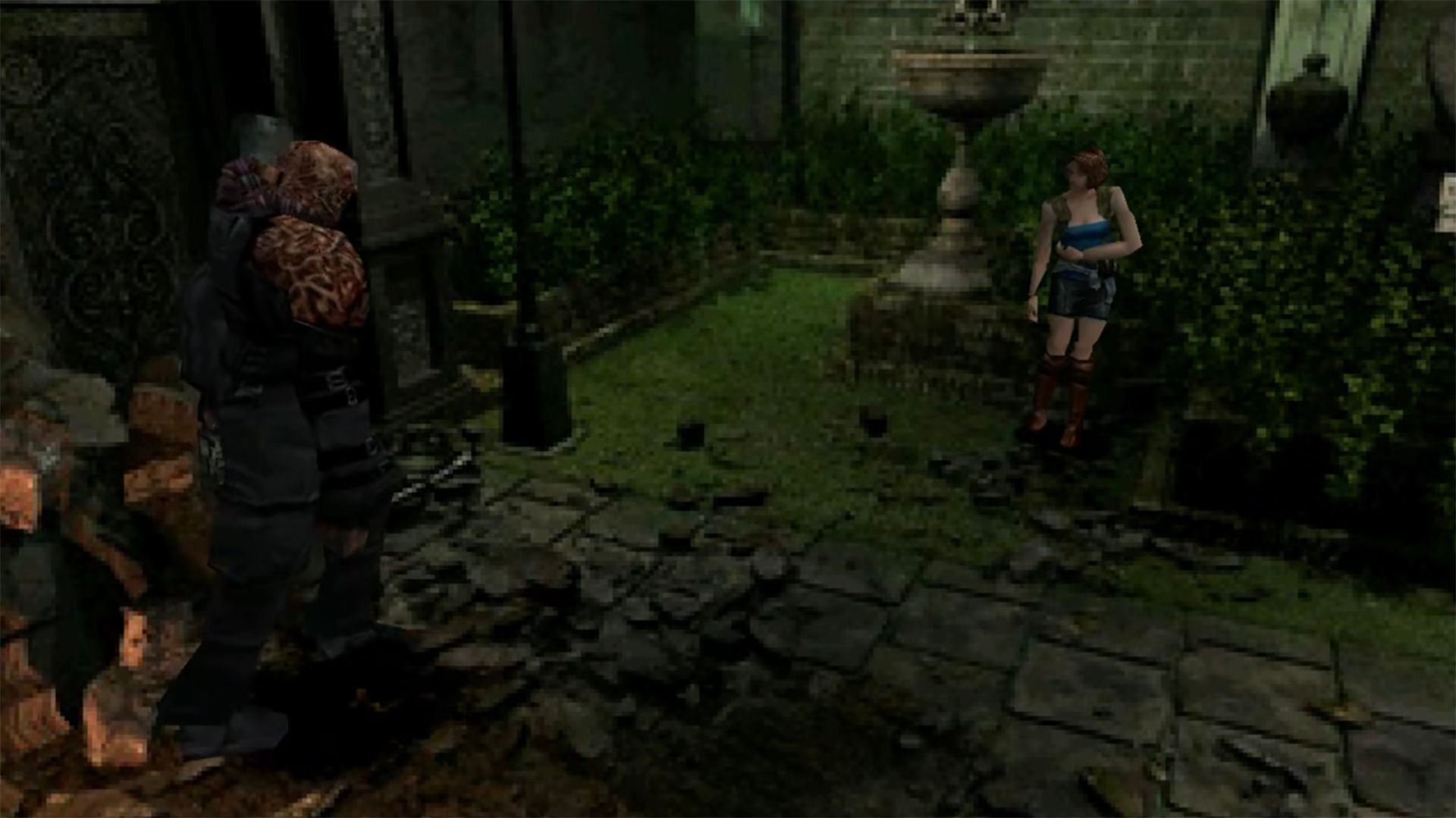
Resident Evil 3: Nemesis. (Image credit: Capcom)
I had no visuals. They had no artwork. I had no idea that she was wearing a miniskirt and tube top, fighting zombies. I only found that out when they came back to do some additional dialogue recording later on. I think I was aware that it was titled Resident Evil, but at some points, it was also referred to as 1.9. So there were layers of inscrutability; I wasn’t quite sure what was going on. Interestingly enough, we recorded it in the same studio that we had been recording X-Men, so it was a very familiar studio to me. In fact, we were recording there up until a few months ago. I don’t know if they’ve torn down the building yet at 49 Ontario, but that’s where we did X-Men all those years ago. That’s where they came back and started with X-Men ’97.
[…] I was in there all the time, and they would bring other actors. Like Carlos [Vince Corazza] would come in for two or three days, and Brad [Evan Sabba] would come. People would come in and out, and I got very lonely. I was really excited when they brought other actors in, because it took a long time. I think the fighting games we knocked off pretty quickly, but this, I’m sure, had at least 14 or 15 recording days that we did over the course of a few weeks. So it was a much more involved project, and I did go a bit squirrelly because there’s no window in that studio. And like I said, I didn’t know anything about it, and so I had all these questions about different lines and what the setting was. […] They were all extremely nice, and it was really fun. And I haven’t done another video game like that since, where I was the lead character and had all that stuff to do.
Susan Hart: One thing that was always so fun to do is when we had to do the zombies. Those were like extras. So if we had actors coming in and doing a role and said, “We’ll have a separate role. We’ll have you do a zombie.” It was just always so much fun because they’d have their tongues out and they’d kind of cock their heads and they’d put their arms up. And I just remember having so much fun doing those zombies, doing those little background sounds, background noises when they’re in the market, or when the soldiers were yelling or screaming for their lives…
Doing the layers of directing was a lot of fun. Even when the incidentals came in, which were the smaller characters, and a lot of times, they were more colourful characters. They would be the store owner, or the shop owner, or the driver, or something like that. Even those, I really enjoyed doing, and I took all of those roles as a director seriously, and did something unique with each one of those layers, so that one was just not hanging out, and then you had some drab at the back end. Everybody stood out.
Redfield reunion
One year after Resident Evil 3, Capcom put out Code Veronica, which, at one point, had actually been considered for the next numbered entry instead. In retrospect, that makes a lot of sense, given that the story follows Claire and Chris Redfield as they deal with a viral outbreak in the Southern Ocean and Antarctica and, in the process, come face to face with Wesker. It was also the first Resident Evil game for next-generation hardware, Sega’s Dreamcast, allowing Capcom to feature significantly upgraded visuals including, most famously, a gloriously over-the-top John Woo-inspired opening cinematic.
Alyson Court: I remember after [RE2] came out, I was actually on tour for The Big Comfy Couch, and it was like November, December 1998. A couple of the guys were part of the crew, so they’d travel on the bus, and they had their PlayStations there, and they played their video games. And the one guy was telling me, “You know that Resident Evil is a big deal, right?” I’m like, “Is it? I’m so clueless.” [laughs] He’s like, “Yeah.” I’m like, “Okay.” And so I went and tried to look it up. The late ’90s wasn’t that great for search engines and stuff. And it was my dad that actually found a review of the game where they’re talking about the voice performances and how they were like leaps and bounds better than the first game.
I actually printed that out and took it when Capcom came back in March of 1999 to do Code Veronica. They had me come in and audition again. [laughs] Whether that was absolutely necessary or some of their staff members were just kind of being jokesters, who knows? But they had a full casting session, I guess, because they had to cast some of the other roles. But I had to come in. And on the breakdown, it describes Claire’s character, and it had my name as voice reference. [laughs] And I’m like, “What?” So I printed out the review of the voice performance from Resident Evil 2 and brought it in. I’m like, “Look, I don’t suck! Okay? The people out there are saying we’re really good, so there!” [laughs] And they’re like,”Yeah, okay, whatever.” I was quite tickled to read some of those reviews. I mean, it’s still campy as all get out. But there’s a kind of “chill vibe” camp to it. It’s not this “over-the-top pushed” camp that some stuff has today. It was just naturally campy in places. Now, I find, sometimes things just try too hard to replicate what we managed to just do naturally back then. There’s a bit of a forced vibe now.
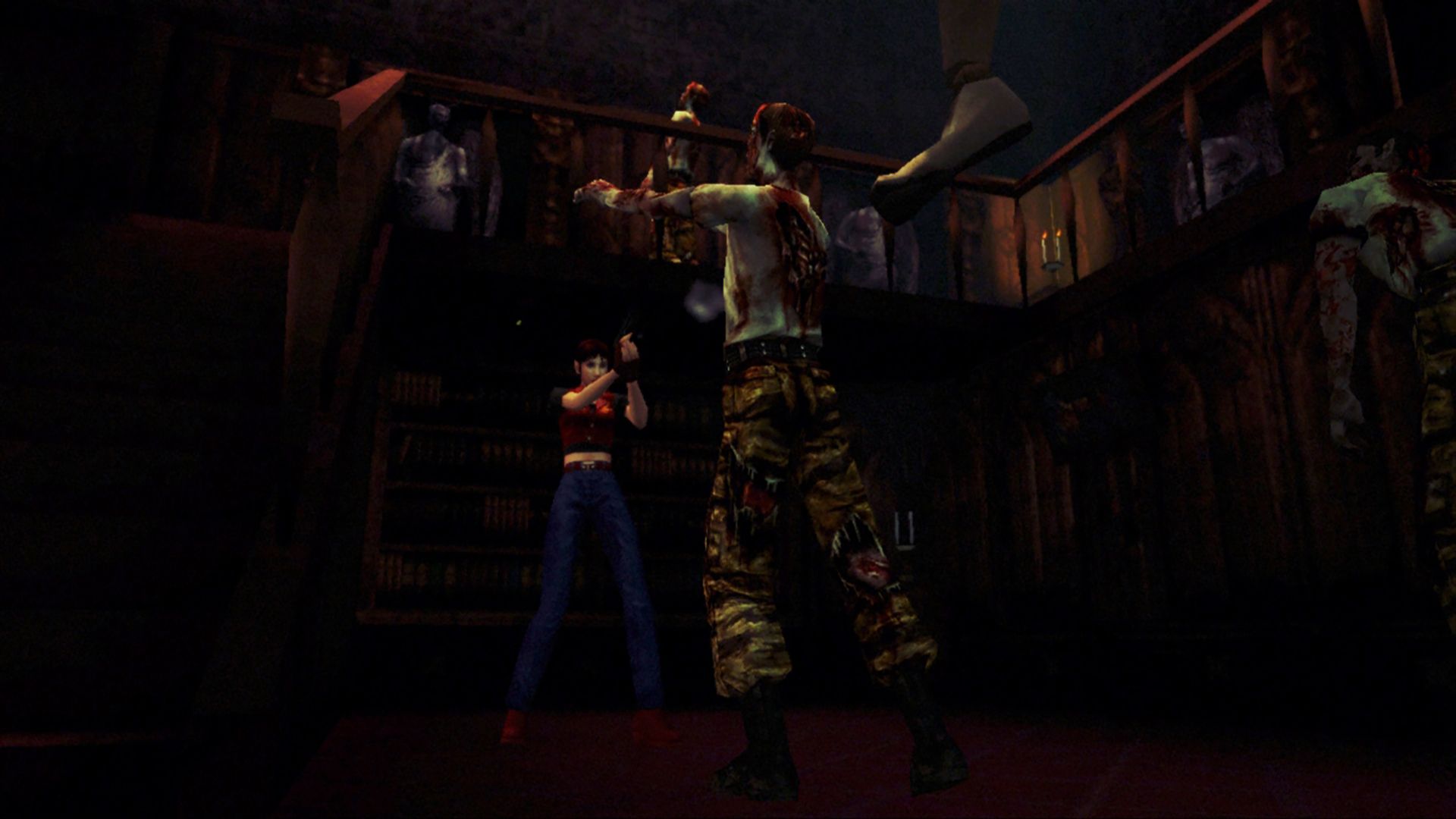
Claire in Code Veronica. (Image credit: Capcom)
[…] When they came back to do Code Veronica, there was a lot more transparency, a lot more information flow, and understanding about, “Okay, so this scene…” And we were much more comfortable with each other by then. So there would be that, “Yes, it feels like the same scene, but this is if Steve didn’t complete the task in the other room, so you guys don’t have the microchip or something.” Just as an example. Or if a different weapon got left behind. So understanding that and having those little bits of information… It might seem like nothing, but let me tell you, when you’re in the booth by yourself, you feel like you’re going crazy because you’re like, “I swear, I recorded this exact same scene like six times! What is going on?”
[Veronica] was a very different experience. First of all, because I now had a certain familiarity and comfort with the environment and what was going on with the property. I had by that point played Resident Evil 2, so I did have an understanding. I got to work with all of the other actors. So any scenes that I had with other characters, we were in the booth together, which was fantastic because a lot of them didn’t understand what we were making. These were theatre people who were like, “Video game is Pac-Man! I don’t understand what’s going on.” And it can be really trippy if you’re there in the booth by yourself and you’re not getting a lot of communication or feedback from the clients. So one of the things, it was actually the producer, Erik Suzuki, who had said he wanted to have me in the booth with all of the other actors because I was basically grounding them. I was their anchor because I’d been through it before, so I could sort of share my battle stories and tips for survival. [laughs]
So it was great. We had a lot of fun working on that. I love working with other actors. There are some people who prefer to be in the booth on their own. For me, ensemble is the way I would always go, if possible. And during those initial recording sessions for Code Veronica, we didn’t get to see the technology. All I knew was that two of the fellas from Japan were from Sega, and they were there because this was for the Dreamcast. And then you had the two guys from Capcom, which were [localization lead] Tom [Takuya Shiraiwa] and Erik, and every now and then they were alternating days between doing Code Veronica and Resident Evil 3: Nemesis.
So they were kind of swapping people out with the two different games. It wasn’t until we did the pickups for Code Veronica that I got to see just how much better this game was going to look. And because they had me do it to picture for that opening scene, they wanted the breathing and the running sounds, and as she drops down… We did that a few different ways, but I did all of it to picture. Every time I picture that scene, it’s just instinct now — I always go like this [beats chest with hands] because our engineer, Paul Shubat, and Susan Hart, every time they would watch it, because of the helicopters, they would sit there and do the helicopter sound on their chests. [laughs] So that’s the visual that I have forever burned in my brain, getting ready to dub to pictures and watching the scene. And I look up and I can see the two of them doing their helicopter sounds. That’s when I got to see it.
[…] But I will say seeing those graphics for the first time when we were doing the ADR pickups for Code Veronica, it was unreal — just stunning and so cinematic and, yes, very John Woo. Which was great because in ’97 when I’d been working on Resident Evil 2, I was also doing an episode of John Woo’s Once a Thief. Huge, huge John Woo fan, so when they showed me that scene, it was just stunning, and I was actually very, very excited for the game.
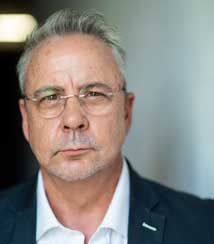
Image credit: Richard Waugh
Richard Waugh (Albert Wesker, Code Veronica, 0 and 4 : I actually only have fleeting memories that seem to only surface when people ask about it or fellow cast members talk about it. (It was decades ago). I do remember knowing very little going in to the first recording session, almost nothing other than what was given to us for the auditions… It was a Japanese video game (first time I’d heard the term “anime”). My character was a villain. It was a horror. That was it. It was just one voice job in a handful that week. Never in a million years did I expect to be talking about it or signing autographs almost thirty years later.
I wasn’t directed to go where I did with it. As I said, we were given a bit of information (villain, horror) along with some lines for the audition, and I latched onto the villainy. My kids were little and we had been watching the original Disney Jungle Book. The villain in that is Shere Khan the Tiger, voiced by the amazing George Sanders. I loved his voice and had been crossing my fingers I’d find a place to steal his read for something. So I did my best George for my audition because he was my favourite villain at the time, and they liked it. So, Wesker went from regular North American guy to vaguely bored, vaguely British aristocrat.
I’ve heard Pablo Kuntz was none too pleased that I’d changed it up so much. But in my defence, I had never heard his Wesker, never even heard of Wesker, never even heard of Resident Evil, so… no insult intended, Pablo. […] I placed Wesker’s accent somewhere in the middle of the Atlantic, and American ears sometimes hear that as Canadian. I wanted Wesker to sound like a North American who was educated at Oxford or Cambridge and pretentious enough to come home with the accent.
[…] There was no mo-cap or cameras. At first, there weren’t even illustrations to reference. We recorded alone in a booth with our director, the great Susan Hart, filling us in on everything else, what was physically happening, what the vibe of the scene should be, even the tone of our scene partner who may or may not have had recorded earlier. It was all just using our imagination.
Susan Hart: It was theatre. It was finding those big voices, those moments, those sad moments, those grotesque moments. And so it was a lot like theatre directing and having the actor in the booth. There was a lot of emotion, and a lot of the actors, I would say 99.9 per cent of them, were all extremely experienced actors in theatre, film, and television. And so they brought with them this energy. And the stories were good. The adventure was good. The characters were well-written. It has some great adventures. I had that with other shows and other brands that I had worked on as well. But there was a common thread that I really enjoyed: it felt like theatre.
New gen, new Jill
With video game remakes being all the rage nowadays, it’s fun to consider that one of the earliest and most defining was 2002’s Resident Evil. Thanks to the beefier specs of Nintendo’s GameCube, director Shinji Mikami reimagined his original 1996 game with dramatically overhauled visuals, a rewritten script with new voice actors (including American Heidi Anderson as Jill), and new enemies and weapons. As part of these changes, teenaged Canadian model Julia Voth, who was in Japan at the time on a work contract, was hired to provide the likeness for the updated Jill Valentine. The small-town Saskatchewan native would subsequently be featured as Jill in 2007’s The Umbrella Chronicles and 2009’s Resident Evil 5, but even in the years that followed, she remained the face of Resident Evil’s OG heroine for many fans.
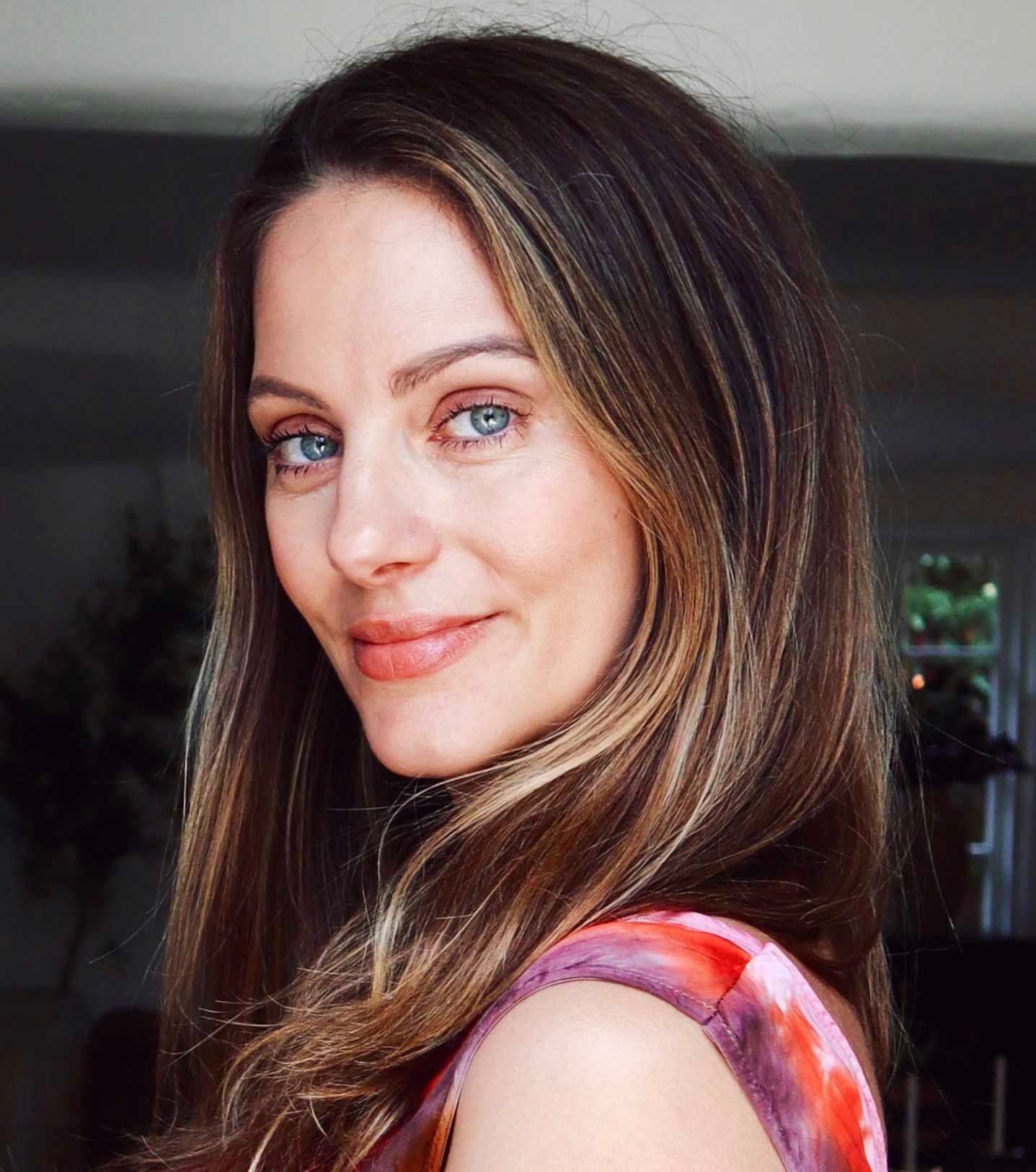
Julia Voth. (Image credit: Eliza Eaton/@3liza3aton)
Julia Voth: It helped that I was so young. I was 14 the first time I went to Japan, and 14-year-olds have this beautiful ability to just say yes with no fear. No one leaves the modelling business unscathed, that’s for sure, but I got to start with that fearlessness. The contrast couldn’t have been bigger. The Prairies are vast and open, and I love them. Saskatchewan is my home and always will be. But even as a little girl, I longed for something different.
Then I landed in Japan, and it was the absolute opposite: crowded, loud, people everywhere. It was exactly what I’d been yearning for. My attitude was basically, “Yeah, I can do that.” That naive, green energy really worked to my advantage. After a few years of going back, I’d spent so much time there that I partly grew up in Japan too, and it started to feel normal. Not everyone in my small town understood what I was trying to do, but the important people did: my teachers and my family.
As we’ve now learned was quite common with these auditions, Voth had no idea what she was joining.
Voth: My manager explained what the game was, but I didn’t play video games at the time, so it didn’t mean much to me. When we went to the audition, there was no context at all. But I remember it so clearly. It was a big boardroom with a huge table and maybe 20 businessmen in suits. A bunch of models were brought in and sat in front of them, and one by one we’d stand up, turn around, they’d discuss, and then we’d sit down.
I was 15, and I was chatting with the girl beside me when my manager whispered, “Shh, don’t talk.” I’d been a girl again for about five seconds and had to snap right back into model mode. And when I did, I looked up and saw them all looking at me, talking, going through my book. I sat up straighter, took my turn, and did my thing. I could hear the inflection in their voices, and it sounded like they were excited by what they saw. A couple of days later, my agent sat me down, smiling, and said, “Julia, this is a really big job. This is really amazing.” I think I said, “Oh, that’s cool!” Because at the end of the day, I was still just a kid.
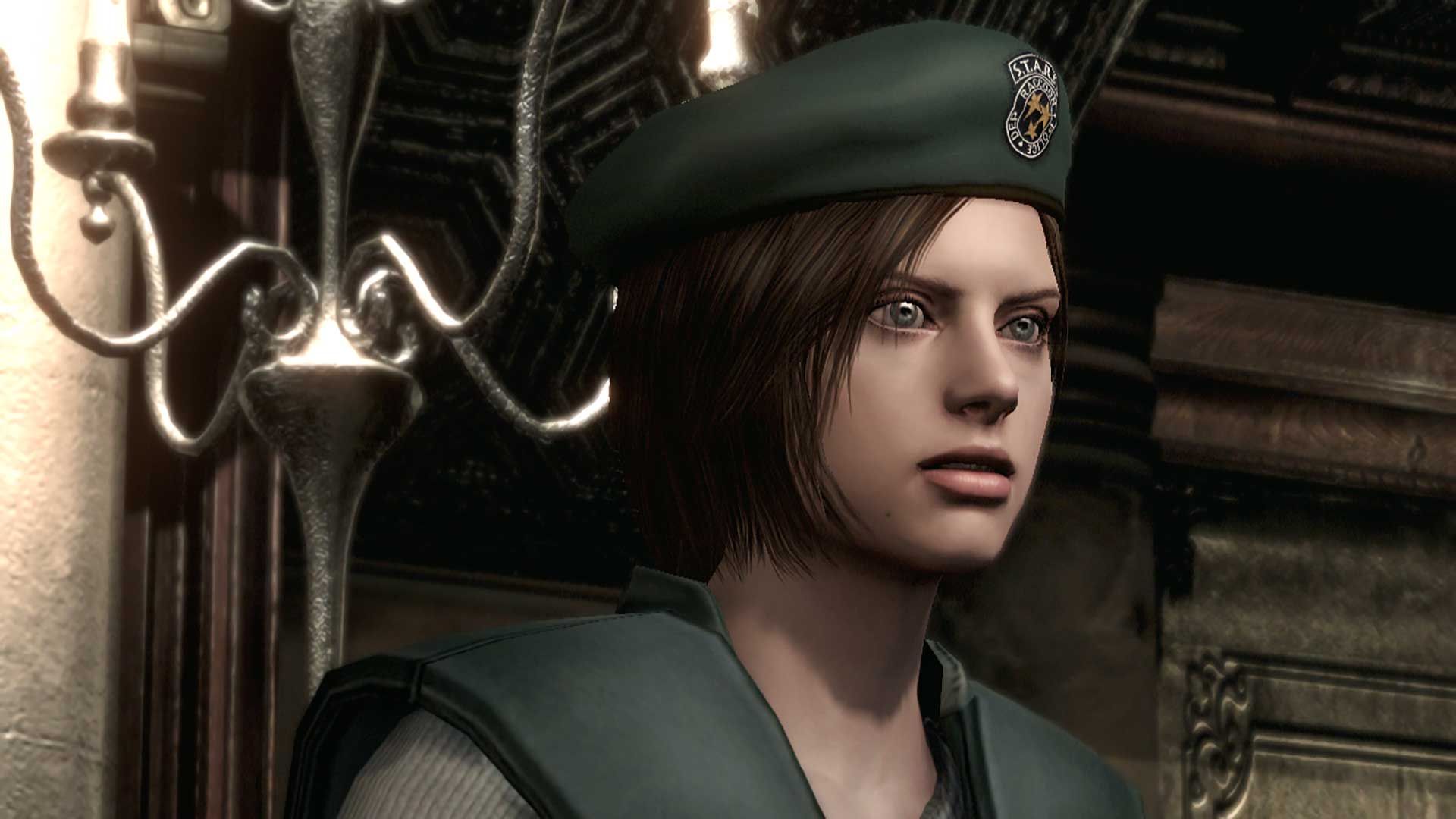
Jill in the Resident Evil remake. (Image credit: Capcom)
This was before motion capture as we know it now. I didn’t act anything out on a green screen with tracking balls all over me. I was just in regular clothes, and they scanned my hands, feet, ears, face, even my tongue into a computer. Then they had me make different mouth shapes and facial expressions, and scanned those in, too. That was it. It took an afternoon. The facial expressions were the most fun. They’d say, “Imagine you see a scary monster. What do you do?” and I’d go, “Ah!” My first real acting gig, I guess […] Since it was all rendered on a computer, there wasn’t much collaboration. But it has always meant a lot to me, especially after I started acting and people recognized me for something I did when I was 15.
As it turns out, Capcom never needed to re-scan Voth for Jill’s appearance in those later games, even with the more advanced hardware. But the character has continued to stick with her, even as she moved into other acting roles and, in more recent years, her own LA-based real estate business, House of Zonshine. Over the years, she’s embraced RE wholeheartedly, attending conventions around the world and even doing professional cosplay shoots as Jill.
Voth: I couldn’t understand why someone wouldn’t. Yes, it was a job, but very early on I could see the organic love and admiration fans have for Jill. People grew up playing her, and when you spend that much time with someone, real or fictional, you become connected. Because she was based on me, I got to feel that love in return, from all those years and hours of collective playing.
When I started acting, and people found out Jill was based on a real person, I couldn’t not give them what they wanted. My job was already to dress up and play characters, so why wouldn’t I take it one step further, dress up as myself, go to cons, meet people, and do photo shoots? That’s what being young and having fun is supposed to be. It all started at a convention in Bahrain, where a fan gifted me the beret I still wear. I put it on, took a photo, and thought, “Oh my god, I should do this.” I never got the fan’s name and haven’t connected with him since, but if he ever reads this, thank you. That beret was literally the start of my cosplay journey.
Breaking out
Of all the Resident Evil games, 2003’s Outbreak is perhaps the most overlooked. For one, it was the first multiplayer Resident Evil, and for another, it’s long been stranded on PS2 hardware while most of the other games have been ported to modern platforms. (The inability to officially play Outbreak on modern platforms outside of emulation is especially glaring considering that one of the two main characters from this year’s Resident Evil Requiem, Grace Ashcroft, is actually the daughter of one of Outbreak‘s leads, Alyssa Ashcroft.)
Even without Capcom’s support, though, Outbreak has proved to be ahead of its time in many ways, featuring a novel co-op experience centred around everyday people in Raccoon City who must work together to survive while growing infections bring them closer to death. The game was also a big step up for the Toronto-based Resident Evil crew, with none other than Alyson Court taking over as the voice and motion capture director on the local shoots and leading a scrappy band of Canadians into uncharted territory for the series.
Alyson Court: I knew the world, and I was working with Capcom and other stuff as well, helping with localization. We’d done Onimusha 2 and Devil May Cry, and a lot of audition stuff for a bunch of their games, Mega Man, and all of that. But taking on the performances — it was both voice and mo-cap — was exciting for me because I’m a horror fan. I’ve been a horror fan my whole life, so not only did I have experience with understanding the world of Resident Evil, understanding the people at Capcom and their vision, but I had a pretty solid relationship with many people who work at Capcom, so there was that comfort level… Just getting to explore more of the survival horror side and the visual side of it and the storytelling side that, as an actor, you don’t always get to bring into it.
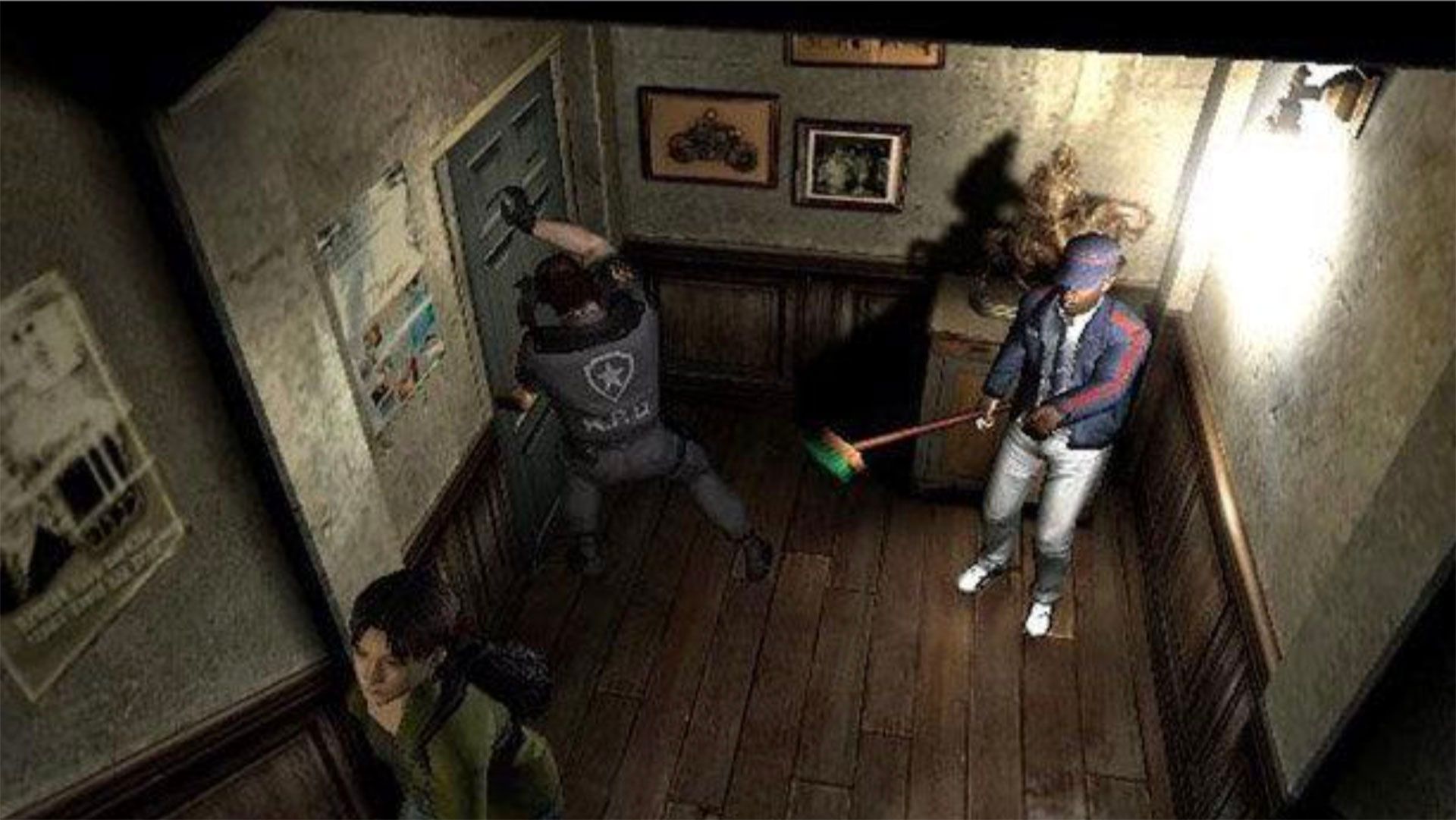
Resident Evil Outbreak. (Image credit: Capcom)
But when you’re directing and you’re doing performance capture, you have to actually do the layout to get the performance, and we were also working on changing the dialogue. So you get the translated dialogue, but localizing is a lot more than that, and it’s trying to find the equivalent of what this character might say in that moment. In Japanese, they’ll say something, and to us, it’s like, “That makes no sense! Well, it’s a little saying, a little colloquialism or whatever. What would our equivalent be?” So [it’s] a lot of that stuff, and making it feel more within a North American audience, which is what they wanted. Really getting to dive deep into all of that. So I was fully immersed in everything Outbreak and those characters, those main characters, the eight of them and all of the storylines. That was my life then.
There’s certainly something to be said to have continuity from people. It’s good to have fresh blood come in if you want to have some new ideas, but I’ve been in this industry long enough to know that there’s a fine line between fresh blood to help bring some new great ideas to the table, and people who just want to put their thumb on something for the sake of putting their thumbprint on it. So we didn’t have that with Outbreak. That was one of the hardest-working teams I’ve ever seen in my life. I feel like we went through war together. [laughs]
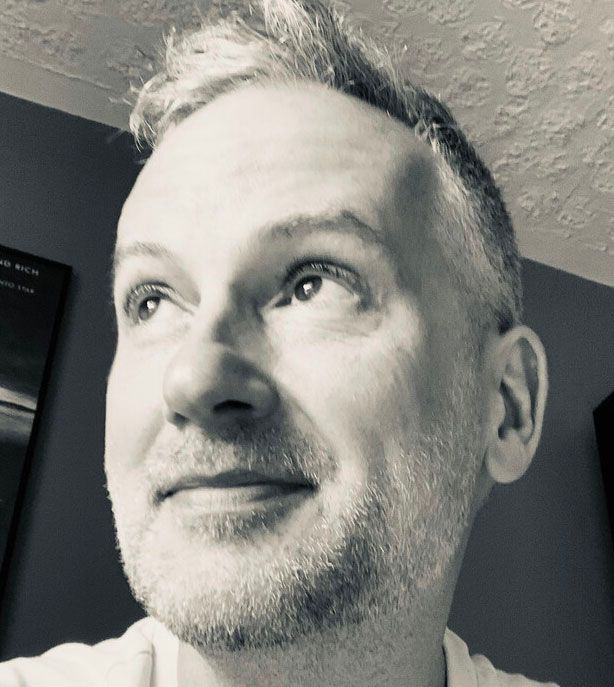
Mark Alberts. (Image credit: Mark Alberts)
Mark Alberts (Outbreak mo-cap engineer): It was actually just by circumstance that I got involved. I was living in Vancouver and I was working at a motion capture facility, and the production was looking for a couple of people to get involved to run the system that they had out here in Toronto […] Myself and another colleague of mine, a good friend of mine named Ray Ng, were working there as the sort of like public liaison, troubleshooter, entertainment industry sort of representatives. And so when the production of Resident Evil was going around putting the team together, they got wind of us. They kind of headhunted us, for lack of a better word, and we ended up coming out here to Toronto to work on the game. So it was really just circumstances and good fortune that I got involved originally. I knew of Resident Evil as an IP. So certainly, finding out that that’s what we were being hired to do was very exciting.
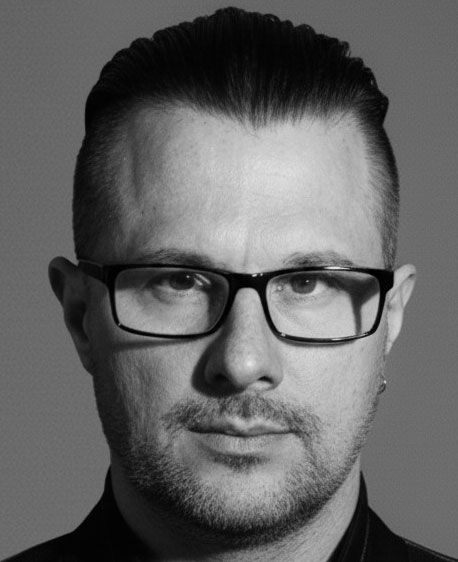
Mark Perceval Maxwell. (Image credit: Mark Perceval Maxwell)
Mark Perceval Maxwell (Outbreak mo-cap engineer): I was employed by the studio before learning it was a Resident Evil game. Although I knew there was an association with Capcom, I didn’t find out about the actual project until a few months after joining and helping set up the studio. It was an incredible surprise, as Resident Evil had always been one of my favourite game series. Being my first job in the industry, it really couldn’t have been better.
Alberts: It was a lot of trial and error along the way and working out the methodology and the workflow, particularly because it was just the three of us, Mark, Ray, and myself, processing enormous amounts of data and mapping the characters at different sizes. And the motion capture workflow was something we were still figuring out. In terms of how that relates today, I think the workflow is still very similar in terms of the steps that you need to take in order to put somebody in a studio space and ultimately get them onto a character. That remains pretty much unchanged. There’s better tools and it’s faster and all that kind of stuff. The technology has advanced so much that you can do photorealistic, real-time facial capture, hand capture, body capture, all simultaneously, which you couldn’t do back in those days, but you can now.
The second advance — which, as a small boutique studio owner myself, I feel more passionate about — is that technology has evolved to the point where you can also do motion capture on your phone. Now you can shoot video of somebody standing in a room and moving around, and using that same kind of workflow that I just talked about. Use that video to encode to motion data and then to map to a character, which again, is mind-blowing to me. 20 years ago, you needed 12 cameras all calibrated in a space, having to deal with it like it’s a very fragile system that one little nudge is going to throw everything off and you’re going to lose half a day of work. [Now] you can turn around a quick motion capture test with a phone or even a cheap mo-cap suit and get very high-quality motion in your living room.
Maxwell: The mo-cap cleanup process is far better now. Back then, cleaning up data could be incredibly gruelling, whereas these days it’s much less of an issue. Working with real-time engines like Unreal, where you can light your scenes as you build them, is also incredibly satisfying. What’s interesting is how little the fundamental workflow has actually changed. Vicon systems are still among the best and operate more or less the same way they did back then. Even some of the pipeline software hasn’t changed dramatically in over 20 years. I still mainly use MotionBuilder, which back then was called Filmbox.
Court: It was 14 cameras in a big open room. People had to wear the black suits with the silver Mylar little balls all over, and the markers had to have very specific placements, and they were on with Velcro. Our team was amazing. We did a combat scene at one point where there’s soldiers and there’s a mom. They’re wrangling refugees or survivors, and the army’s there trying to get people out. And there’s a mom carrying a boy, and he’s actually a zombie and she’s trying to hide that. And then the soldier comes up to take the kid, and the kid bites him and they fall and then the soldier shoots and all this stuff [happens]. We did that scene with six people, and we captured them. And in this day and age, I think people are like, “Yeah, that’s no big deal.” We had 14 cameras, and all the limitations of, when people would touch, the data would get swapped. It was nuts.
And our team, after we captured it, we had to do it a few times — it would take the whole weekend. The guys would have it rendered just to fully come into existence. And then they’d have to go in and clean up the swapped markers and stuff like that. But we did it. It was pretty amazing. We did some incredible stuff. And then all of that to learn, because you’re capturing 120 frames per second… So you watch the playback, and you’re watching like the dots, T-characters — these little green skeleton dot things doing their interactions. But you can see what’s happening, and it was amazing to watch back. And then you find out that at the end of the day, they have to strip the 120 frames per second down to three frames per second because the engine can’t handle anything more than that.
So the biggest learning curve for all of us working on Outbreak was that ultimately, PS2 — at least, the initial version of it — could not handle all the things that we thought it was going to be able to handle when we first started making the game. So there was a lot of revising and truncating and making smaller and simplifying and all of that stuff. So we went from like 50 scenarios down to — we ended up completing like 19 or something? But I don’t know how many ever got released.
Craig Burnatowski (Outbreak mo-cap actor, Wesker in 2023’s Resident Evil 4 and Zeno in Requiem):
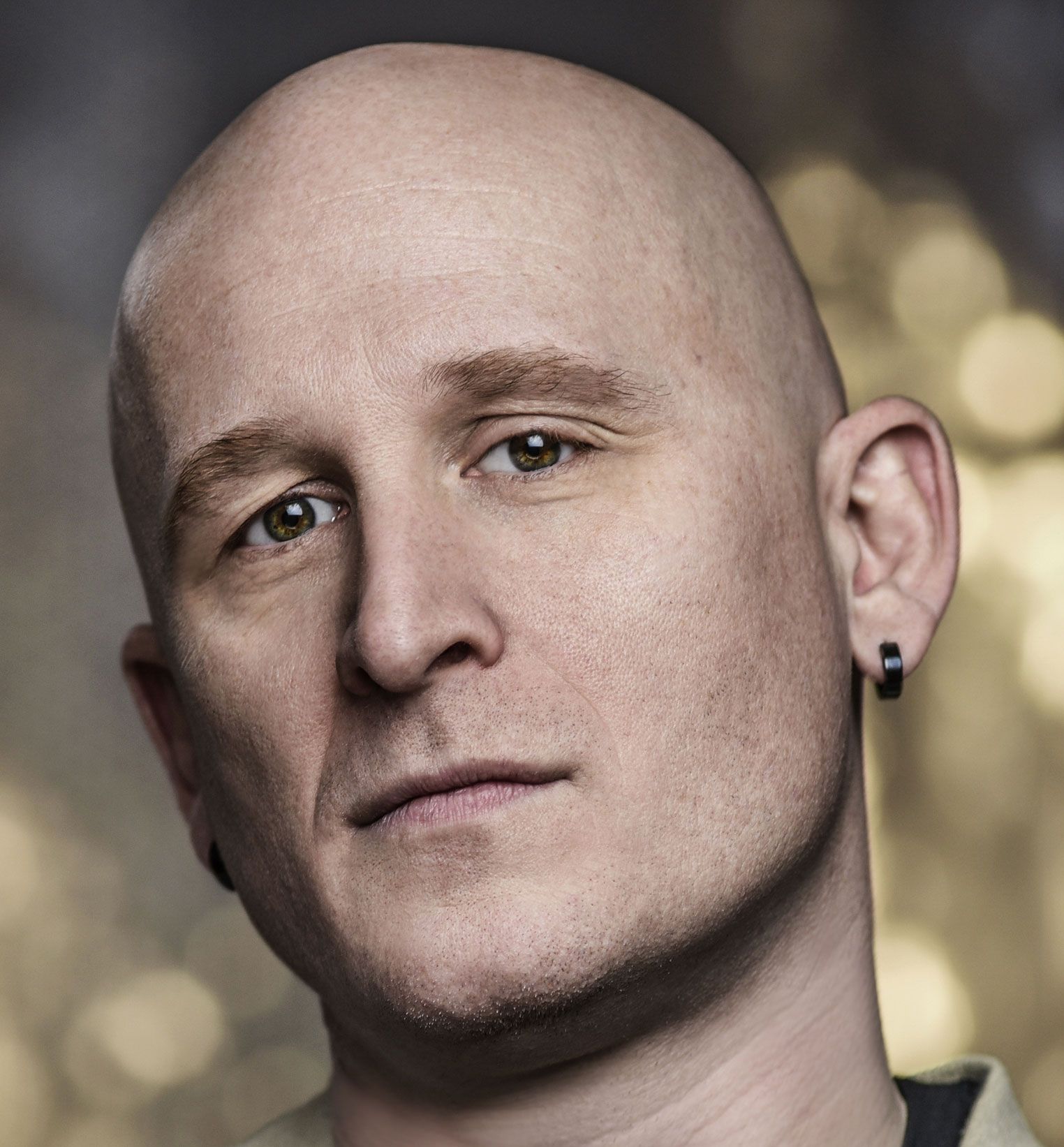
Craig Burnatowski. (Image credit: Craig Burnatowski)
Outbreak is still the only game I’ve worked on that I haven’t played myself. I just didn’t have the hardware at the time, and now it’s only available through emulation. I have often heard that many fans held it in their hearts as one of their favourite titles, but it’s definitely something I hear more often these days. Especially with the ties that Requiem makes to Outbreak‘s characters. I haven’t exactly been silent about my involvement with Outbreak many years ago, but it’s still a thrill when fans find out I did mo-cap for that project as well.
[…] The first thing I notice the upgrade in tech [with modern Resident Evil] affecting is the level of realism and truth I see in performances. Outbreak’s dialogue was done in recording booths, often one actor at a time, and then we would listen to the edited dialogue and try to move as convincingly as we could to those voices. Full performance capture allows for the actors to really connect to each other, listening to the nuances in the other’s delivery, and seeing the micro-emotional looks on their faces. Today, a smirk can change a whole scene. If I could show younger me what cutscenes in video games today were capable of, it would blow my mind!
Alberts: It’s a little hazy now, but I think it was every two to three weeks, these guys from Capcom would come over from Japan, and we would do a session. So it would be like a full week of motion capture where the voices had already been recorded. So we had that as audio cues, and we’d get the talent in, and many of them had never done motion capture before. So there was a bit of a learning curve for them — and for us, too. It was pretty much in its infancy back in those days.
[…] But it was a lot of using your imagination in this big empty space and having to understand that later on in the game, “There’s going to be a monster over there, or don’t go over here because there’s a wall here.” So we’d set up cinder blocks. That was really our only prop that we had in the space, and those would be our placeholders for where objects in the video game space would be. And the guys from Capcom would be there to oversee that because they were the ones who knew the big picture. We were just making these modular little scenes where we would play the audio track that had been recorded, and the actors would sort of act out to the audio track what was supposed to be happening in the game. And it was great — it was so fun.
[…] It wouldn’t have worked without [Alyson] because she not only knew the property, the IP, but she’d had this experience with previous games and doing voice work on other projects as well — just understanding how it all was put together. She was amazing to work with. I’d never collaborated with somebody who’d had this granular understanding of how all the different components went together. And to be honest, I don’t even know if at the time I realized that. But certainly in the years that have passed, and in retrospect, I think back to those times and think she was just masterfully overseeing this whole thing and being able to direct the talent in a really generous and gentle kind of way because she, coming from an acting background, knew how to interact with actors.
[…] I think the highlight of working on the game was actually not specifically the motion capture sessions, but it was when the gentlemen came over from Capcom from Japan and would be here for the motion capture sessions. Because we would be working together during the day, but in the evenings we’d also socialize sometimes, and I really liked that. It was really cool because they were interested in what life in Toronto is like and what you do when you’re not down at the Portland studio space doing motion capture. So we would sometimes go out for dinner or even drinks sometimes and just hang out. And there was a language barrier, so it’s fun to navigate that and try and break through and get to know your client as a person. That, to me, in retrospect, really stands out as being a really special part of the experience, having that time with them.
Hasta luego…
The release of Resident Evil 4 in 2005 was a pivotal moment both for Capcom and the video game industry as a whole. With original director Shinji Mikami back at the helm, RE4 became a full-on action thrill ride that set the gold standard for third-person shooters while cementing Leon, now a U.S. secret agent fighting to save the president’s daughter from an infected cult in Spain, as one of the medium’s most beloved heroes. But RE4 also marked the end of Capcom’s storied run of recording in Toronto. While some of the previous Canadian RE actors returned, and Toronto-born Rino Romano (The Batman) joined the cast as Luis, the bulk of RE4‘s Western production moved to LA, where it’s predominantly been ever since.
Susan Hart: I can’t remember; I think some of the stuff was recorded here. But yes, it did go to the States because I think they may have had an R&D branch there, and budgeting. It had nothing to do with anything we did. It just had to do with the company. They were happy up here. They were grateful up here. Everything was going well. It just moved for whatever reason. But I’m still in touch with a couple of the guys still, so [we’ll say] “Hi, how are you?” and send pictures of kids and stuff like that. If I do get [to the U.S.], which I may be going to next year, I definitely will be knocking on their door and saying, “Hey, how are you?” and have a little reunion. Nothing happened, it was just a shift. I continued to voice direct other games. And I still had my foot in that door. But things were starting to really pick up in animation for me, so it was just a natural segue.
Alyson Court: There were multiple reasons. There was SARS [in 2003], so that was sort of the final nail in the coffin. One of the guys from Capcom wanted to move to LA; he wanted to set up shop in LA. “If I can make the switch and move things to LA, then I get to live here,” and that’s what he wanted. And he wanted to do it on the company dime. So that was a behind-the-scenes thing that was going on.
And then by that point, I believe, the union there did have a video game-specific contract that they’d finally negotiated, whereas in Canada we didn’t. We were all working under animation contracts. So Capcom obviously wanted to move to something that was video game-specific, so that it would be an in-perpetuity buyout and all that. So it’s the usual reasons: it’s finances, and there’s always going to be somebody who has their own personal agenda.
Sally Cahill: The fact that I was involved in one of the greatest games ever made seems wild to me now. I’m glad I didn’t know at the time what was to come, or I may have felt a lot of pressure. It was all recorded in Toronto, and I lived so close to the studio downtown I used to ride my bike to it. I was really happy to be back. I felt connected and at home playing Ada. When they pivoted to the U.S. actors to continue the later games, I think at first we all felt a bit strange, as if something we had nurtured had been taken out from our hands. But then you remember this industry is
transitory; things end — shows, series, plays — and you learn to adjust and move on to the next thing.
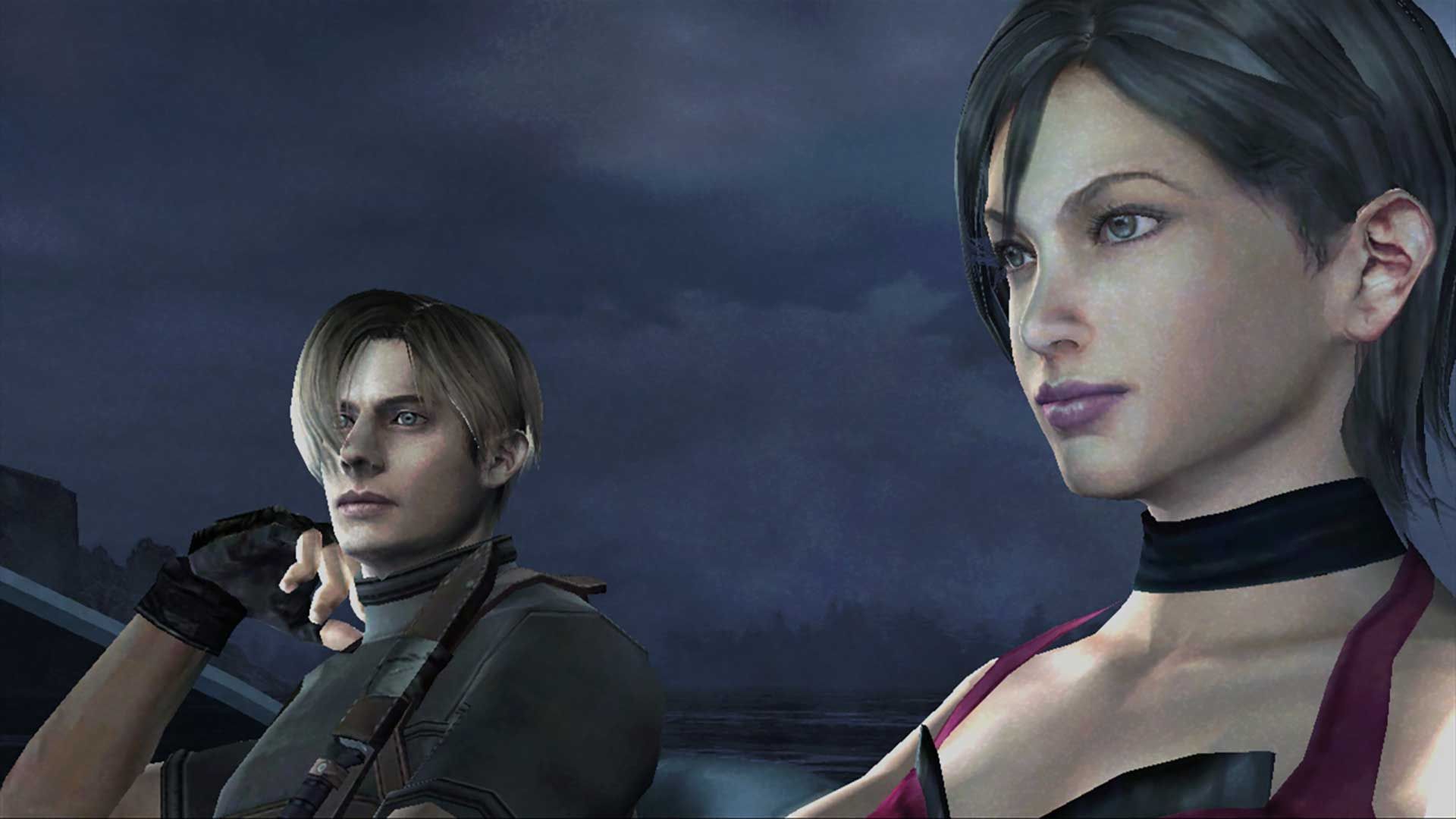
Leon and Ada in Resident Evil 4. (Image credit: Capcom)
I think one of the most exciting parts about Resident Evil 4 OG was having more detail for Ada in her interactions and relationships. Also, the relationship between Leon and Ada continued to have sparks and conflict as well as chemistry. Separate Ways was a different turn for me. Suddenly, instead of saying a little or just enough before leaving the room or jumping out a window, a lot of her inner mind was revealed. I was learning more about Ada myself as I read the script and recorded it, and if memory serves, we did it in one session take […] I’m not sure what the experience was like for the other V.O. actors, but for me the process of recording didn’t seem to change [with the new console technology]. I was still approaching the work as a V.O. actor. The visuals changed, but my voice and my intentions didn’t. It was just great; I had more to work with in the script.
Richard Waugh: By that time, I was invested in [Wesker], and when they moved to LA and I was replaced by D.C. Douglas, I was a little hurt. Someone told me they moved to California because they could use cheaper non-union actors. I repeated that somewhere, and it turned out to be not entirely true. I eventually got the chance to apologize to D.C. for implying he was some random amateur. He and I have communicated a few times. I really like him. We even met up in LA with our mutual friend Adrian Hough [Nightcrawler in X-Men: The Animated Series]. D.C. had the idea of an all-Wesker panel — the voices, models, film actors, everybody. I would love for that to happen.
…Hola de nuevo
It’s no secret what happened with Resident Evil in the late 2000s and early 2010s. 2009’s Resident Evil 5, while generally well-received, marked a radical departure from previous RE games by focusing on West Africa-set co-op action between Chris Redfield and newcomer Sheva Alomar that was widely criticized for being racist. As the first mainline RE game recorded fully in LA, it didn’t star any Canadians. Following that, 2012’s Resident Evil 6, which also didn’t feature any Canucks, was a huge commercial hit but garnered a mixed response from critics and fans for having disjointed and bombastic campaigns featuring Leon, Chris and several other characters that further lost sight of what people loved about the series. It was only after five years that the series would be revived in a big way with Resident Evil 7: Biohazard, returning to classic survival horror and paving the way for the renaissance we’re now in.
From there, Canadian involvement in the games started to return. First, Toronto-based model Jordan McEwen is the likeness of Claire Redfield in 2019’s beloved Resident Evil 2 remake (and seemingly returns in the 2027 Code Veronica remake), while 2020’s reimagining of Resident Evil 3 features Montreal-born actor William Hope (Aliens) as both Captain Mikhail Victor and Dr. Nathaniel Ward.
But it was Capcom’s third modern Resident Evil remake that brought Canada back to the series in a truly significant way. For 2023’s Resident Evil 4, the performance capture was handled at prolific Vancouver-based motion-capture company Beyond Capture Studios. This meant that virtually every actor in the acclaimed game outside of returning Leon star Nick Apostolides was actually Canadian. It was an ironic twist of fate. The original RE4 signalled the end of the series’ time in Canada, while the remake brought it back here in an even bigger way thanks to 20 years of technological advancements.

Genevieve Buechner. (Image credit: Genevieve Buechner)
Genevieve Buechner (Ashley Graham, Resident Evil 4 remake): We were in the full suits. We had the headcams. So all of the characters’ facial expressions and movements and stuff in those cutscenes, we fully, physically, acted them out, and it was an absolute blast. But you definitely have to have a lot of imagination because you’re just in a big empty room and you’re wearing this like silly Velcro suit with these dots all over you, and we’ve got these big camera helmets on, and it’s kind of awkward, and you have to pretend like none of that is happening, and you’re really in those situations.
So I had a great time because I have a super active imagination. It was an absolute blast for me. I got to just play pretend to the maximum, basically, and I loved it. But I think something that a lot of people don’t know is that most of what we did was performance capture. Because a lot of people say, “Oh, they’re voice actors,” but we really were acting everything. We were doing all of it. And then the voice work was really only in certain parts of the game, mostly gameplay, and the rest was performance capture.
[…] My favourite part of fleshing out this character and working on this game was definitely working with the team and seeing everything that they had already worked on. We’re the actors — they’ve put years of work into this game before I even show up. So there was so much care and love already there for these characters. And getting to see all of that and then having them, in the studio, hand us the reins was just incredible. And the people that I got to work with were amazing. And I think we all just kind of clicked into place really easily.
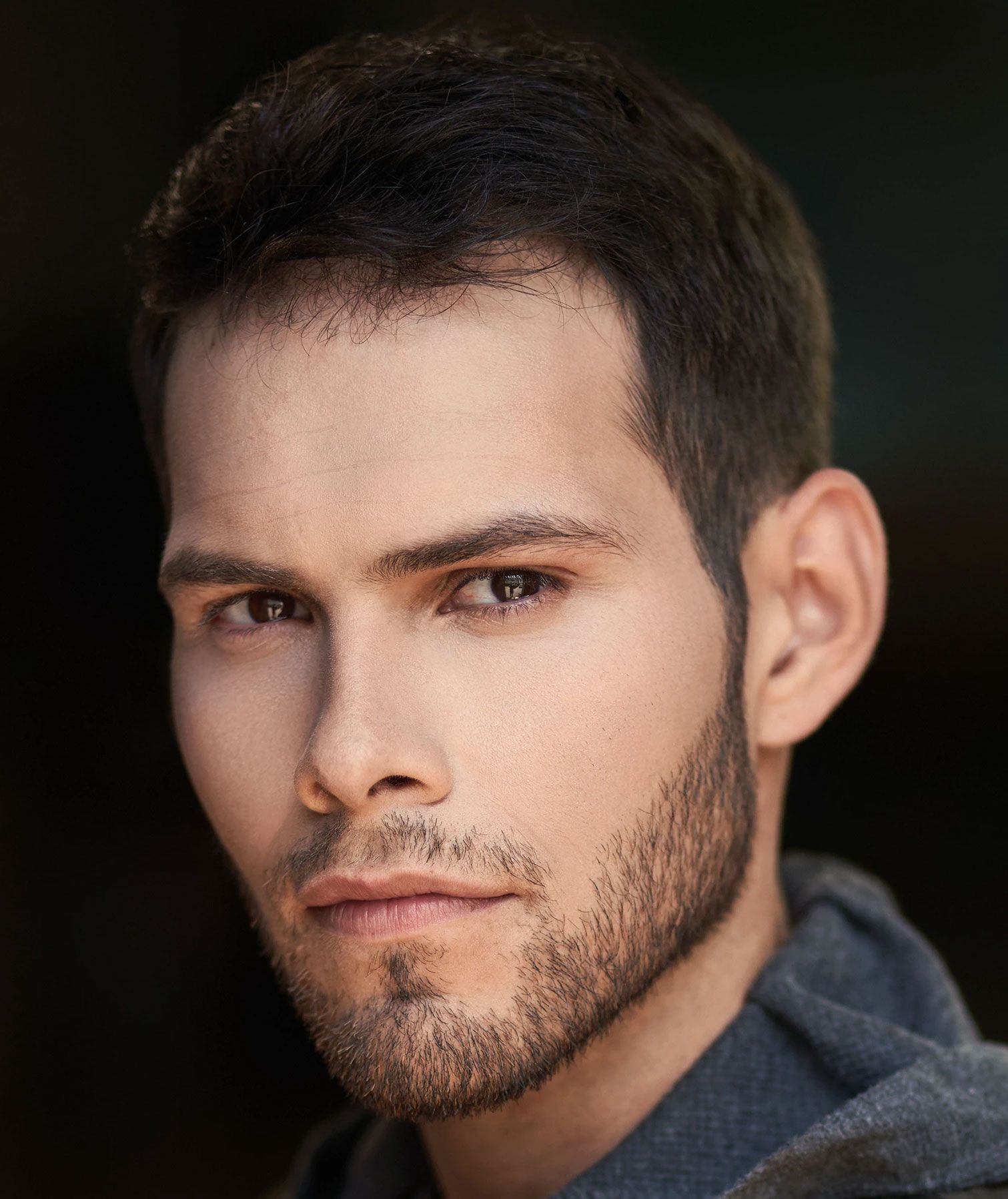
André Peña. (Image credit: André Peña)
André Peña (Luis Serra, Resident Evil 4 remake): I’d just gotten [to West Edmonton Mall]. Funny enough, I was looking at a Mauser C96 in the shooting range because they have a shooting range because it’s so big. That’s when I got the audition, and my agent says, “You know what? You have to get your butt back home right now to do this audition.” And I was like, “Okay!” So I didn’t even get a chance to get lost [in the mall]. I was literally there, I set my foot in there, and then I stepped right back out, and then the 13-hour drive back [to Vancouver]. It’s crazy that I was looking at Luis’ gun while I had the audition for Resident Evil 4. It was wild. Almost feels like it was meant to be.
[…] The fun I had portraying Luis! I took a lot of inspiration from Rino Romano, the original Luis, but at the same time, I wanted it to be my own. I wanted it to be different. So there was a lot of the original Luis, but I do feel like he’s a little bit more quirky this time around, which made him that much more fun because I feel like he doesn’t take things too seriously. That’s what makes him even more charismatic in a way. Even in the face of fear, in this place where everything is just falling apart, he’s able to say, “Hey, relax!” So that was really, really cool, to put myself in that situation. Because as an actor, that’s what we have to do, we have to fully feel like we’re there — and then, at the same time, be free, in a way, by being so charismatic or carefree or quirky or whatever it is. I love doing that.
I studied acting for film and television, and you’re able to act very subtly, depending on where the camera is placed. If it’s a close-up, you can be as subtle as you want. But in high school, I was a little bit of a theatre kid. And with that experience, you have to project everything. You have to exaggerate everything a little bit, you have to really make yourself believe that you’re in that situation. In a film set, you might have an actual prop that you can work with, whereas here, on the soundstage where we film, you have a stick with a weird ball at the end that is the marker. That’s supposed to be your lance or something. So I was able to use both skills there, where I can act as subtly as possible, because there’s over 80 cameras pointed at you at once, but at the same time, you have to pretend that everything is real because everything is skeleton-ized, everything is bare bones.
So I was really able to use my imagination, if you will, and it was a ton of fun to be able to do that. So it’s kind of this weird mix of theatre and film acting, where you can act in both ways, or you need to have both of those experiences to be able to act well in this. And I had a ton of fun doing that, and I loved it. Being able to use my imagination to say, “Oh yeah, that door is really there, that wall is really there, or that’s gonna be a barrel that I’m gonna lean against where it’s nothing there,” that was really cool.
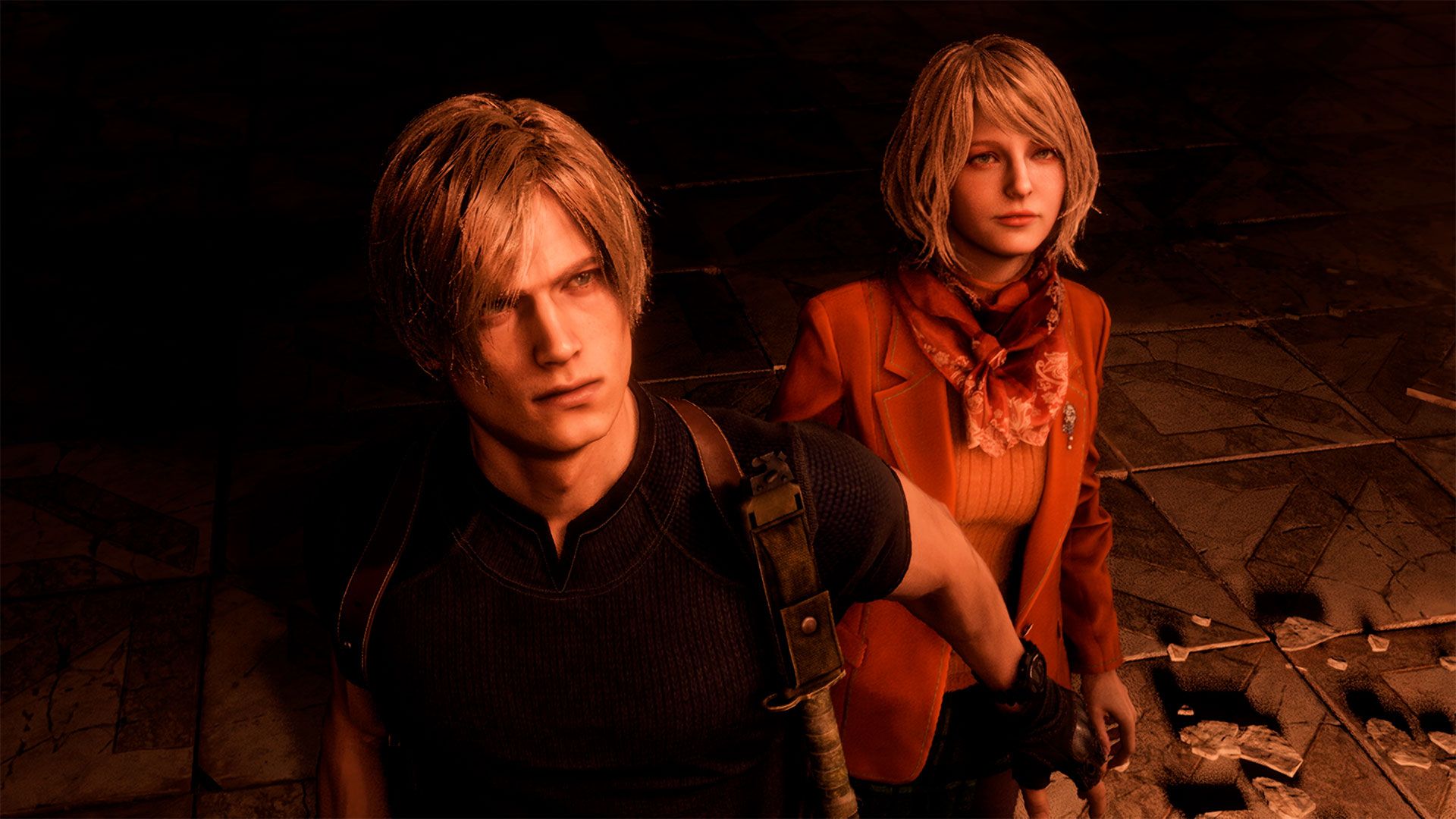
Leon and Ashley in the Resident Evil 4 remake. (Image credit: Capcom)
[Craig Burnatowski is in the unique situation of having played Wesker and Zeno, two intrinsically connected yet nonetheless separate characters, so we asked him about the process of working on them both.]
Craig Burnatowski: Bringing a character, or in my case two characters, like this to life takes an entire team. The original story writers, localization team, interpreters, directors, character and costume designers, motion capture team, animation team, stunt team, and every other person involved in the production deserve just as much credit as the performance capture artists. I’m often told just enough of the story necessary to capture the scenes I’m working on. So there is a great deal of trust shared by the entire team. I think Kate Saxon, Requiem’s director, deserves a great deal of the credit for helping me differentiate Zeno from how we had established Wesker in RE4R. Zeno is most definitely a person that uses a different set of tactics to achieve his goals.
REflection
August 28, 2026. Huge crowds of Redfields, Kennedys, Valentines and merchants are gathered in the Metro Toronto Convention Centre. They’re eagerly awaiting a Fan Expo Canada panel featuring a slew of (predominantly Canadian) Resident Evil stars in what’s being billed as the largest RE reunion to date. There’s so much interest in the panel, in fact, that the room had reached full capacity and Fan Expo had to turn away some hopeful attendees.
Many of the actors had never even met, and some of them had done few, if any, convention appearances before, making the day particularly special for all. It was the perfect example of the powerful relationship that all of the Resident Evil talent, including those who weren’t at the panel, have had with the franchise and its fans over the past 30 years.
Alyson Court: The inspiration [for the panel] was the amazing people who have worked on [Resident Evil] over the years. All of those actors, and the mo-cap crew — all of those guys that haven’t been out going to these cons. And you see all of the other actors, and they’re out there, and they’re doing lots of signings and stuff, which is great. And I, myself, have been able to go to these events all over and do signings and really get to see just how much Resident Evil love is out there […] Initially, they were skeptical, and they’re like, “Oh, no one’s gonna want to come see me.” I’m like, “You have no idea. Trust me.”
Even my lovely Outbreak cast — they had no idea. That was the one, more than anything. Because there is such a die-hard fanbase for that game because of the lack of support from PlayStation and Capcom. The fact that they took the servers down, so fans built their own and did the whole mirroring to run it for the servers. […] Laura Thorne, who plays Yoko — she’s just such a sweet, lovely soul. I remember when I was explaining to the whole group, I had all of the different actors on [Zoom] and saying, “Here’s my plan. Here’s what I want to do with you guys.” Laura’s just laughing and shaking her head when I’m explaining. “Yeah, people will bring their games or a poster or if you have a table print, they’ll pay you to autograph.” And she’s just like, “Alyson, no one is gonna pay me to sign something!” [laughs] And I’m like, “Laura, just come — trust me.” And sure enough…
View this post on Instagram
[…] Those cast members who got to get announced and walk out on stage and hear those cheers — that was the thing that I wanted more than anything. I was like, “I want you all to experience what I’ve been getting to taste and what I know is out there and how much love that these people want to give you. You need to get here and you need to experience it.” I was feeling more like an audience member than a cast member because I was just so giddy seeing it all come to life and watching my friends get that love from the audience and just watching their faces. I was like, “This is the best thing ever.”
Craig Burnatowski: Meeting Richard Waugh was a bucket list item for me, and he’s a riot. I hope we get to do more of these together. Alyson Court has been a friend since she directed me in Outbreak, and years later I brought her in for a project I was directing. She is a force to be reckoned with, and I will always have an immediate yes to anything she asks me to be involved with. I had a wonderful time chatting with Riva Di Paola Lombardi, who played Rebecca in RE0, and it was great to meet the Outbreak actors that I did motion capture for.
[…] I consider Toronto fortunate that Capcom decided to make the first few games here. I honestly don’t know what went into that decision, but I’m grateful that it happened. I am so proud of this city and it is absolutely stuffed with incredibly talented people! There are so many productions of shows, films, and video games that most people don’t know are shot in Toronto. I’ve made a game out of spotting my friend’s neighbourhoods or condos in some of my favourite shows! And yes, I feel very proud to be part of the Canadian contingent of Resident Evil cast members.
Mark Alberts: Just to be included in that [panel] was really special to me. And it was wonderful to see Alyson again. It was also really cool to see Craig Burnatowski, because he was our main guy for Outbreak. He did numerous roles. Everyone was great, but he was very much the predominant talent that we had in the motion-capture space, and again, just to see him and to see that he’s still involved in the franchise too is amazing. It’s so cool. He’s really made a good go of it with Resident Evil, and he’s still as gung-ho and enthusiastic about it as I remember him being 20 years ago, which is fantastic. And the other cool thing about being there was being up on that stage, knowing that my 15-year-old son was in the audience. He was at Fan Expo, and he’s a big gamer now. So that was pretty meaningful to me to be up there on stage and to know he was out there in the audience and is interested now in getting into Resident Evil.
Genevieve Buechner: That [panel] was so special and lovely, and I’m so glad [Alyson] did that. There were tons of people up there that I had never had an opportunity to meet yet. Getting to meet some of these OG characters from this absolutely iconic franchise was so special, and I had a blast. And I’m so glad that everybody who was there got to see everybody and meet everybody, and we could all chat. And it’s definitely something I’ll always remember. I was really excited to meet OG Leon [Paul Mercier] as Ashley. That was really, really special to me. I got a photo. That was pretty peak for me. That’s special. Such an iconic character […] I also didn’t know how many people [in Resident Evil] were from Canada before. I had no idea that it was such a legacy. And I can’t tell you how grateful and lucky I feel that I got to be one of those Canadians that got to be a part of it. I didn’t know it was such a thing, and I’m honoured to be a part of that.
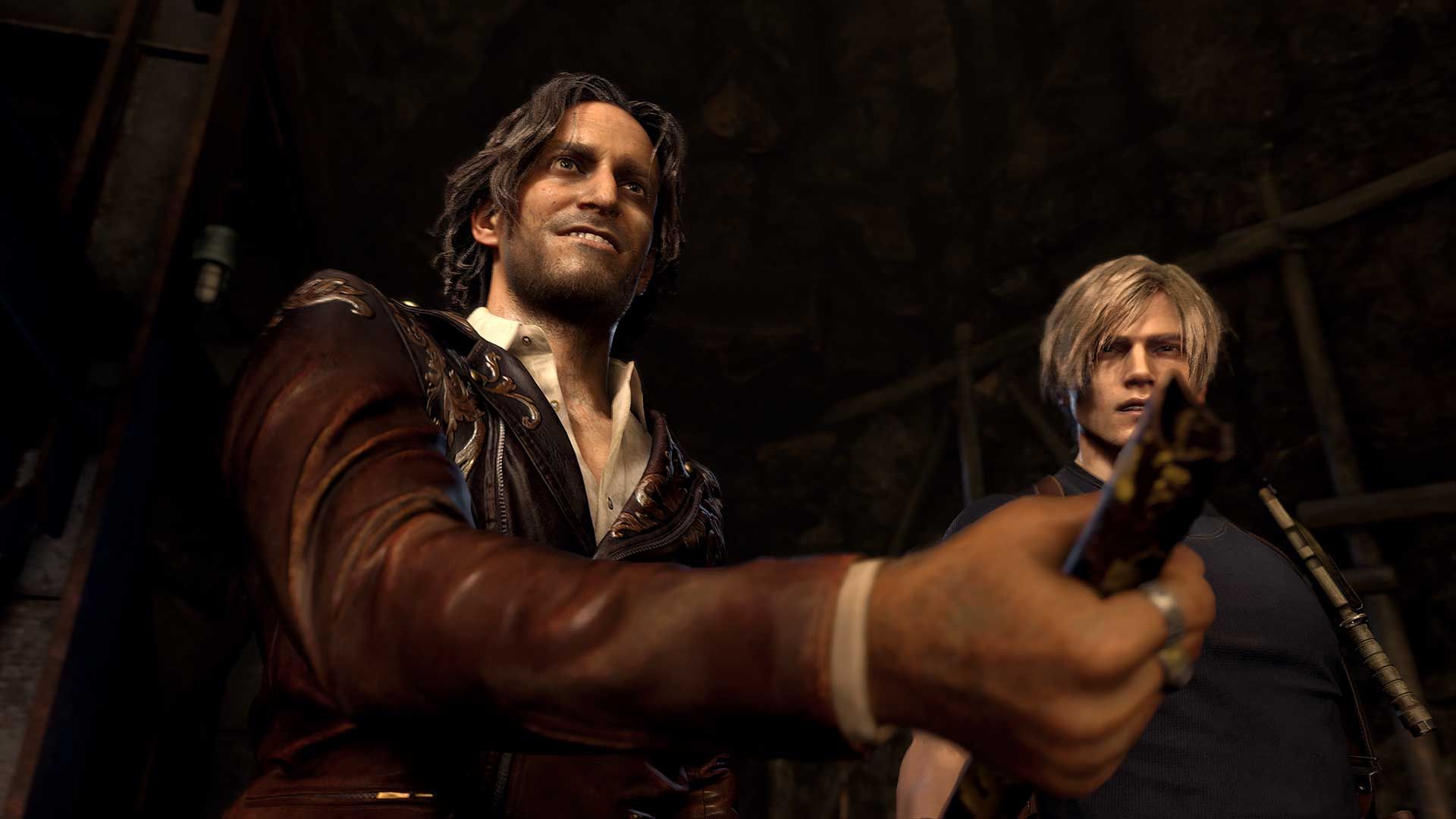
Leon and Luis in Resident Evil 4 remake. (Image credit: Capcom)
André Peña: I feel absolutely honoured to have been cast in Resident Evil 4 Remake. Being [in the con] booths, you hear all the time, “Your game has inspired me. Your game has changed my life.” I said that to Paul [Mercier], because without him, I wouldn’t have a career. So it really changed my life. And I am honoured to have been blessed with this opportunity and to be able to interact with so many people — fans and other creators and other actors, like the rest of the Resident Evil cast that I got to meet. It’s just been an honour.
Richard Waugh: I had a great time seeing old friends like Sally Cahill and meeting hopefully new friends like the Outbreak cast. Craig is great. I like him so much I felt entirely comfortable teasing him on a podcast we were both part of recently. We have every hope of crossing paths again. It was also a highlight seeing Alyson again after several years. I adore her. RE abounds with cool people. […] I can’t say there is one particular moment or scene that jumps to mind, but I can say that there are several fan interactions that I have found quite moving. That my voice became so important to someone, got them through a bad time or is a thing these smart, funny people turn to for fun and comfort, it’s humbling. I don’t feel worthy.
Sally Cahill: When we reunited at Fan Expo, even when we did a group chat, new memories kept coming back and still
do. I think perhaps the most interesting thing is that my memories were of something fledgling and new. We were all just trying our best to make it work all while having no idea of what it was to become and how many people all over the world would connect and be brought together by it and how long it would continue and develop in so many way. It’s been almost 30 years and it’s still going on. More movies. New games. Hundreds of fan sites dedicated to it. And it all started for us in a little basement studio in the east end of Toronto in the ’90s. I could still ride my bike there.
Pablo Kuntz: People were saying, “I want you to play the game!” And I’m not a big gamer myself. But my son, Lennon, likes to play games, and this was around COVID time […] And so I embraced the game by having my son play it, and then we both really enjoyed it. It was very fun to watch the first Resident Evil, just to see it in action, the dogs coming through the window and scaring the life out of him. He was only 12, so we recorded that. We put it on his channel and put it on my channel, and then that really took off, and I got a couple thousand subscribers pretty quickly just from that. But then I wanted to support Lennon, and so we ended up continuing to play Resident Evil on his channel, and we continue to play every week pretty much. We’ve gone through all the games, all the remakes, and I just sit there. It’s been a great father-son thing. We don’t get a ton of people, maybe 30, 40, 50 people join on a livestream, and we just chat. But they’re so genuine, the fanbase. They’re so gracious and funny.
[…] I just watched the Resident Evil movie with my son. We went to see it. I thought it was great. It was a lot of fun. I was tickled to see everybody in there. It was a fairly packed cinema, and it’s a nice feeling — I didn’t say to anybody my experience of Resident Evil. I was just with other fans, and it’s nice just to think that this little germination in Tokyo led to so many years of this thing. It’s managed to survive; it’s amazing. And also, the fact that I was the first one. Even though the voice might be kind of funny and all that — the fact that it’s the first is a nice feeling. It’s been nothing but positive.
Mark Perceval Maxwell: That whole year in Toronto was pretty surreal. We were a small, newly formed crew figuring things out as we went, and sometimes we’d improvise shots we probably had no business attempting, like a Licker whipping someone across the room. There was a fair bit of chaos, but it was all part of the fun. Still one of the most unconventional experiences of my career […] Mark Alberts told me about the reunion, and I really wish I could have been there. I wasn’t actually aware of the recent renewed interest in Outbreak, but I’m not surprised it still has its fans. It’s always been a big part of my career.
In fact, when I joined Rocksteady back in 2008 [to become a cinematics artist on the Batman: Arkham series], the cinematic director was a huge Resident Evil fan and told me that my work on Outbreak was one of the reasons they wanted to hire me. So the game has stayed with me in more ways than one!
Catherine Disher: It was interesting to see how many people came out specifically for Resident Evil that day and all through the weekend. Sometimes, over half of the people that come to me at those cons are for Resident Evil. It’s that big, and it seems to be getting bigger, weirdly enough. And more and more people pay attention. So it’s an honour to be around. I feel very connected to Jill. I feel very proud of being a part of it. She’s really a kind of feminist icon. I got corrected on Reddit once. I had been told that she was the first playable female character in a survival horror game, and I was roundly corrected that there was one that preceded her, I believe. [Ed. note: There’s a 1995 survival horror game called Clock Tower that stars a woman named Jennifer Simpson.] And now I love the miniskirt and the tube top; it’s iconic. And I love the boots — the sound that the boots make. [taps table in footsteps rhythm] That’s my favourite part of it.
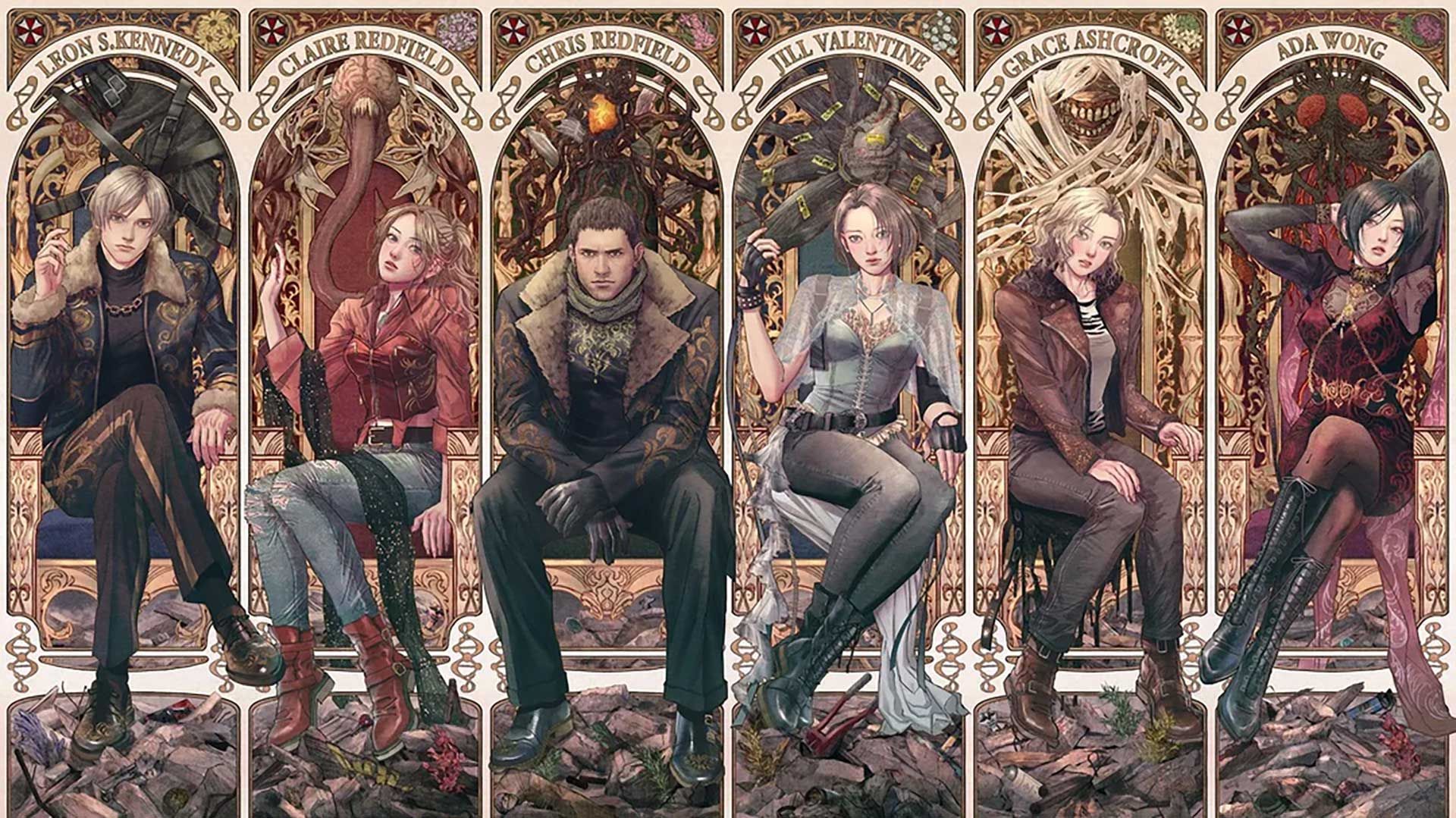
Official Resident Evil 30th anniversary key art. (Image credit: Capcom)
Julia Voth: It’s a little removed from my life now, so people don’t really come up to me anymore. But it comes up in conversation a lot, and the reaction is always amazing. Sometimes people get a little awkward, and I feel the need to crack a joke to break the ice, because I get it, it really is unexpected and kind of random. I did that job at 15, and I’m 41 now. The fact that something from that long ago still lives with me and is still recognizable is mind-blowing. It’s the job that keeps on giving. The fan interactions, hands down [are my favourite]. Not everyone gets to meet their hero, and Jill is a hero to a lot of people. I felt a real responsibility to show up as the person they hoped I’d be, and that’s what I carry with me. The best part was getting to be that for everyone who cared.
Susan Hart: I’m very proud of it, and I’m very grateful that I happened to be sitting on the couch that day when a call came through. I’m very, very grateful that I can be a part of something that moves people, that entertains people, that makes people talk, that makes people meet together, that makes people share. I’ve been directing for 30 years, so it’s where I’ve chosen to spend my time, and it’s my passion. And very, very grateful that I was on the couch that day. I could have been somewhere else, and that wouldn’t have happened. So I’m happy for it. And each game had special memories, each of them had special experiences. And Capcom — gracious, good, thoughtful, talented individuals. There were no egos. We were all in there to work on one thing and one thing only: make it the best that we can. And I love that camaraderie.
These interviews were edited for language, clarity and length.
A big thank you to everyone for taking part, and a shout-out to the many other Canadian artists who aren’t featured here. And, of course, endless gratitude goes out to the amazing Capcom developers for making these beloved games in the first place!
Header image credit: Capcom
 Gaming
 Gaming
 Gaming
 Features
