


%20--%3e%3cdefs%3e%3cstyle%3e%20.st0%20{%20fill:%20%2300c8fd;%20}%20.st1%20{%20stroke:%20%23e6e5e6;%20stroke-miterlimit:%2010;%20stroke-width:%2044.96px;%20}%20.st2%20{%20fill:%20%23fff;%20}%20%3c/style%3e%3c/defs%3e%3cpath%20class='st1'%20d='M513.9,94.56h939.4c146.6,0,265.62,119.02,265.62,265.62v39.41c0,146.6-119.02,265.62-265.62,265.62h-939.41c-146.59,0-265.61-119.02-265.61-265.61v-39.41c0-146.6,119.02-265.62,265.62-265.62Z'/%3e%3cg%3e%3cg%3e%3cpath%20class='st2'%20d='M667.08,332.78c47.11,0,74.97,24.77,74.97,66.98v86.14c0,3-2.43,5.43-5.43,5.43h-31.07c-3,0-5.43-2.43-5.43-5.43v-34.05c-6.94,27.01-29.05,43.68-59.23,43.68s-52.57-18.21-52.57-45.57c0-29.26,23.87-46.62,64.12-46.62h47.68v-3.58c0-21.21-12.54-33.95-34.02-33.95-19.47,0-29.35,8.57-31.14,22.78-.35,2.76-2.47,4.94-5.25,4.94h-31.1c-3.11,0-5.76-2.66-5.5-5.77,2.79-34.06,30.52-54.99,73.96-54.99ZM656.8,428.81c-17.37,0-26.53,5.95-26.53,17.22s9.8,18.27,27.16,18.27c24.57,0,42.7-13.15,42.7-30.94v-4.55s-43.33,0-43.33,0Z'/%3e%3cpath%20class='st2'%20d='M793.39,320.81h-31.93c-3,0-5.43-2.43-5.43-5.43v-25.83c0-3,2.43-5.43,5.43-5.43h31.93c3,0,5.43,2.43,5.43,5.43v25.83c0,3-2.43,5.43-5.43,5.43ZM792.97,491.33h-31.08c-3,0-5.43-2.43-5.43-5.43v-143.5c0-3,2.43-5.43,5.43-5.43h31.08c3,0,5.43,2.43,5.43,5.43v143.5c0,3-2.43,5.43-5.43,5.43Z'/%3e%3cpath%20class='st2'%20d='M849.9,491.33h-31.08c-3,0-5.43-2.43-5.43-5.43v-196.34c0-3,2.43-5.43,5.43-5.43h31.08c3,0,5.43,2.43,5.43,5.43v196.34c0,3-2.43,5.43-5.43,5.43Z'/%3e%3cpath%20class='st2'%20d='M1019.57,336.97c3.78,0,6.4,3.77,5.09,7.31l-56.15,151.37c-13.44,36.68-36.04,52.93-72.8,52.93-5.57,0-11.38-.41-17.44-1.24-2.67-.37-4.69-2.73-4.69-5.42v-29.17c6.37.9,11.77,1.32,16.52,1.32,15.39,0,25.61-4.49,32.66-14.95.98-1.45,1.15-3.37.55-5.01l-54.7-149.85c-1.29-3.54,1.33-7.29,5.1-7.29h32.32c2.39,0,4.5,1.57,5.19,3.86l35.65,117.87,36.2-117.9c.7-2.28,2.8-3.83,5.19-3.83h31.3Z'/%3e%3cpath%20class='st0'%20d='M1263.77,320.81h-31.93c-3,0-5.43-2.43-5.43-5.43v-25.83c0-3,2.43-5.43,5.43-5.43h31.93c3,0,5.43,2.43,5.43,5.43v25.83c0,3-2.43,5.43-5.43,5.43ZM1263.35,491.33h-31.08c-3,0-5.43-2.43-5.43-5.43v-143.5c0-3,2.43-5.43,5.43-5.43h31.08c3,0,5.43,2.43,5.43,5.43v143.5c0,3-2.43,5.43-5.43,5.43Z'/%3e%3cpath%20class='st0'%20d='M1435.41,344.13l-48.29,143.5c-.74,2.21-2.81,3.7-5.14,3.7h-50.28c-2.34,0-4.41-1.5-5.15-3.71l-47.76-143.5c-1.17-3.51,1.45-7.14,5.15-7.14h32.5c2.42,0,4.54,1.6,5.21,3.92l35.75,123.7,36.17-123.72c.68-2.31,2.8-3.9,5.21-3.9h31.49c3.71,0,6.33,3.64,5.14,7.16Z'/%3e%3cpath%20class='st0'%20d='M1574.56,439.04c3.62,0,6.41,3.56,5.26,7-10.29,30.95-37.11,49.49-72.06,49.49-46.56,0-77.98-32.9-77.98-81.55s31.07-81.19,77.13-81.19,75.61,32.06,75.61,80.99c0,3.71-.15,7.49-.57,11.4h-111.72c2.73,23.1,16.87,36.83,38.72,36.83,15.13,0,25.73-6.63,32.05-19.77.9-1.88,2.73-3.19,4.82-3.19h28.73ZM1542.27,399.28c-3.49-22.05-15.53-33.54-35.14-33.54s-33.03,12.19-36.39,33.54h71.53Z'/%3e%3c/g%3e%3cpath%20class='st2'%20d='M481.5,291.13h-67.59c-3,0-5.43,2.43-5.43,5.43v189.35c0,3,2.43,5.43,5.43,5.43h67.59c60.33,0,101.28-39.4,101.28-100.1s-40.94-100.1-101.28-100.1ZM480.51,453.39h-28.2v-100.64c0-1.44-.57-2.82-1.59-3.84l-19.84-19.84h49.64c36.61,0,57.76,22.18,57.76,62.15s-21.15,62.17-57.76,62.17Z'/%3e%3cpath%20class='st0'%20d='M1166.75,296.55v52.23c0,1.44.57,2.82,1.59,3.84l19.84,19.84h-105.14v-75.91c0-3-2.43-5.43-5.43-5.43h-33.39c-3,0-5.43,2.43-5.43,5.43v189.35c0,3,2.43,5.43,5.43,5.43h33.39c3,0,5.43-2.43,5.43-5.43v-51.81c0-1.44-.57-2.82-1.59-3.84l-19.83-19.83h21.42s83.71-.01,83.71-.01v75.49c0,3,2.43,5.43,5.43,5.43h33.39c3,0,5.43-2.43,5.43-5.43v-189.35c0-3-2.43-5.43-5.43-5.43h-33.39c-3,0-5.43,2.43-5.43,5.43Z'/%3e%3c/g%3e%3c/svg%3e)
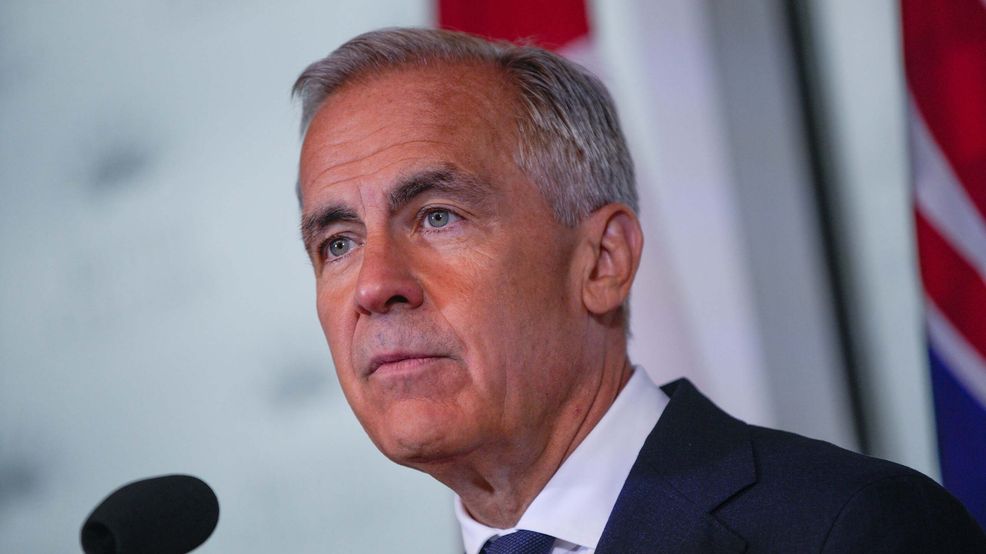
Amid this week’s announcement that Quebecor is seeking to acquire Telus, Prime Minister Mark Carney says Canada’s telecom market could become more competitive with fewer major companies under certain conditions.
Speaking at a Nov. 18, 2026 press conference in Shenzhen, China, during his visit for the APEC CEO Summit, Carney declined to endorse the proposal or say whether the federal government should permit a telecom market with three major national wireless providers — down from the current four.
Quebecor, the Montreal-based owner of Videotron, Freedom Mobile, and Fizz, publicly unveiled its proposal to buy Vancouver-based Telus on Nov. 16. The deal is valued at approximately $31 billion, excluding debt, based on the stock prices used in Quebecor’s announcement.
When asked by media about the proposal, Carney suggested the effect on competition would depend on how the market is organized.
Discussing markets dominated by a handful of large companies, known as oligopolies, the prime minister said that “depending on the market structure, the form of oligopoly can lead to more competition with fewer players under certain circumstances.” He acknowledged that he would likely face some criticism for suggesting this.
However, Carney repeatedly stressed that he was not passing judgment on the Telus-Quebecor combined company proposal and pointed to the responsibilities of the Canadian Radio-Television and Telecommunications Commission and federal competition regulators.
“Again, I’m not going to make a direct comment about the number of players in the market, which would necessarily imply a conclusion about any specific transaction,” he said.
A Telus-Quebecor merger would put two of Canada’s four major national telecommunications companies under the same owner, leaving Rogers, Bell, and the combined company.
Carney was also asked whether growing competition from foreign satellite provider Starlink, owned by Elon Musk, called for a different approach to the industry. He said the federal government is reassessing telecommunications policy as technology and the market change, while emphasizing the need for companies to keep investing in better services.
He pointed to recent rule changes allowing providers to sell broadband services using other companies’ networks, saying that opening up access helps increase competition and lower prices. He maintained that affordability, service quality, and investment would guide the federal government’s decisions.
“You need a competitive market structure that provides that competition. We have seen the costs, for example, of broadband come down significantly over the last years, but technological developments, including some of the ones you referenced, has the potential to further that progress,” said the prime minister.
When asked about Canadians continuing to face high telecommunications bills, Carney acknowledged that more needs to be done.
“There has been improvement, but we need more improvement,” he said.
The federal NDP is calling for Carney’s administration to reject the acquisition outright.
“We don’t need bigger telecom empires. These companies are already charging us way too much — they don’t need even more power,” said NDP leader Avi Lewis in a statement on Nov. 18. “The Liberal government must not allow this deal to go through.”
The NDP leader warned that combining the companies would give a smaller number of owners greater control over the industry and put upward pressure on phone bills.
The NDP is also calling for a publicly owned telecommunications option to compete with private companies. Lewis pointed to SaskTel — Saskatchewan’s provincially owned provider — as a model for other parts of Canada.
“Only a public telecom option can permanently lower bills and give Canadians a real alternative to corporate price-gouging,” continued Lewis.
“Saskatchewan has done it for generations with SaskTel, offering some of the lowest prices in the whole country. It’s time to take that proven model to Quebec and the rest of Canada.”
Quebecor argues that combining its networks and resources with Telus would give it more money to improve services and compete with foreign technology and satellite companies. It has also promised to keep Telus’ brands and Vancouver headquarters.
The proposal would face intense scrutiny given the federal government’s previous efforts to establish a fourth major national wireless competitor.
When Rogers acquired Shaw in April 2023, Shaw’s Freedom Mobile was sold separately to Quebecor’s Videotron. The federal government had refused to let Freedom Mobile’s wireless spectrum licences — the rights to use airwaves for cellphone service — pass to Rogers, instead approving their transfer to Videotron under conditions intended to strengthen competition against Rogers, Bell, and Telus.
Quebecor’s new proposal would bring that fourth competitor together with one of the three companies it was meant to challenge.
Telus has not accepted the proposal. Its board has raised major concerns about the price, debt, shareholder voting rights, and the likely difficulty of securing regulatory approvals.
Header image credit: Shutterstock
 Deals
 News
 Deals
 Gaming
