
IFA in Berlin is Europe’s biggest tech conference, and that means a wide array of gadgets and gizmos see the light of day at the show. Some are wacky concepts, but many are ready-to-roll products set to enter the market.
This group sticks to categories we already know, yet they each offer something different and unique in how they do what they do. Plus, most, if not all, will be available to Canadians at some point.
RugOne Xsnap 7 Pro
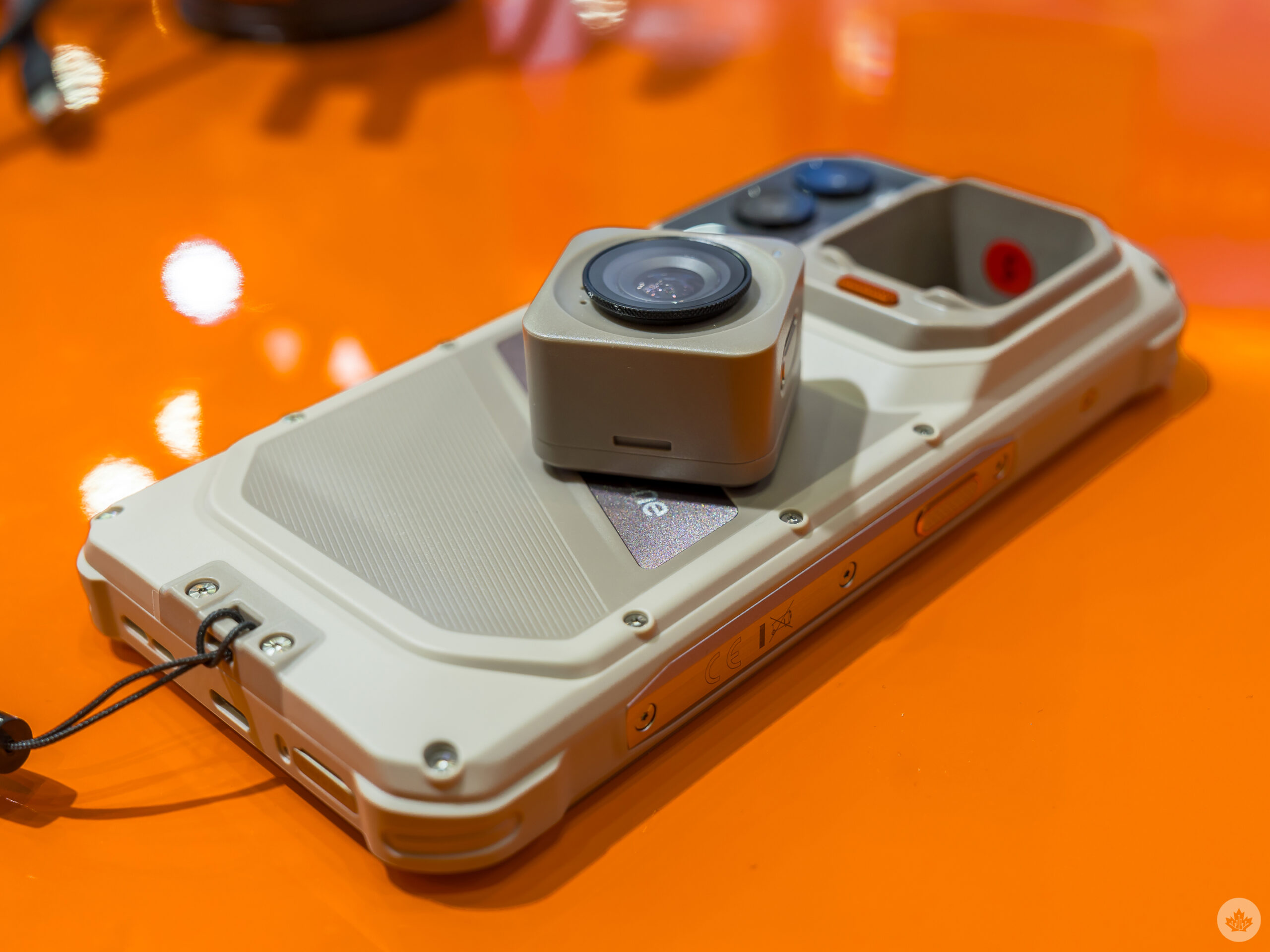
Ulefone’s adventure-focused RugOne sub-brand takes a leaping attempt with the Xsnap 7 Pro as a rugged Android phone built with an action camera that fully detaches from the body. Weighing 39 grams, it sits in its dock flush with the rear panel and pulls free by grabbing onto the lens cover. The magnet on the back can attach to a helmet, chest, bike, or other mounts via accessories RugOne will make available to support the phone. Given the strength of the magnet, it could also attach to metal surfaces on its own. And since the mounting system is the same as GoPro’s, there’s additional flexibility on top of that.
The detached module records up to 2.7K video at 30fps with a 133-degree field of view via a 1/2.7-inch sensor, and can run for up to 40 minutes per charge. The Xsnap 7 Pro itself has IP68 and IP69K dust and water resistance, but RugOne says the detached camera can submerge down to five metres without a case.
The phone itself is big and heavy to accommodate all this, weighing 477 grams with a thickness on par with a phone using a rugged case. But that’s also why it has a massive 9,300mAh battery to also double as a charging bank for the module, rated for about 20 recharges. The rest of the camera array carries a better 50-megapixel main camera using a bigger 1/1.57-inch Samsung Isocell GN9 sensor, and in a rare case, a 64MP infrared night-vision camera intended for true darkness. RugOne is releasing a global variant that will work in Canada (though no carrier support, of course), starting on Kickstarter first at an early-bird price of €799 (about C$1,283.71), with retail availability planned for October at US$999 (roughly C$1,381.62).
Xiaomi 18 Fold
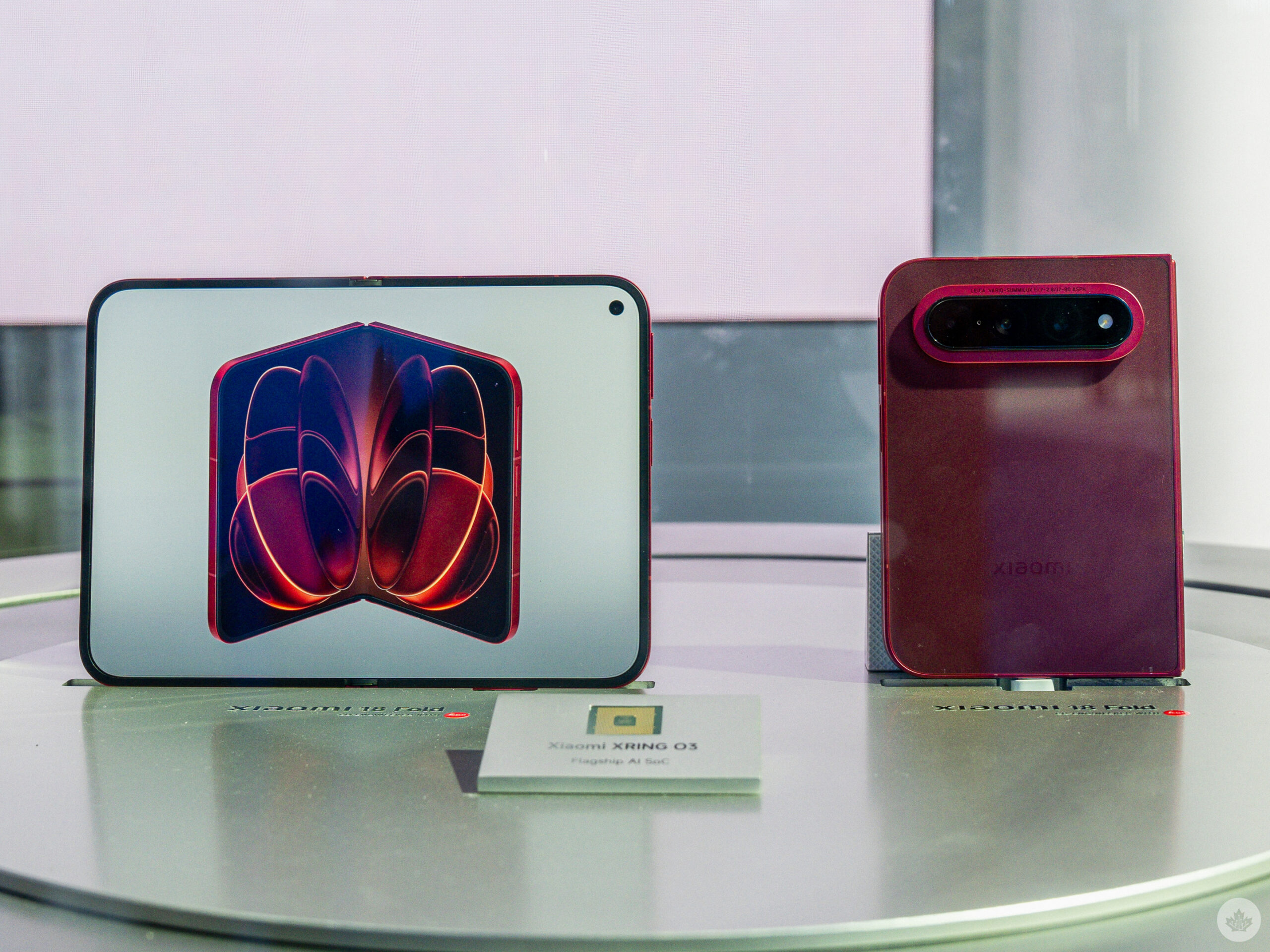
I couldn’t get hands-on time with the Xiaomi 18 Fold, but now that Apple has launched its own foldable, their respective form factors bear similarities. It’s a passport-style design the company calls its first “mid-fold” phone device — basically, something between a full book-style foldable and a compact flip phone. It pairs a 7.58-inch inner AMOLED display with a 5.38-inch outer screen, both running at 120Hz, and at 219g, is considerably lighter than both Apple and Samsung’s passport foldables.
It runs on the company’s own XRING O3 chip, a 3-nanometer in-house processor rather than a Qualcomm Snapdragon chip, paired with what Xiaomi says is the world’s first implementation of CXMT LPDDR6 RAM. The rear camera array includes a 200-megapixel main sensor alongside a 50-megapixel ultrawide — and crucially — a 50-megapixel periscope telephoto lens, all tuned with Leica’s colour science.
The 6,000mAh battery is also considerably bigger than what Apple and Samsung are equipping, and it supports 67W wired charging to charge up faster than both. The phone is launching in China first for roughly US$1,640 (about C$2,268.12) in colours that also mostly resemble what Apple has done. Global availability, while looking likely, is unconfirmed at this time.
TCL P80 Ultra
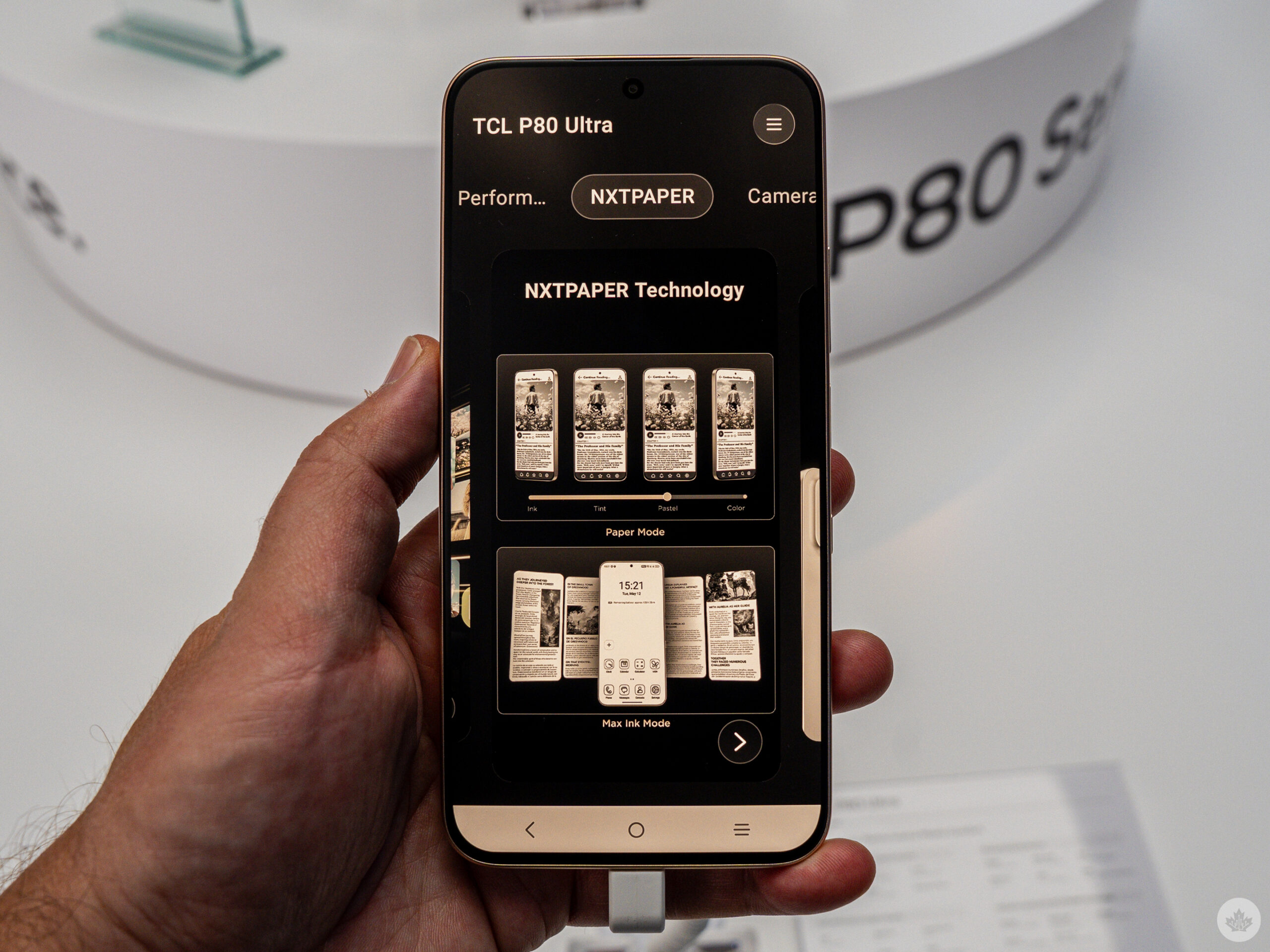
TCL’s Nxtpaper screen technology has been getting better with almost every iteration, and the P80 Ultra marks the first time the company is implementing it in an AMOLED screen when it was previously limited to LCD panels. The 6.83-inch, 1.5K screen reduces blue light output, adds circular polarization so the display remains visible through polarized sunglasses, and hits a claimed 3,200 nits of peak brightness at 120Hz. As with any Nxtpaper phone these days, the dedicated key on the side switches screen modes from full colour to ink paper or Max Ink mode.
This includes a new nano-matrix anti-glare treatment tuned specifically for AMOLED optics, which TCL says is the first anti-glare layer ever applied to a smartphone AMOLED panel. At the same time, deeper blacks and more vibrant colours also have a visual impact, and supporting 100% DCI-P3 colour gamut no longer forces a compromise when viewing photos or video.
It’s clearly not a flagship-level device given the MediaTek Dimensity 7400 Elite chipset inside, along with 8GB of RAM, up to 512GB of storage, and a 5,800mAh battery supporting 45W charging. TCL promises four major Android OS upgrades and seven years of security patches, which isn’t all that common for a mid-range Android phone. It’s got some decent durability with IP68 dust and water resistance. Now out in Europe for €549 (about C$882.05), TCL hasn’t announced availability or pricing in North America yet.
Lexar Muse
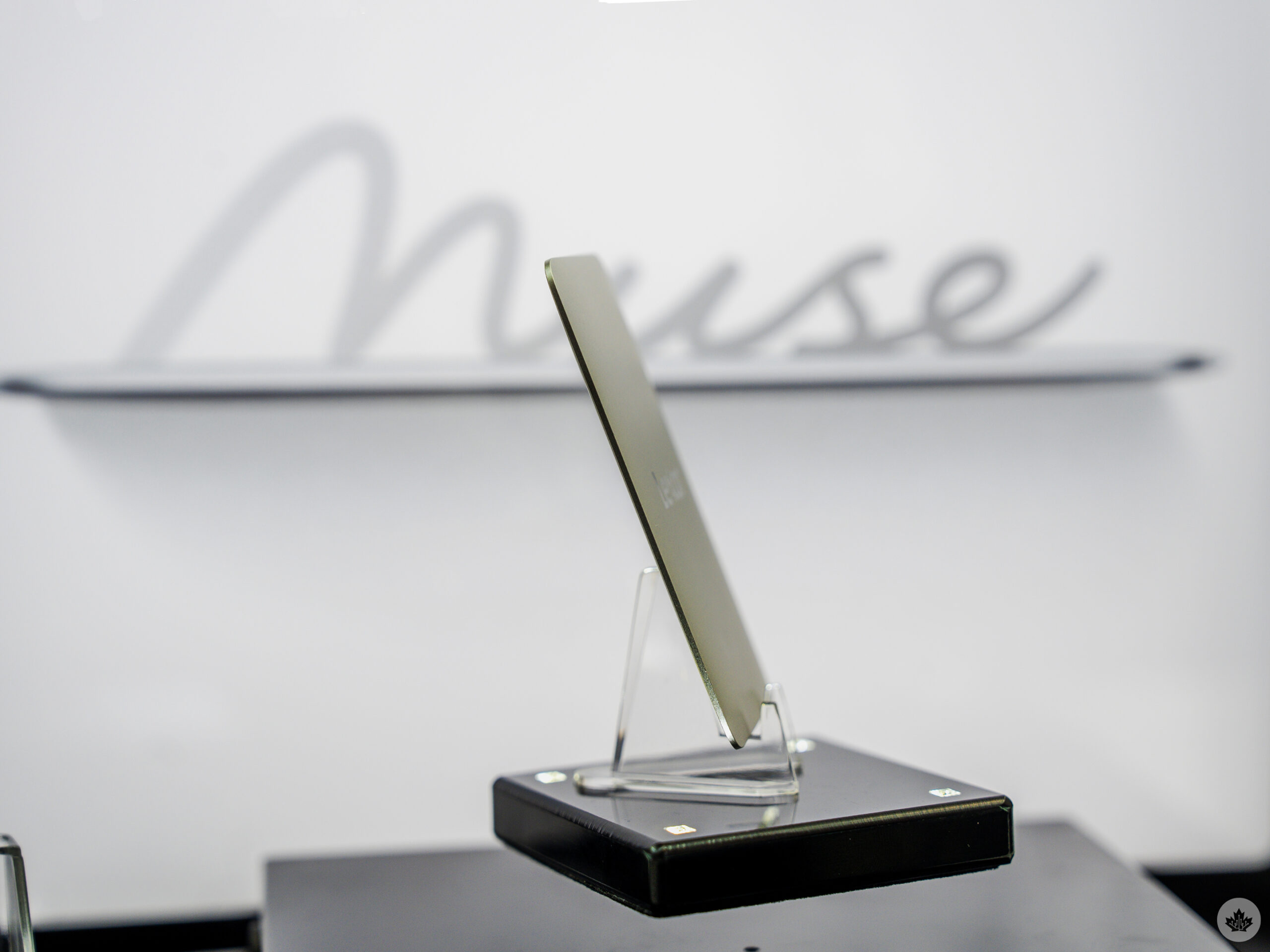
Lexar made the Muse into what it calls “the world’s thinnest portable SSD”, measuring just 3.8mm at its thickest point, tapering to about 1mm at the edges. It’s so thin that it’s comparable to a debit or credit card. That’s why it comes with a faux leather sleeve with MagSafe on the back to sit flush on the iPhone or any Android device supporting it in one way or another. It connects to the phone through a proprietary magnetic connection system called SnapLink, made up of pogo pins and neodymium magnets on one end and USB-C on the other. For that latter reason, this only works with iPhones in the 15 series or later.
The drive has a read speed of up to 1,050MB/s and write speed up to 1,000MB/s — respectable for the size, but not class-leading. On top of external storage, you can use it to record Apple ProRes 4K video at up to 120fps directly to the drive for high bitrate capture on the go. Lexar also emphasizes compatibility with iPad, Mac, and other USB-C devices. In particular, the Samsung Galaxy S26 Ultra supports Log recording, including for its own APV codec, directly to an external drive, so this should work the same way.
The Muse will ship in 512GB and 1TB capacities starting in Q4 2026, though no price has been confirmed yet.
Hohem Eyepic
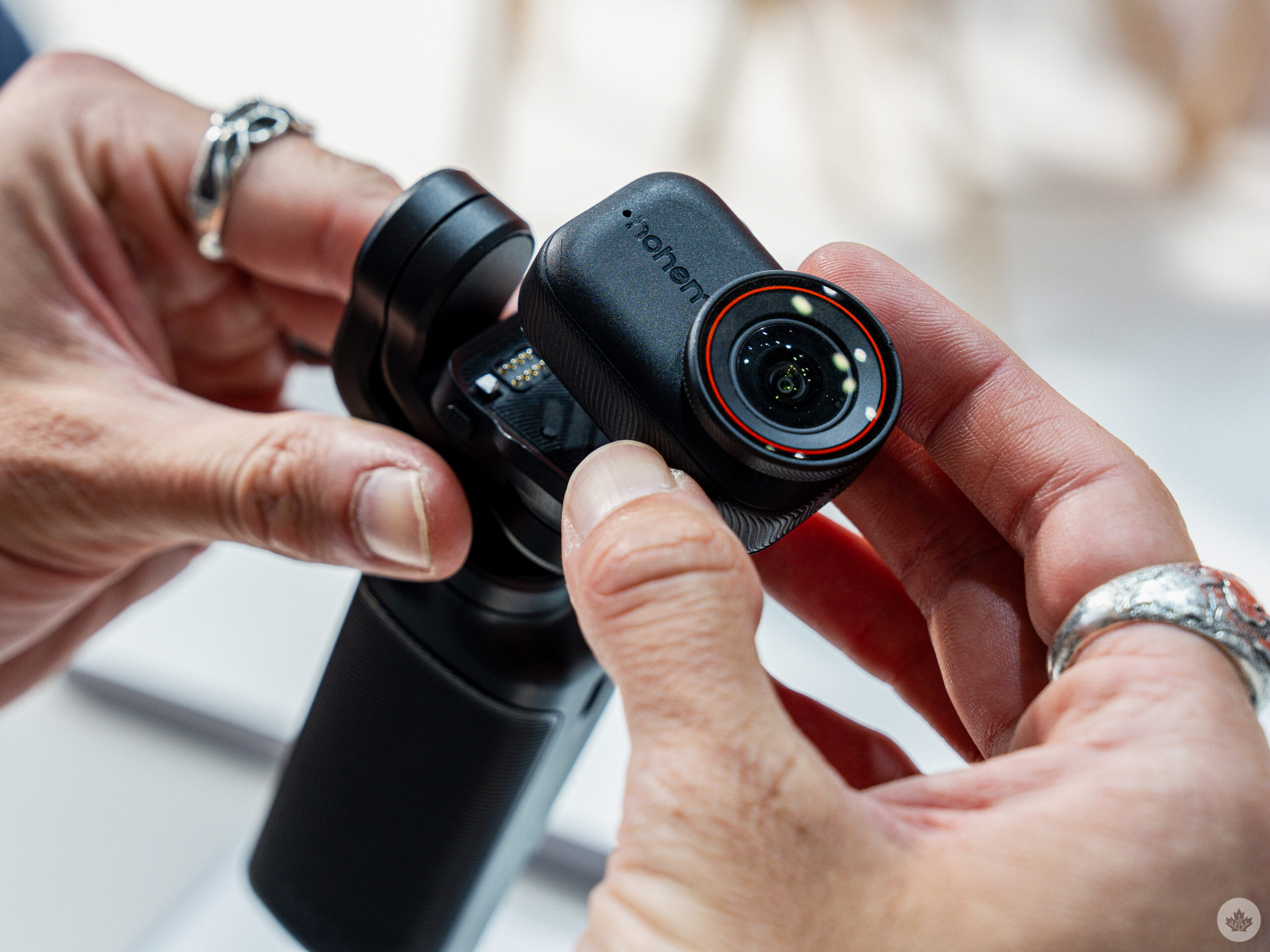
Hohem is taking what it knows about camera and phone gimbals and going into pocket gimbals with the Eyepic, a 2-in-1 model that differs from what Insta360 has done with the Luna Ultra. In this case, the camera itself magnetically detaches from the body, effectively turning it into a hands-free action camera that can clip or mount onto various accessories. When detached, the camera module itself is waterproof down to 10 metres.
One of the standout features is native vertical video capture, meaning that instead of cropping a horizontal frame for social platforms, the 2.51-inch touchscreen and camera physically rotate together, recording true vertical 4K at up to 60fps without any resolution loss. The handle still provides a 1080p live view and doubles as a remote control from up to 10 metres away. We don’t know pricing yet, but Hohem says it’s looking to undercut DJI and Insta360, though this is a single-camera gimbal rather than the dual setups the Osmo Pocket 4P and Luna Ultra have, so there’s no telephoto capability in the Eyepic.
It’s also not clear yet what the sensor size, battery life, or internal storage situation will be until closer to launch in Q1 2027. At this point, CES 2027 in Las Vegas will probably reveal all missing details.
Dreame Leaptic Cube
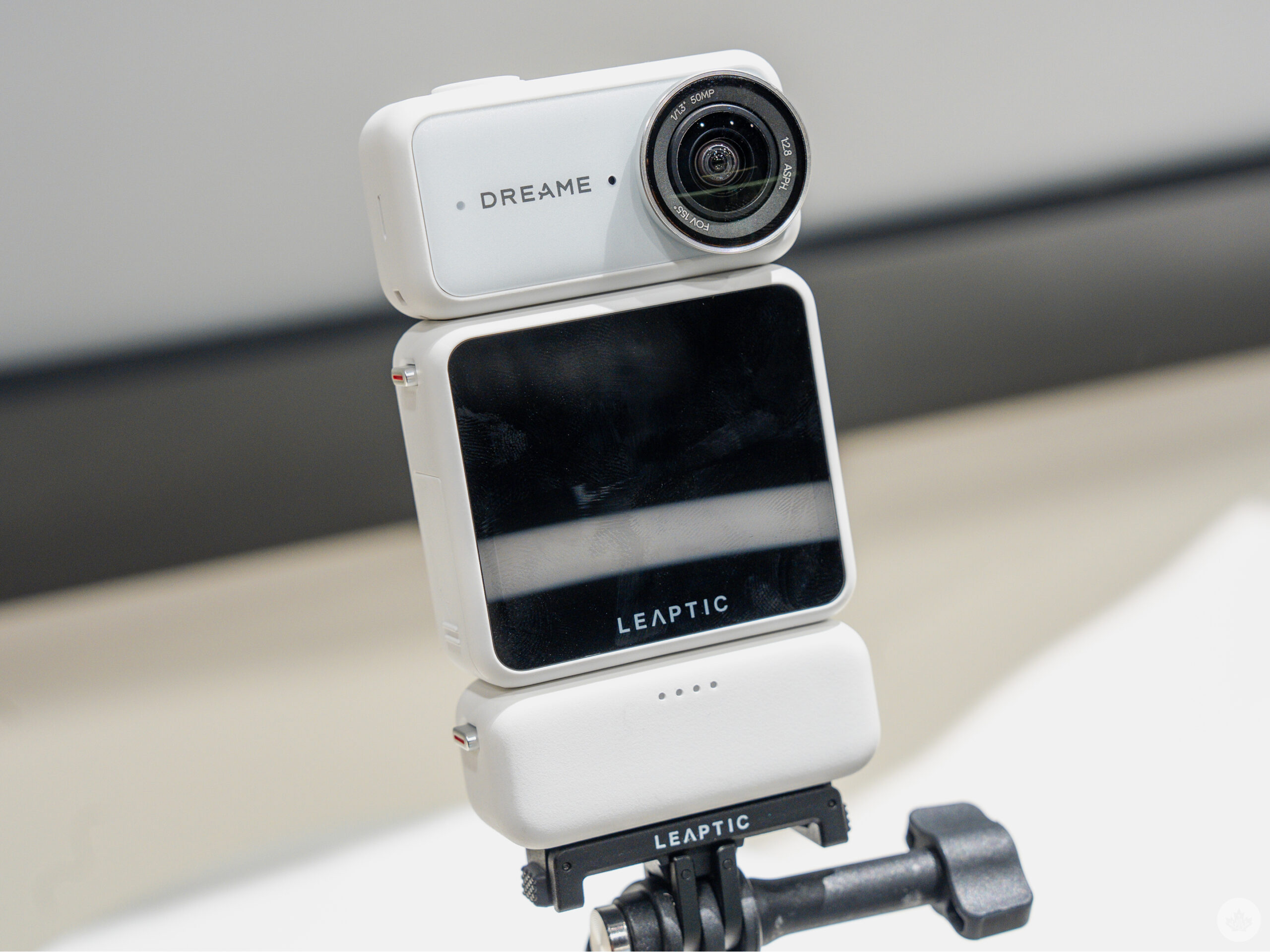
Dreame making an action camera is an odd pivot for a company known for robot vacuums and lawnmowers. The Leaptic Cube was first unveiled at CES 2026 but is now a full-fledged device ready for launch in October. The camera’s magnetic modular design lets the roughly 56-gram lens unit shoot on its own or snap onto a separate base with a 2.27-inch touchscreen for live view and on-device controls. What’s new is a third magnetic battery pack introduced in Berlin that pushes total runtime to about 210 minutes. On its own, the detachable camera module itself can last around 110 minutes and recharge to 80% in roughly 19 minutes.
The main selling point to stand out from other action cams is stacking pieces together, even though the detachable design itself isn’t really a new thing. Water resistance reaches 10 metres bare and 60 metres with an optional dive case, though the case only covers the camera module itself. On resolution, Dreame is positioning the Leaptic Cube against rivals like the DJI Osmo Nano and Insta360 Go Ultra, which top out at 4K, by pushing to 8K at 30fps from a 1/1.3-inch sensor, alongside a voice assistant called Moko that can start recording or switch modes hands-free. As of now, a U.K. launch will start at £349 (about C$652.19) for the 64GB configuration, with U.S. estimates at $439.99 to $459.99 depending on storage. Global availability is coming, including Canada, but without a confirmed timeline in Q4.
PexarBolt Dock
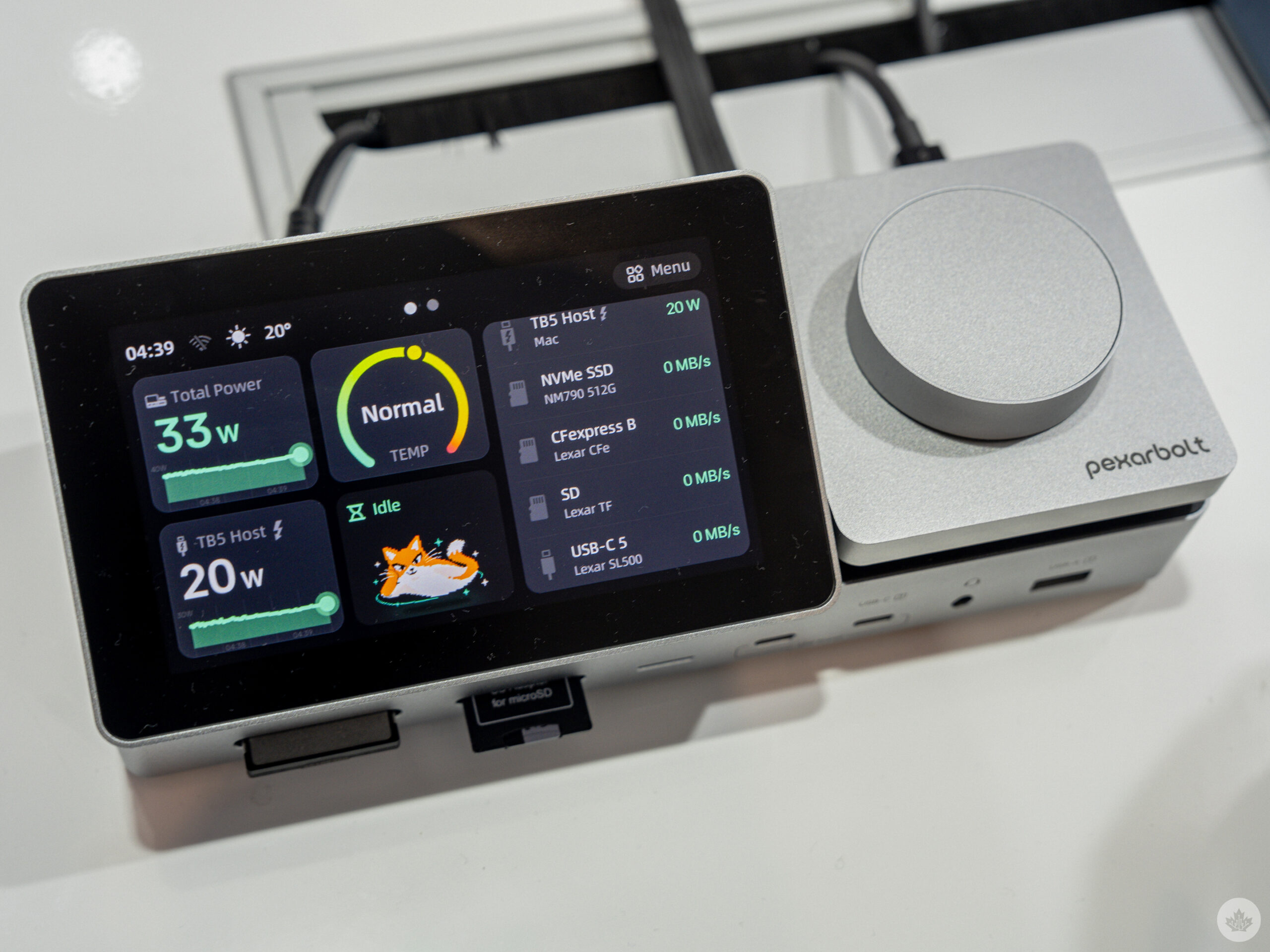
Pexar is a sub-brand from Lexar, and the PexarBolt Ultra TBT5 Dock is the “world’s first” Thunderbolt 5 dock built with its own touch-control dashboard. With no less than 22 total ports, it looks like almost anything can plug into it as a central hub. That includes CFexpress Type B, SD UHS-II, and microSD UHS-II card readers, an internal PCIe Gen 4 M.2 NVMe slot for user-installed storage, a 10GbE network port, and dual Thunderbolt 5 connections supporting either dual 8K displays at 60Hz or triple 4K monitors at 144Hz.
A feature called Bandwidth Boost provides up to 120Gbps of bidirectional bandwidth. When it kicks in, it shifts the reallocation with up to 120Gbps flowing out to the displays, with 40Gbps reserved for the return direction. That’s why the dock can push its higher-end display configurations, be they dual 8K monitors or triple 4K displays, without running into bandwidth ceilings that a flat 80Gbps split couldn’t handle.
A couple of caveats may apply here, like how refresh rates above 60Hz might need Display Stream Compression (DSC) support on both the graphics card and the display to actually hit those numbers. Colour depth may drop at higher resolutions or refresh rates when bandwidth gets tight. In that regard, Bandwidth Boost functions more as a workflow feature for displays specifically, not something that speeds up general file transfers or storage access.
A 5-inch touchscreen controls a lot of this with real-time information on every connected device, including transfer activity, storage status, per-port power readings, and cooling-fan behaviour. The rotary dial next to the screen offers partial control but is more for navigating settings and approving or rejecting AI agent actions, like Claude Code Integration, for example.
Early-bird Kickstarter pricing starts at US$479 (roughly C$662.46), rising to US$649 (about C$897.57) in retail after the campaign.
Ugreen HomeAgent
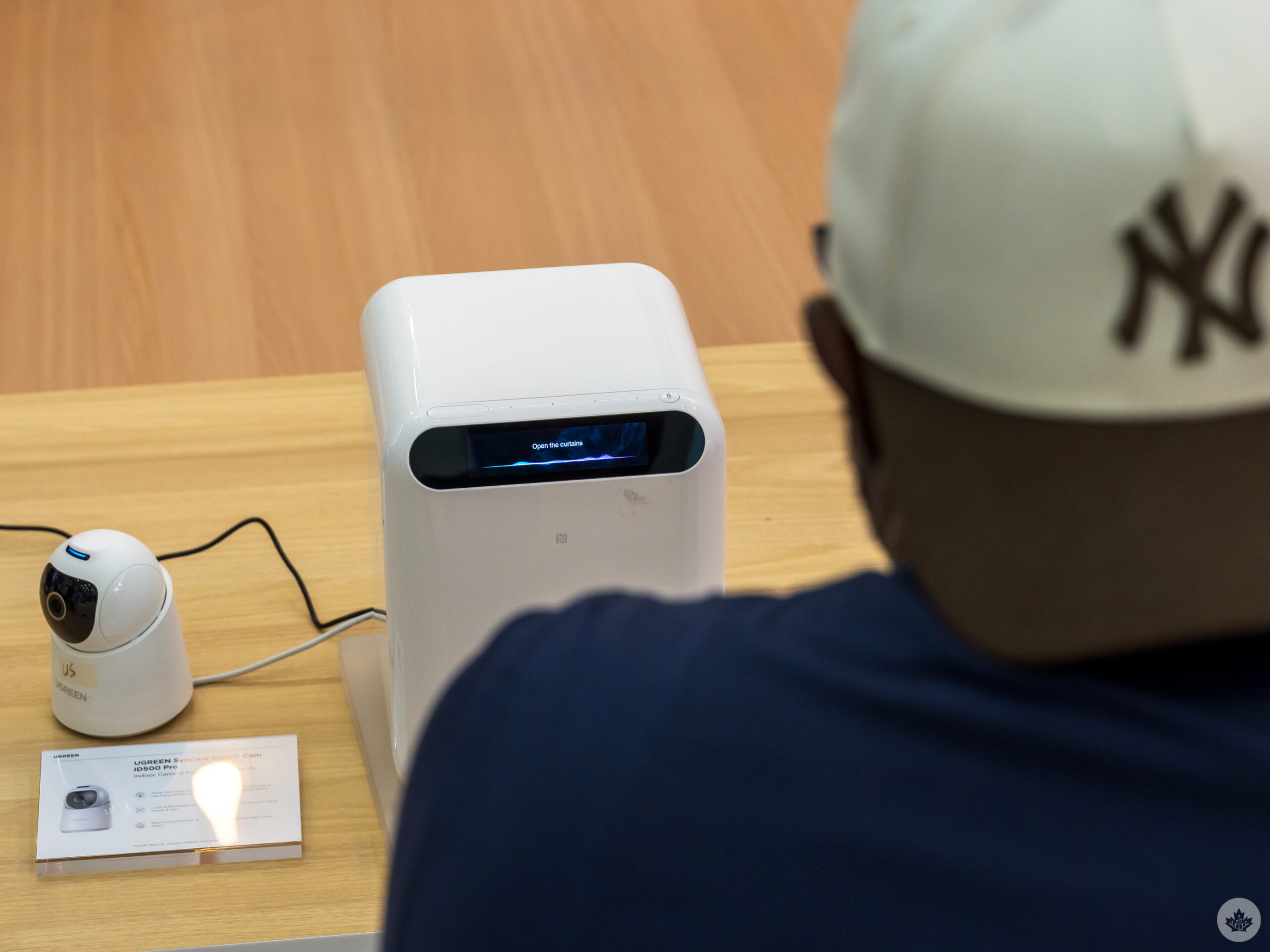
Another company, Ugreen, is also taking a chance by entering a new category. Known way more for its chargers and NAS (network-attached storage) hardware, the company is getting into smart home ecosystems with what it calls HomeAgent. The HA100 series combines network storage, security-camera recording, home-automation control, and on-device AI processing in one hub, explicitly avoiding cloud dependency for tasks like analyzing footage or responding to voice commands through its Uliya voice assistant.
The entry-level HA100 model uses a Rockchip RK3588 chipset rated at 26 TOPS of local AI performance with 16GB of memory, while the higher-end HA100 Pro steps up to 32GB of memory and 205 TOPS, and the fully-loaded MasterAgent MA100 model uses Nvidia’s Jetson Thor T5000 hardware. These are NAS devices that double as hubs, letting you talk to Uliya directly through it or the app to control smart home devices. I got to see this in action at a launch event in Foxborough, MA, at Gillette Stadium prior to IFA.
The system supports Matter, Thread, Zigbee, and Wi-Fi for third-party device integration, including new Ugreen SynCare security cameras utilizing AI features that automatically identify people, animals, vehicles, or packages. These devices won’t come cheap, even with the Kickstarter campaign involved, as pre-orders for the HA100 are set at US$899 for the super-early-bird, $1,799 afterward, moving up to $2,999/$5,999 for the HA100 Pro, and $9,999/$19,999.
Ugreen also expanded its MagFlow charging line alongside this launch with what it calls the world’s first liquid-cooled Qi2 25W magnetic power bank, positioned as a companion accessory to the HomeAgent ecosystem rather than part of the hub lineup itself.
Anker EufyMake Printer
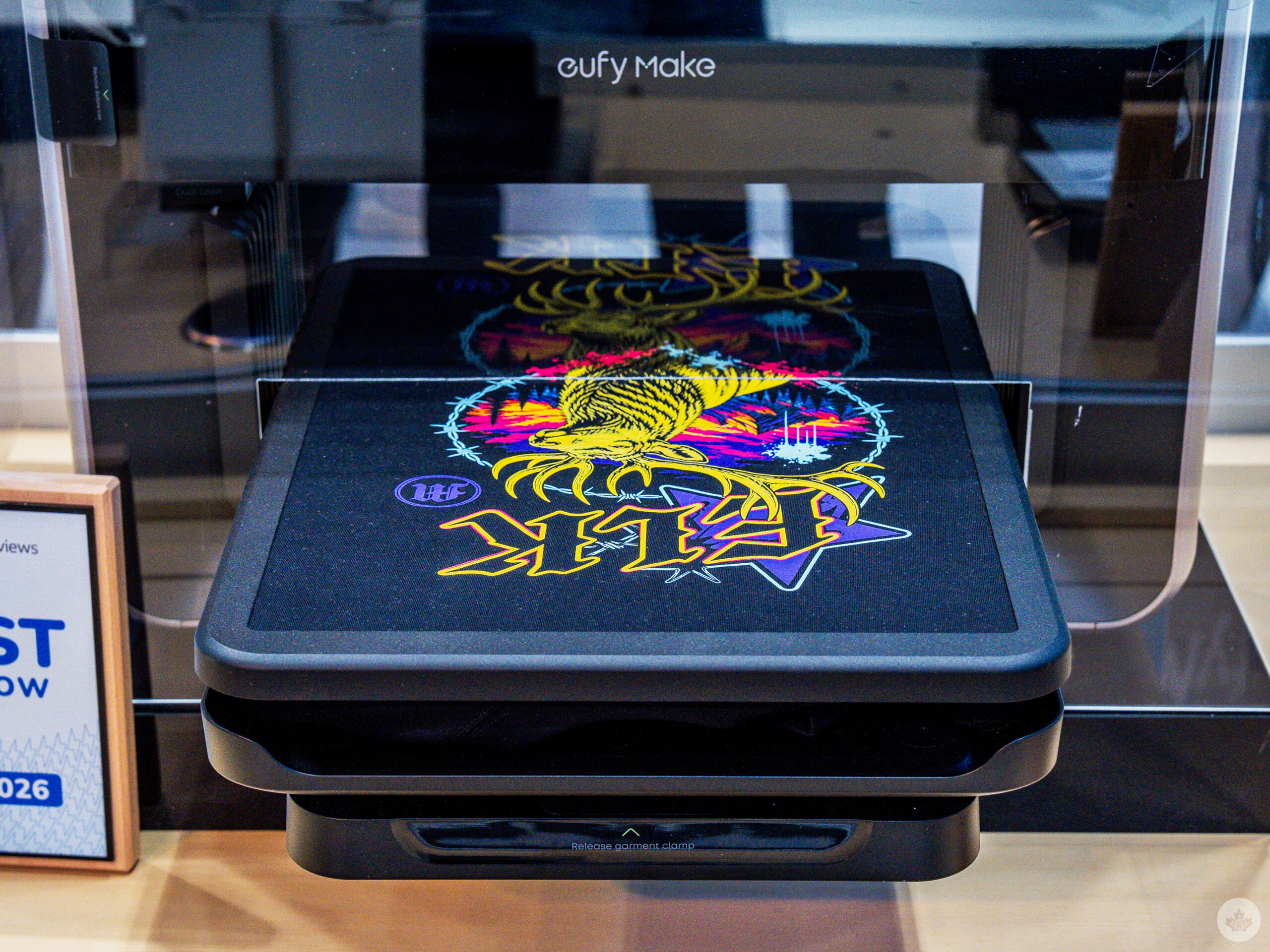
This EufyMake Fabric Printer still doesn’t have an official name, but it’s coming in Q1 2027 and bringing garment printing into homes and small studios. The desktop machine combines Direct-to-Garment (DTG) and Direct-to-Film (DTF) printing in a single unit, bringing it down to desktop size, all controlled from an app. DTG embeds ink directly into natural fibres like cotton for a soft, breathable print, while DTF prints onto a film first, then heat-presses it onto the garment, extending compatibility to polyester, leather, and oddly-shaped items like hats and shoes. A built-in camera scans each garment before printing to detect light versus dark fabric and automatically adjust how much white underbase ink gets applied, without requiring manual input.
Anker is also positioning the printer as a cheaper embroidery workaround, running designs through a unique single-colour embroidery machine for texture, then layering colour on top via DTG to approximate multicolour embroidery at a fraction of the cost. The company says it will use odourless, water-based inks rated for 50 wash cycles without visible fading, and the software will support common file formats, plus AI-driven style filters that can convert photos into watercolour or oil-painting effects.
What’s interesting is there are currently no safeguards preventing users from printing copyrighted material or offensive content, an issue Anker reps say they’re still working through. Without pricing, it’s hard to know what it might cost, but entry-level professional DTG machines currently start around $10,000 CAD, which is the gap Anker is trying to close.
MobileSyrup may earn a commission from purchases made via our links, which helps fund the journalism we provide free on our website. These links do not influence our editorial content. Support us here.