



Canada is one of the biggest game development hubs in the world. With over 800 studios bringing in $5.1 billion to our GDP through popular games like Mass Effect, EA Sports FC, Assassin’s Creed, Warframe, and Dead by Daylight, our national game sector truly is a global powerhouse. Now, a new report is spotlighting the many ways in which gaming makes an impact on Canadian gamers themselves.
In its latest ‘Essential Facts’ survey, Canadian gaming industry lobbying group Video Games Canada (formerly the Entertainment Software Association of Canada) examined the role that gaming plays in Canadians’ lives. Most notably, 48 per cent of Canadian adults aged 18-64 report playing games on a regular basis, while 93 per cent of children and teens say they play weekly. Further, sixty per cent of them regularly play on mobile and consoles, with 44 per cent doing so on PC and 13 per cent on handhelds. Genre-wise, meanwhile, action-adventure is the most popular in Canada (44 per cent), following by puzzle games (40 per cent), strategy/simulation (37 per cent) and casual/social (35 per cent).
But for Paul Fogolin, VGC’s president and CEO, it’s the reasons why Canadians play games that really stand out.
“A couple things jumped out to me in this report, and one of them was the amount of Canadian players who talked about how they use games to unwind, to reset. The term I use is ‘self-care.’ So people talk about self-care. It’s an important aspect of modern life — we’re living in a stressful world,” he says. “I think there might have been a time where the idea of activities and hobbies that help relax and unwind would have been taken for granted. We can’t do that anymore. So, 91 per cent of players say that games help them relax and unwind.”
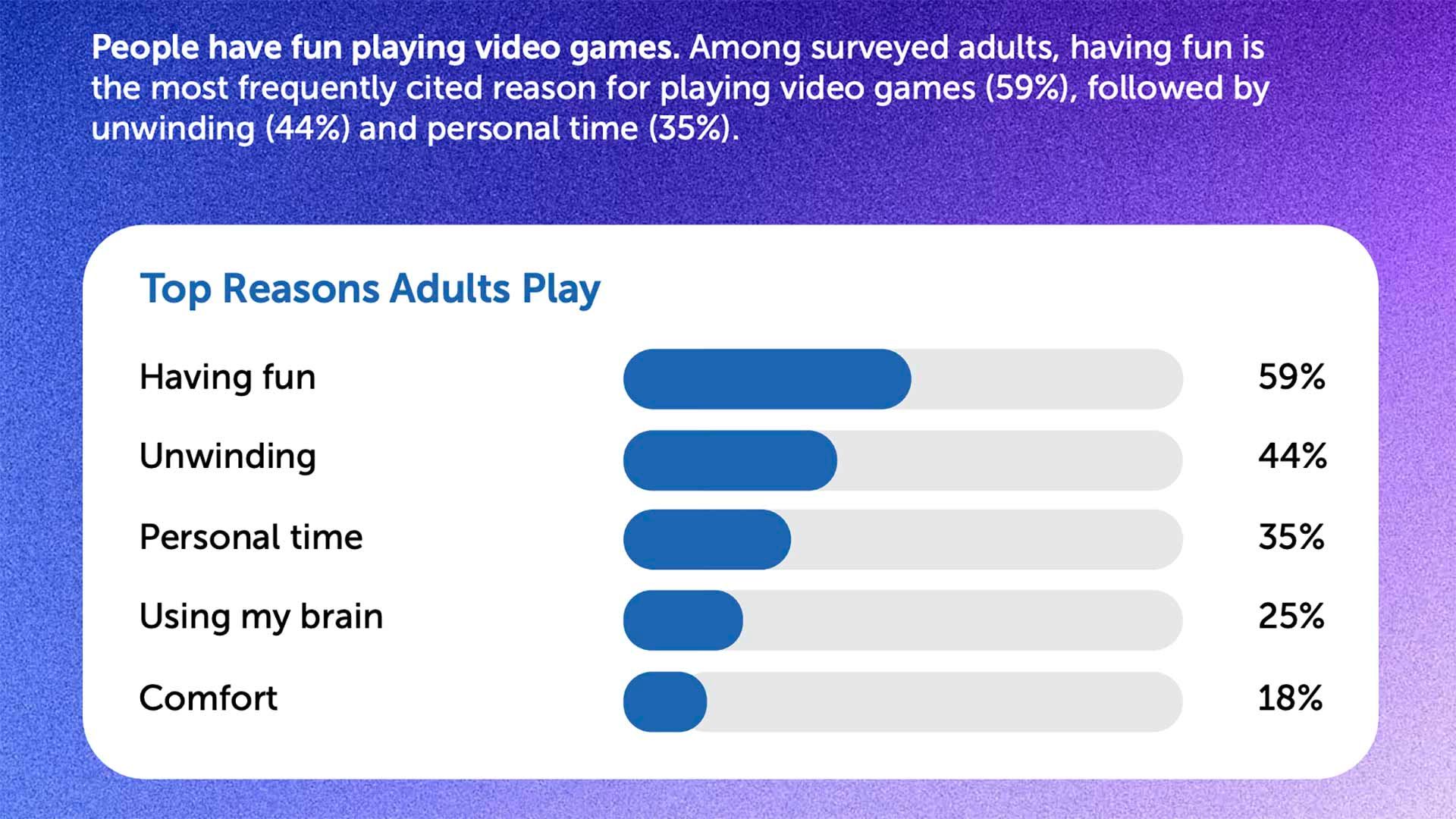
Image credit: VGC
He adds that games can have deeper benefits, with 78 per cent of adults and 69 per cent of teens saying games make a positive impact on their mental wellness. Seventy per cent of respondents also said that games help them stay connected, while 63 per cent said games build community and encourage social connection.
“Those are resounding numbers. And again, we are living in interesting times where there’s a cost of living crisis. There are uncertainties in the world. Mental health challenges are, I think, more prevalent than ever,” he says. “So when you have Canadians saying, ‘Here is a hobby, here’s a pastime, here’s something that I can do to unwind, to relax, and, actually, I feel better, my mental health improves after I play, either if it’s a single-player experience where I’m delving into a world that I love, or something I’m doing with my friends and family online, or new friends that I meet — that is huge.”
Canadians made similar comments in VGC’s last iteration of Essential Facts in 2022, demonstrating gaming’s enduring positive impacts on well-being. But something this latest report dove into for the first time was Canadians’ sentiments towards Canadian-made games and the national gaming industry as a whole.
“We wanted to get a sense of: Do Canadians play Canadian-made games? Do Canadian players know they’re playing Canadian-made games? Is there a sense of pride in the industry? Is there a sense of patriotism around the industry? Is this an industry that Canadians think is worth investing in? Is this an industry Canadians think that we should spend more money investing in?” says Fogolin. “And the results were very positive in that regard.”
This line of questioning pertains to one of the other key findings that stood out to Fogolin: the number of Canadians interested in getting into the gaming industry. In particular, the report found that 54 per cent of teens, 52 per cent of Gen Z and 44 per cent of millennials are interested in pursuing games careers.
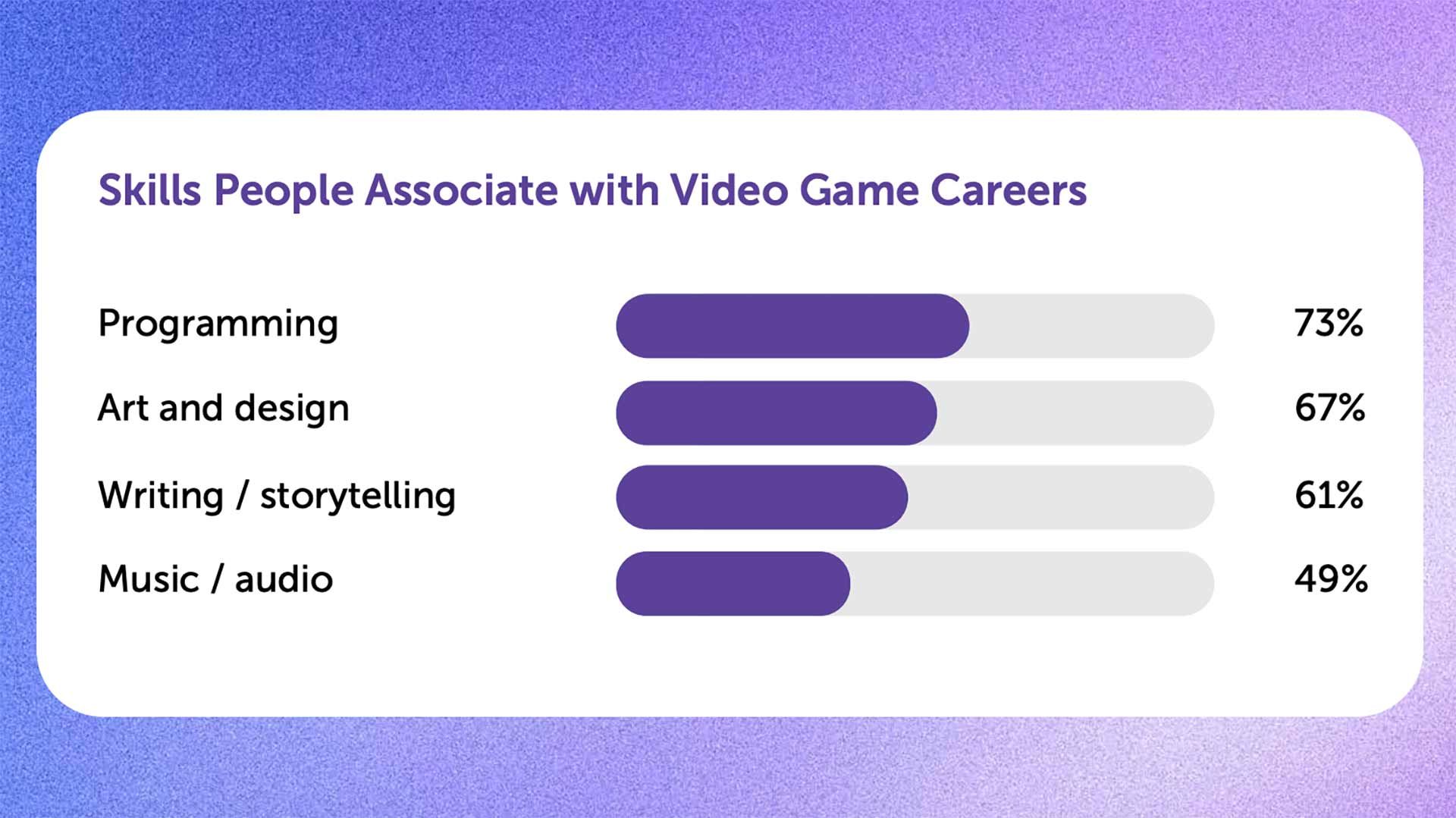
Image credit: VGC
While that’s certainly good to see, it’s also important to not sugarcoat the state of the industry to aspiring game developers. After all, we’ve seen tens of thousands of layoffs since 2022 alongside studio closures, consolidations and numerous project cancellations.
“Here in Canada, we’re not insulated from the global pressures the industry has faced. More investment than ever was seen during the pandemic in the industry globally. Canada was a part of that,” says Fogolin. “A re-adjustment post-pandemic, not just with the end of the pandemic, but into new macroeconomic conditions, impacted the industry. Capital is tighter than ever when it comes to investment. Budgets are higher than ever when it comes to making games. And so the act of making games has never been so competitive.”
What does help counter those headwinds, he says, is Canada’s large pool of developer talent.
“Here in Canada, we are blessed with an advantage, a foundational advantage in the industry, in the level of talent we have — the infrastructure, the community, the knowledge, the studios, whether it’s larger global studios, our homegrown indie studios, and everything in between,” he says. “Because of that foundation, we have fared better than most jurisdictions during this time, and because of that foundation, we are poised to continue to be a global leader in game-making that punches above our weight.”
Fogolin also says he was heartened to see a rise in a national sense of pride for Canadian games in the 2026 Essential Facts report. In particular, 68 per cent of respondents say it’s important that video games created by Canadian developers are available to play, 61 per cent said they believe the gaming industry is important to Canada’s economy and 77 per cent said Canada should invest the same amount as, or more than, competing countries to bolster our national gaming industry.
But of course, that’s only part of the story.
Supporting Canada’s game developers
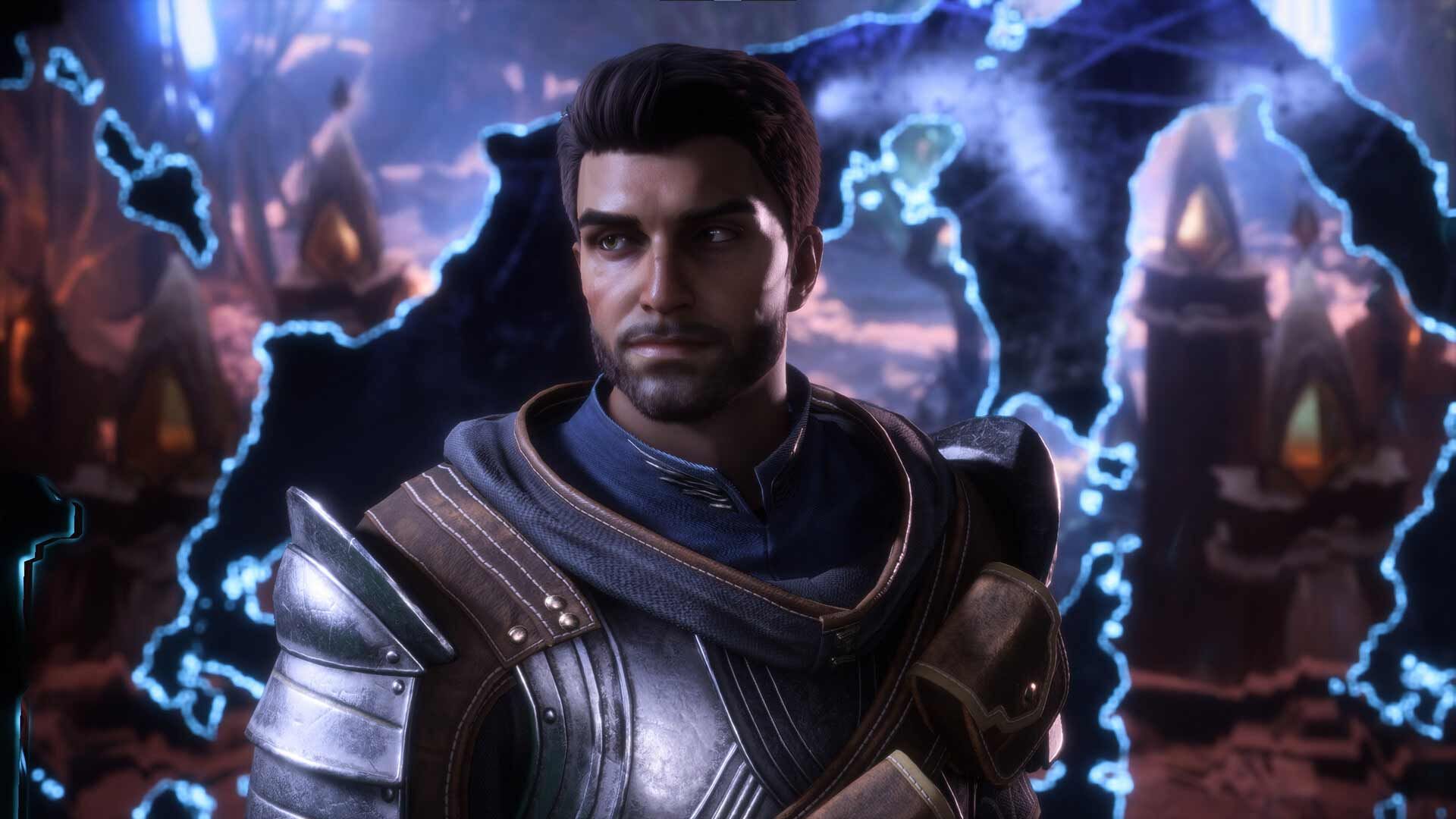
Dragon Age: The Veilguard. (Image credit: EA)
No real discussion about the Canadian games sector can be had without BioWare, the beloved Edmonton-based developer recently shuttered by Electronic Arts. People around the world have been mourning the prolific RPG maker, with many developers in Canada, especially, having been heavily influenced by the studio.“Anytime there’s a studio closure in the industry or any job loss, it’s incredibly difficult. That’s their livelihood. There’s families. There’s implications. It was hard to see a studio with such a rich history close — it’s like we’re going to a new chapter,” says Fogolin. “I try to focus on the incredible games that they’ve made, the creators themselves, the talent that grew up in Edmonton, in BioWare, and that talent remains. That talent is here in Canada. That talent can and should be able to continue to make games.”
On that note, there’s been a lot of discussion in the wake of BioWare’s closure about what, indeed, should be done in Canada to sustain game developers. Most notably, NDP leader Avi Lewis has argued that the federal government should help former BioWare workers reclaim the studio and the Mass Effect intellectual property (IP) from EA. To be clear, there’s no indication that either EA or the federal government would ever even entertain such a scenario, but the latest Essential Facts report clearly shows that many Canadians do want game makers to be supported.
That begs the question, then: outside of existing government funding opportunities like the Canada Media Fund (which just got a “historic” federal investment of $213.4 million), what else should be done to help Canadian game makers avoid BioWare’s fate?
“I want to separate a couple things. There’s individual studio decisions — every company has their own business model, large, medium, or small, that informs their business decisions and how they move forward with different studios, and so there’s no one or two factors that lead to a studio closure or downsizing or, similarly, expansion on the positive side,” says Fogolin. “So I would not draw a parallel between government incentives and one particular studio closure, or any other particular market condition. I think it’s a package. It’s a holistic package when you think about investment and you think about conditions that allow the businesses in this industry to succeed.”
That package, he says, includes everything from “capital availability” and “talent availability and mobility” to incentives that make each province “more attractive” to investors. It’s for that reason that he calls for a “national strategy” for Canada’s video game industry.

Mass Effect: Legendary Edition. (Image credit: EA)
“Having a conversation, especially at the national level about coordinating policies and approaches to this industry, is where we need to be, and I think that there’ll be ideas coming from all across the industry and all the different players, at different levels, at different sizes, on how best to coordinate that,” he says.
“If you look at the [2026 federal] budget from [last week], there’s a section on strategies for different industries, and there’s AI, and there’s forestry, and there’s robotics, and there’s modular housing and things. To me, this industry belongs in that conversation to say, ‘Alright, what’s going on here? What’s working? What’s not working? What else is going on in the world in competitive jurisdictions? How are they trying to support the video game industry, and what can we do better to compete?’ And I think that would be an ideal place to be as we move forward.”
For now, he says he’s hopeful conversations will move in the right direction, based on something else he saw in Budget 2026.
“It lists ‘industries of the future,’ essentially growth industries of the future, where there’s the most opportunity for economic benefits for Canada. And it’s specifically those where we already have, according to the Government of Canada, an advantage, and games were on that list. And it was incredible to see. It’s ‘finally at the big kids’ table.’ There’s things like AI and automotive and robotics and cybersecurity, and games were right up there,” he says.
“So to me, that’s such a strong signal that our partners in government understand that we have an advantage, and they also understand that this is one of 10 to 15 industries with real growth potential, despite the challenges, and so that gives me some optimism for the future.”
The 2026 Essential Facts survey was conducted by Burson using the Leger Opinion online panel to survey 1,650 adults, 250 children (aged 6-12), and 250 teens (aged 13-17) between Oct. 1-16, 2026 in Canada. All respondents played video games within the past four weeks on a device they own.
The full survey can be found on VGC’s website.
Header image credit: Shutterstock
 Gaming
 Gaming
 Deals
 Gaming
