


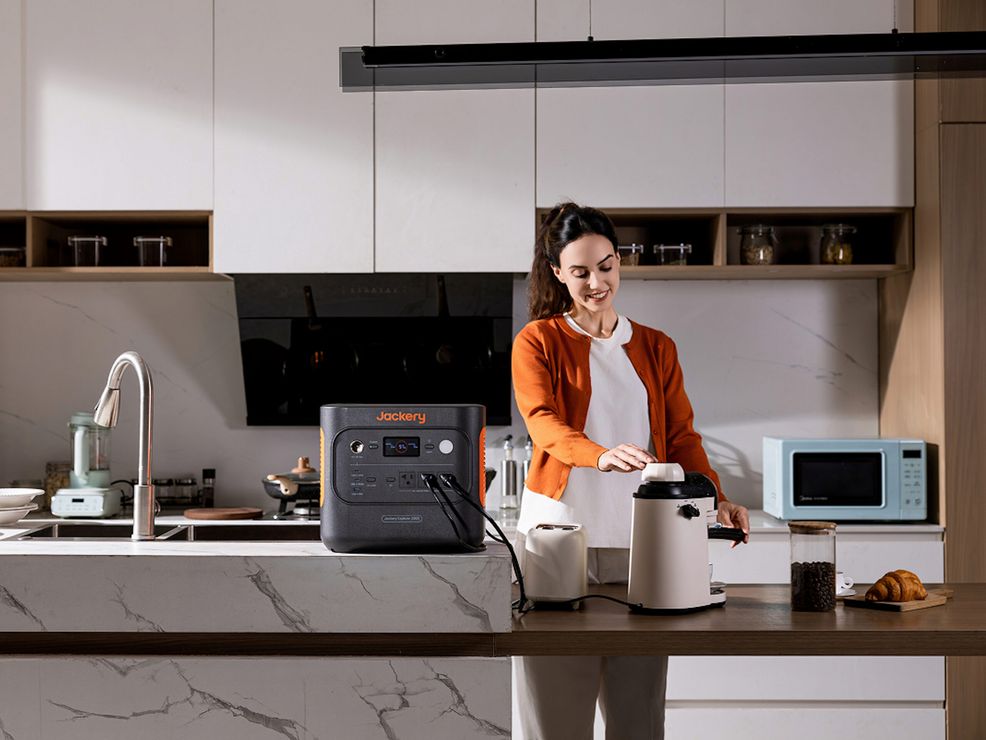
Jackery’s Black Friday deals run until Dec. 6 across Canada, with the “Winter Ready. Jackery On.” philosophy taking up to 60 per cent off portable solar generators backup power stations. Considering the unique challenges of Canadian winters, the most common mistake home backup buyers make is either overspending on excess capacity or buying a unit that is too small to handle their needs.
What do watt-hours and watts tell you?
When you look at a solar generator, the two numbers that matter most are capacity and output. Capacity is measured in watt-hours (Wh) and tells you how long a unit can keep going before it needs a recharge.
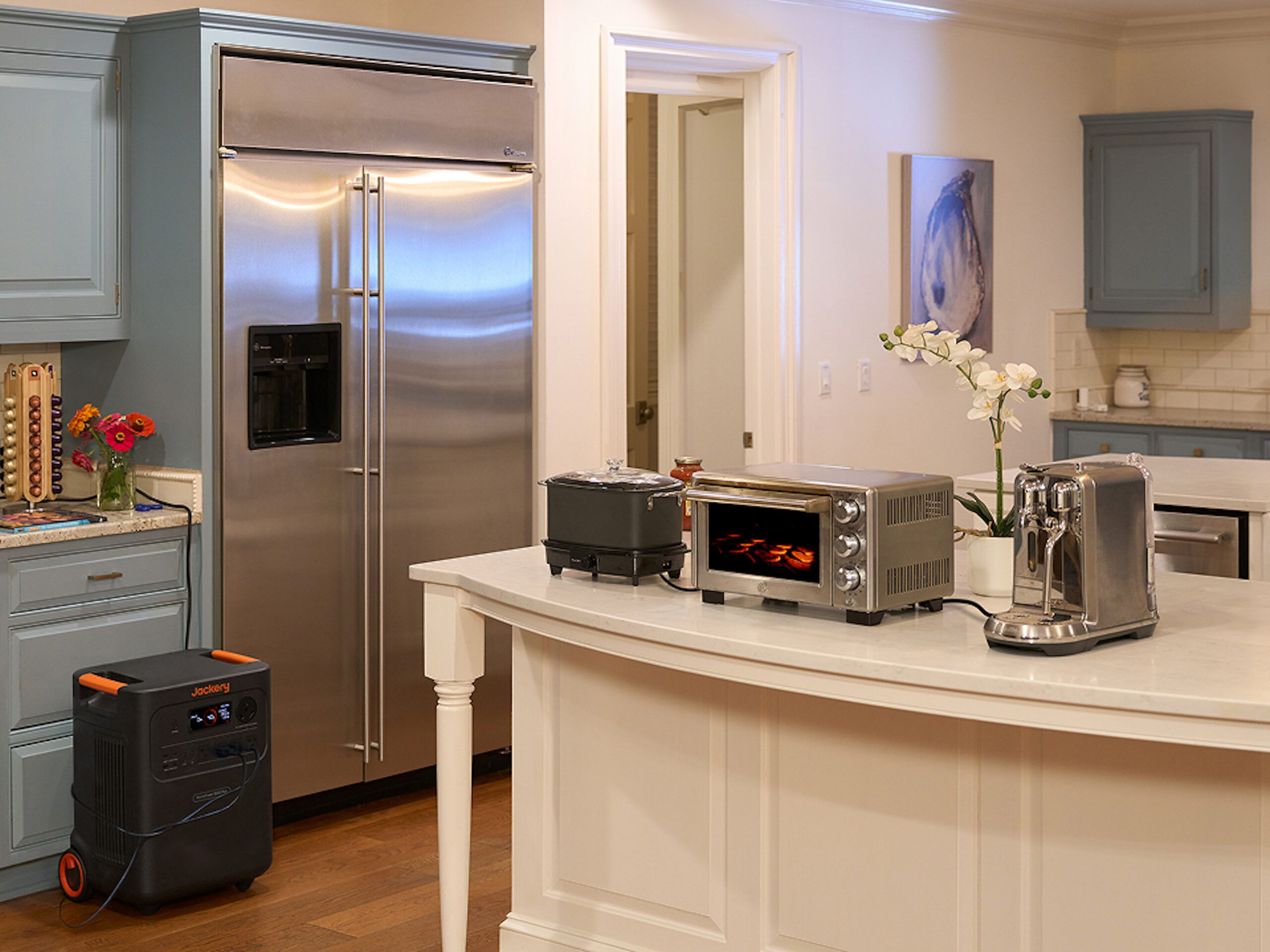
For context, an average side-by-side refrigerator and freezer combo uses about 1400Wh daily. Output is measured in watts (W) and tells you how much power the unit can deliver at once to run multiple appliances simultaneously. That same typical Canadian refrigerator/freezer draws roughly 200W while it’s actively cooling. That makes the Jackery HomePower 2000 Plus v2 a great choice for keeping food fresh, storing up to 2048Wh and providing up to 2400W at one time. And every Battery Pack 2000 Plus v2 you add to it increases storage by 2048Wh.
What do you want to keep running?
To find the right output and capacity, you need to add up the typical draw of your essential hardware. A standard fridge or freezer will draw between 100 W and 400 W depending on its size and compressor cycling. You will also want to account for your router, laptops, lights, the furnace fan, and perhaps a sump pump if you have a basement.
How fast does the unit take over when the power drops?
Switchover speed is crucial if you’re trying to keep sensitive electronics from resetting or a fridge compressor from shutting down. Jackery’s Explorer 2000 v2 restores your power in 20 milliseconds or less when it drops, fast enough to keep basic electronics running without a hitch, including many Wi-Fi routers and modems. The FridgeGuard acts even faster, with a 10-millisecond response time that protects sensitive compressor components.
How does a solar generator recharge when the outage lasts for days?
Jackery
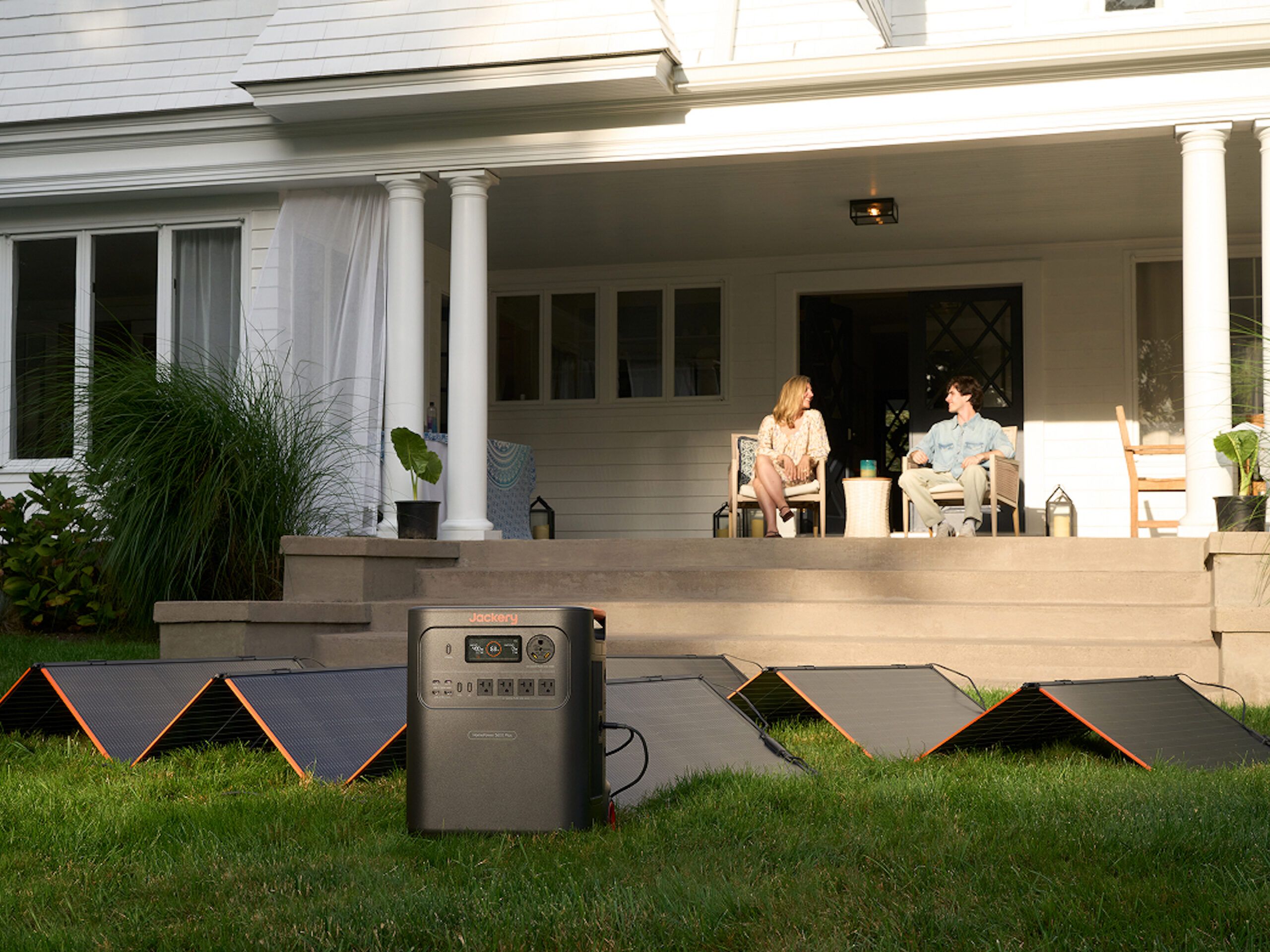
Jackery’s systems are designed to be kept plugged into the wall so they’re fully charged ahead of a storm. Once the grid is down and you have depleted the battery, you can recharge the unit using the SolarSaga 340 X Solar Panel. Active solar charging extends runtime and can help keep life relatively normal throughout short blackouts.
During longer outages, if you cut power usage to just the essentials, the right solar panel setup can just about keep your home running indefinitely: the Explorer 2000 v2 recharges in around 5 hours with direct sunlight and proper placement of two SolarSaga 340 X panels. So, if your home’s essential core load draws less than 2042Wh from dusk to dawn (and it’s sunny out during the day), your refrigerator and Wi-Fi can basically run uninterrupted until the power’s back on, as long as you keep the Explorer 2000 v2 topped up throughout the day.
Which size fits which home?
Jackery
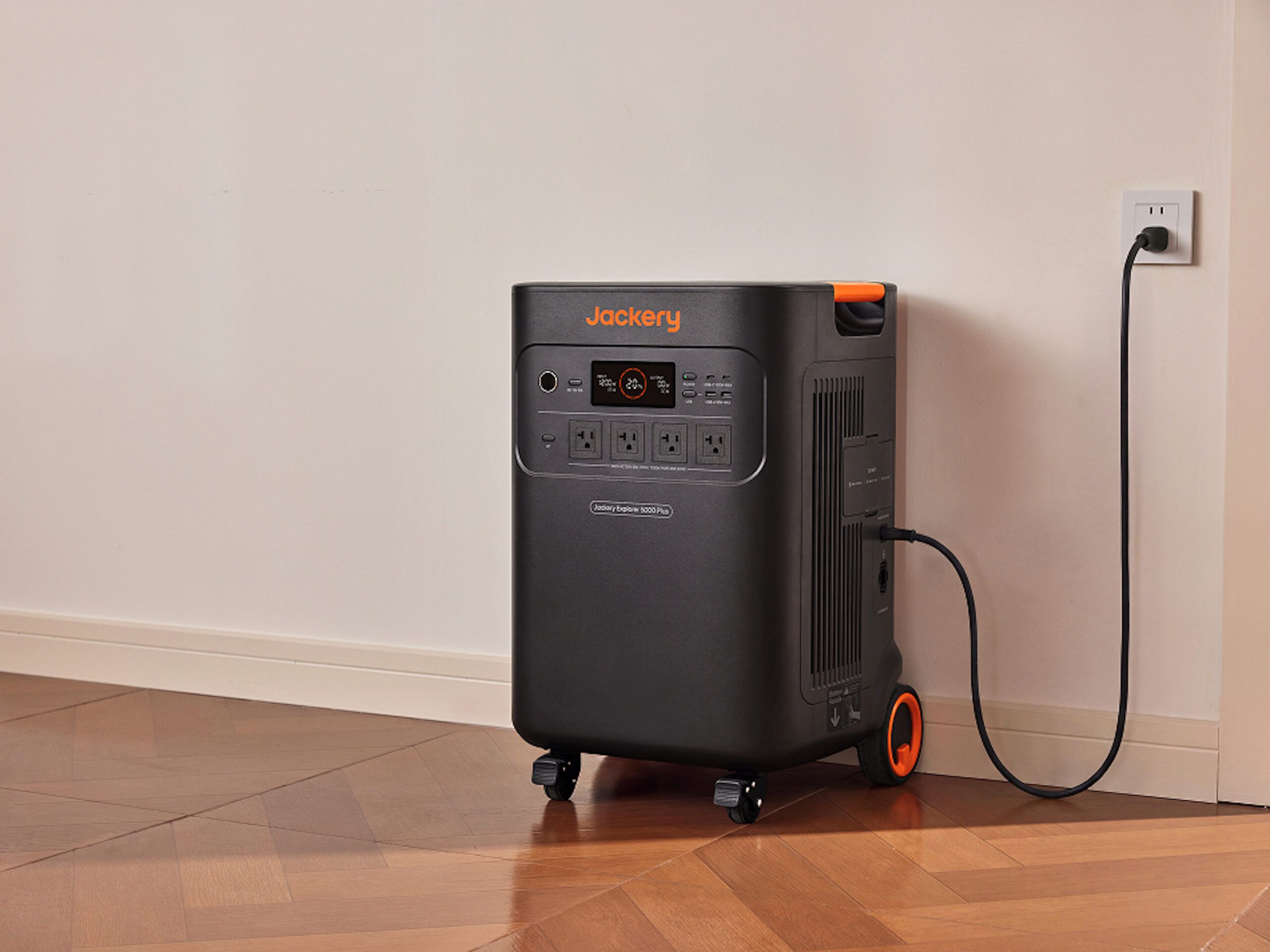
Because Jackery solar generators meet strict indoor safety standards — producing no emissions, requiring no gas, and running almost silently — you can set them up right in your living space. That means The World’s No.1 Solar Generator Brand* offers a solution for every type of home layout.
If you live in a detached house with a furnace fan, a sump pump, and a full-size fridge, you need high capacity and high output. The Explorer 5000 Plus delivers 5,040 Wh of capacity and 7,200 W of output. It can run a mini fridge for 26 hours, a small water pump for 40 hours, and a microwave for 3.5 hours.
If you live in a townhouse and want to run a household refrigerator, a microwave, and keep 24 laptops charged, the Explorer 2000 V2 provides 2,042 Wh of capacity. It can power a 520 W fridge for 3.2 hours or a 5 W light for 155 hours. The expansion capability of a model like the HomePower 2000 Plus v2 makes it ideal for households that want to start with essential home backup now and potentially expand its appliance support and runtime in the future.
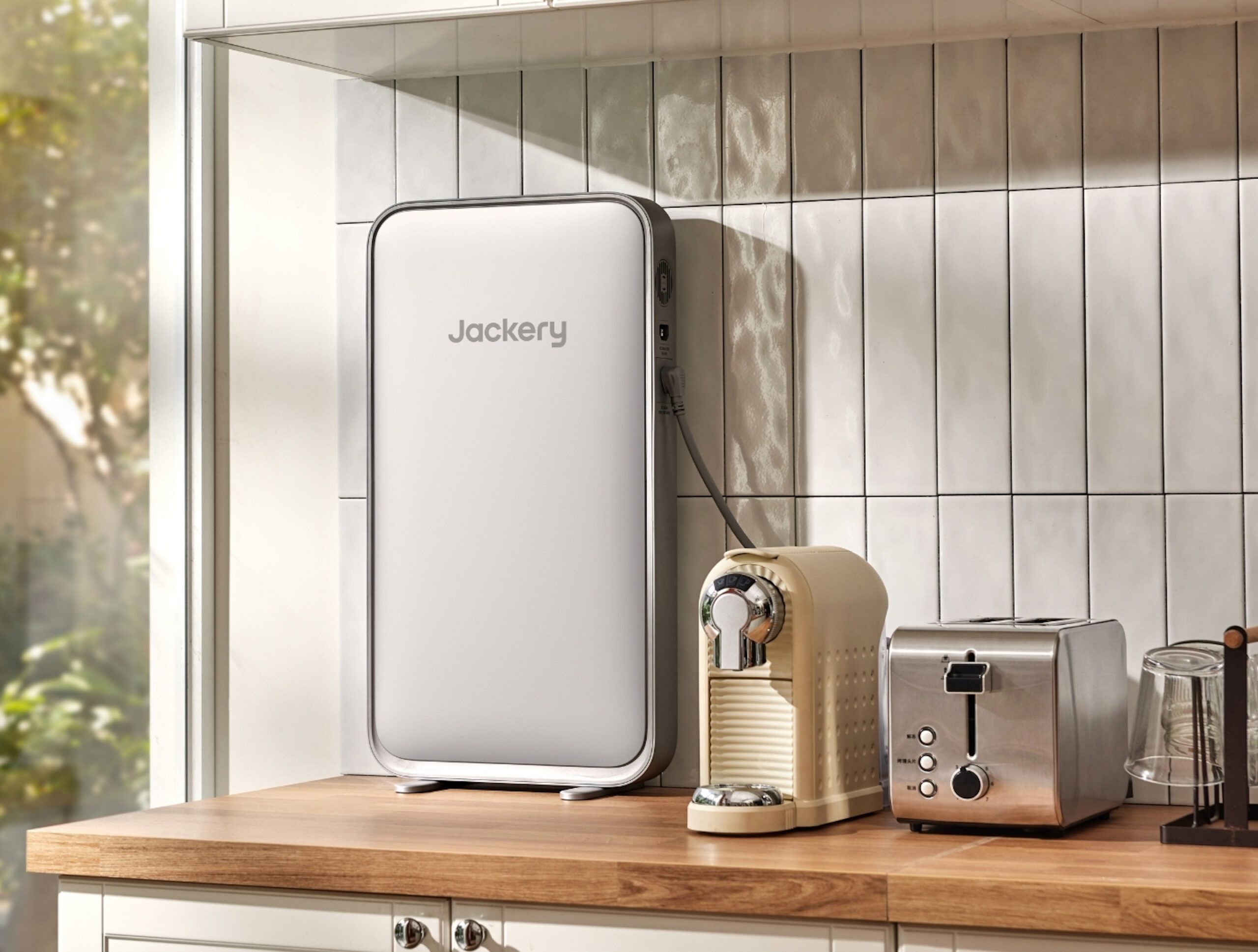
If you just need targeted backup for the kitchen, the FridgeGuard offers up to 15 hours of fridge runtime in a sleek package just 2.6 inches thick. Its automated, 10ms-or-less switchover time ensures the sensitive components in the compressor aren’t damaged when the power goes out, and it fits easily in a modern kitchen physically and in terms of appearance, ready to spring into action at a moment’s notice, without intruding on everyday life.
Jackery
If you want a scalable home backup hub, the HomePower 3600 Plus stores 3584Wh with a 3600W output, easily enough to run a full-size refrigerator for over a day.
What does it cost this Black Friday?
Jackery
During the sale at ca.jackery.com, the Explorer 5000 Plus is $3,899 (regular $4,999). You can also bundle it as the Jackery Solar Generator 5000 Plus with one solar panel for $4,669 (regular $5,999).
The Explorer 2000 V2 is down to $1,099 (1,410 off the regular $2,499), and the FridgeGuard is $869 (regular $1,099).
The Explorer 1000 v2 is discounted to $649 (450 off the regular $1,099)
The HomePower 3600 Plus is on sale for $2,559 (regular $3,999), or you can grab the Jackery Solar Generator HomePower 3000 bundle with a SolarSaga 340 X panel for $3,189 (regular $4,399).
The broader sale runs until December 6 (with slight pricing shifts expected after December 1). Plus, buyers who secure their units on ca.jackery.com between November 19 and November 30 receive Jackery’s 30-Day Price Match guarantee, which ensures they’ll enjoy the best price available over the next month in case additional discounts arrive after they’ve already made their purchase.
*Based on cumulative sales volume and cumulative revenue as of the end of 2025, Jackery ranked No. 1 globally among solar generator brands. Data source: Frost & Sullivan, White Paper on Global Solar Generator and Plug-in Solar Storage Industry (2026).
 Sponsored
 Sponsored
 Sponsored
 Sponsored
