


In 2024, Toronto-based Hilltop Studios released its first game, Lil’ Guardsman, to significant critical acclaim. With its clever mix of the whimsy classic LucasArts adventure games and social deduction mechanics of Papers, Please, the nascent Canadian developer’s debut title proved to be a cozy, funny, and all-around delightful game.
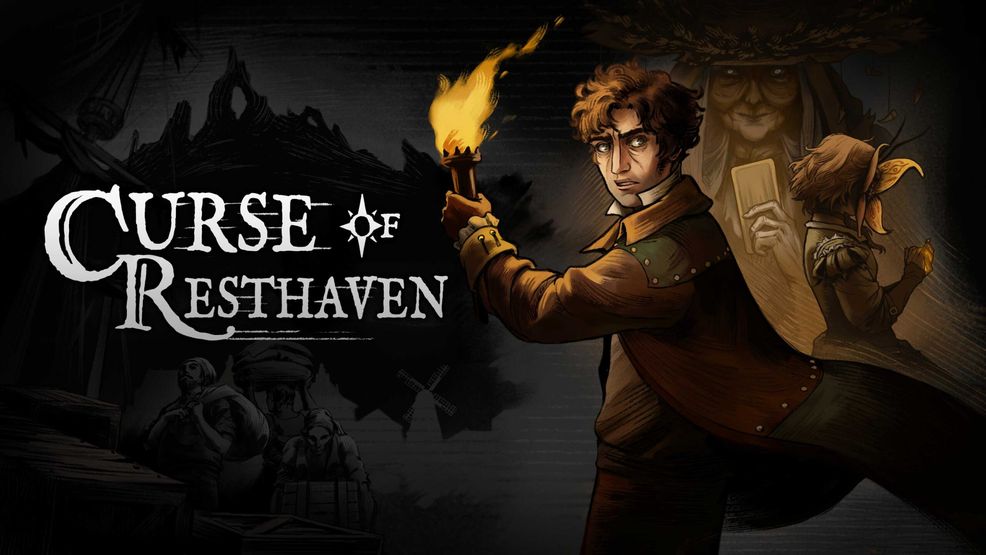
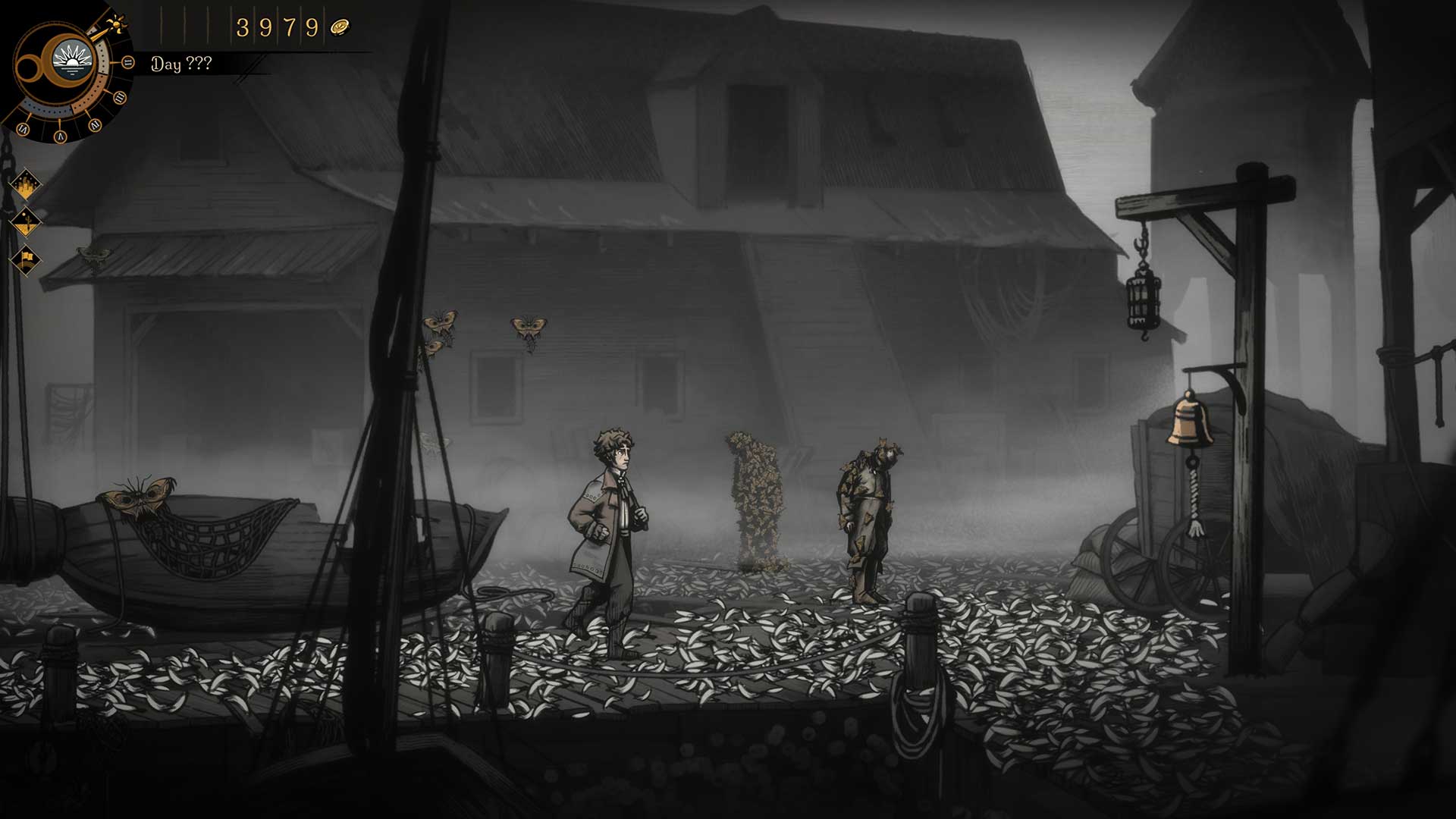
Curse of Resthaven, Hilltop’s second game, is a radical departure from all of that. It’s a gothic narrative roguelite in which Ambrose, the governor of an island colony, must investigate supernatural threats as he searches for his missing niece. To do that, the player will need to juggle a seven-day time loop, the town’s resources and a deck-building system, which come together in expeditions that the player takes to other parts of the spooky island.
Given the breezier Saturday morning cartoon feel of Lil’ Guardsman, the direction of Hilltop’s follow-up game comes as quite a surprise.
“Curse of Resthaven partly came out of my love for dark, spooky stories set at the edge of the map. A mix of mystery, superstition, and ‘What’s actually out there?’ felt like a great foundation for a game,” explains Scott Christian, Hilltop co-founder, studio director, game director, narrative director and composer. “The world of Curse is sort of a mashup of historical and contemporary horror, dark fantasy and ‘weird fiction’ books, films and games.”
He likens the shift from “the bright, joke-a-minute world of Lil’ Guardsman” to going from Cartoon Network to HBO. “It’s been a blast creating something moodier and more unsettling.”
But as Hilltop co-writer and game designer Matt Bernard explains, there’s a key “rhythm” between comedy and horror that connects Hilltop’s two games. “Tell a joke, or a spooky story too fast, and the audience can miss the punchline or the scare. Too slow and they’ll yawn,” he says. “It’s been really enjoyable to get to dissect the rhythms of horror. And the good news is both genres involve clowns.”
Horror also allows the team to more subtly pay homage to its favourite stories compared to, as Christian puts it, the overt “comedy, anachronistic pop culture references” in Lil’ Guardsman that featured direct riffs on everything from Disney princesses to ’80s slasher films.
For Curse of Resthaven, Bernard says he was drawn to “a number of really chilling unearthly stories and accounts like the Roanoke colony,” a series of attempts by explorer Sir Walter Raleigh to found the first permanent English settlement in North America that ultimately resulted in most of the party going missing.
“Discovering that led me down a rabbit hole searching through other ghost stories and tales from not only North America, but all over the world. We used these accounts and fables as inspiration for the expeditions,” says Bernard.
Encore, encore
Even with the tonal shift, Hilltop wants to double down on the strong characterization that made Lil’ Guardsman such a blast. For one, Christian notes that Hilltop learned with its first game that having “a great voice cast is absolutely worth the investment,” and so it’s once again featuring fully-voiced characters in Curse of Resthaven.
And on a deeper level, Bernard notes that both games touch on similar themes that are explored from radically different perspectives. Where Lil’ Guardsman was about the “fear and anxiety” of a 12-year-old girl having to cover for her dad at work, Curse of Resthaven examines these emotions from the perspective of Ambrose’s “more adult reality” of losing the one he loves.
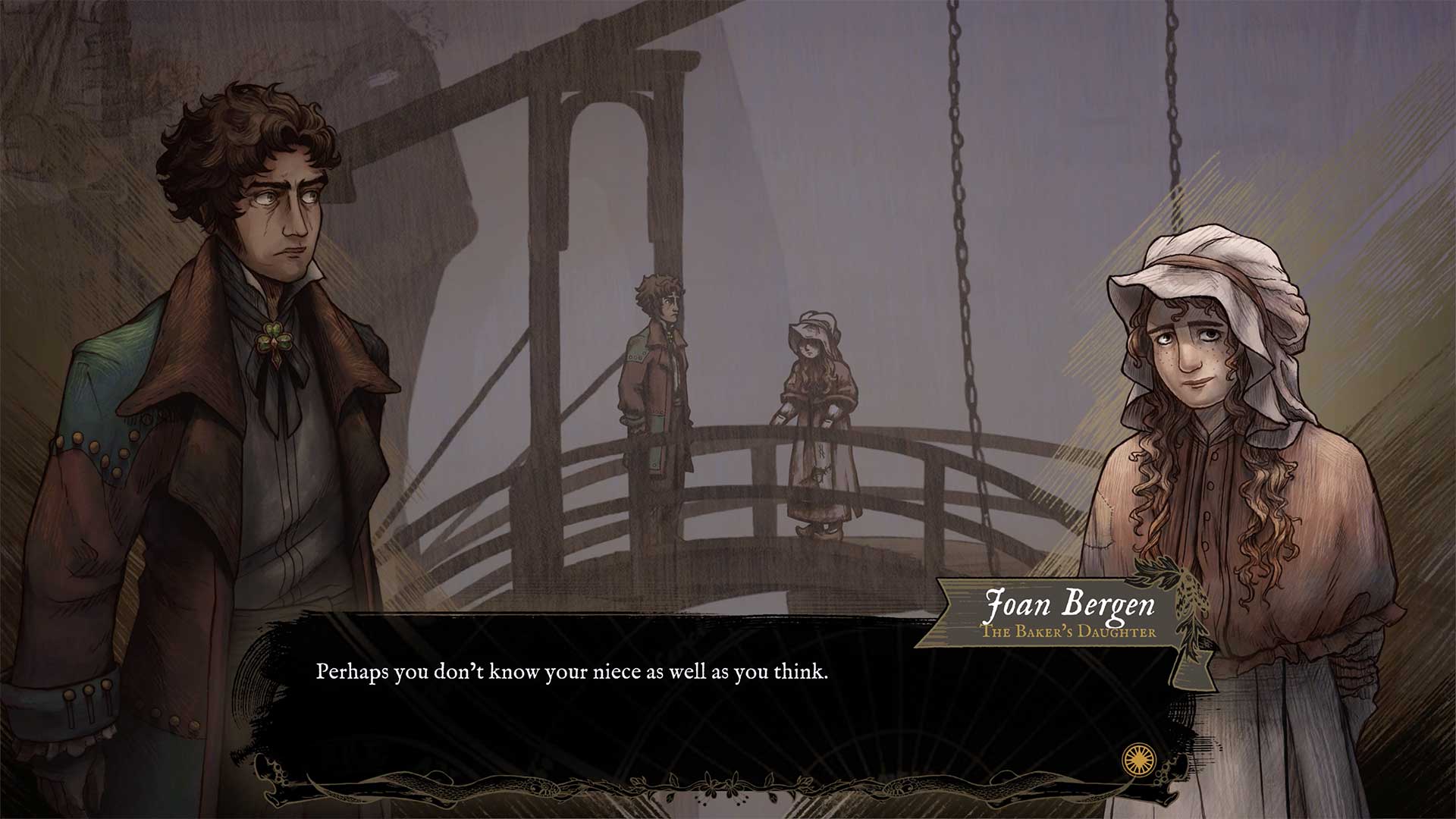
Hilltop is also using elements of eldritch horror to enhance the struggles of the cast and create suspense for the player. As Christian points out, Twin Peaks was a key inspiration for its focus on a town with secrets, and the eldritch horror allows the team to pose some tantalizing questions regarding the cast of characters. “Are there monsters? Are the people the monsters? Are you? Tension between the supernatural and the psychological lets us heighten everything,” he says.
What’s particularly interesting about Christian is his creative versatility, from leading the studio and overall direction of the game to handling writing and music composition. These multi-hyphenate abilities stem from his background in the Toronto arts scene, and he credits this for allowing him to inject more personality into the world and characters.
“In some ways, there’s overlap between producing a game and producing theatre. You’re cultivating a vision, making a thousand small decisions, and trusting really talented people to do what they do best. Wearing the writer/director and composer hats just means I’m thinking about story and tone from multiple angles at once,” he explains.
“I don’t think I’ll ever make a game where the music isn’t a primary flavour. In addition to the background music, there’s a bard in the tavern, who has inspired writing an ‘EP’ of songs for that character to perform. It’s been a really fun way to sneak in lore and slowly ratchet up the tension through the lyrics. Nothing says impending doom like a haunting melody.”
Darker world, deeper mechanics
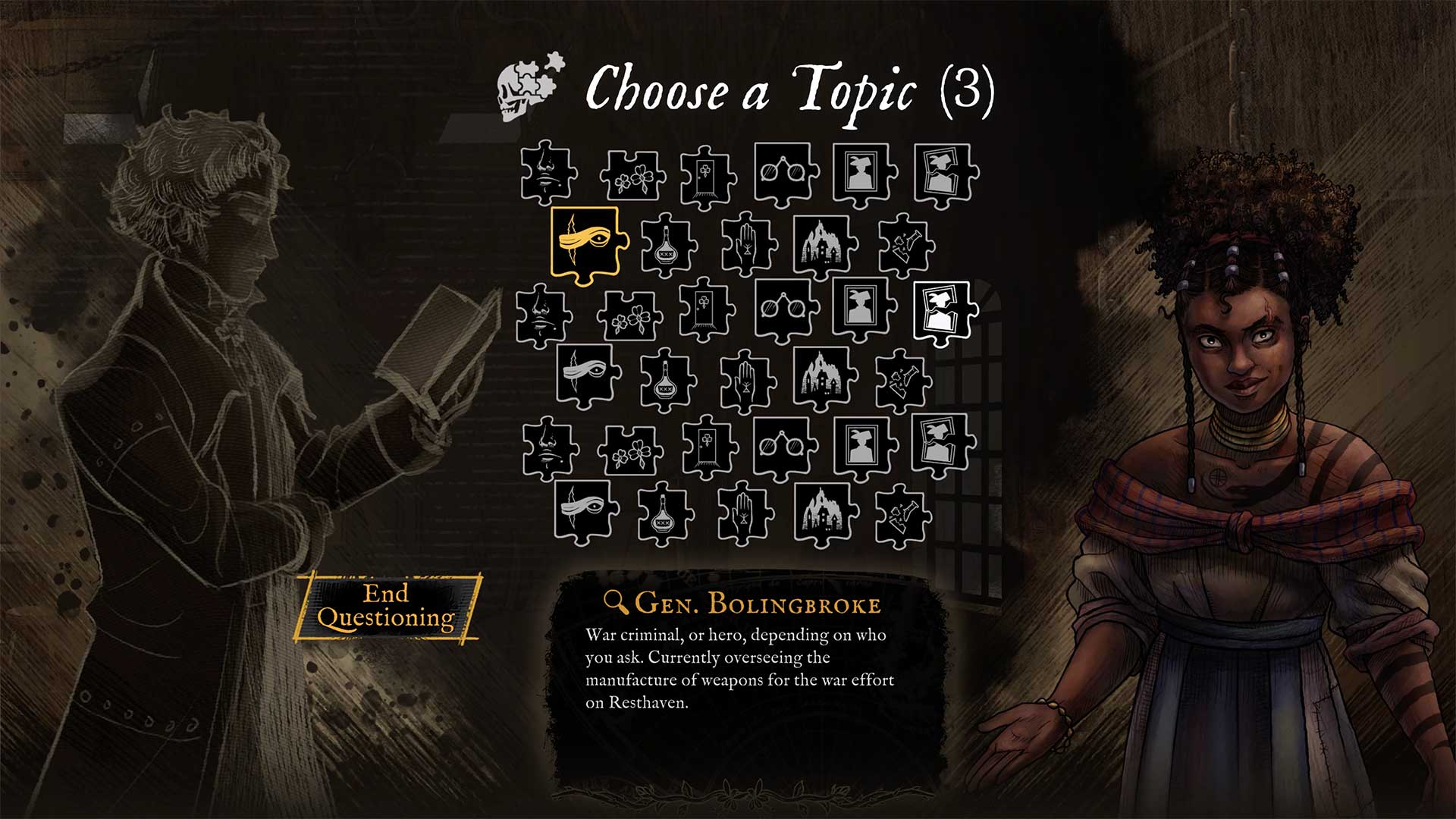
A quick look at Curse of Resthaven shows just how much more mechanically ambitious the game is compared to Lil’ Guardsman. In Hilltop’s previous game, you really only had to manage a magical toolset with which you could interrogate people trying to enter the kingdom, a deliberate choice to keep the game approachable and cozy. But in Curse of Resthaven, you’re managing deck-building, town management and roguelite elements throughout Ambrose’s quest.
It’s easy to see how all of these mechanics could have felt too disparate, but as art director, animator and game designer, Clayton Nguyen explains, it was important for the team to connect everything narratively and thematically.
“Cards are the thematic framework used to connect resources and recruits gathered through town management and present them as possible actions to bring with you into our randomized expedition encounters,” he says.
“Early in the game, you meet Agata, a mysterious fortune teller who helps you prepare for expeditions. Her character is tied to the design choice to represent expeditions as cards… the clues she gives you are represented as cards, so it all feels very connected and integrated,” adds Mexico-based programmer and game designer Adolfo Rico.
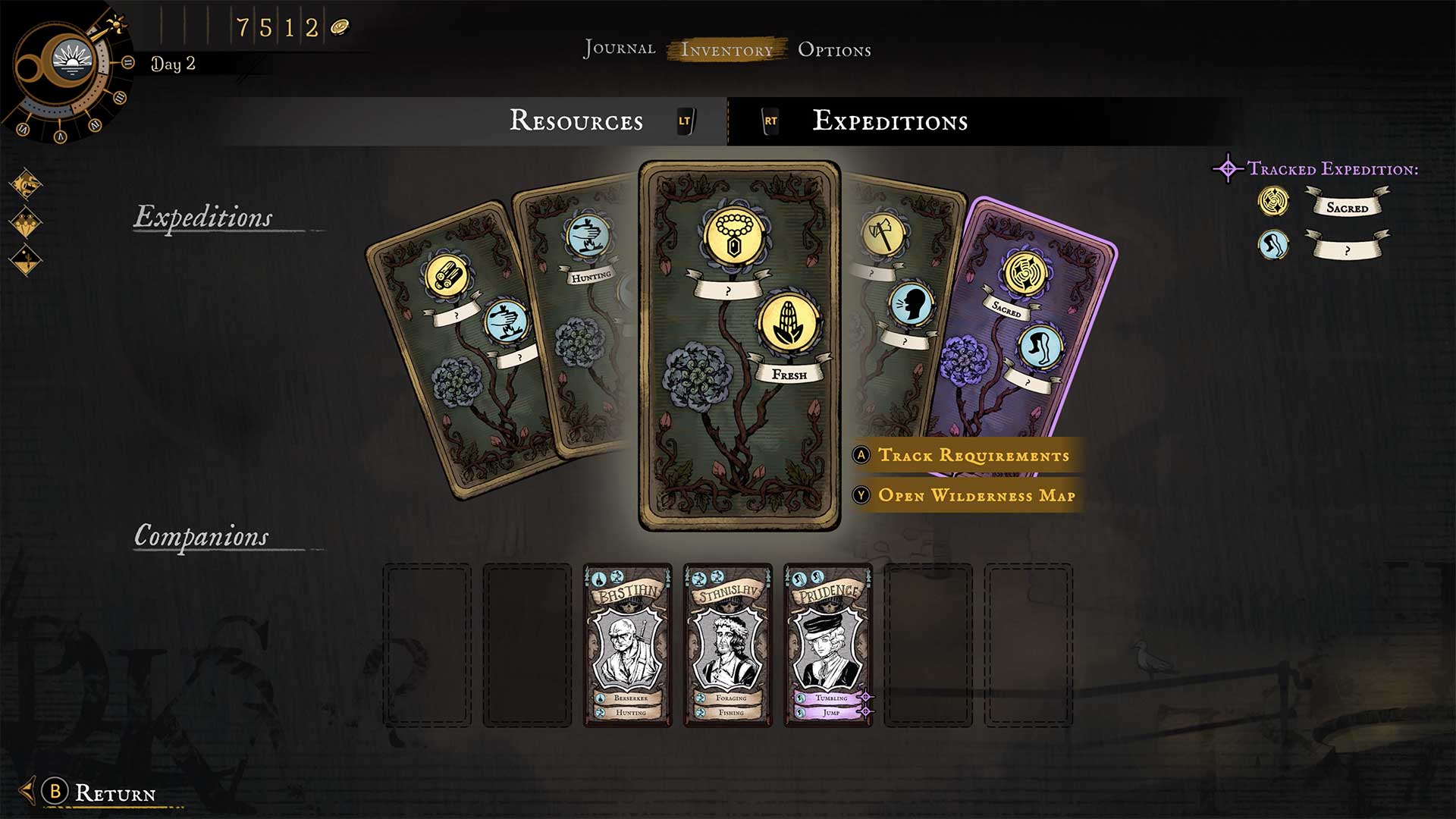
Further, Christian says this system gives the game a refreshing approach to deck-building.
“When people hear ‘deck-builder,’ they immediately think of combat. We were drawn to cards as part of our game’s design language for a simpler reason: everyone understands them. They’re a clean, intuitive way to show information and action without overwhelming the player,” he explains.
For the roguelite-fuelled expeditions, meanwhile, Rico teases that each run will have a “unique mix” of permanent skill upgrades related to attributes like trading and town upgrades, as well as variables like economic progression resets and new traders at the docks.
“We’ve spent a lot of time looking at the good, the bad and the ugly when it comes to time loop games. It can be brilliant like Majora’s Mask and The Forgotten City, or… less brilliant, like other games,” adds Christian. “For us, the time loop aspect concentrates and intensifies the mystery, and we’re working really hard to respect the player’s time and make sure they’re not having to sit through the same thing over and over.”
One of the other key differences between Lil’ Guardsman and Curse of Resthaven is the art style. Where the former had a lovely cartoonish aesthetic, the latter focuses on a striking graphic novel presentation. Character designer, artist and animator Maddy Woodland says she was “through the roof with excitement” for the opportunity to tackle historical horror in Curse of Resthaven.
“18th-century art, clothing, architecture and aesthetics was already a huge interest of mine, and a year before we started production I had already amassed my own book collection on these topics. I have referenced this book collection heavily for things like characters’ costumes, elements of some of the interiors, and even some of the UI design,” she says, citing the likes of Andrew Lang’s Fairy Books as inspiration.
“I wanted to bring some of the dark grime of sketches of that era into the game, too, combined with my more modern ‘graphic novel’-esque art style. So for the characters, I landed on using a mix of hatching, watercolour brushes and rake brushes for the final look for the characters’ colours. It ended up making all the characters always look a bit ‘dirty,’ which was exactly what I wanted.”
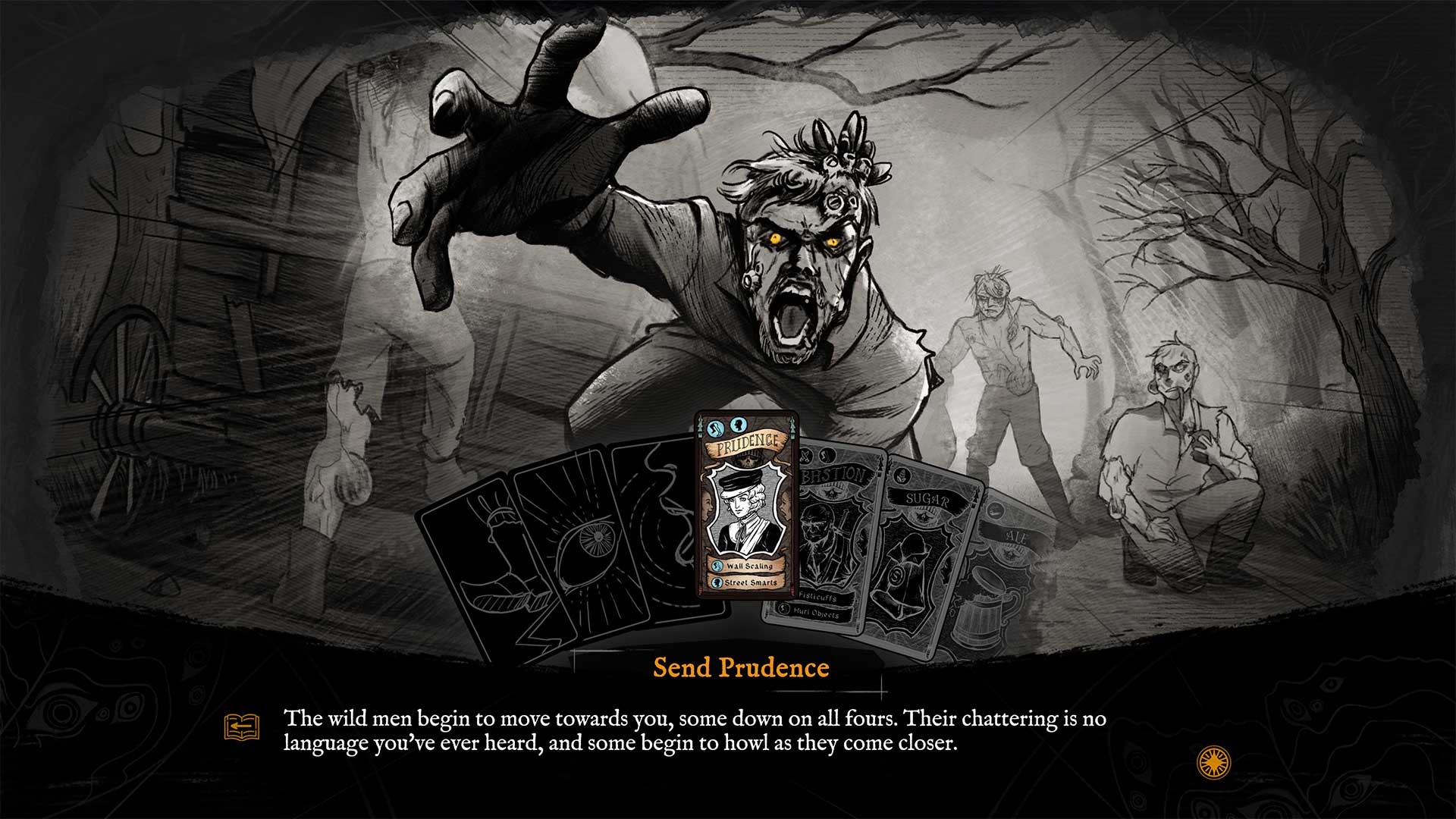
According to Nguyen, “lines and ink” define the visual aesthetic, and it certainly leads to a distinct look and feel.
“We knew for the expeditions that we wanted to evoke the hatched printed illustrations of gothic horror novels, as well as the engraved illustrations in the late 18th century, so we brought in those textural elements of hatch marks and ink stains throughout the game’s visuals,” he says. “Combined with the dark and moody palette of baroque-era paintings, and sharper, modern illustration, we created a hybrid style that feels historical and tactile, while being approachable.”
A rising Canadian talent
Talking to the Hilltop team members, it’s clear that their backgrounds in various artistic fields is coalescing into something quite promising. But something else that unifies their work is their involvement in the Canadian gaming industry.
“It’s been really cool diving into the Toronto game scene and I really, really enjoy it,” says Woodland, who previously worked in animation and notes there’s a connection between that medium and video games.
“Being part of an indie game studio is different from working for a large animation company. There’s a real sense of pride and excitement talking to other industry folks about what we’re making,” she says. “Because you’re really putting a piece of yourself in there. Everyone I’ve met in games is so positive and ready to make art, I love everyone’s enthusiasm.”
Christian feels the same. Now that Hilltop has shipped one game and is well on its way to releasing a second, he says he now feels more connected to the Toronto gaming scene.
“In the last year, I’ve made a point of pushing myself to show up to more things like Interactive Ontario events, the IGDA [International Game Developers Association] meetups, scrappier stuff like Dirty Rectangles… There’s a lot happening in Toronto!” he says. “What’s struck me is how generous the community is. In Canada especially, it really does feel like we only move forward if we lift each other up.”
Curse of Resthaven is set to launch later this year on PlayStation, Xbox, Nintendo Switch, PC (Steam) and Mac.
Image credit: Hilltop Studios/Digital Bandidos
 Features
  Features
  Features
  Features