


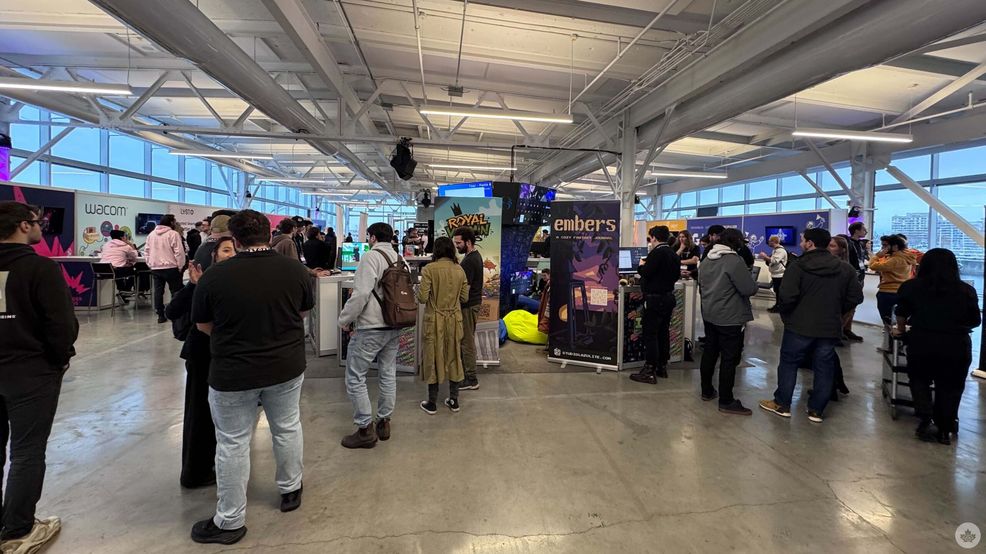
The Canadian video games industry has an image problem.
That much was the verdict of several expert panels and talks at the recent Montréal International Games Summit (MIGS), which convened to discuss what is going well and what still needs to be done to keep Canada at the forefront of global game development, production, and innovation.
Video games contribute enormously to the Canadian GDP—a fact that we often quote at MobileSyrup and hear quoted a lot at industry events and conferences—but it’s the widespread recognition of not only the games’ impact, but also the outsized involvement of the Canadian talent in successful video games globally that’s missing from the conversation.
Big names in Canadian game development like Ubisoft Montréal, BioWare Edmonton, Behaviour Interactive, and the titles they work on usually stay top of mind for consumers, both in Canada and internationally. But the staggering number of smaller studios, many of them independent, spread out from coast to coast to coast, fly by unnoticed. There are currently 821 game studios in Canada, most of them found in Ontario, Québec, and British Columbia. They publish hundreds of titles annually, and the number of unreleased game titles currently in development is impossible to quantify. Yet, ask a casual gamer what big Canadian-developed game they’ve played in the recent year or two, and you’d be lucky to hear Assassin’s Creed: Shadows.
Soft skills are a big need
“We never developed a workforce to sell games. We got really good at making them, but we suck at selling them,” notes Christopher Chancey, the founding partner and general manager of Indie Asylum, a Montreal-based collaborative hub for indie game studios. Lack of investment and fewer tax credits for talent that is not directly related to the technical processes of game development—the soft skills, if you will—results in a smaller talent pool and the lack of respect for marketing and sales that are an absolute necessity in today’s saturated market. Josh Nguyen, Regional VP at Xsolla, echoes the sentiment: “The disdain for marketers, I wish for that to go away.”
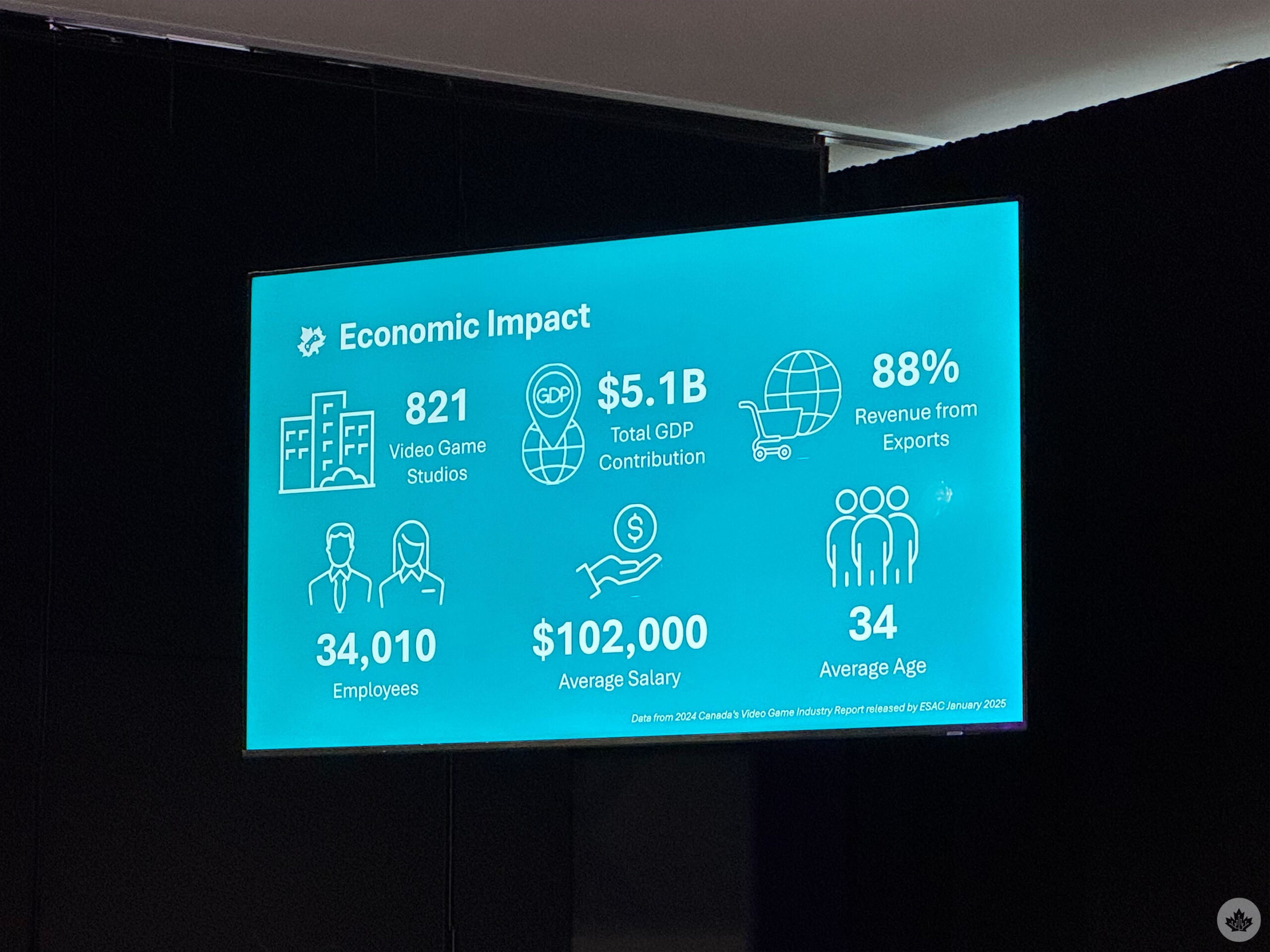
Entertainment Software Association of Canada (ESAC) data on the impact of Canada’s gaming industry.
This is especially strange, as the competition these days is fierce. From several hundred new games shipped on Steam ten years ago to a whopping 15,000 being released today, the focus on productivity and profitability is immense, and a shift towards “making a business out of a game, with more commercial mentality” is palpable, notes Chancey. Josh Nilson, founder and investor at Maskwa Games, emphasizes the need for strategy and building a good business first, which is only possible with a rounded set of skills. What works is “building slow and training small, nimble teams at the same time.”
More homegrown funding
Funding for Canadian games has its own difficulties. “Money costs more now,” notes Chancey, “Everyone is more careful with deployment, looking for surer shots.” The investment gap for smaller projects seeking funding within a $10M CAD range is particularly uncomfortable, as few investors want to be in that “in-between” zone. Foreign investment remains a dominant funding source for Canadian games, influencing their image and the perception of the industry at large. Meaning: Canadian games are less likely to be recognized or marketed as Canadian.
Not only that, but foreign ownership of many Canadian studios and foreign financing for development result in the profit from games’ successes leaving Canada. Lysane Perreault, Studio Head at Norsefell, notes that if Canada is to stay competitive and be recognized for our game development prowess, more Canadian investors and publishers are needed, so that money invested into Canadian games stays in Canada.
There’s light at the end of the tunnel. After “a rough 2024-2025,” there are signs of a much-welcome rebound, with not just new projects being announced and projects resumed and unfrozen, but also various IPs coming back into Canadian ownership. New funding models emerging, like the co-op support model Indie Asylum provides, bootstrapping, micro-investments, and government financing all help.
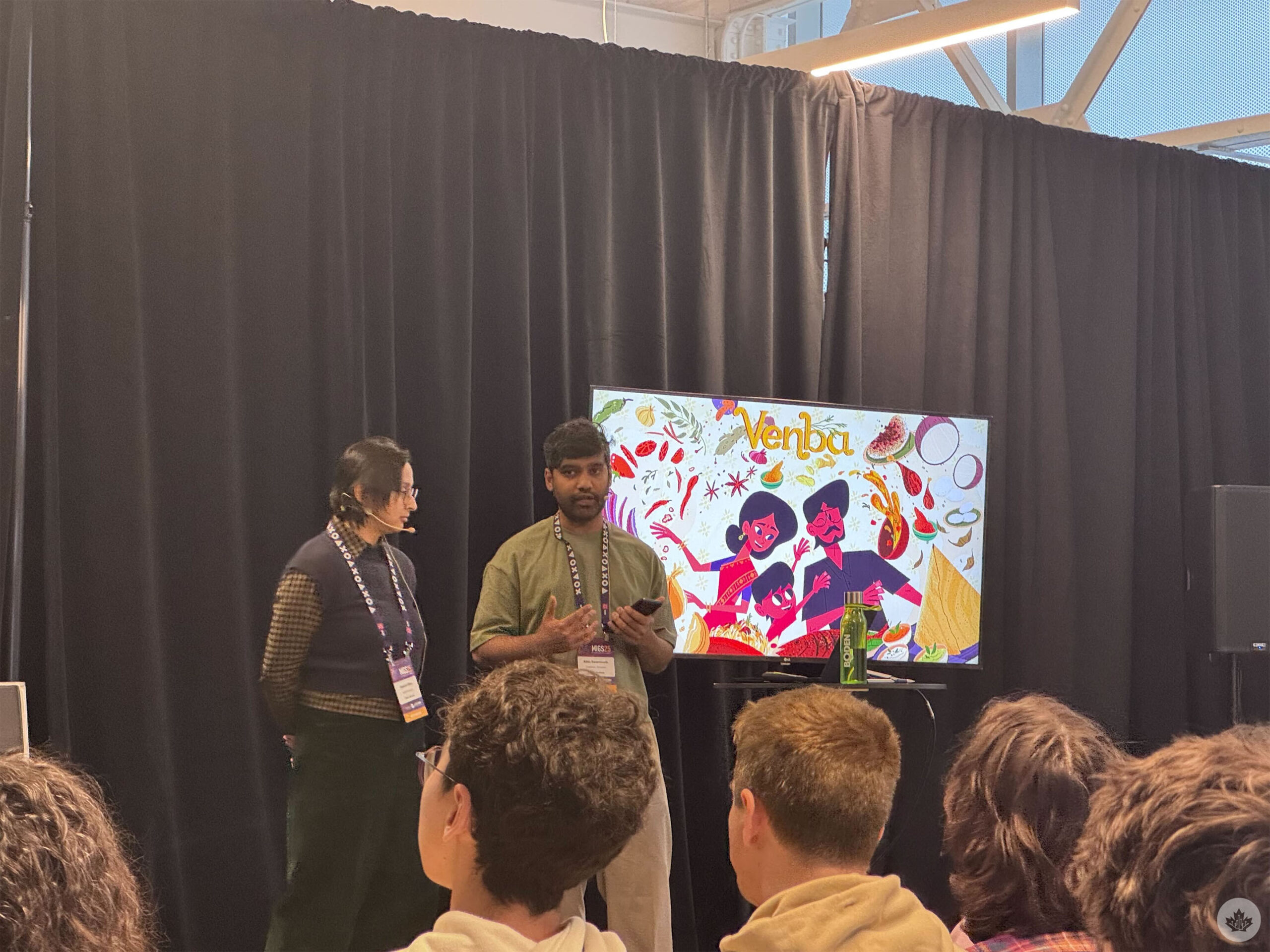
From left to right — Shahrin Khan (producer) and Abhi Swaminath (creative director) discussing Venba.
Credit where it’s due: Canada does provide incredible support to developers and studios, to a level that the studios of other countries could only dream of. We have a range of organizations, from the Canadian Media Fund (CMF), which includes an extensive range of programs for “interactive digital media,” to provincial organizations like Interactive Ontario, the Guilde du jeu vidéo du Québec, and the Entertainment Software Association of Canada, lobbying for video game developers’ interests in political and bureaucratic circles. “That’s a big positive for the industry,” says Nilson, but additional government tax credits, including for the aforementioned “marketing jobs and strategic decisions,” would be a huge boon, according to Chancey.
Easier consumer discovery
Canadian games aren’t hard to find at international conventions and gaming events. They truly are everywhere, from Gamescom to The Game Awards. What is much more difficult is consumer discovery. The issue of distribution comes up often for more niche game categories, like Indigenous-developed video games, but these barriers affect all games built at home, except for a handful of the biggest titles known worldwide. Nilson agrees: “The real problem is distribution. We have great programs for art in Canada. Art and cultures, games. How can we connect with the distributors that are available in Canada? Netflix, Roblox, Apple, Google, Epic, Steam, social media platforms like TikTok—they all have a presence in Canada. How can we work with them?”
Also, how does one seek out a specifically Canadian-made product? There is no good channel for doing so right now. Sure, there are curated lists by Steam groups like Canadian Games Devs, and private recommendations, but neither of these is well-known or straightforward to find, unless you know where to look. (Most consumers do not.) Third-party topical Steam sales events (for example, Quebec Games Celebration and Canadian Games Sale) are a step in the right direction, but they, too, have a limited reach outside of the platform.
There is no good answer to the issue, at least not yet. The Canadian video games industry does have an image problem. But we’re working on it.
 Features
  Gaming
  News
News  Gaming