


Although Wi-Fi 7 is still a fairly nascent technology, Canada has been slow on the uptake. Wi-Fi 7 has only garnered about 0.6 per cent of Speedtest user samples throughout the first quarter of 2025 in Canada, according to data released by Ookla.
While the final Wi-Fi 7 protocol isn’t expected until the end of 2025, the non-profit Wi-Fi Alliance, which owns the Wi-Fi trademark, introduced the Wi-Fi Certified 7 program in January 2024 to certify Wi-Fi 7 devices. Several Wi-Fi 7 products are already available based on the draft standards.

Per Ookla’s data, the adoption of Wi-Fi 7 in Canada is one-third of the rate in the U.S. This gap in Wi-Fi 7 adoption is likely due to the time gap between the announcements for Wi-Fi 7 in the respective countries. For example, U.S. cable company Spectrum started promoting Wi-Fi 7 hardware in November 2024, while Rogers only just launched a new Wi-Fi 7 product in Canada.

Another contributing factor to Wi-Fi 7’s slower uptake could be performance. The data released showed that Wi-Fi 7’s performance was slightly worse than that of Wi-Fi 6E in aspects like download, upload, and latency.
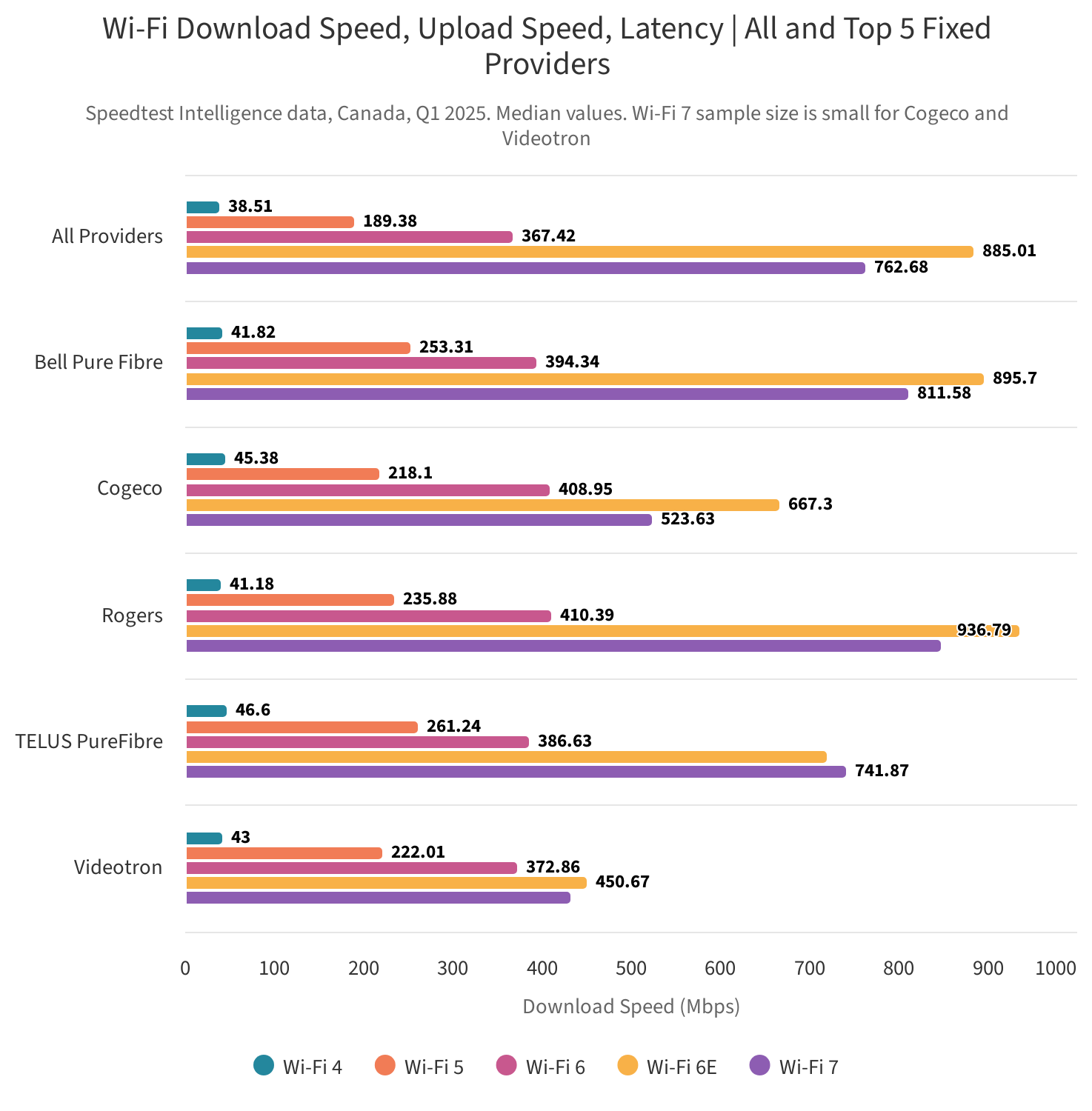
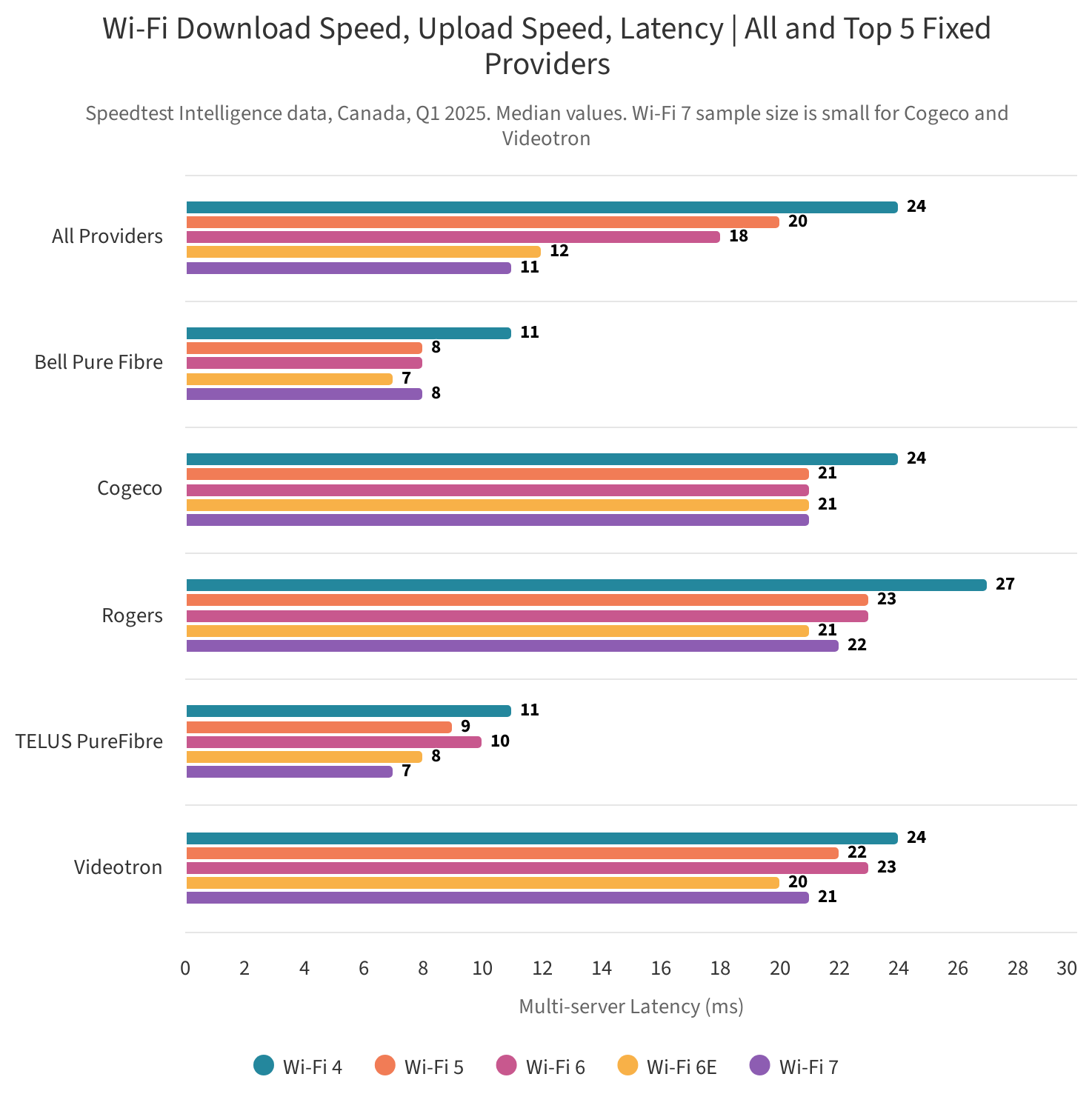
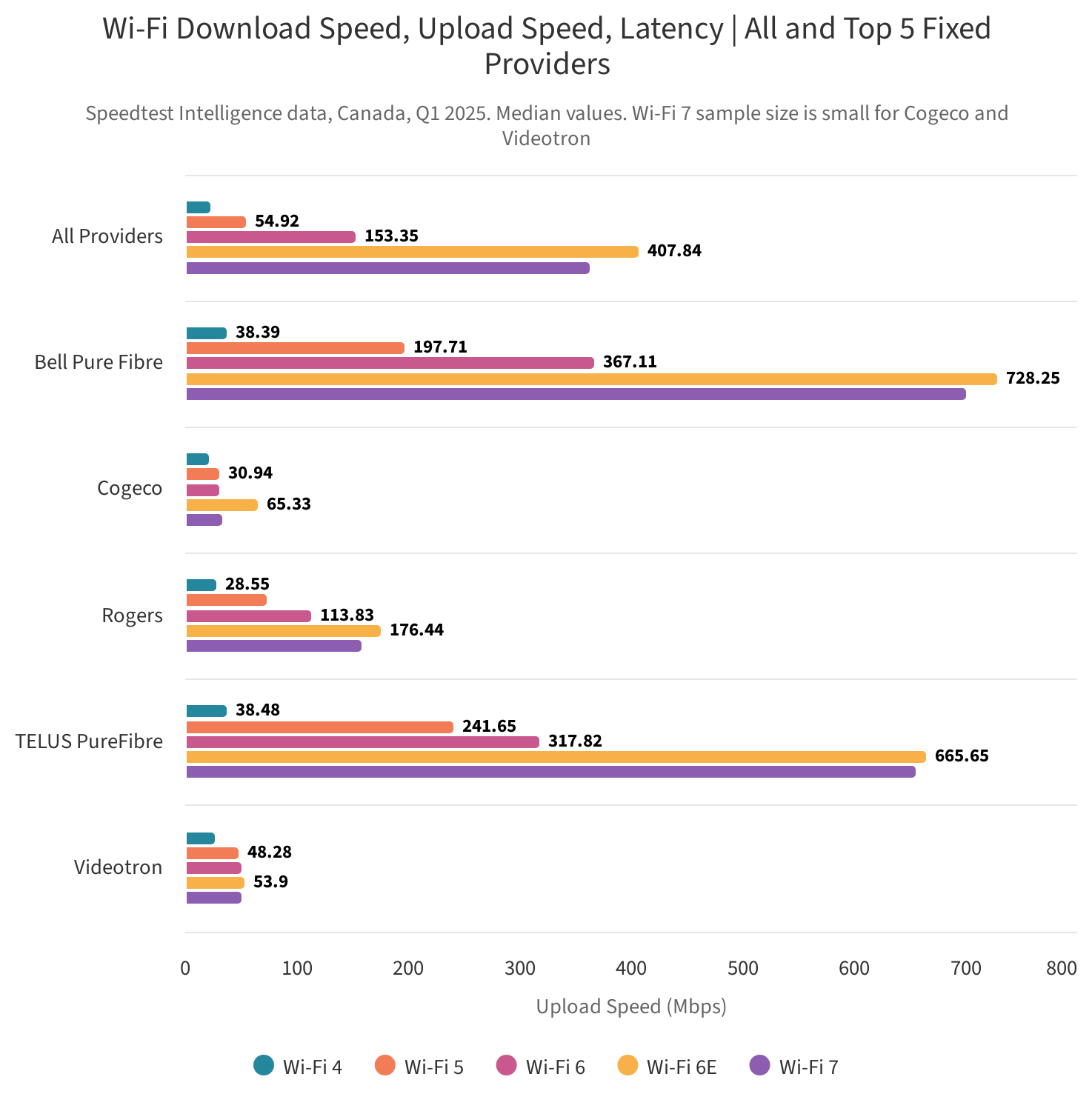
When looking at the data, it’s easy to assume Wi-Fi 6E is faster, and Wi-Fi 7 isn’t an upgrade. This is an easy misconception to have because Wi-Fi 7’s real strength comes from its flexibility.
With newer technologies and the implementation of Multi-Link Operation (MLO), Wi-Fi 7 is likely to outperform 6E in most situations.
Wi-Fi 6E is very fast as it exclusively uses the 6GHz band, which increases Wi-Fi’s speed at the cost of range and wall penetration. Wi-Fi 7, because of the newly implemented MLO, can utilize multiple different bands simultaneously. This allows the Wi-Fi 7 to use 2.4GHz bands that provide the longest range and wall penetration in conjunction with faster bands like the 5 or 6GHz to offer similar speeds to Wi-Fi 6E, without facing similar range and wall penetration issues. This, in turn, offers better overall performance.
This conclusion is echoed in the reviews for each Wi-Fi generation, showing that general reception towards Wi-Fi 7 is better than Wi-Fi 6 and 6E.

However, Ookla notes that the user ratings are for the internet service providers (ISPs) and not scores based on router hardware.
Source: Ookla
 Business
  News
News  News
News  Deals
Deals 