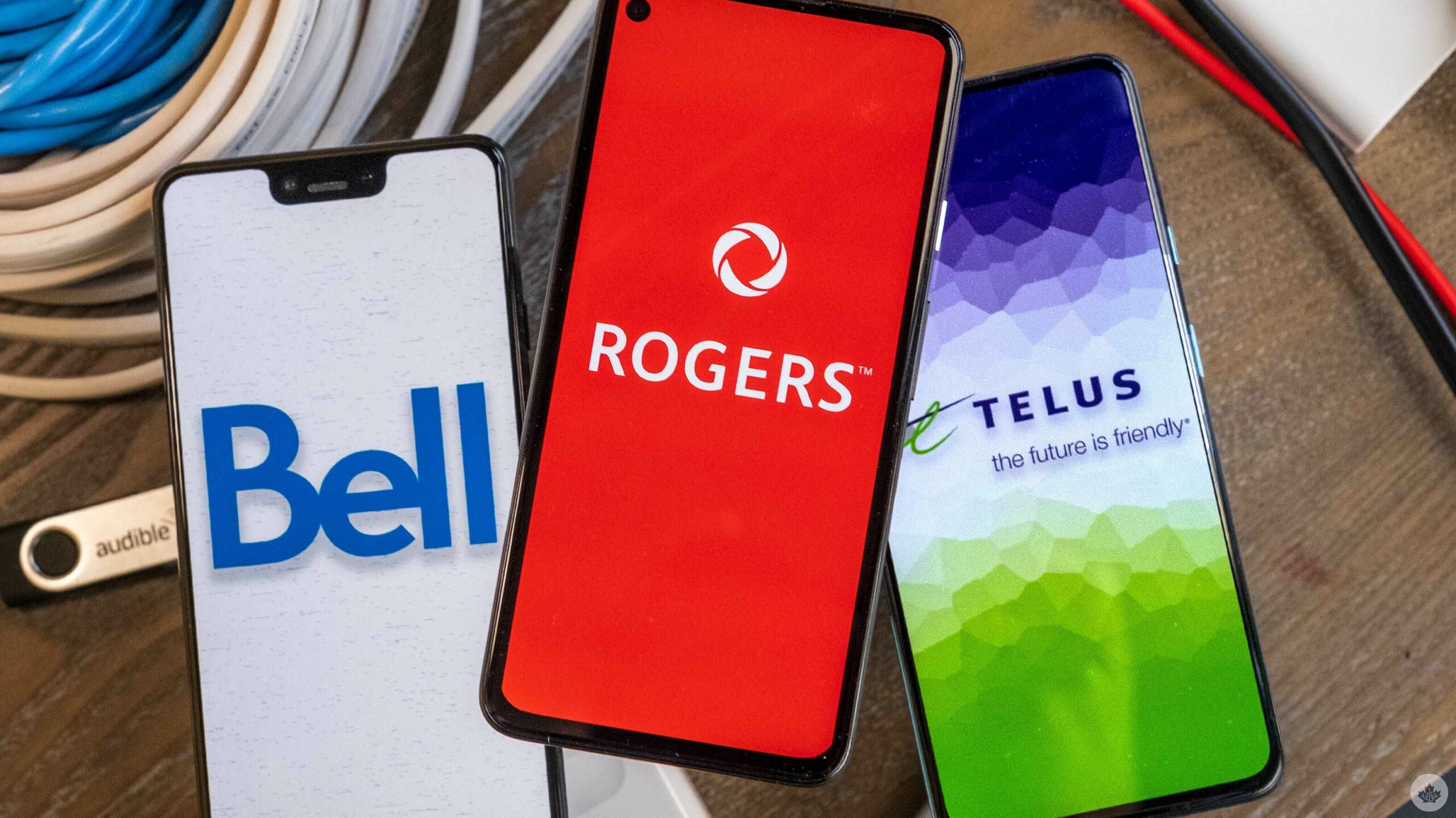
Rogers, Bell, and Telus have all told the CRTC they will continue charging new fees, claiming that they’re exempt from the commission’s ban on junk fees.
The CRTC officially implemented rules banning fees “related to the activation or modification of a telecommunications service plan, or any other fee whose main purpose is, in the opinion of the Commission, to discourage subscribers from modifying their service plan or cancelling their contract for telecommunications services” on June 12, 2026. However, the Big Three carriers and their respective flanker brands added new fees that appear to contradict the ban.
As a quick refresher, it started with Bell in May, when the carrier added a $40 device handling fee. Rogers launched a similar $40 device setup charge on June 16. Telus, on the other hand, went a slightly different route by expanding when and how it charges a $15 SIM card fee. The CRTC responded by sending letters to each carrier requesting additional information about the fees and threatening regulatory action if the carriers didn’t change course.
What the carriers are saying
On June 17 and 18, Bell, Telus, and Rogers filed their responses to the CRTC. Across the board, the carriers defended their new fees and told the CRTC they would continue to charge them. The fee ban includes an exemption for “reasonable fees,” such as those for physical equipment installations or for additional, optional products customers choose to purchase. However, the CRTC has so far argued that charging fees for phones and SIM cards is not exempt, as both products are “required for the delivery of the wireless service customers are purchasing.”
In its June 17 letter, Bell reiterated its comments from its June 10 letter, writing that it’s “clear that the Device Handling Fee is fully compliant” with the new rules.
Bell response to CRTC over device handling fee – June 17 by jon
“In particular, the fee relates to an optional device purchase that the customer expressly chooses to make, is distinct from the activation or modification of a wireless service plan, recovers legitimate device fulfillment costs, and does not discourage customers from switching or modifying plans,” the company said.
Rogers’ June 18 letter to the CRTC defends more than just its new device setup charge — it also tries to justify the carrier’s existing SIM fees and a $25 shipping fee it started charging in 2024. Regarding the device setup fee, Rogers argues that it’s “only applied to the optional purchase of a device through Rogers and is not a charge for subscribing to a new monthly telecommunications service plan,” and thus the fee is permitted under the new rules.
Rogers response to CRTC over device setup fee – June 18 by jon
Similarly, Rogers argued that its SIM card and shipping fees aren’t new and that both are related to optional purchases. Further, Rogers claims the SIM fee “only applies to customers who request a new physical SIM card to replace a lost or damaged SIM card,” while the shipping fee is “not a fee incurred as a result of activating a new retail telecommunications service plan or modifying an existing one.”
“None of these fees act as a barrier to customers switching plans or service providers. As such, there is no basis for any further regulatory action by the Commission,” Rogers concludes.
Telus response to CRTC over SIM fees – June 17 by jon
Finally, Telus’ June 17 letter — the longest of the three at a whopping 18 pages — extensively argues that the new rules do not apply to its SIM card fees. Telus states that the rules don’t “prohibit carriers from charging for equipment and products,” that SIM fees are not incurred as a result of activating new telecom services, and that the main purpose of the SIM fee isn’t to discourage customers from modifying or cancelling their wireless services.
What comes next?
While some of the arguments from the big three carriers make sense, most of these fees exist in a grey area where the products in question aren’t always required purchases.
For example, an argument could be made that with the proliferation of eSIM technology, physical SIM cards could be an optional purchase, as most phones no longer need a physical card. However, that would leave people with older devices in a lurch — and that’s not even getting into the fact that Telus charges $15 for both physical SIMs and eSIMs.
The device fees can be viewed in a similar way. There are certainly cases where a device is an optional purchase, such as customers who already have a phone and simply want to change plans or carriers. However, there are also cases where people need to purchase a phone; for example, if a customer does not already own a phone, or if their old device is broken or too old to work anymore, a phone is a required purchase, as the CRTC argued.
It’s also worth examining a notable difference between the device fees charged by Bell and Rogers. Bell describes its fee as a one-time charge “to cover fulfillment costs associated with your device order.” Rogers, however, has gone to great lengths to frame its device fee as a charge for optional assistance to set up a device.
Despite that, Rogers itself also says that it charges the fee for “specialist-assisted device purchases (including in-store, over the phone and live chat),” so it sounds like customers who interact with any Rogers staff during the purchase process will be subject to the fee, even if they don’t require assistance with setting up a new device. Sure, plenty of customers can choose to do an online order to avoid the fee, but there are also many people who can’t do that, and thus don’t have a choice about the fee.
With all three carriers sticking by their new fees, it will be interesting to see how the CRTC responds. In its initial letters to Bell, Telus, and Rogers, the commission threatened to take “more formal regulatory action” if the carriers didn’t resolve the situation. But the carriers aren’t backing down on fees, so now the ball is back in the commission’s court.
MobileSyrup may earn a commission from purchases made via our links, which helps fund the journalism we provide free on our website. These links do not influence our editorial content. Support us here.