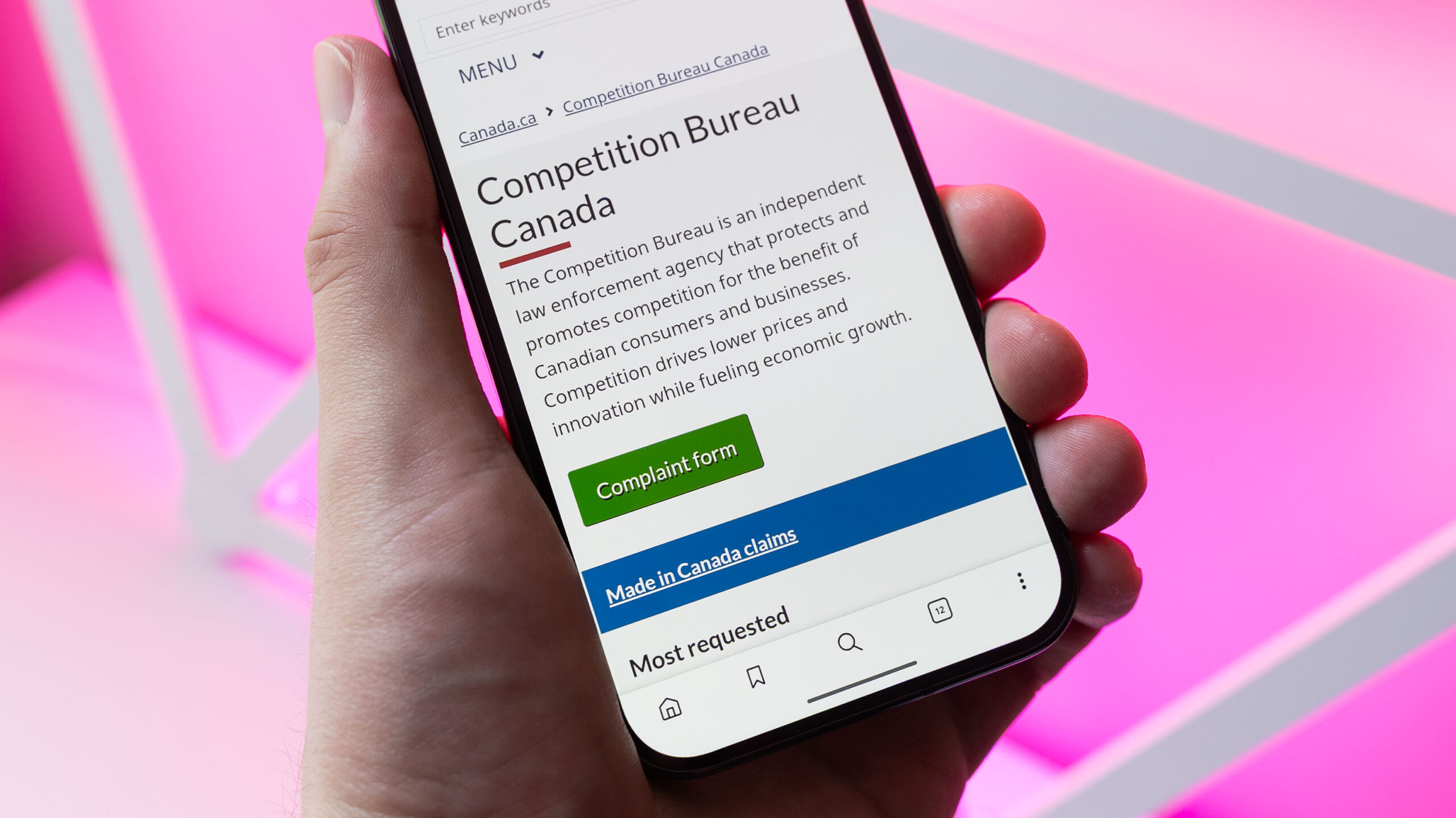
Canada’s Competition Bureau released a massive report this week about data portability, highlighting how it could improve competition and save Canadians money. Like, a lot of money — potentially billions of dollars.
In the report, the Competition Bureau says that in just the insurance market, data portability could save Canadians between $1.10 and $3.83 billion in time and money, with the bureau estimating about $1.57 billion in savings from switching to cheaper insurance plans and $2.26 billion in value from time saved.
And that’s just insurance — the bureau says Canadians could save roughly $1,860 each year by changing or renegotiating their telecom, banking, and insurance plans.
But what exactly is data portability, and why could it have such an impact on Canadians? To start, data portability is simply the right for a person to obtain and/or transfer their personal data from one data holder to another in an easy and secure way. There are a few different ways data portability can exist, such as the ability to download your data and move it somewhere else, or the ability to authorize direct data transfers between two service providers.
There are a lot of applications for data portability, but some notable ones highlighted by the Competition Bureau in the report include sharing medical history between healthcare providers or transferring budgeting data from one financial management platform to another. Other possibilities include allowing people to migrate followers, photos, posts, and more from one social media platform to another, or giving gamers the ability to move their game progress, purchases, and profiles from one platform to another.
The Competition Bureau says data portability will give consumers and businesses more control and boost competition. Data portability could make switching from one doctor to another, or from one insurance company to another, much easier for Canadians. And if it’s a lot easier for Canadians to switch service providers, it could boost competition as companies offer deals to lure new customers, or retain their existing ones.
Of course, there are already some instances of data portability already at play in Canada, particularly in tech. Canadian carriers offer some portability — for example, it’s relatively simple to bring your phone number when you switch service providers.
Most smartphones offer solutions for transferring data like photos, apps, and more. However, there are still limitations, particularly if you’re going from iPhone to Android or vice versa (you can’t bring your purchases with you).
Some cloud service providers offer ways to access your data — for example, Google has a fairly in-depth data download tool to take your information from its various services, like Gmail.
That said, there’s always room for improvement. The Competition Bureau’s report calls for policymakers to create a comprehensive data portability framework, and outlines several things they should pay attention to when crafting said framework. Moreover, many other countries have adopted some data portability measures, such as the U.K.’s open banking system or Australia’s Consumer Data Right, which Canada can look to when implementing its own solution.
Those interested can read the full report on the Government of Canada website.
MobileSyrup may earn a commission from purchases made via our links, which helps fund the journalism we provide free on our website. These links do not influence our editorial content. Support us here.