


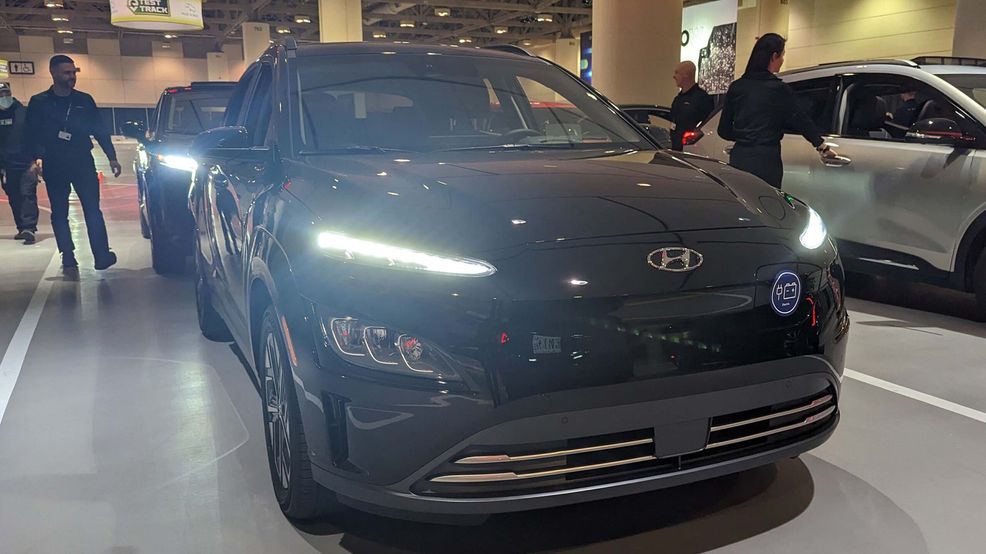
Like many drivers, I have been confused by bright LED headlights on modern cars, thinking someone had their high beams on, and have been blinded by someone flashing their LED headlights in my rearview mirror.
Now, Transport Canada wants to hear about it, as conversations surrounding these headlights have prompted the organization to launch a survey on its website about Canadians’ experiences with headlight glare.
The survey is currently open to drivers, pedestrians, and cyclists, and it includes questions about travelling at night, driver behaviours, and potential changes.
According to a statement the government emailed to CBC News, more than 142,000 Canadians have participated in the survey so far.
CBC News also spoke with Dr. Christina Schropp, an optometrist, who noted that patients increasingly talk about vehicle headlights, with some reporting difficulty driving due to headlight glare, especially at night and on highways. Schropp said
In an interview with CBC, 35-year-old optometrist Dr. Christina Schropp noted that patients are talking about vehicle headlights more than ever, with some reporting difficulty driving due to headlight glare, particularly at night and on highways. Further, Schropp said the direction headlights are pointed can cause problems, but also pointed out that bright headlights don’t affect eye health since windshields protect drivers. Despite that, there are other safety concerns. For example, sudden bright lights can “startle” people’s visual system, causing it to lose focus.
The Transport Canada survey is the latest piece in the government’s ongoing investigation into headlight glare. Last year, researchers conducted a test-track study to examine newer headlights and their relationship to driving performance.
The survey is open until April 20, and the results are expected in May.
This survey is one of many efforts centred on improving vehicle safety, especially with the recent increase in technology. As an example, both China and Europe have cracked down on touchscreen-heavy vehicles, now requiring physical buttons for key functions.
Source: Transport Canada via CBC News
 Gaming
  News
News  News
News  News
News 