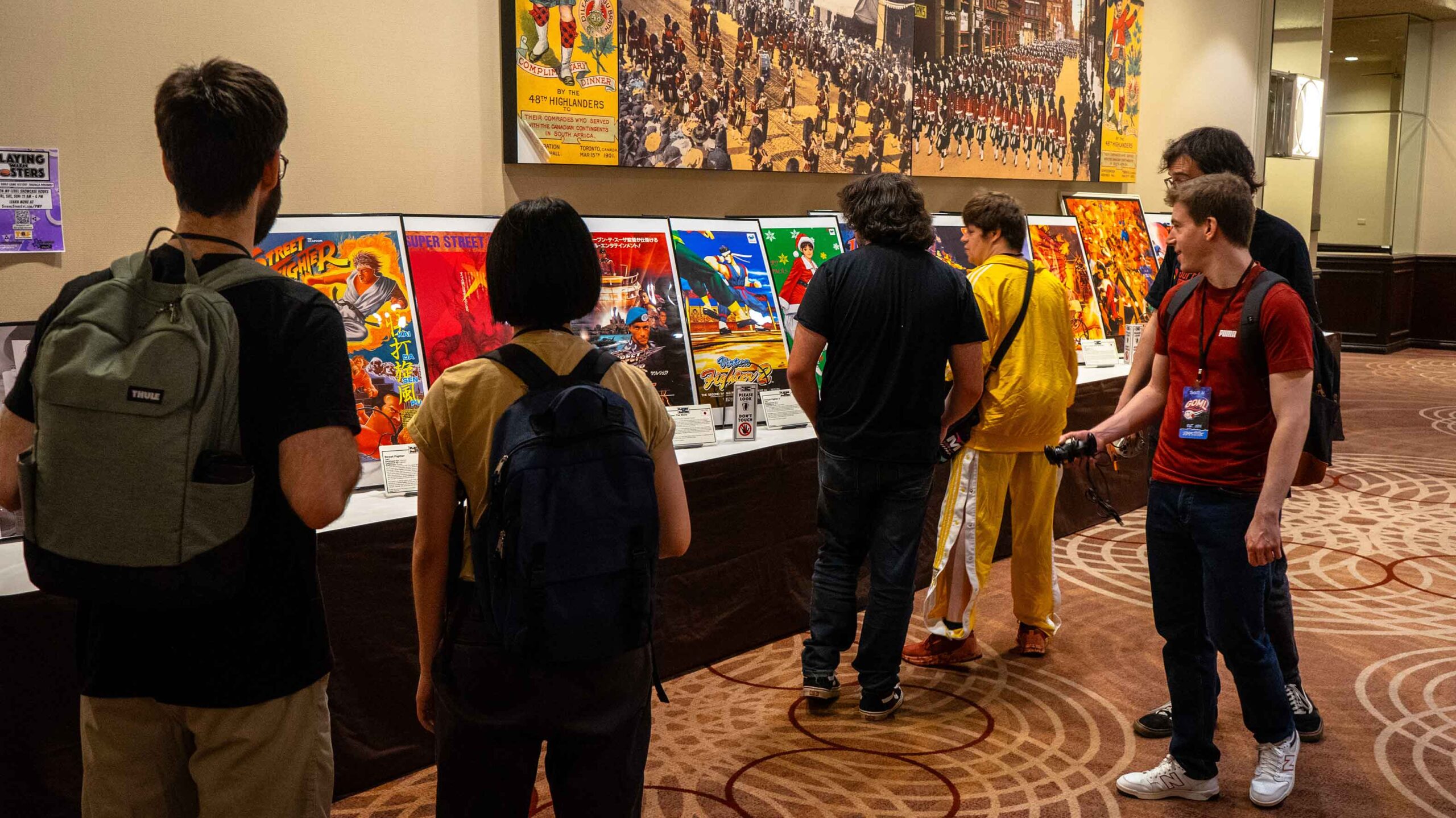
The video game industry has a preservation problem.
While gaming as as we know it dates all the way back to the ’70s, many of the experiences that have shaped the art form over the past several decades remain inaccessible on modern hardware. In fact, a 2023 study from the Video Game History Foundation (VGHF) found that a whopping 87 percent of games released in the U.S. before 2010 are now out of print. To put this into context, the VGHF noted that even silent films are still overall more accessible than video games, even though they were last popular in the ’20s.
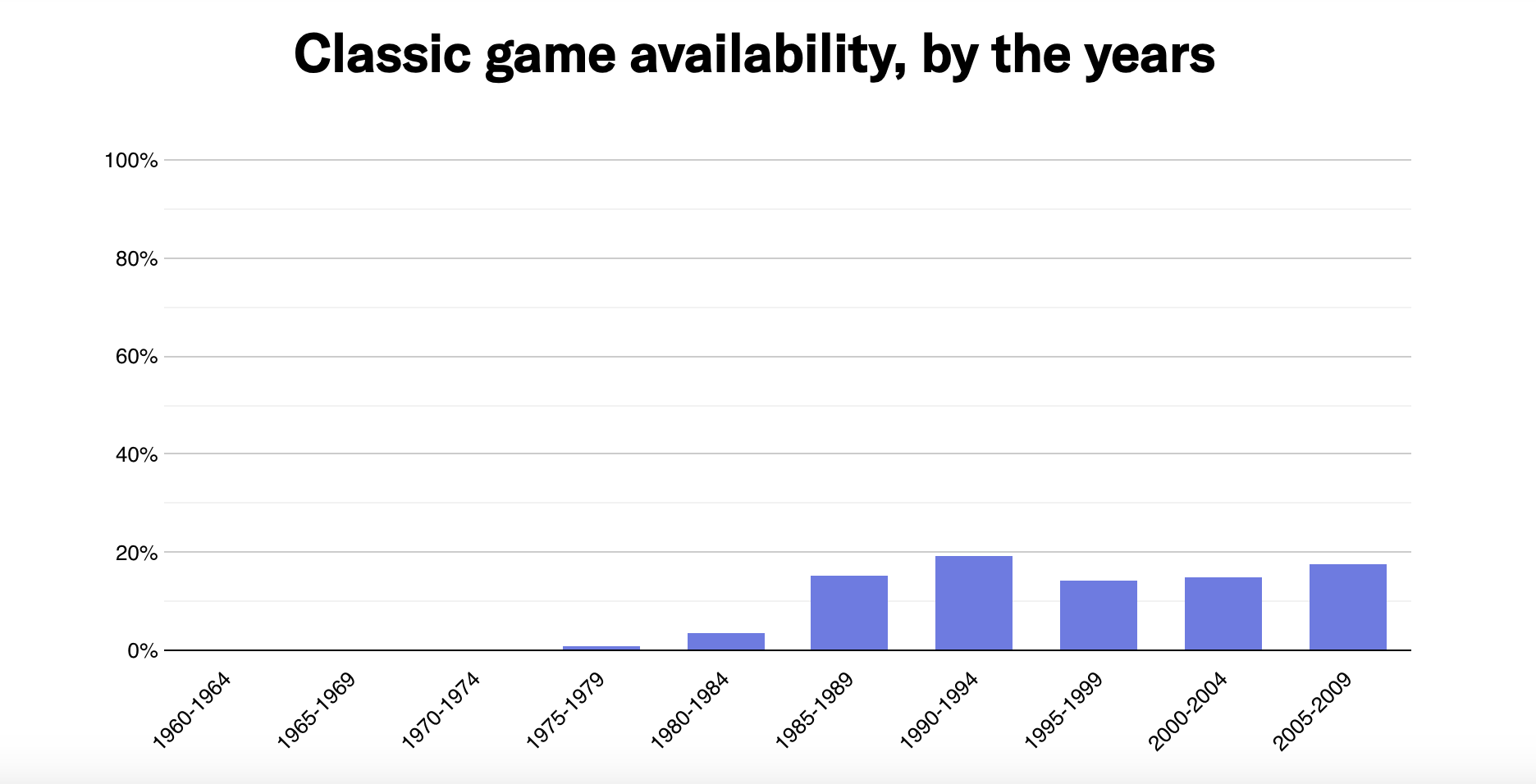
Old video games are largely unavailable nowadays. (Image credit: VGHF)
With most gaming publishers failing to do anything about this, organizations like the VGHF, Hit Save! and The Strong National Museum of Play have stepped up to do great work to preserve the medium, from archiving games from across the years to cataloguing all kinds of memorabilia.
But there’s one Toronto duo that shows that you don’t even have to be part of these kinds of internationally recognized groups to make a difference when it comes to preservation. Enter Toronto-based The Game Foundation, a registered charity run by Dixon Wu and Jordan Sparks that helps preserve games through large printed posters that they display at various events across Canada. Dubbed “Playing With Posters,” the initiative is intended to create a museum of sorts through which attendees can learn more about various games from throughout the years.
A way to better appreciate the art of gaming
The nascent charity started in early 2025 when Wu, a game developer and founder of the UX firm Spoon Usability, reached out to the Toronto gaming industry for partners for a gaming poster exhibit and got the attention of Sparks, a multimedia artist and educator with his own production company, Shining Spark Entertainment. As it so happens, Wu spent many years in Hong Kong, where his lifelong love of games led him to found the Hong Kong Retro Gaming Expo and start collecting retro gaming posters. He says he soon discovered the “joy” of sharing retro gaming experiences with others, which led to the idea of what would later formally become Playing With Posters.
“I kind of gave myself this mission of collecting the paper in gaming, like promotional posters and flyers and [all that]. Because I think social media is killing all the papers,” Wu says. “Social media is replacing game magazines. When was the last time you went into a game shop and you needed a poster to tell you what games are coming out? Facebook or Instagram would have pushed some kind of an ad, or YouTube would have pushed some kind of an ad to tell you that.”
It certainly helps that video game culture is particularly prominent in Asia, allowing Wu to add all sorts of physical materials to his collection, including special region-exclusive variants. Altogether, he’s gathered over 500 posters, flyers and other printed goods. He says there’s something special about viewing physical versions of this gaming artwork that digital media just can’t replicate.
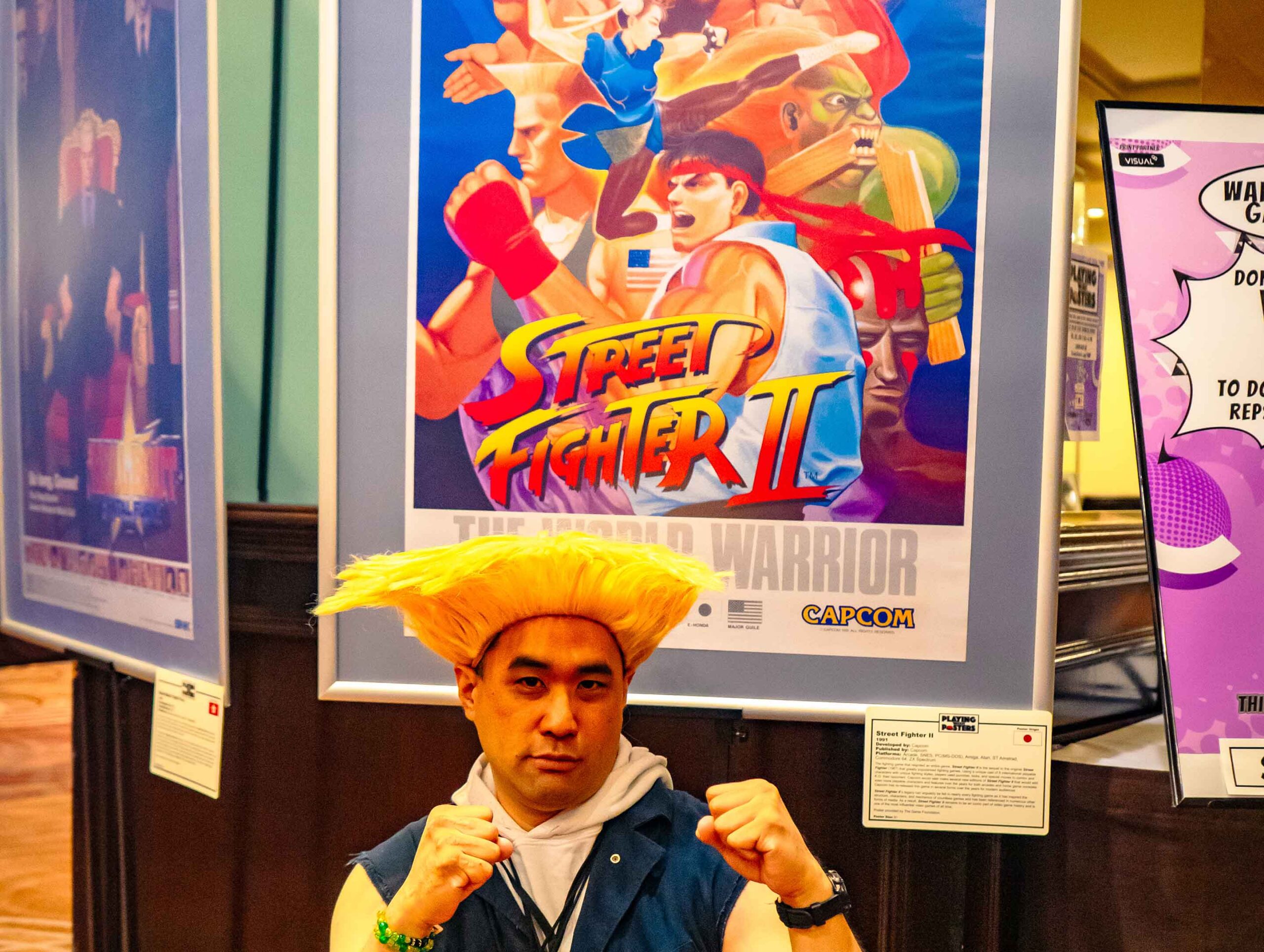
A fan dressed as Guile from Street Fighter in front of classic SF2 art. (Image credit: Shining Spark Entertainment)
“Some of [those] artworks are iconic. Let’s say the Street Fighter II poster. Many gamers have actually seen the artwork, but never on paper, if you really think about it. And the problem is that artwork was meant to be on paper,” Wu says. So far, Playing With Posters has exhibited at a handful of Toronto events, including last year’s business-oriented XP Game Summit and public Get On My Level fighting game tournament. He notes that seeing the printer art up close at these events has led to some enlightening conversations with attendees, especially those from younger generations.
“At an exhibition that we did, I started talking to a younger gamer and he was like, ‘I never actually thought that you would see the strokes of the original Street Fighter II artwork.’ And so we were discussing what caused those strokes […] We got into this conversation that makes them think, ‘Wow, this has evolved so much,'” says Wu.
Another attendee, a gaming design student, told Wu that it was so informative to see an old Japanese poster and learn about what was done back then — in terms of artwork, logos, pricing, and the like — versus the state of the business now.
“He’s like, ‘So when you said that paper is already vanishing, what will happen in five years?’ We’re basically not going to even see the cover art on an insert, because physical games [and their manuals] are also disappearing,” says Wu. “And so he started thinking, ‘Yeah, you’re right. These things are disappearing along with physical copies.’ It’s almost like it’s an attachment to physical copy games.”
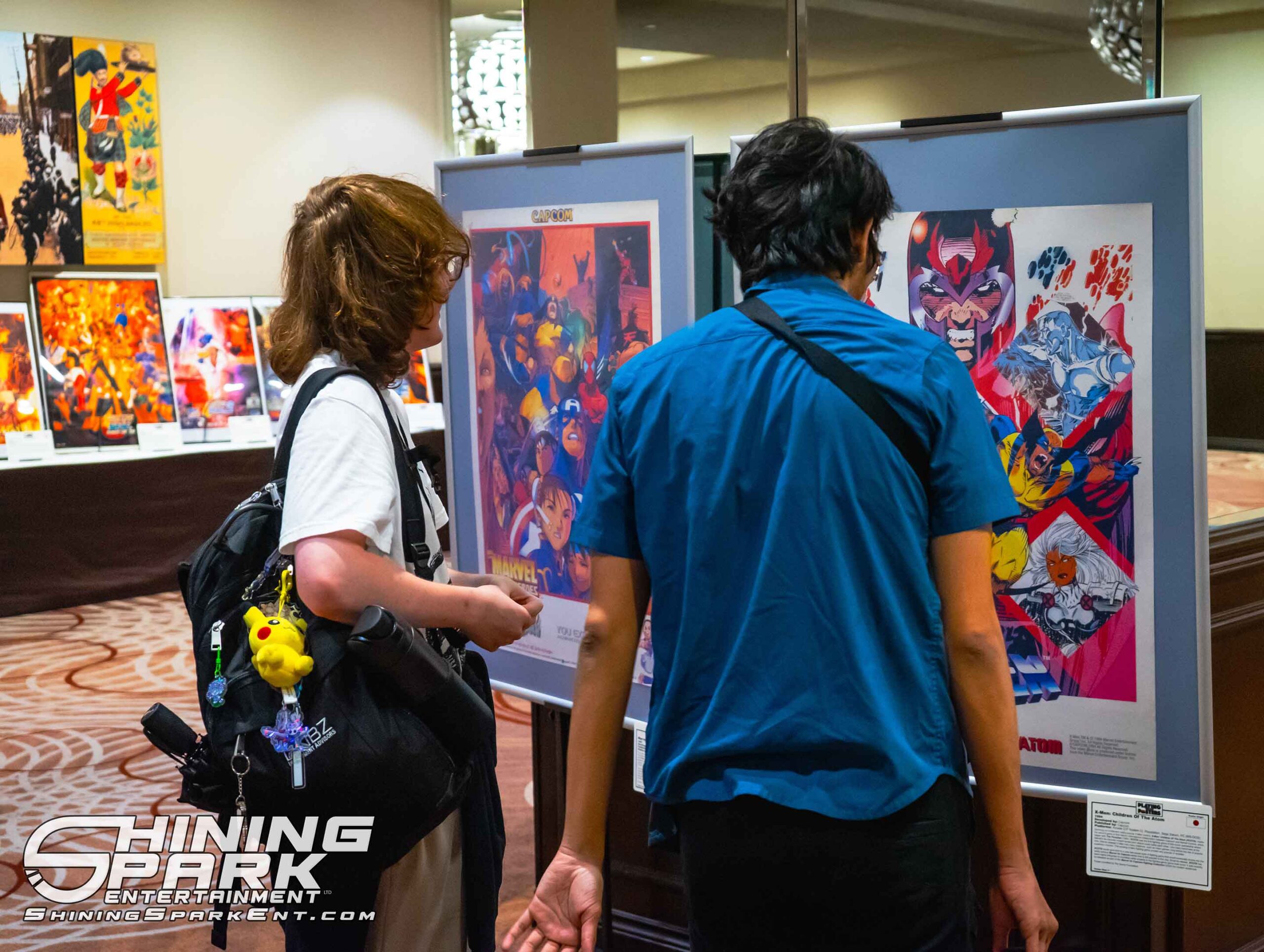
Some of Capcom’s classic Marvel games. (Image credit: Shining Spark Entertainment)
He says this printed, tactile artwork is especially significant in an age where companies are pushing for AI-generated content. “With AI, you would start thinking hand-drawn or human-made video game artwork might disappear.” But these posters were fully made by artists, and he hopes that seeing them up close will make people better appreciate all of the work put into them.
“Nowadays, anyone can just capture a game screenshot from [built-in capture options], so they would almost take it for granted. And looking back just maybe 20 or 30 years ago, you actually had to do a lot to just capture one screen and to make it look good. And so I think to see the poster in its full glory, and to actually be able to see the detail, makes a whole difference.”
He points to something like the classic retro arcade Marvel vs. Capcom fighters. “They had all the freaking characters on one poster, which is so cool when you see it in the one size, because you can actually see the detail of each character. And if you think about it, that artwork was designed to be on a large print, and that’s why they put so many different characters in different layers […] So I think that’s what’s so interesting about preserving prints, especially large prints, because in a way they were meant to be viewed like that.”
A learning tool, especially for Canadian history
In a separate interview, Sparks says Playing With Posters is particularly near and dear to his heart not only due to his love of games, but also his passion for education. Over the years, he’s taught or lectured at such institutions as Humber College, the University of Toronto and Toronto District School Board. And separately from Playing With Posters, he serves as the director of technology and workshop coordinator at the Hand Eye Society, the Toronto non-profit that supports the gaming industry through exhibition, education, mentorship and more. Playing With Posters, then, is a way to bring all of that work together.
“I really love to work on things that support game preservation, and this poster exhibit with Dixon is a unique way to do it, especially because some people are not just games people. You can tell them to go play a video game, but they’re not going to have either the time or the desire to do it,” he says. “But if you show them a poster, which is a piece of art from a project, to try and encapsulate what a glimpse of what that project is through the poster, then you have people who even aren’t games people able to appreciate it for what it is and what it’s trying to do. And that’s a really accessible way for people to understand and learn about the importance of game arts.”
That’s meaningful, he says, because games have become an increasingly dominant part of our culture.
“Games, much like any art, are a form of heritage, and I think that there is a lot that we lose because we don’t preserve these experiences very well,” he says. “As a piece of art, every single game embodies the zeitgeist of the time — what people are thinking about [in terms of] the future or the past or things like that, and just the general vibe of an era, or even the technological limitations, the creativity that people have to work with, the world that they live in… And we lose that if we lose games.”
As an example, Sparks points to the ancient Egyptian board game Senet, the rules of which have been lost in time and are therefore the subject of conjecture. “There’s many games like that, and that is a part of history, and we lose that history if we don’t preserve it.”
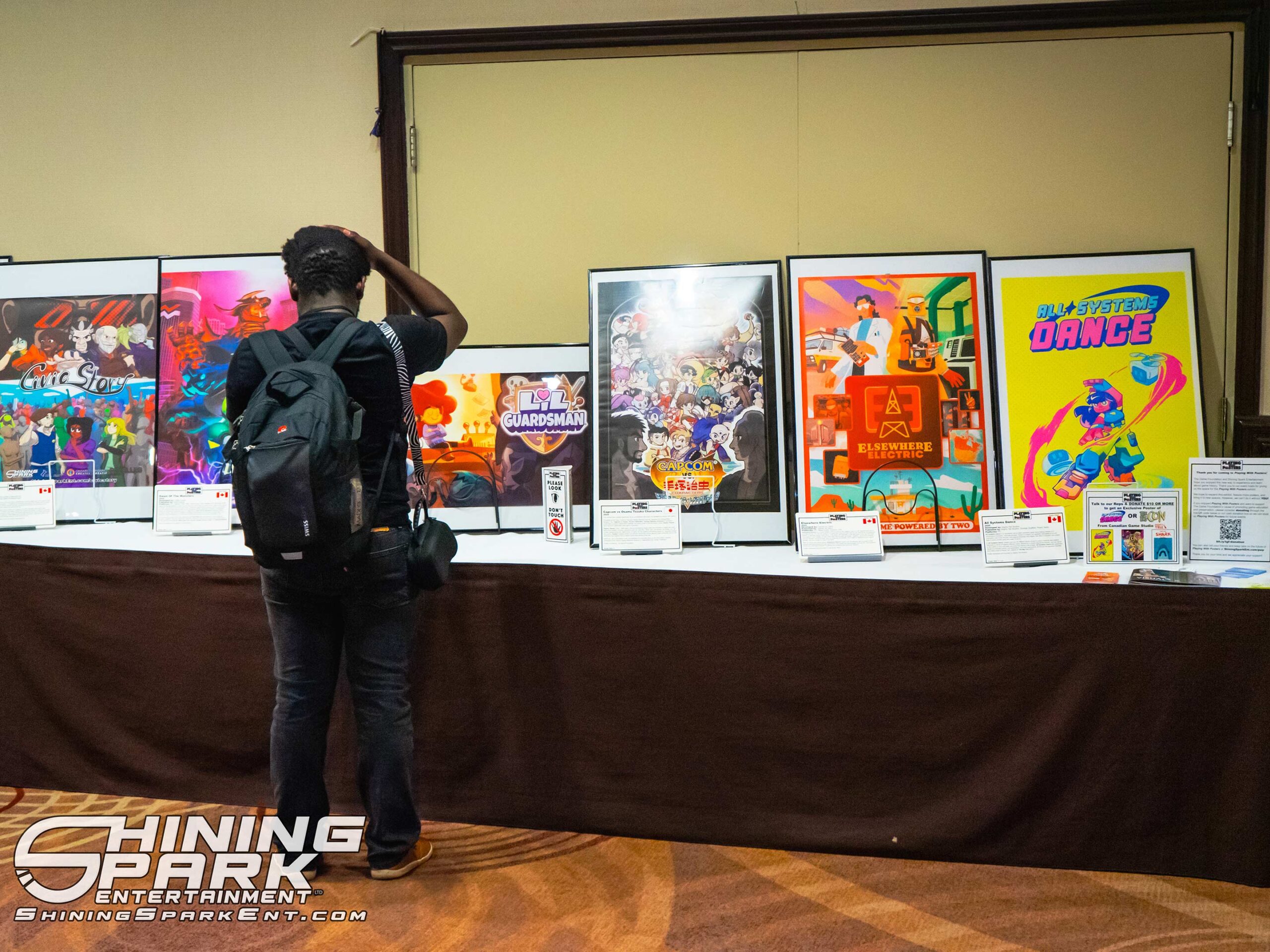
Canadian games like Lil’ Guardsman, Elsewhere Electric and All Systems Dance featured by Playing With Posters. (Image credit: Shining Spark Entertainment)
Bringing it back to video games, he points out how Flash was the dominant internet technology in the ’90s and early aughts but has since been phased out, rendering many experiences obsolete. “Now, you have websites, you have games, you have animations that you cannot see anymore because the technology went defunct […] There’s a lot of game history that is just lost because the technology has advanced, and newer technologies don’t care about older technologies. They just abandoned them.”
Of course, this isn’t exclusive to the early internet era. Relating the issue to more modern technology, he notes how many games are now unplayable because their servers went offline or they were just delisted from stores entirely. We’ve seen this with the likes of Firewalk’s Concord, Ubisoft’s The Crew and, just this month, BioWare Edmonton’s Anthem.
Naturally, then, a lot of thought goes into the selection and presentation of the posters. In addition to some more iconic games, like the Japanese works that Wu spoke about, Sparks says he wants to spotlight the works of Canadians, especially as it’s a space that can often be overlooked. For more recent releases, he says Playing With Posters will work directly with Canadian teams on how to best present their games in the exhibits. Naturally, that can help promote games from active Canadian developers, particularly smaller indies, including Toronto-made works like Hilltop Studios’ Lil’ Guardsman, Games by Stitch’s Elsewhere Electric and Mighty Yell’s upcoming All Systems Dance.
But Sparks says he also wants to “emphasize the Canadian history that nobody really knows about or considers.” To that end, one of the highlights of Playing With Posters exhibits is the Canadian-made Bertie the Brain, a four-metre-tall tic-tac-toe arcade set that was actually the first publicly playable computer game. Created by Austrian-Canadian engineer Josef Kates, the game was first displayed at the CNE in 1950 before being dismantled shortly after.
“It existed long before Space War, long before Pong, and yet no one knows about it,” says Sparks. “‘Did you know one of the first very video games is Canadian?’ That fascinates people, because no one’s ever heard of that […] This is why it’s important to preserve these experiences, because Bertie was not preserved, and now it’s forgotten. Video games are a billion-dollar industry, but no one remembers where it started is right here.”
Levelling up
With multiple events under its belt within its first year, Playing With Posters is certainly off to a strong start. But of course, there’s always room to grow — and always a need for help.
“This actually takes a lot of time and cost to run,” admits Wu, pointing to investments in printing, framing, transporting and storing all of the materials. Therefore, The Game Foundation is graciously asking for donations and other kinds of support, especially as a registered charity. “I would love to grow Playing With Posters to showcase at different events and get sponsorships so that we can take it to different events,” notes Sparks.
And if nothing else, Wu hopes that younger audiences might be encouraged to spread the word and maybe even pitch in some posters of their own.
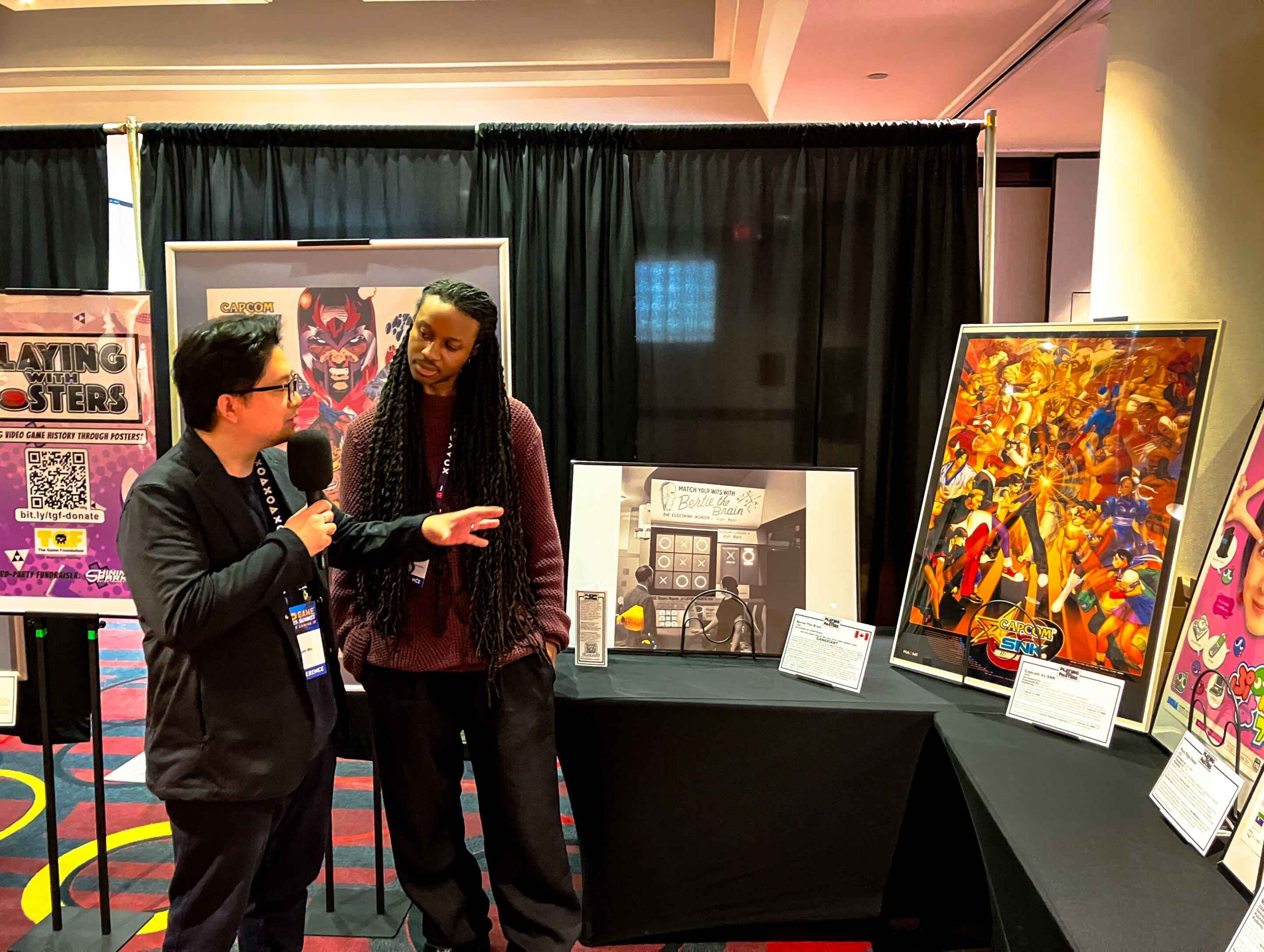
Wu with an attendee, with Bertie the Brain featured behind them. (Image credit: Shining Spark Entertainment)
“One of the main themes that I always have for an exhibition like this is to inspire the next generation to do it, too, because you can’t just rely on us. We’re two people, but in the grand scheme of things, we need everyone to understand that if you have a poster rolled up lying around in your bedroom, you could decide A) to throw it away, or B) maybe donate it to someone that cares about it,” he says.
He notes that doesn’t even have to be The Game Foundation, either, mentioning other potential recipients like museums and the University of Toronto Mississauga campus’ Syd Bolton Collection, which houses thousands of old games and consoles.
“A lot of important information or information that’s lost forever is on paper, and yet, every time we have something that’s paper at home, we think it’s the least important […] I think we’ve sparked a lot of meaningful and inspiring conversations. I hope we’re going to make bigger shows and show more of what the poster world has to offer.”
More information on The Game Foundation can be found on the charity’s website. There are also links to donate. To learn more about preservation, check out this primer, courtesy of Hit Save.
Header image credit: Shining Spark Entertainment
MobileSyrup may earn a commission from purchases made via our links, which helps fund the journalism we provide free on our website. These links do not influence our editorial content. Support us here.