


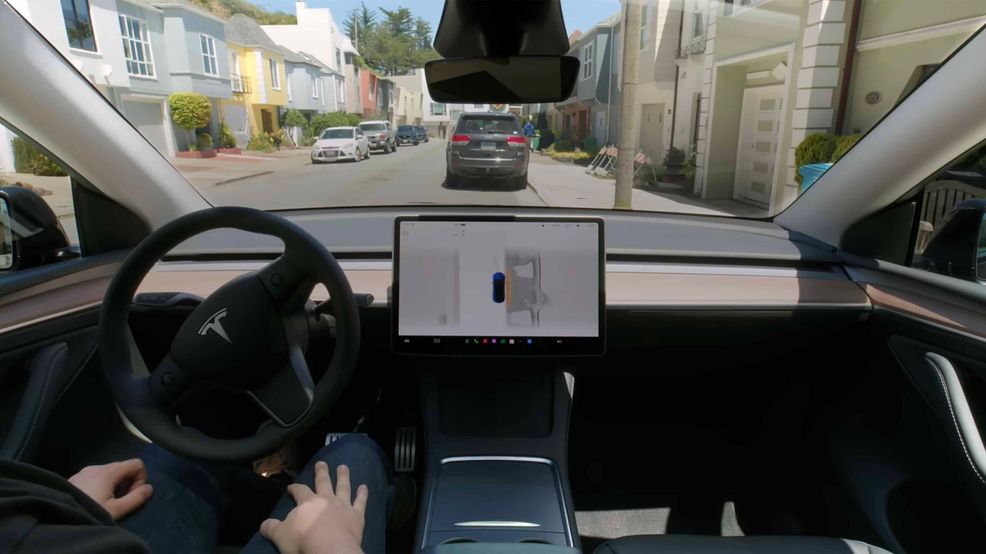
A University of Windsor professor and researcher is outlining shortcomings in AI infotainment systems in cars.
In a news story published by the university earlier this month, Francesco Biondi, a professor in the Faculty of Human Kinetics, talked about his research into this technology.
“We’re sold the sort of reality where we can just drive along and multitask with these very intelligent assistants,” Biondi said, “but this is just a dream. The reality is very different.”
As he explains, automakers’ inclusion of high-resolution screens is leading to more distracted driving — an issue that has already been increasing amid the ubiquity of advanced smartphones. According to the Government of Ontario, over 30,000 collisions in 2022 involved distracted or inattentive drivers, and these accidents led to nearly 11,000 injuries and 100 fatalities.
Of course, companies will tout their AI infotainment systems as being a solution to this because they’re voice-based, but Biondi notes that they can sometimes still struggle to connect to navigation applications and perform tasks like speech-to-text messaging. This is a problem, he says, because drivers will then spend more time and energy trying to sort it out instead of actually focusing on driving.
At the same, Biondi points out that there are a lack of standards for these infotainment systems.
“We have standards for seatbelts, for airbags for seating in the car, but there’s no standards or regulations whatsoever on infotainment systems,” he said. “The automakers don’t want to be regulated. They believe having a bigger screen or designing the screen is their own concern, and even the regulators don’t want to overstep in that domain, but in my opinion, there’s just too much technology in the car.”
As part of his research, Biondi is also looking into automated systems like Tesla’s Autopilot to determine the distraction potential associated with them. He’s also developing a system that’s capable of detecting distraction in real time by using dash cameras.
But outside of his work, Biondi says there is more that could be done beyond regulation. For one, he says parents need to be careful to avoid distracted driving, especially in front of their kids who might think this behaviour is okay. He added that public education, policing, and traffic campaigns can also help raise awareness of the seriousness of distracted driving.
Image credit: Tesla
Source: University of Windsor
 News
News  News
News  News
News  News
News 