


Telecom complaints have dramatically increased in recent months, according to the mid-year report from the Commission for Complaints for Telecom-Television Services (CCTS).
The report covering data between August 1st, 2025 and January 31st, 2026, shows complaints rose by 16 per cent, with Rogers/Shaw accounting for the highest number of complaints (34 per cent) since reflecting their integrated branding as “Rogers together with Shaw,” as noted by the CCTS.
Among the top five service providers, Fido saw the largest increase in complaints from the 2024-2025 reporting period, rising 156 per cent over last year. Rogers/Shaw followed with a 95 per cent increase, nearly doubling from 3,369 complaints in 2024-25 to 6,583 in 2025-26.
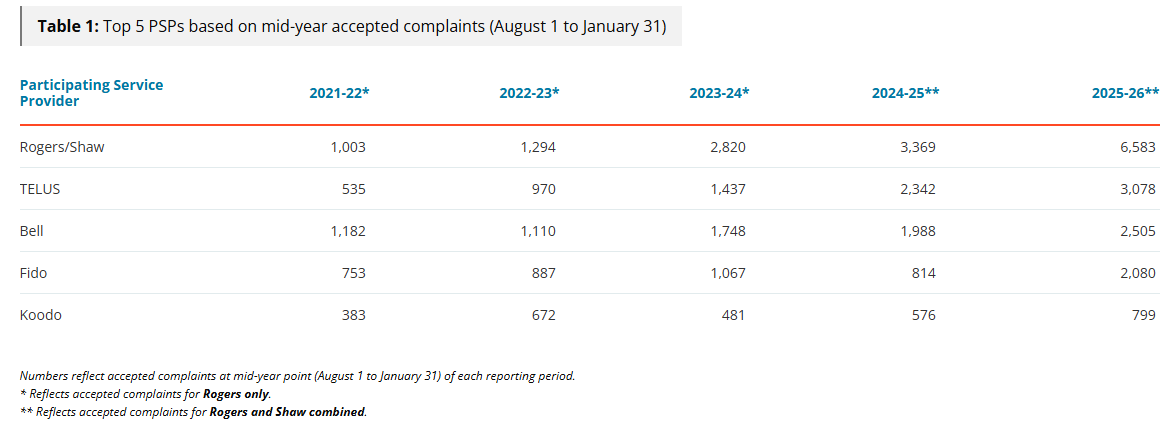
The CCTS says the increase in Fido’s complaints include concerns about charges for installation, activation, or reactivation, and regular price increase of monthly price plans. The CCTS notes “Complaints about price plans may arise when customers believe the base monthly cost of their service increased unexpectedly, or without clear notice from their provider.”
Key insights on service complaints
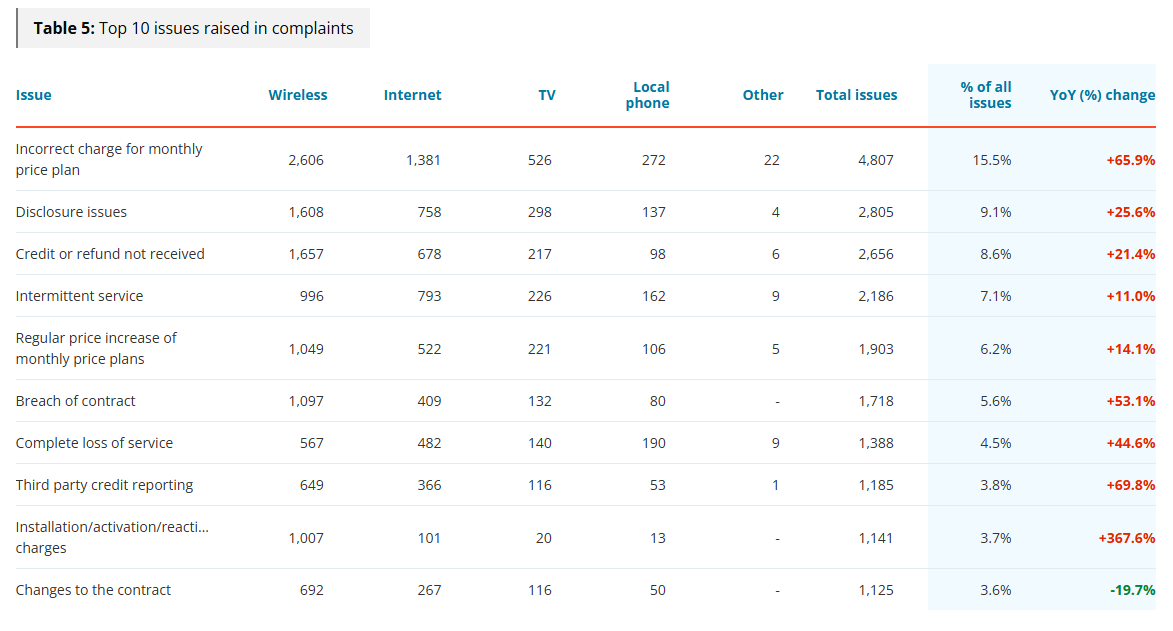
Wireless accounted for 56 per cent of complaints across all service types (wireless, internet, TV, and local phone). The number of issues related to Wireless services rose by 53 per cent compared to last year’s mid-year report.
Billing issues remain the dominant complaint driver across all services. Notably, the top reported issue across all services was ‘incorrect charges for monthly price plans.’ That accounted for 15 per cent of issues this year, and rose to a 66 per cent compared to last year’s report.
Wireless Code Breaches
The CCTS reviews the conduct of Canada’s service providers using four codes issued by the Canadian Radio-television and Telecommunications Commission (CRTC), Canada’s independent authority on telecommunications and broadcasting regulation.
Introduced in 2013 by the CRTC, the Wireless Code establishes rules governing fair conduct and service standards among providers, while also protecting consumer rights and promoting access to reliable telecom services.
Code breaches are “instances where service providers have failed to follow consumer protection rules set out by the CRTC” as noted by the CCTS. Wireless Code breaches more than doubled this year compared to the previous mid-year point.
The CCTS received 2,244 alleged breaches of the Wireless Code, 109 reports required investigation, leading to 79 confirmed breaches of the Code.
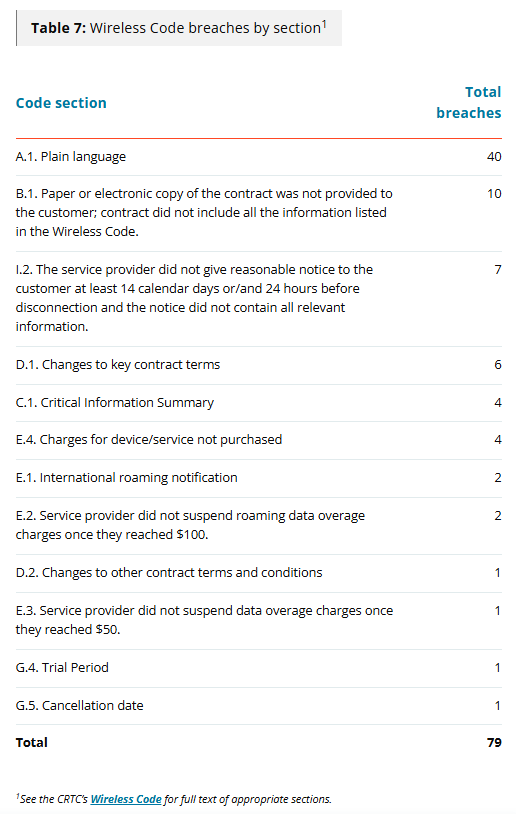
Of the 79 confirmed breaches, Plain Language (Section A.1 of the Wireless Code) was the most frequently breached requirement, with 40 reported instances, representing nearly 50 per cent of total confirmed breaches.
The CCTS resolved 16,103 complaints this mid-year reporting period. The CCTS publishes all reports on its website.
 News
News  News
News  Deals
Deals  News
News 