


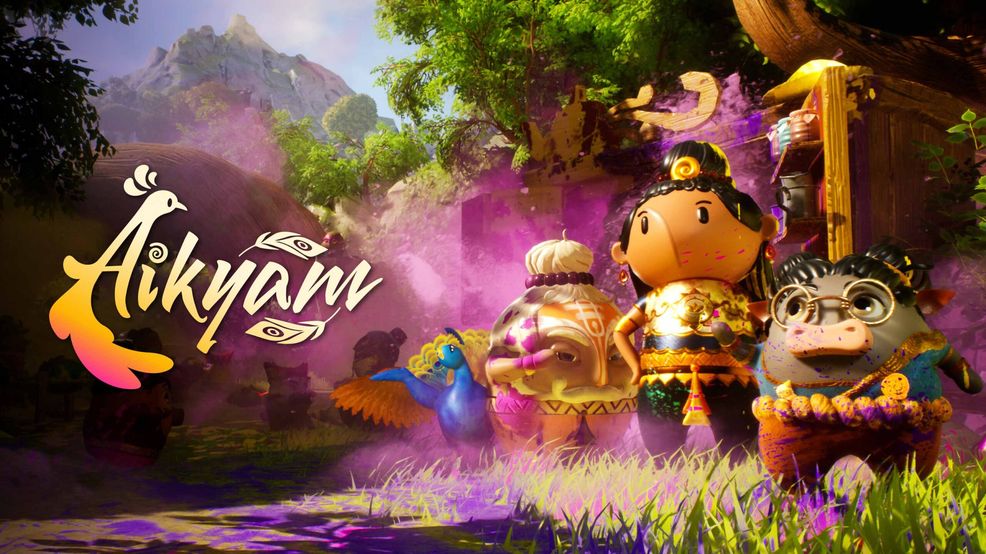
In most games, defeating your enemy involves some form of combat, and often, it can be decidedly violent. But what about a game where you work out your problems through the power of dance?
Enter Aikyam, an upcoming turn-based RPG from Toronto-based Thousand Stars Studios. Inspired by the ever-expressive Bollywood, the game follows Vishva, Ramli, and Guruji as they help disgruntled citizens and repel demonic forces through dazzling dance battles.
Aikyam was just featured in Summer Game Fest’s India Game Showcase, so to learn more, MobileSyrup sat down with Parth Soni, studio co-founder and game director, and Sally Luc, studio co-founder and lead artist/developer. Together, they talked about the origins of their studio, the inspirations behind Aikyam, how the dance battles work, the wider trend of South Asian representation in games and more.
To start, tell me a little about Thousand Stars. How did you decide to start a game development studio, and how did you go about doing that?
Parth Soni: We started Thousand Stars back in 2017. We were primarily a service company and helped a lot of other folks in the community network, make their projects over time, build up their teams… And the idea of Aikyam came about, and the team was excited, and we wanted to transition to making our own projects. So, slowly and surely, we’ve made our way there.
After doing that service work, where did the idea for Aikyam come from?
Soni: A lot of people had their hands in it. The initial sort of kickoff point was the fact that my dad was getting to his retirement age and trying to get back into drawing and the art style Sally has. He used to paint when he was younger, so he drew a few characters merging his style with Sally’s. And it looked really, really cool — the characters in the world felt super unique. So we started developing ideas there. And I, personally, grew up in India until I was 13, and then we moved here, and I’ve grown up with a lot of Bollywood and Indian folklore and stuff. And I wanted make a fantasy RPG that encapsulated some of the themes that I’ve grown up with, some of the art style that Sally and my dad had. And our environment artist, Sam [Dayomi], he’s a filmmaker, so it was kind of a perfect fit, because he was able to bring a lot of that cinematic flair that we needed for the game. So it was a lot of right ideas and skills clicking at the same time that made it special.
Sally Luc: And to add to that, I think my style is more of stylized and toy-like, so it really tailors to the youth audience. And as for what it means for me, who isn’t Indian, like the rest of our team, we’ve grown up with a lot of stories like Red Riding Hood, or the Three Little Pigs, or just a lot of Western-style stories, but we never really hear anything about Indian stories or Chinese stories. So, by [working on Aikyam], we learned a lot about [these different epics], like the Samudra Manthan or Ramayana. So, having all these different stories come to life and give us the inspiration, we were able to build up a world like Aikyam.
I like the idea of the different art styles coming together. How did that come about in terms of shaping that? You have your own sensibilities, so what did the process look like of deciding what you wanted to incorporate from each?
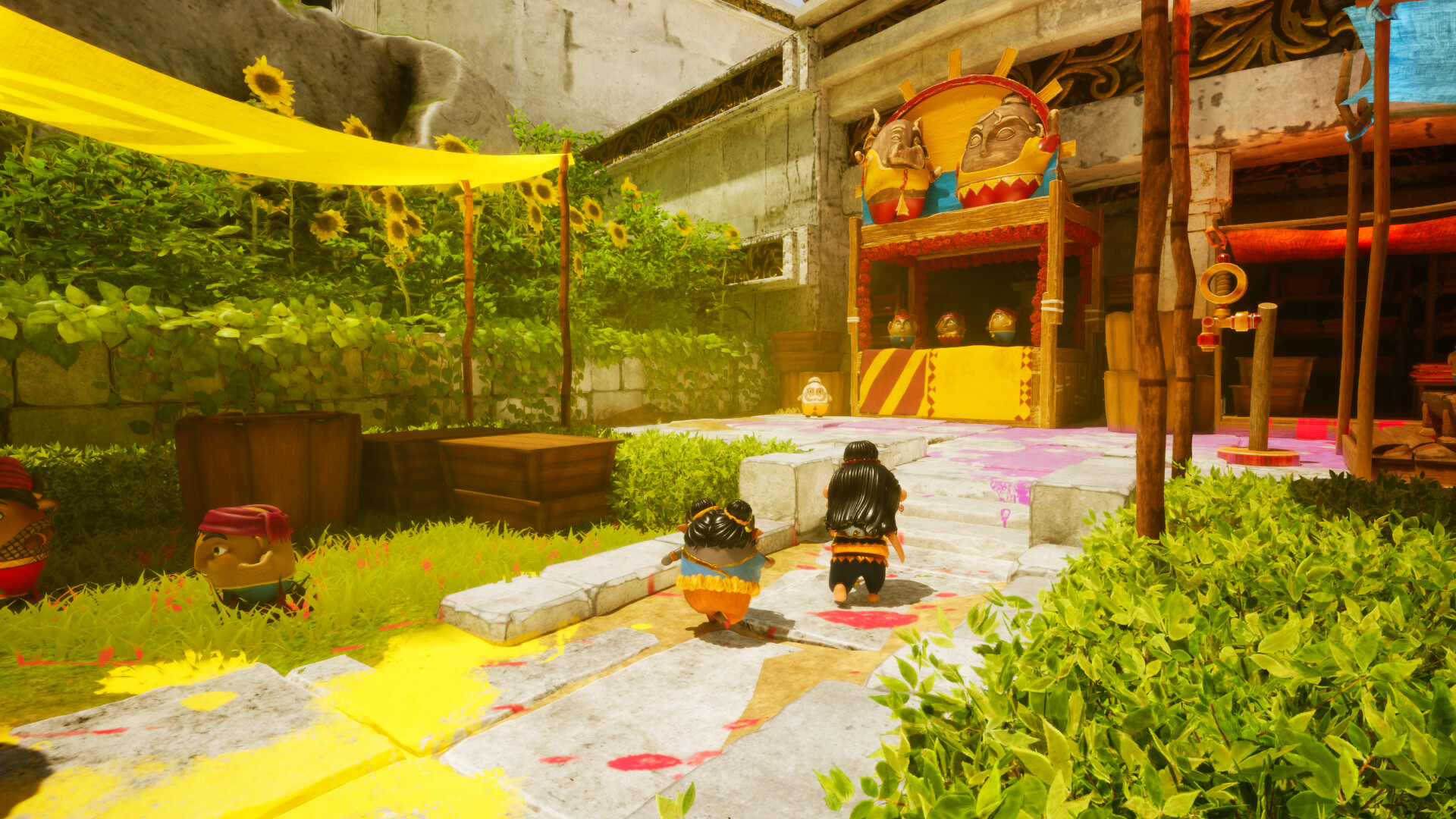
Soni: I think when you’re a small team, it’s kind of “[all] hands on deck” with everybody. You have one idea, you pass it around, and by the end of the conversation, it transforms into something unique and special with everybody’s voices in it. And that’s sort of a big part of the process that we have, just making the game as well where we’re leveraging that. We have our isolated roles and such, but I think what we’ve realized, even earlier on in the production, is that, let’s say, if Sally wants to come up with an animation of whatever attack the characters are doing, she runs some ideas by me, and I’ll reference her to, ‘Oh, you should check out, this song or this dance,’ and Sam will try to teach us about how cameras and lighting and all that sort of stuff works. So a lot of that process during concepts starts [from] forming the idea into something special. We have some design pillars and theming of the game, so it works against that just to make sure that’s always respected. But yeah, just passing the ideas around, people tend to come up with some really cool stuff here.
Sally mentioned a couple of things in terms of the Indian epics you wanted to touch on. But in a larger sense, what were some of the specific elements of Bollywood or Indian culture that you wanted to represent in the game?
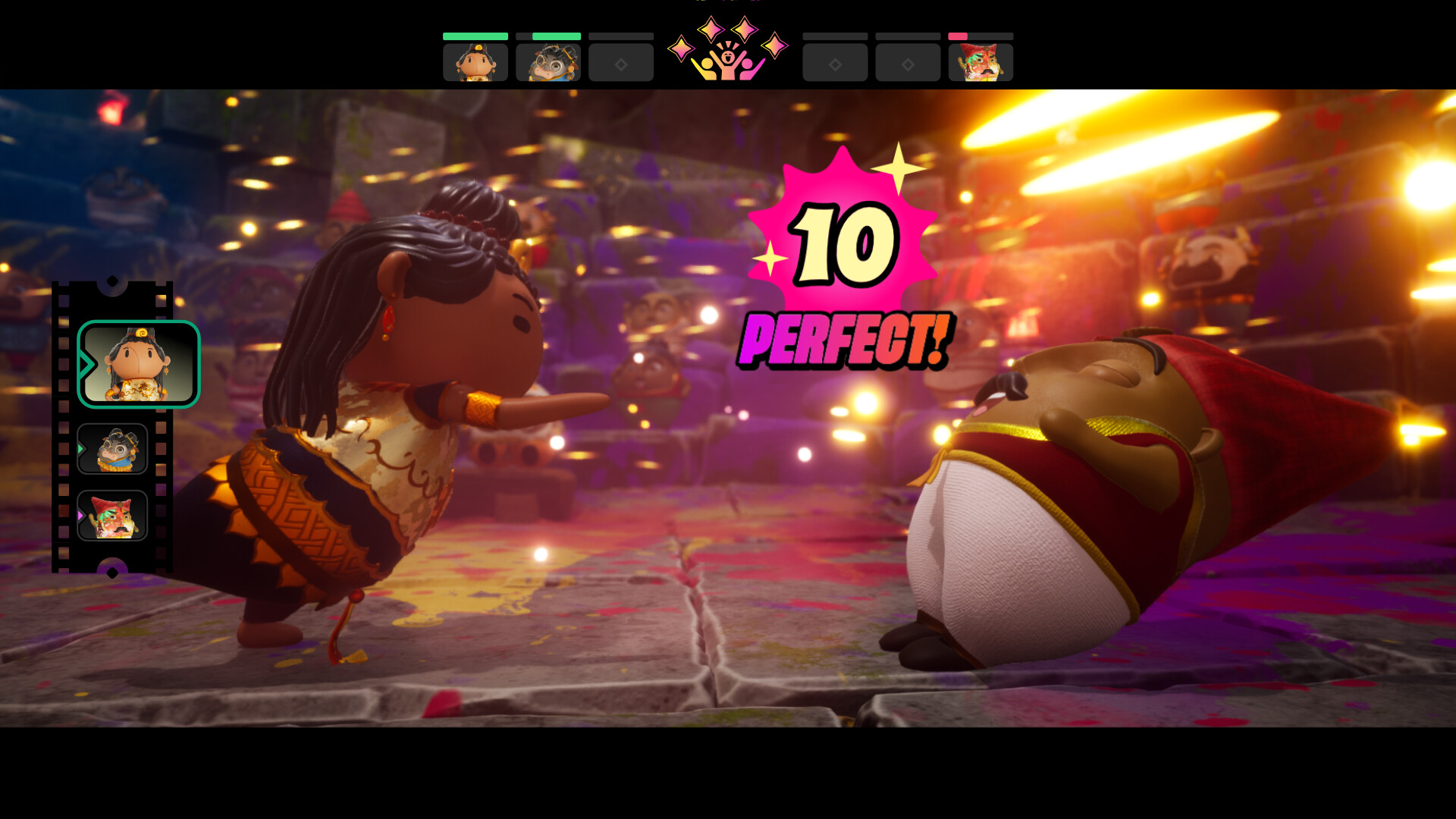
Soni: The very specific Bollywood aspect that we wanted to go off on was the idea that Bollywood’s kind of famous for their dance numbers; people are dancing out to solve their problems. And we felt that was a pretty interesting storytelling mechanic that we hadn’t really seen in games before. So we kind of came up with our spin. We all play JRPGs a lot, and [Aikyam‘s] almost like a JRPG-style game, where you go around, you help people, but you can win them over with dances, along with doing favours and stuff. And once you do that, they’ll come back and cheer for you during other fights. So the way you become stronger is by helping people. It kind of seems silly but fun at the same time, where the way you win them over is just by doing silly dance moves.
So that’s the biggest trait that we’ve picked from Bollywood. The game’s also kind of split into two different battle styles as well. We haven’t showcased [the other], but we call it the “De Shum De Shum.” It’s kind of like a sound that I think old Indian Bollywood movies used whenever the character punched. But it’s basically more to do with reflecting a little bit more of the Southern Indian movie scene where there’s the over-the-top action sequences, so we’ve been inspired by a few different elements that brought a lot of that stuff together.
Luc: The over-the-top physical attacks are meant more for when you’re fighting against demons, but if you want to win them over with kindness, you can also dance against them. So it becomes a choice of what kind of attacks you want to see or what kind of things you want to do in these battles.
I really like that idea of combat being framed through dance. A lot of games are focused on the violence of it all, where combat is purely action-based. But Aikyam is centred around the concept of helping disgruntled citizens, and, as you mentioned, getting them to rally around you. How did you ultimately land on this idea of a game that’s focused more on compassion and acts of kindness?
Soni: I think that came from just the core values that we try to focus on at Thousand Stars. When we made the studio, the statement that we lived by was, “We want to be the ‘Pixar of video games,’ where we wanted to tell stories and bring up themes that are very human and interesting, but aren’t necessarily the common tropes that mainstream games tend to explore. So a lot of that is rooted in the values of the types of projects that our team’s interested in.
Luc: We want to spread a little bit more kindness in this world. [laughs]
That’s a great goal! I love that. Looking at some of the gameplay that you’ve shown off and reading more about the game — besides the combat, there’s more exploration elements. You can do sidequests, that sort of thing. Can you talk a little bit more about that larger structure? How does that all work, and what was your design philosophy behind all that?
Soni: I think it took a little bit of time, to be honest, to find the footing for it. Because the exploration, generally speaking — not pointing at specific games — in JRPGs tends to be a little bit monotonous with the idea of just getting from point A to point B. So we did want it to introduce a little bit more “puzzle-iness” to solving areas as you’re discovering characters. So we came up with this idea where characters will have different dance poses that they’ll unlock. Think about them as like spells, so there’s like a flamboyant blast pose that will blow up rocks, or there’s a pose that lets you copy whatever somebody else is doing. And then we came up with different regions around these poses. It’s letting the player still explore the area in their own way, but just adding a little bit extra [flair], like 10 per cent, to make it feel more charming and cohesive with the rest of the theming.
I like that you mentioned the JRPG influences, because I’m a big JRPG guy myself. What were some of these games that were formative for you?
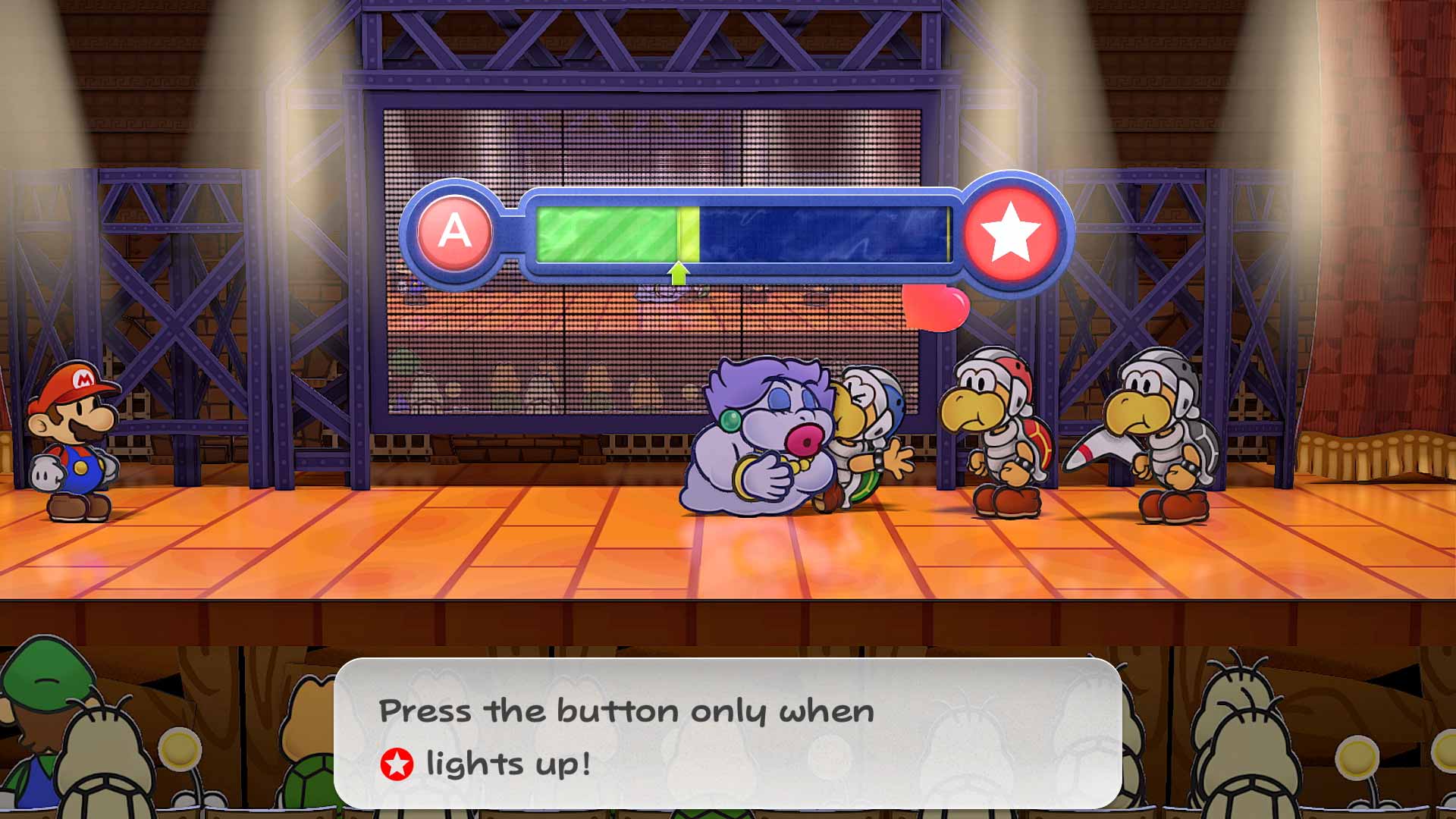
Paper Mario: The Thousand-Year Door. (Image credit: Nintendo)
Soni: I think Paper Mario was probably the biggest inspiration, because we really enjoyed the sort of the QTE aspects of it. We kind of built a little bit of that system into our game as well. And I think Yakuza: Like a Dragon is probably the other biggest influence, because of just how absurd and interesting their attacks are. Every time I played that game, it just makes me smile. So that was in the back of my mind whenever designing an attack or designing an interaction. It needs to bring joy; people must be smiling. So those two, at least for me, were kind of the guiding light.
Your studio has been around for almost 10 years now, and you’re part of the Toronto game scene, which is quite large. Canada as a whole has a very large gaming scene. So I’m curious, having been in it for almost a decade now — what would you say makes the Canadian gaming scene, or Toronto specifically, special or unique?
Soni: Oh man, everybody’s just so welcoming and inviting. Let’s say if you’re struggling with something — there’s always somebody like 10 steps ahead of us and like 10 steps behind us. So we try to help however we can, and there’s always somebody around to lend an ear as they’ve gone through the same struggles. And people are very willing to help and be compassionate. That’s been the biggest positive. It’s been very special to be part of the entire scene.
You mentioned doing a lot of service work before, and I think that’s interesting because sometimes a first-time indie developer might just jump straight away into their own game. But you cut your teeth with a lot of that other work first. How do you think those experiences helped prepare you, and what did you take from all of that going into Aikyam?
Soni: Personally, for me, it would probably be discipline, which was a pretty big thing. I think that took a long time to build up, because there’s just so many unknowns, and when you’re running your business, you’re not there 10 to 6; the problems persist with you afterwards. So, just getting a little bit of experience of managing all of that, making sure you know everyone’s looked after, everyone’s happy… It’s quite a big challenge. Even after having a lot of this experience, we went through a lot of struggles on Aikyam, just making sure the team transitioned out of some of the service work mindset and all that kind of stuff as well.
Luc: I agree with you on discipline. But there’s also a lot of other aspects, too. We started our company right after we graduated university, so very new, very green. We had no track records, and we were told, “It’s best if you got more service work first before you jump into a major game.” And so we took that advice, and we went ahead. We’ve done years and years of service work, where we’ve learned how people handle different pipelines, how they handle different situations, and being able to be part of a different team, and just watch, as well as support, all of that, we were able to bring back a lot of those skillsets with us and implement it into our own pipelines as well. Now we have something that is robust for us to continue making games moving forward.
We’ve seen a lot of sort of South Asian representation in games in recent years, which has been really nice. Besides your game, of course, there’s Venba from Visai Games, also from Toronto. There’s what Outerloop has done with Thirsty Suitors and Dosa Divas. And even PlayStation’s Saros this year had Rahul Kohli playing the main Indian character. How do you hope, especially with Aikyam coming up, that this sort of representation continues and maybe even expands or evolves?
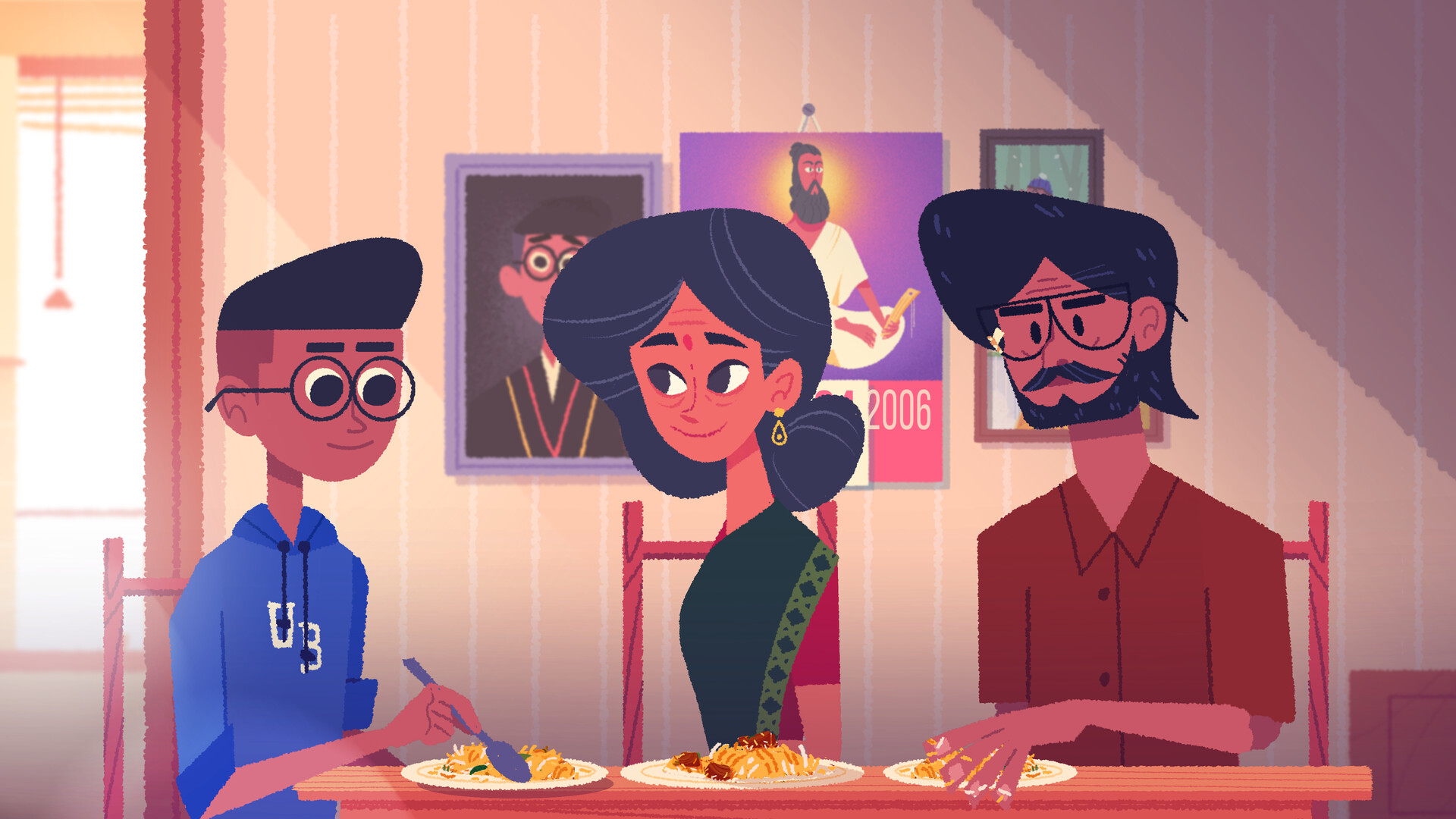
Venba. (Image credit: Visai Games)
Soni: It’s been fantastic to see more diverse stories and such being told. I know PlayStation also has the India [Hero Project], where they’re trying to help out a lot of folks. Asia in general — and South Asia very specifically — has so many amazing stories to be explored. And I’m really excited to see how people portray them in different ways that they can bring that into mainstream media. I feel games have sort of been lacking in that sense. I know we’ve got a lot of really amazing Japanese games. I know like China is also starting to build up a really good repertoire. So I’m very thankful to be part of this rising scene, and I’m very, very excited to see where it all goes.
For players who maybe aren’t necessarily from an Indian background — if they play Aikyam, what do you hope they take away, either about Bollywood, specifically, or Indian culture or representation in general?
Soni: First of all, I think I really want them to enjoy the game in its essence. I hope they feel represented, but I really wanted it to be fun and get their gears clicking as well where they can tell stories like this, perhaps even bigger and better than Aikyam in the future as well. [To see] it’s possible, and there’s an audience out there that genuinely enjoys these types of representation in stories as well. Like you’ve mentioned, we’ve definitely seen this a lot with Venba or a lot of the stuff like Outerloop has done. So I just want more people inspired to spread more happiness and more cool stories.
Luc: From a non-Indian perspective, I think it’s a great way to introduce people who aren’t familiar with the culture into the culture as well. With Aikyam, I didn’t know that much about India before starting the project, but now I’ve felt introduced to it. It’s a very welcoming experience to let people dabble in the culture and learn something new.
Soni: I think we’ve identified all the little traditions and stuff that we have. For example, the demo of Aikyam starts with Holi [the Hindu festival of colours marking the beginning of spring]. The people who aren’t familiar with it, they’re fascinated by it. “Oh, that’s such a cool thing, I actually have to throw this water balloon,” and they’re so happy. And the people that are familiar with the festival just go around like splattering everything. It’s fun to see people approach it in a different way. But at the end of the day, they still get a little something out of it, which I think is very valuable.
Aikyam doesn’t yet have a release date, but it’s set to launch on PlayStation, Xbox and PC (Steam). A demo is also now available on all of those platforms. Aikyam is also part of the India Games Showcase’s Steam event alongside many other games.
Image credit: Thousand Stars Studio
 Features
  Features
  Features
  Features