


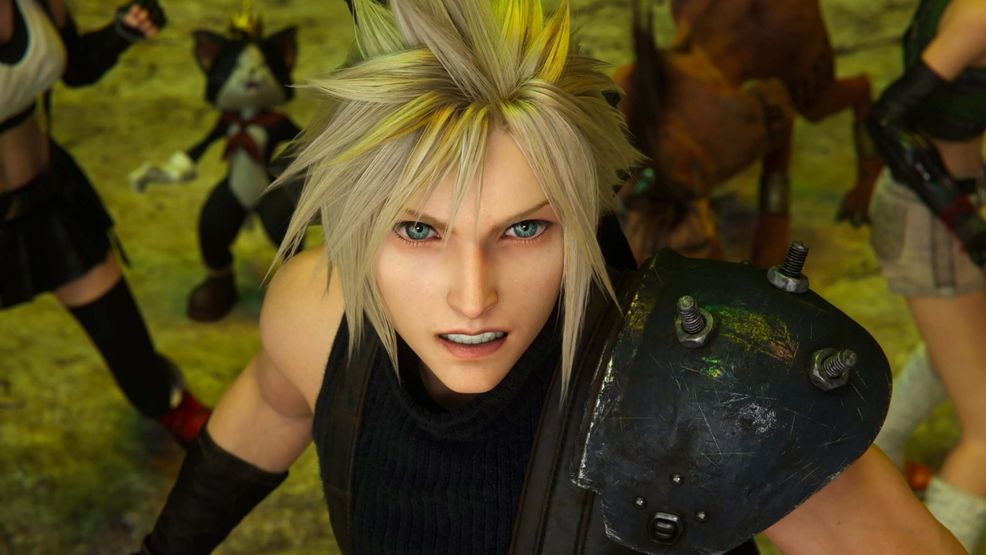
Ever since I played the Nintendo Switch 2 port of Final Fantasy VII Remake earlier this year, I’ve been quite intrigued to see how well its sequel, Final Fantasy VII Rebirth, would fare on the console-handheld hybrid. After all, Remake is a mostly linear RPG, while Rebirth brings the action into a much larger open-world structure.
Now that I’ve gotten my hands on Rebirth on Switch 2, I’ve come away pretty impressed. It’s a port that certainly has its concessions, but on the whole, it successfully maintains what’s most important, allowing you to fully appreciate the masterful core experience that Square Enix has created.
As a quick refresher, Rebirth picks up shortly after the events of Remake, with Cloud and friends having successfully escaped Shinra and ventured beyond Midgar in pursuit of Sephiroth. After a gripping flashback sequence chronicling Cloud’s traumatic falling out with Sephiroth in his hometown, the party must race to stop the former hero from destroying the planet.
For a more in-depth analysis of Rebirth as a whole, you can check out my original review, but suffice it to say the game is simply magnificent. Focusing on such themes as environmentalism, overcoming trauma, and identity, the deeply emotional story provides rich characterization for the entire party, especially in regards to the ramifications of Cloud’s ever-declining mental state. All the while, the game leans into the fascinating metanarrative surrounding the fate of Aerith, who died in the original FFVII, while encouraging you to cherish all of the sweet little moments between characters, from staring out at the sunset on a tranquil beach to an intimate conversation at a starlit amusement park. Rebirth does get overly convoluted by the last couple of hours, but the roughly 40-hour journey to get there is still fantastic.
Meanwhile, Rebirth greatly expands on the structure and gameplay mechanics of its predecessor. Quite wisely, the sequel adopts more of an “open zone” framework, meaning that it’s broken up into several sizeable but self-contained areas. Not only does this make exploration more manageable and rewarding in terms of tangible progression, but it also allows for distinct biomes with their own appealing art direction and gimmicks. Whether it’s the withered brown fields of Junon that have been ruined by Shinra’s corporatization, the sprawling, vertical chasms of Red XIII’s tribal home of Cosmo Canyon or the dense, sweltering jungles of Gongaga, the environmental diversity in Rebirth is astounding and filled with all sorts of meaningful sidequests to take on.
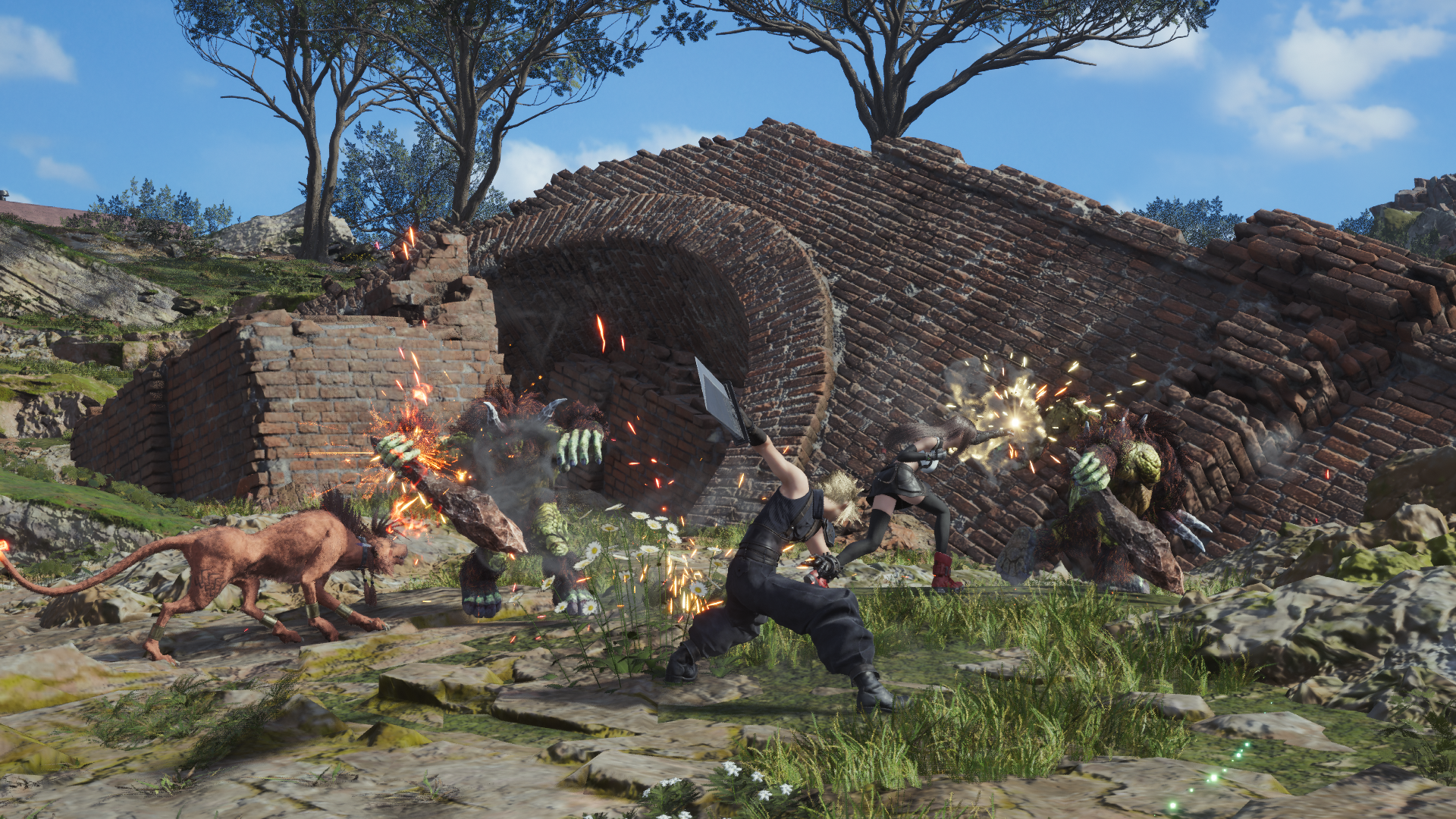
What’s more, Rebirth fine-tunes Remake‘s already stellar combat system that mixes real-time movement and basic attacks with tactical menu inputs. In Rebirth, battles are even more fluid thanks to quality-of-life improvements like seamless ground-to-air combo transitions (something that Remake struggled with), and some snappier dodges and other maneuvers for characters, including a much-needed ranged attack for Cloud. But the single best addition in Rebirth are Synergy Attacks that challenge you to regularly switch between party members to build up each of their metres to execute powerful team-up moves, like Firework Blade (Aerith imbues Cloud’s sword with magic that he then hurls at enemies) or Call of the Wild (Tifa poses like a lion with Red XIII before launching animalistic attacks). They’re dazzling to behold, invaluable in combat and even nicely flesh out characters’ unique personalities and interplay. Plus, you’ll hear some of the absolute best music in all of gaming as you play.
And what’s most impressive about the Switch 2 port is that it rarely gets in the way of any of that splendor. Visuals remain solid throughout at 720p handheld and 1080p docked, especially with respect to the slick and highly detailed character models, while the frame rate remains consistent at 30fps. Honestly, that latter part is essential for a frenetic action game like this, so I appreciated that I never ran into any noticeable dips or stuttering.
With all of that said, maintaining the integrity of the core experience has come with a bunch of smaller trade-offs. For one, there is aliasing in some of the environmental textures, making them look a bit rough in places. There is also a lot of pop-in, even with nearby NPCs and other objects. As I ran around in the opening Nibelheim flashback, several citizens and even a dog would just magically appear a few feet in front of me, while the subsequent present-day Kalm town section had an entire Chocobo and cart spring up as I reached the top of some stairs. Pop-in also occurs with flowers and other environmental objects in the open-world sections, although it’s not as bad since far fewer NPCs are there. And finally, visibility can be wonky when you go from the sunny outdoors to a dark cave, temporarily making it very difficult to see as the game readjusts its lighting.
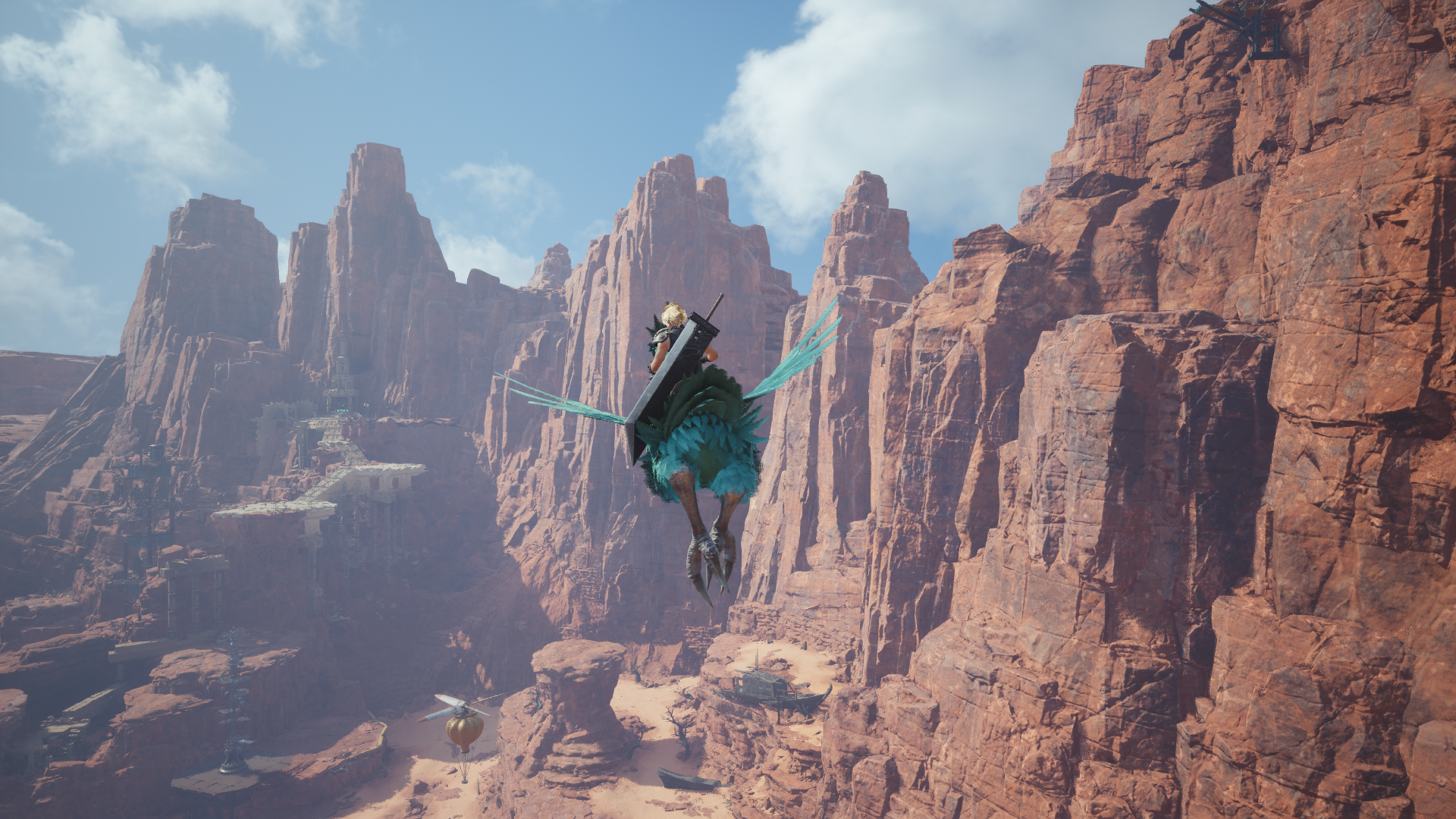
Ultimately, though, these are understandable and worthwhile concessions when the game overall still looks and plays consistently well. As a result, this is an easy recommendation for Switch 2 owners. Rebirth is absolutely one of the best RPGs in recent years, and this is a fine port that preserves all of its strengths where it counts. It remains to be seen how well the third and final part of the Remake trilogy will fare on Switch 2, given that it’s expected to create a seamless open-world that’s explorable via the Highwind airship. But for now, at least, you can play Rebirth on Switch 2 and have an all-around excellent experience.
Final Fantasy VII Rebirth launches on Nintendo Switch 2 and Xbox Series X/S on June 3. The game is also now available on PS5 and PC.
Image credit: Square Enix
 Reviews
  Reviews
  Reviews
  Reviews