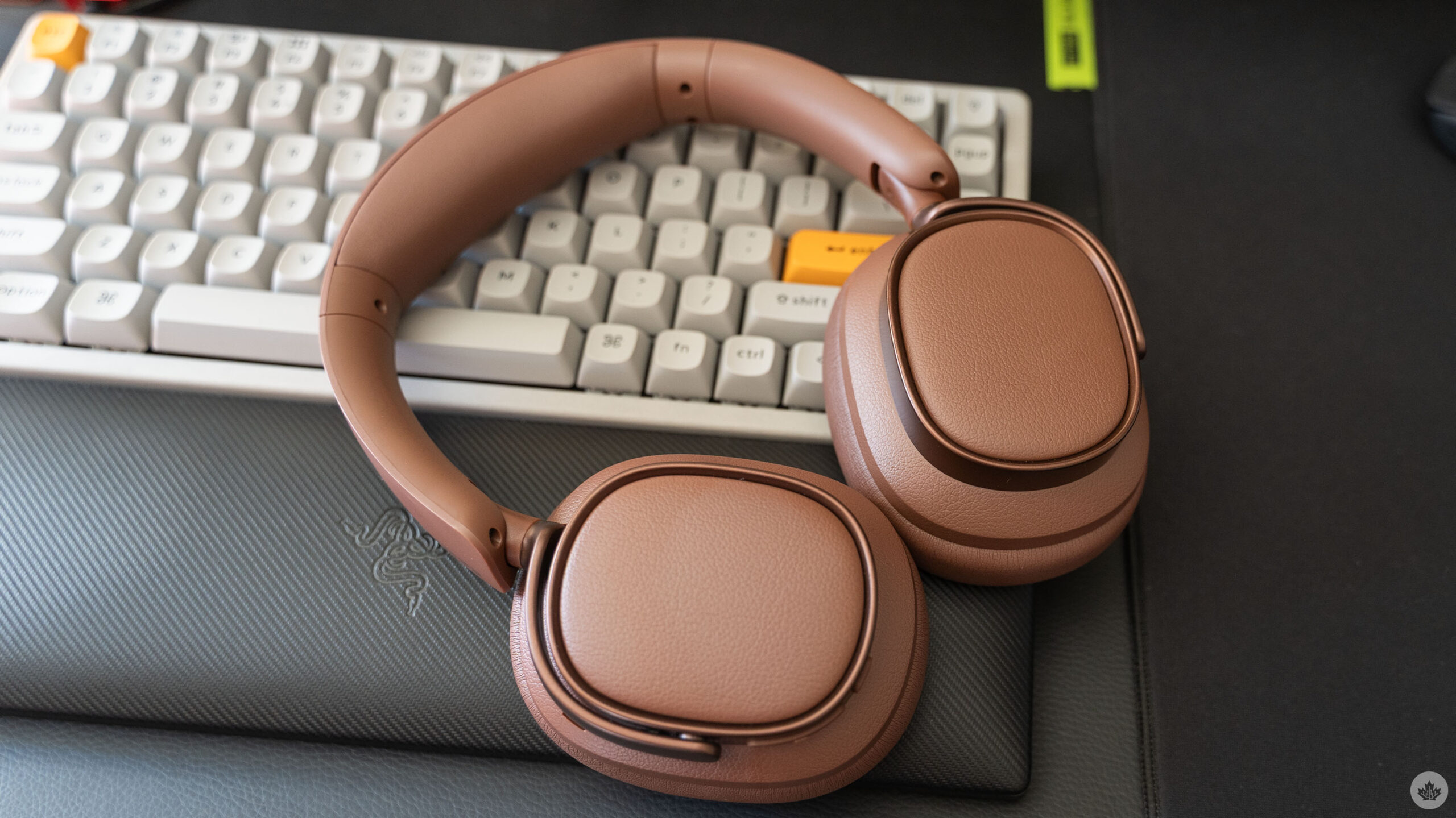
After my review of their V80 headphones, Edifier was kind enough to send me a pair of their ES850NB headphones to try out. Because I love the V80s, I was excited to give these new and improved headphones a test run. I’ve been using them pretty regularly for several months, and I have quite a few thoughts.
I mentioned in my review of the V80s that my budget is limited, so price is often one of the first things I check for, whether I’ve paid for a product or received it as a gift. The Edifier ES850NB headphones are available on Edifier’s website for $199.99. At the time of writing, they’re on sale for $129.99 on Amazon Canada.
That’s a pretty substantial price jump from the affordable V80 headphones, which are regularly $69.99, and currently on sale for $39.99 on Edifier’s website and on Amazon Canada. In theory, that should mean that the difference in quality is also substantial, if the pricing is to be considered fair. However, I’m not sure that’s quite the case for the ES850NB headphones.
Don’t get me wrong: they’re excellent, and improvements were definitely made. Out of the box, the audio quality is noticeably stronger than the V80 headphones. Where the V80s required a little bit of EQ to get them sounding full and smooth, the ES850NBs can get away with the default audio settings in the EdifierConneX companion app. If you’re picky, you may find the bottom end just slightly lacking, but it wasn’t enough to bother me. I think the average listener would be more than satisfied with the overall sound.
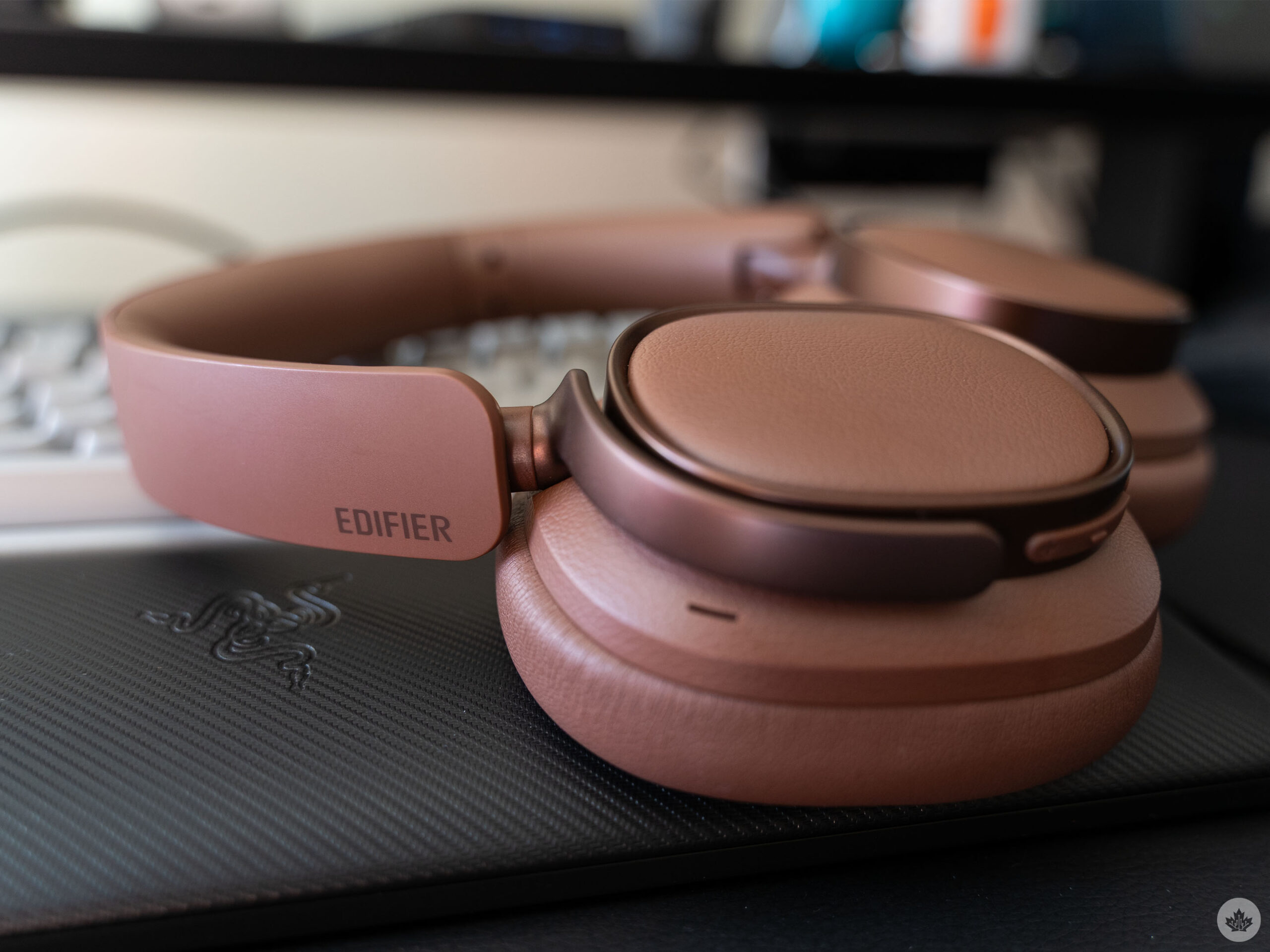
The ES850NB’s Active Noise Cancelling (ANC) has not improved much from that of the V80 headphones. The product details of the ES850NB headphones cite -45dB noise cancellation, where the V80 headphones do -44dB. A difference of one decibel isn’t really detectable to the human ear, but I think Edifier’s use of Passive Noise Cancelling (PNC) makes a huge difference.
While ANC uses tiny microphones in a process called “phase cancellation” to monitor external noise and generate inverted sound waves to cancel out the noise, PNC refers to the use of physical design to minimize external noise interruption. The shape of headphone cups, the density of ear cushions, and the angle at which they sit over the ear are all a part of Passive Noise Cancellation.
With any headphones or earbuds, I like to test noise cancelling in a noisy, crowded environment. The V80 headphones did an impressive job with external noise suppression. It was easy to drown out the chaos and lock in, even at my favourite coffee shop during the lunch rush.
Even though the ANC on the ES850NBs is only one decibel greater than the V80s, it felt a lot stronger because they have better PNC. In addition to the external noise suppression being improved, it also effectively eliminated the sound leakage I noticed with the V80s.
I won’t pretend to know exactly how the ES850NBs reduced sound leakage – physics as a whole is mostly a mystery to me – but the headphones leak a lot less sound than the V80s. I was able to turn the volume up to almost 90% before my partner could hear what I was listening to.
This is great news if you like to listen on the louder side, but you should always be mindful of how loud and how long you listen, unless you’re cool with damaging your hearing.
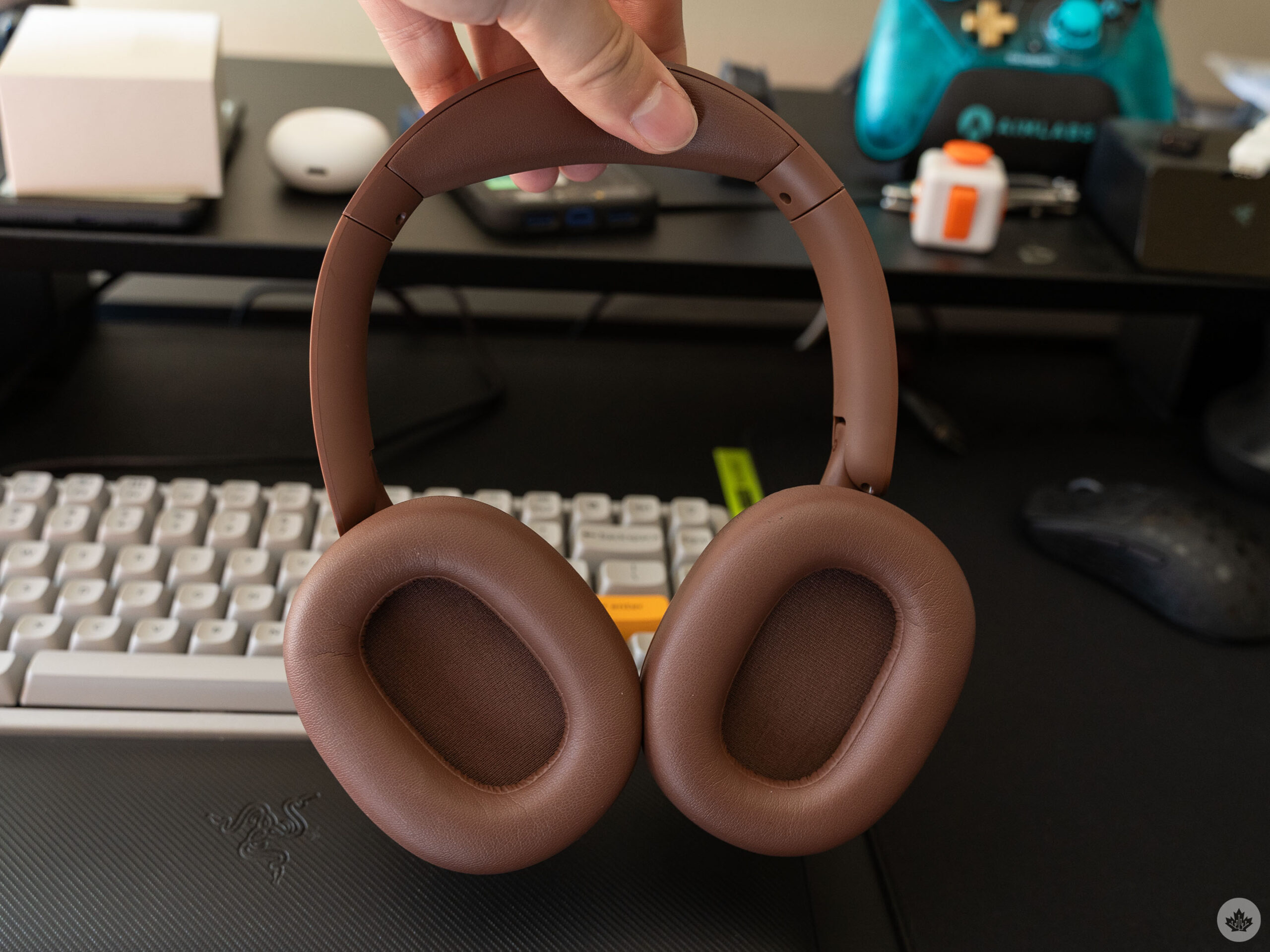
The physical design of the ES850NB headphones is quite different from the V80s. The ear cups are slightly less oblong. They have gently rounded corners, creating a shape closer to a “squoval”. The cups protrude more abruptly and have much sharper edges than the round design of the V80 headphones. I don’t notice much of a difference in the density of the ear cushions or headband, but the shape of the ear cushions also leans a bit more square than oval.
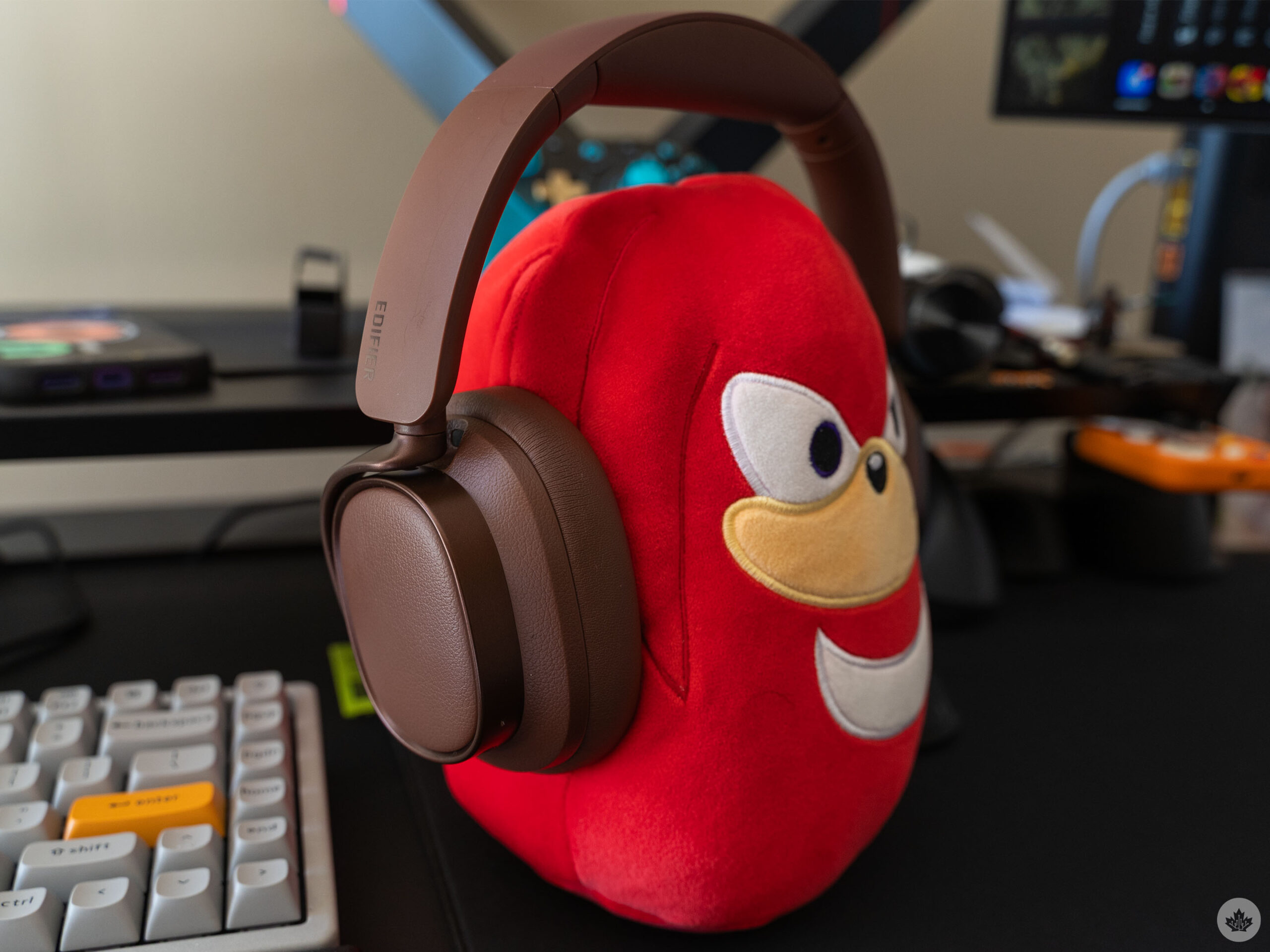
Aesthetically, the ES850NB headphones are gorgeous. I have them in brown, which feels very luxurious, especially with the faux leather face on the outside of the cups. I was secretly hoping for pink, but even the brown could pass for a deep mauve. They go with everything, and they’re extremely comfortable. They are a bit warm, but I think that’s the case for just about all over-the-ear headphones.
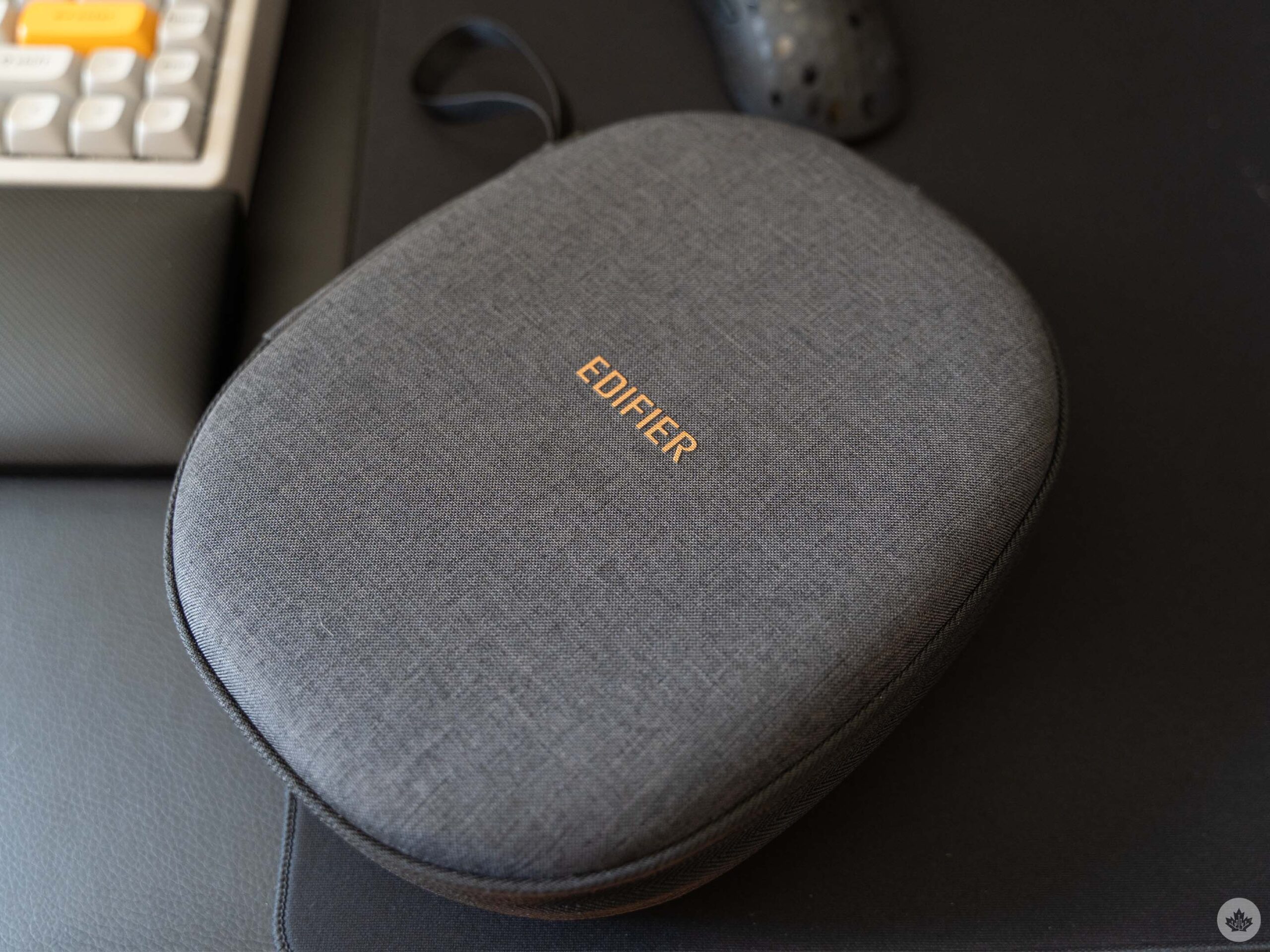
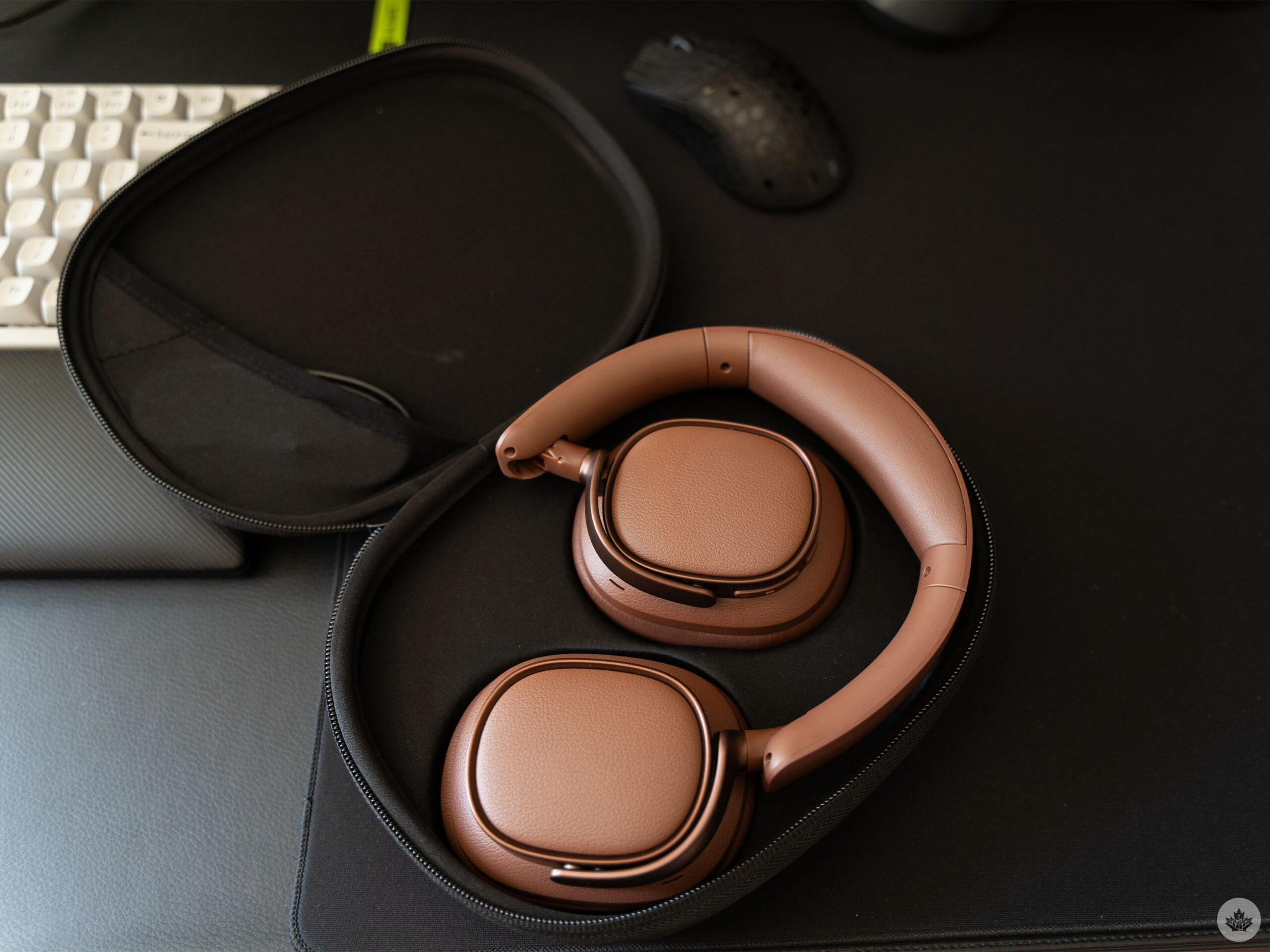
The ES850NB headphones come with a pretty nice travel case, which is handy for keeping your headphones in great condition. I’m never a fan of tossing any device into a bag without some kind of protection, so I appreciate this addition.
The button setup is the same as on the V80 headphones, and the buttons are also customizable through the EdifierConneX app. The ES850NB headphones have a similar Bluetooth range of about 30 feet, and they also sport the same 40mm driver as the V80 headphones. The two also share the same listening modes: High Noise Cancellation, Medium Noise Cancellation, Ambient Sound, and Wind Reduction.
Edifier has added support for the LDAC codec to the ES850NB headphones, which basically allows more audio information to pass through the wireless Bluetooth connection, resulting in higher-resolution audio for the listener. It’s worth noting that device compatibility with the LDAC codec is still pretty limited. Most mid-range and flagship Android phones from 2024 and newer support LDAC, but it still varies by brand and model. Currently, there are no iPhone models with LDAC support.
The ES850NB headphones have gained an interesting new feature called Touch-to-Chat. When using ANC, you can touch and hold the right ear cup to pause playback and switch to ambient sound mode, then release to resume playback. The idea is that if someone is trying to speak to you while you’re listening to something, this will be a seamless way to have a quick chat, then go back to listening.
I really like this idea, but you have to hold for about two seconds before playback pauses. That two-second delay is just a little too long for it to be considered seamless. I find it easier to just move the cup off my ear and then hit the pause button. Touch-to-Chat is a great idea, and that delay is the only drawback for me.
Other than physical design, the biggest difference between the V80 and ES850NB headphones is the battery capacity. The ES850NBs offer a massive 53 listening hours with ANC, and 92 hours without. This is a huge jump from the V80s’ respective 26 hours with ANC and 45 hours without. You still can’t charge while listening, but the Fast Charging makes up for that fact. 15 minutes of charging will get you 11.5 hours of playback without ANC on the ES850NB headphones, versus the V80’s 8 hours.
So after all this, the question remains: “Do the ES850NB headphones live up to their elevated price point?” My answer is ultimately… kind of. Yes, they are awesome headphones. Yes, I thoroughly enjoy using them. However, I don’t feel compelled to spend $129.99 on them when the V80 headphones can do an excellent job for much less.
I think if you’re in a tax bracket where $129.99 isn’t that expensive to you, you really don’t want to bother with equalizing your headphones at all, and sound leakage will be a big problem for you, then the ES850NB headphones are a great option; perhaps even the perfect option. After all, as far as high-quality headphones go, $129.99 is still quite inexpensive.
Otherwise, I would probably advise sticking with the V80 headphones. Edifier may have shot themselves in the foot by making their budget headphones too good. In this economy, I actually think that’s something to be proud of. I’m always in favour of whatever is most accessible to the average person. A company with high-quality products at reasonable prices is a company I feel like I can trust, which is why Edifier will still be one of the first brands I look to for headphones.
MobileSyrup may earn a commission from purchases made via our links, which helps fund the journalism we provide free on our website. These links do not influence our editorial content. Support us here.