


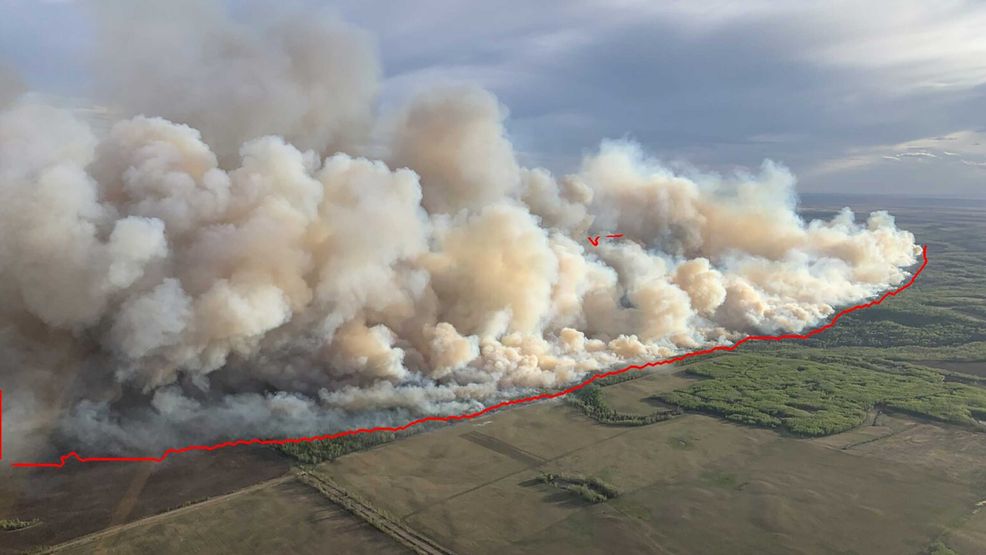
As wildfires rage in northwestern Ontario, one of Canada’s most prominent post-secondary institutions is looking to technology to help quell the flames.
At the University of Toronto Institute for Aerospace Studies (UTIAS), researchers have developed an AI model called TankerVision that they say could help first responders deal with wildfires. TankerVision was produced in collaboration with Natural Resources Canada and Simon Fraser University, with assistance by government agencies and industry groups like Canadian Forestry Services, B.C. Wildfire, Alberta Wildfire and wildfire monitoring service provider Voxelis.
According to UTIAS professor Steven Waslander, the current models that are used to estimate wildfire growth are based in part on data from the 80s, and they haven’t been adapted to take into account modern factors caused by climate change.
This is where AI comes in. Using tech similar to what enables autonomous vehicles to perform labelling, object detection and segmentation tasks, TankerVision aims to study fires to predict how they may evolve. This data is captured through high-resolution colour and infrared cameras and computers that are installed on the piloted aircraft that are currently used to monitor and fight fires, and spend hours scanning for smoke or flames.
Should fires be detected, data will be stored on the aircraft so partners can review to make sure no confidential information is being logged. From there, AI will scan each image to identify which pixels correspond to fire, smoke or ground — a task that UofT notes is “trickier than it sounds.”
After being segmented, images will be mapped onto 3D terrains in accordance with satellite maps, with the merged data then showing how the fire is moving over time. Responders can then combine these measurements with weather data and wind readings to build AI models predicting fire growth.
After testing since 2024, the team is working to have its hardware ready for Canadian responders this fire season. For now, the first research paper focused on segmentation has been submitted ahead of a full-system paper and public dataset release planned for this fall.
Given that Toronto had the actual worst air quality in the world on Wednesday due to Ontario’s wildfires, TankerVision is certainly a worthwhile effort. That said, there are always concerns with AI surrounding “hallucinations,” instances in which the tech makes mistakes.
Of course, this is just one of many ways to combat wildfires, although it should be noted that the Carney government has cut funding for several of them, including Natural Resources Canada and Environment and Climate Change Canada. All the while, the feds have invested more in pipelines and AI, two industries that significantly contribute to climate change. Similarly, Ontario Premier Doug Ford’s government has chronically underbudgeted for fighting fires while passing legislation that puts climate and environment on the back burner.
Image credit: University of Toronto
Source: University of Toronto
 Gaming
  News
News  News
News  News
News 