Something video games often don’t get enough credit for is their educational potential. Indeed, the uniquely interactive nature of gaming makes it a novel teaching tool, from the Canadian-made Assassin’s Creed series offering museum-esque features through meticulously recreated historical settings to family-friendly experiences focused on preserving Indigenous language and culture.
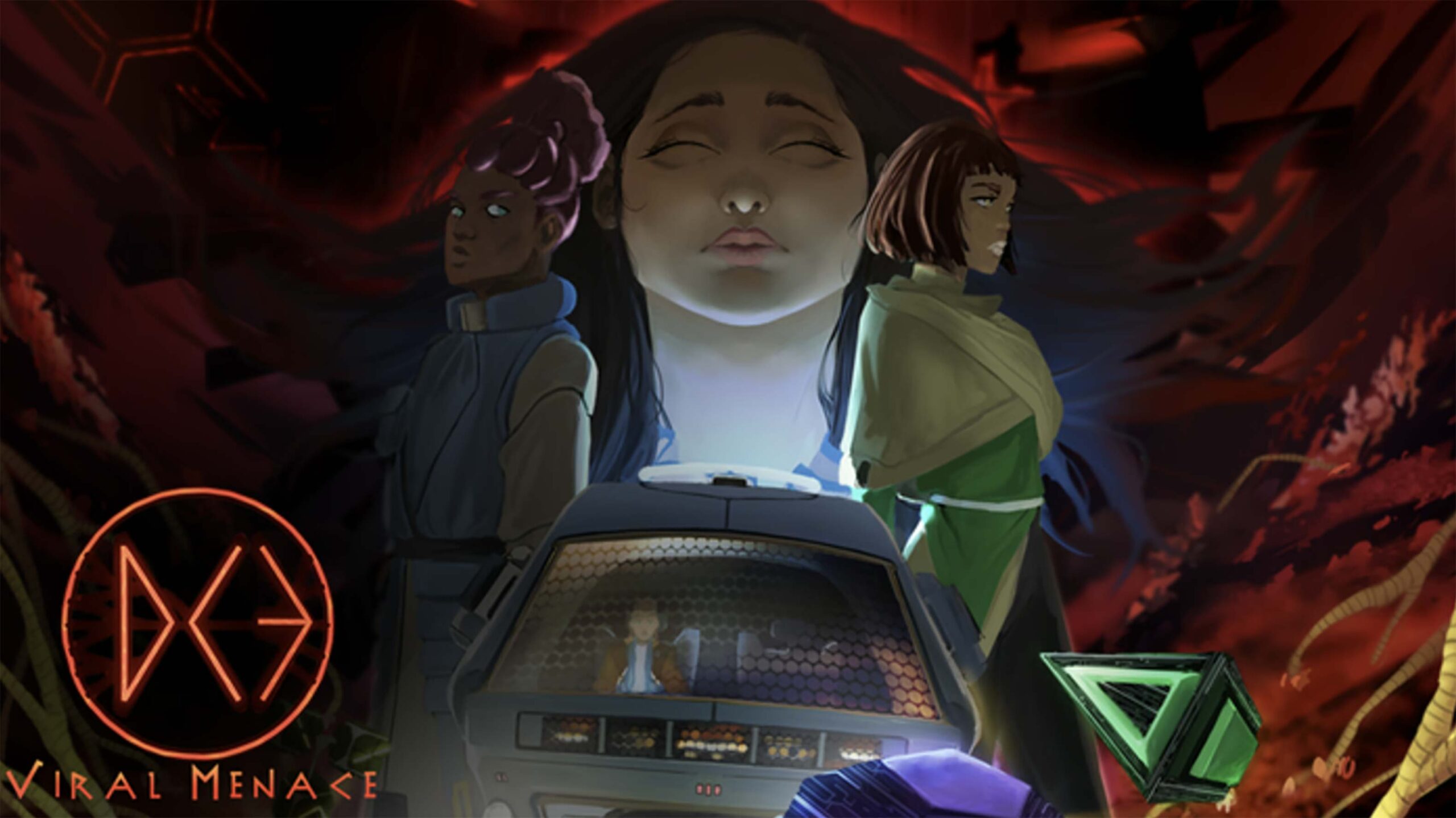
Now, Scarborough-based indie studio S-Qubed Entertainment is looking to add to that scholarly legacy with their game DC3: Viral Menace. Led by brothers Nihar and Nikhil Sonalkar, Viral Menace is a sci-fi twin-stick shooter that follows Dr. Vidya Vichaar as she commandeers a high-tech ship called The Caper-5000 to venture inside the body of her sick daughter Xernia to defeat the viruses that are ailing her.
Befitting of that science-based premise, the original concept for the game actually came about in response to the COVID-19 pandemic.
“At the time, we were seeing a lot of misinformation going about about the pandemic — how to deal with it, what kind of precautions you should be taking,” says Nihar. “So our initial thoughts were: ‘What if we made a game that allowed people to kind of get this cathartic release against viruses, but also, it disseminates good information about how to deal with the virus?'”
However, the brothers realized they didn’t yet have the experience to pull it off and ultimately shelved the project. It was only after doing a few more years of schooling and experimentation with game development tools, says Nikhil, that the pair were presented with a “serendipitous” opportunity. Thanks to connections made through Nihar’s George Brown Polytechnic programming degree, the brothers learned of “Cells At War,” a platform of biology-based games created in partnership between George Brown and McMaster University.
DC3: Viral Menace has humble beginnings on some scraps of paper, but hasn’t always looked the way it does now. Come down memory lane with us as we explore our pre-computer concepts!
— S-Qubed Entertainment Inc. (@squbed.bsky.social) May 8, 2025 at 9:40 AM
Working on Cells At War allowed S-Qubed to revisit the Viral Menace concept and evolve it from a smaller phone game to a full-fledged narrative-driven PC experience. Naturally, these developments meant that the goals behind the project changed; what was once meant to dispel myths surrounding COVID shifted to a broader examination of viruses and the human body. “We can look at it [now] as a way of perhaps addressing some negative information that exists on the topics of vaccine,” says Nikhil.
The new version of Viral Menace also has a feature called The Compendium that Nihar describes as a “Pokédex for viruses” to provide information on each infection as you destroy them. “Players are reintroduced to the biology of it while they’re playing the game and learning more about the human body, how the immune system works when you’re not dealing with the infection and whatnot,” says Nihar.
In terms of the actual gameplay mechanics, meanwhile, Nikhil says the twin-stick shooter focus is a holdover from the earlier iteration of the game, given that it’s a logical way to fight hordes of viruses. But for the tower defence elements added in this latest version, he notes that he drew inspiration from one of his favourite games, Path of Exile, which sports “Blight” tower defence-like encounters.
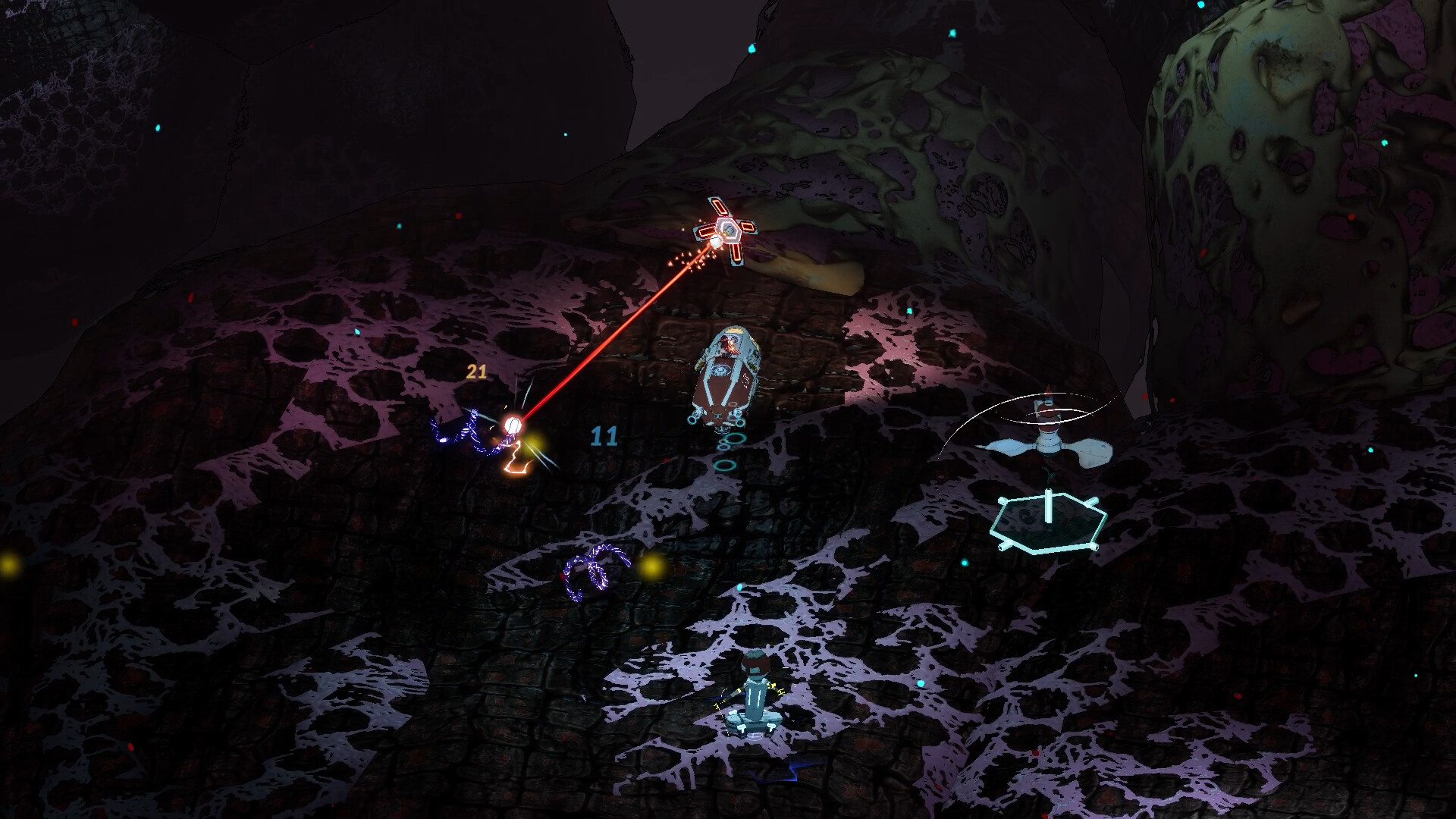
“It was such a complete game loop. So when I was thinking about pushing the design for Viral Menace as not just something that’s twin-stick shooter within the premise of a biology-based game, I thought about Blight,” Nikhil says. “I was like, ‘Let’s combine the tower defence aspects of Blight into Viral Menace, so that we can have the player go from one encounter to the next, where they are defending a certain area in the human body, and when they clear that area, it sort of gets healed.’ So it makes sense narratively.”
In addition to their shared upbringing, the brothers say they work well together because of their distinct academic backgrounds. Where Nihar originally studied film and game design, Nikhil holds an undergrad in genetics and a master’s in public health. As a result, they say they’re constantly learning from their respective artistic and science skills. “At this point, I don’t know who the scientist is and who the artist is — it’s like our brains have combined into one!” says Nikhil with a laugh.
As an example of their “best of both worlds” dynamic, Nihar cites one of The Caper-5000‘s weapons, the Frost Turret, from an earlier version of the game that created a icy wall of defence. After working with McMaster, this gun evolved into a “Clumper Turret” that uses goblet cells, a form of specialized cells that create mucus to protect the gastrointestinal tract, to slow down enemies. “The functionality hasn’t changed, but the narrative design has been readjusted to bring the biology back into the game,” says Nihar of the approach to these upgradeable weapons. “There’s that sense of design and narrative working together to create something that I think is very unique in tower defence and twin-stick shooters.”
Teaching more than just science
On S-Qubed’s website, the brothers mention that they want to “address the lack of diversity by crafting worlds that explore untold narratives.” In Viral Menace, that manifests most notably through its Indian protagonist, which is something we don’t often see in games that also circles back to that original idea of having games be a learning tool. With Dr. Vichaar, the Sonalkars hope to portray a different side of South Asian representation than what many Western audiences are perhaps used to seeing.
View this post on Instagram
“There’s this understanding, this expectation, that people of South Asia, or particularly people from India, are ‘science people.’ Which is true, and that’s fine — there’s nothing wrong with that! But that shouldn’t be all that we can be,” says Nikhil. “I also wanted [Dr. Vichaar] to be kickass. Why can’t she be this superhero who excels both in the lab and in the field? And I think that’s why Nihar also gave her a military background, so she’s a military scientist. And we don’t see that much within an Indian setting.”
He notes that while this isn’t generally a problem in media that is actually made in India, stories produced for “a global scale” in the likes of North America and Europe tend to focus on the same archetypes or beats for Indian characters.
“The Indian person is always just a scientist — is always just a good son or a good daughter. They’re never someone who struggles with the relationship; they’re always family-oriented. Yes, that has to do a lot with the culture in India, where you have more close-knit families, you have joint families, etc, but that used to be the case. I don’t think that’s the case anymore — you have nuclear families,” he says.
“Our family is a good example. The four of us are a very close unit, but for such a long time, our parents spent time apart because they had to. So the world needs to understand that the assumptions that are made about not just the Indian subcontinent or different countries — they aren’t a monolith. Stories and different families can exist across all nations.”
To that point, S-Qubed wants Dr. Vichaar to be proficient in the field while also still being believably flawed when it comes being a mother. And so, Viral Menace focuses on her estranged relationship with her daughter, a kind of dynamic we rarely see in gaming (outside of fellow Indian-Canadian narrative game Venba) considering they’re typically focused on “father” stories like The Last of Us, God of War and The Witcher. Nihar says this mother story, in particular, is “very, very dear” to them.
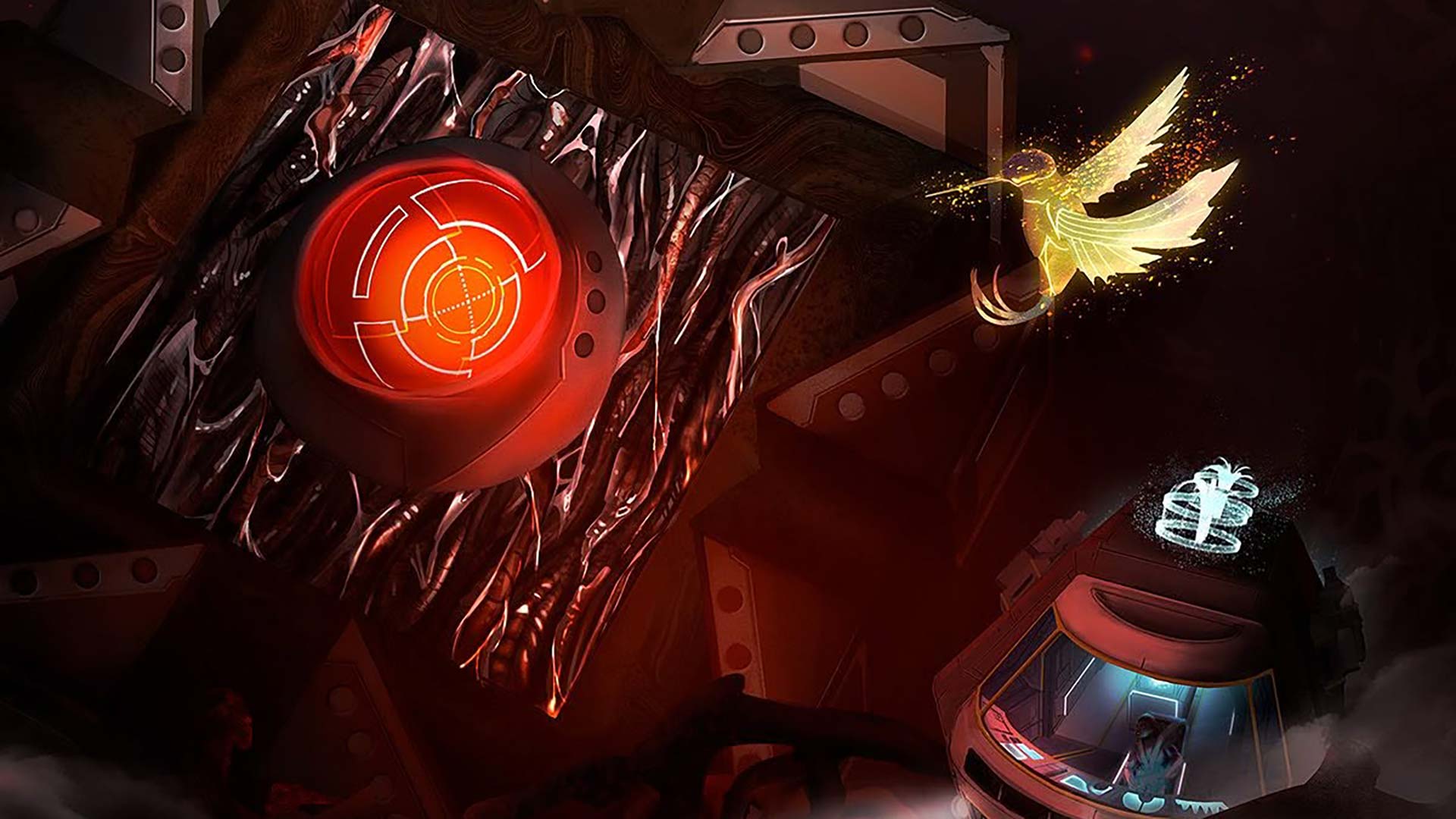
“I spend a lot of time every day talking to my mom, talking about our day. For a good chunk of our life, our dad was away for work and what have you, so [we were] raised by our mom for a long time,” says Nihar. “I wanted to capture that single parent relationship that children have into a story […] And you see the struggle that your protagonist, the mother, is [having] to make sure that that relationship stays firm and that the daughter knows that she is still loved, even if the relationship has soured somewhat.”
While the brothers say they weren’t consciously responding to the lack of “mother games,” per se, they were absolutely cognizant of the fact that there aren’t many women-led stories in media in general.
“I tend to want female protagonists. I enjoy shows with female protagonists, books with female protagonists […] Why shouldn’t we have female protagonists?” says Nikhil. “I hope that we reach a point where that isn’t a question. Like, no one ever asks someone who’s written a story with a male protagonist why their protagonist was male. ‘It just was, what are you gonna do about it?’ I hope one day we reach a point where, ‘Yeah, she’s female, so what?'”
Ultimately, Nihar hopes that all of this will give Viral Menace a stronger emotional resonance.
“Even if they can’t exactly relate to our protagonist, or even if they can’t exactly relate to the condition that the patient is in, I hope that the narrative speaks to them on a more personal level and it brings them back to our next game.”
DC3: Viral Menace doesn’t yet have a release date, but you can wishlist the game on Steam.
Image credit: S-Qubed Entertainment
MobileSyrup may earn a commission from purchases made via our links, which helps fund the journalism we provide free on our website. These links do not influence our editorial content. Support us here.