


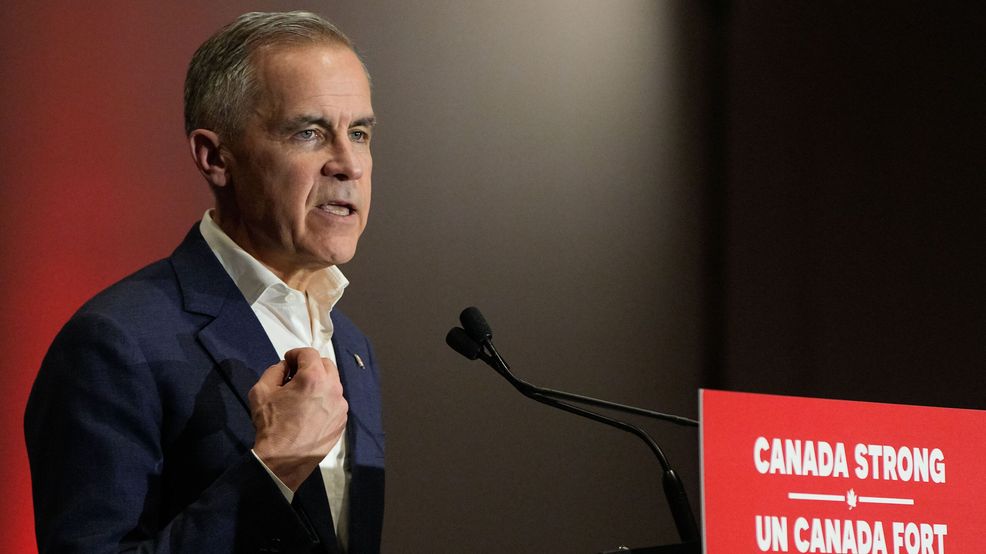
Prime Minister Mark Carney and the federal government have reached a deal with China to allow “tens of thousands” of Chinese electric vehicles (EVs) into the domestic market, in exchange for dropping the duties on canola products.
According to both CBC and Reuters, Canadian canola meal, lobsters, crabs, and peas will no longer be subject to China’s “anti-discrimination” tariffs. Interestingly, there was no mention of canola oil. In return, Canada will allow up to 49,000 Chinese EVs into the Canadian market each year, at a 6.1 per cent tariff, down from the previous 100 per cent tariff.
Carney said this will make some EVs more affordable for Canadians and that it will only be “a sliver” (about 3 per cent) of the Canadian market.
Ontario Premier Doug Ford didn’t take long to criticize the new EV deal, saying that China has been given a “foothold” in the Canadian market, and that the manufacturers will “use it to their full advantage at the expense of Canadian workers.”
Carney pushed back on that narrative in his media conference, noting that the deal is simply a “return to levels last seen in 2023” before the 100 per cent tariff was implemented.
Ford also said that Carney was “inviting a flood of cheap made-in-China electric vehicles without any real guarantee of equal or immediate investments in Canada’s economy, auto sector, or supply chain,” according to a post on X.
“To fix this mess, Prime Minister Carney and the federal government need to urgently step up and support Ontario’s Auto Sector,” Ford continued in the post. “That means making the sector more competitive by ending the electric vehicle mandate, harmonizing regulations with key trading partners, and scrapping federal fees that do nothing but add thousands to the cost of making vehicles and chase away investments.”
However, it’s worth keeping in mind why Ontario’s auto sector is struggling in the first place. Many of the key players in the sector are American companies that have reduced production and shuttered plants as a direct response to U.S. President Donald Trump’s trade war. GM laid off hundreds of workers at its EV plant in Ingersoll, Ont. last year, while Stellantis backtracked on plans to build a Jeep model in Ontario as part of increased investment in the U.S.
Worse, for those who actually want EVs, there aren’t many affordable options in Canada — it’s hard to find EVs under the $45,000 mark. Moreover, one of the more popular EV brands in Canada, Tesla, is owned by Elon Musk, who has close ties with Trump. Musk’s controversial political beliefs and Trump ties soured Canadians’ opinions on the brand. Plus, the EV maker jacked up prices after Canada’s federal EV rebate went away. So with all that in mind, having some EV competition from China might actually benefit consumers and push some other automakers to be more competitive.
Currently, there is no word on which EVs will come to Canada, but most likely it will be BYD, as it is by far the most successful from China. In fact, it just recently surpassed Tesla as the world’s largest EV automaker. I expect a similar launch to that of Vietnam-based Vinfast, which has seen some adoption by drivers (I see them a fair bit where I am in Oshawa), but there’s still some hesitancy.
Header image credit: Shutterstock
 News
News  News
News  News
News  Gaming