Mitch Dyer has worn many hats in the gaming industry.

Mitch Dyer. (Image credit: That’s No Moon)
For years, the small-town Alberta native worked at IGN, the world’s largest video game website. Now, he’s a video game developer who’s written on globally beloved properties like Star Wars, Batman and Crossfire. And yet, this career trajectory isn’t something he had ever imagined during his formative years of playing games with his parents and avidly reading gaming magazines like Nintendo Power and Electronic Gaming Monthly.
“It gave me insight and visibility on a bunch of games that I didn’t know existed — eventually, platforms that I didn’t know existed. And on a long enough timeline, it just became clear to me that, ‘Oh, the names on these articles are people that work here. There’s a masthead at the front of the magazine — this is a job!'” he says during an interview at the NAGIS gaming conference in Edmonton. “So that was my immediate, ‘I could write for a video game magazine,’ and that was my life’s goal from being a kid. So when I was in high school — blogs, WordPress, whatever started becoming more common… It was an avenue for me to start.”
He would soon start freelancing, and it was this work, even without formal journalism education, that eventually landed him his first contract freelance job in 2008 at Official Xbox Magazine. This, in turn, would later segue into him moving to California in 2012 to work at IGN, where he would write reviews, interview developers, and appear on popular shows like Podcast Beyond and Up At Noon.
Of course, joining the world’s biggest gaming website would be both exciting and daunting, and Dyer acknowledges the challenges. But he also attributes the job to changing him for the better as both a writer and a person.
“That was where I became a person, an adult, a functioning human being, around smart, wonderful people who were very good at the job. And the job itself was evolving. It wasn’t just journalism and writing and articles anymore; YouTube was blowing up,” he says. “We had to figure out, ‘How do we slot our personalities at IGN into video, into shows, into produced segments, into podcasts, or whatever. So it was just this all-consuming thing that I embraced. I just loved being around people who were enthusiastic about games, whether it was fellow editors or devs or whoever.”
As someone who worked at the most famous gaming website, then, I had to ask: What does Dyer think about the state of games media today?
“It’s interesting to see the way the conversations about games have evolved, whether it’s in podcasts, which are obviously becoming a lot more video-oriented, whether it’s just talking heads, or [something like the online entertainment company] Kinda Funny, which has their huge studio with glamorous LCD screens and stuff, which is really cool,” he says. But at the same time, he remarks that it’s also funny to see “how little” has changed with games media.
“If I read IGN, my cherished IGN.com, it’s the same website it ever was. I still get annoyed about the same stupid shit that appears on the blog roll that I was getting annoyed about when I was there. Because I was like, ‘Do we really care what somebody on Reddit has to say about the new Assassin’s Creed DLC? Is that really what we’re here to report?'” he says with a laugh.
However, he’s quick to note that IGN still produces “really big, detailed reviews with interesting edited videos or features,” specifically shouting out his friend and former colleague Brian Altano’s recent “really awesome” IGN video about The Legend of Zelda: Ocarina of Time remake. “It was nice to see an enthusiast like Brian put a lot more thought into an edited piece of video than just reacting online, and that, I think, is the peril of games media,” he says. “I want a take or a different lens than I’m seeing anywhere [else].”
To that point, he mentions that the current online landscape has paved the way for a variety of criticism that can be disseminated through a multitude of platforms.
“I’m a huge fan of the video essay. I really like this guy, Peter Hunt Szpytek. He’s smaller relative to huge channels, but Peter does incredible, thoughtful videos. To talk about games, yes, but games are almost a vector for a different conversation. Like, he did this really amazing video about Call of Duty and its adjacency to ICE and the corporate militarization of police. And it’s just a really well-thought-out, interesting video that challenges your basic understanding of a game and what games can mean to us as people,” says Dyer.
“So I’ve become a really big believer in people like Peter, and those kinds of essays, because they’re a way to explore video games, not just in a visual way because it’s edited video, but because it’s usually an independent channel of a creator. They can do whatever the fuck they want, which you can’t really do under the publishing umbrella of a corporation.”
Dyer says this speaks to a younger generation of “sharper critical thinkers” that also includes Hunt Szpytek’s Critical Error podcast co-host Jake Steinberg, freelance culture writer Autumn Wright and Polygon editor-at-large Giovanni Colantonio.
“I’m noticing that there’s a lot of these folks, young people, who are super thoughtful and incisive and thinking about games in ways that I am not, to the point that I’m reading young critics and it’s recalibrating the way that I think about the games I’m playing, which is exactly what you want from criticism,” says Dyer. “It’s not just to validate, like, ‘Oh, game good, go buy,’ which is fine. Product reviews are okay. But for me, I am a big boy. I know when I’m gonna buy a game […] I want more interesting angles.”
Breaking into games writing with a little thing called Star Wars
Games criticism has taken on a whole new meaning for Dyer in recent years, given that he’s now a developer himself. Over the past decade or so, he’s written on big games like 2017’s Star Wars: Battlefront II and 2020’s Star Wars: Squadrons at EA’s Montreal-based Motive Studio, Warner Bros. Games Montreal’s Gotham Knights (2022), and, most recently, the upcoming Crossfire from LA-based That’s No Moon.
Of course, covering the industry for years would give some inside knowledge when breaking into actual game development, but it’s still a huge leap to make. Dyer credits his successful career transition to several developers, particularly Uncharted creator Amy Hennig, for offering words of encouragement throughout his time at IGN.
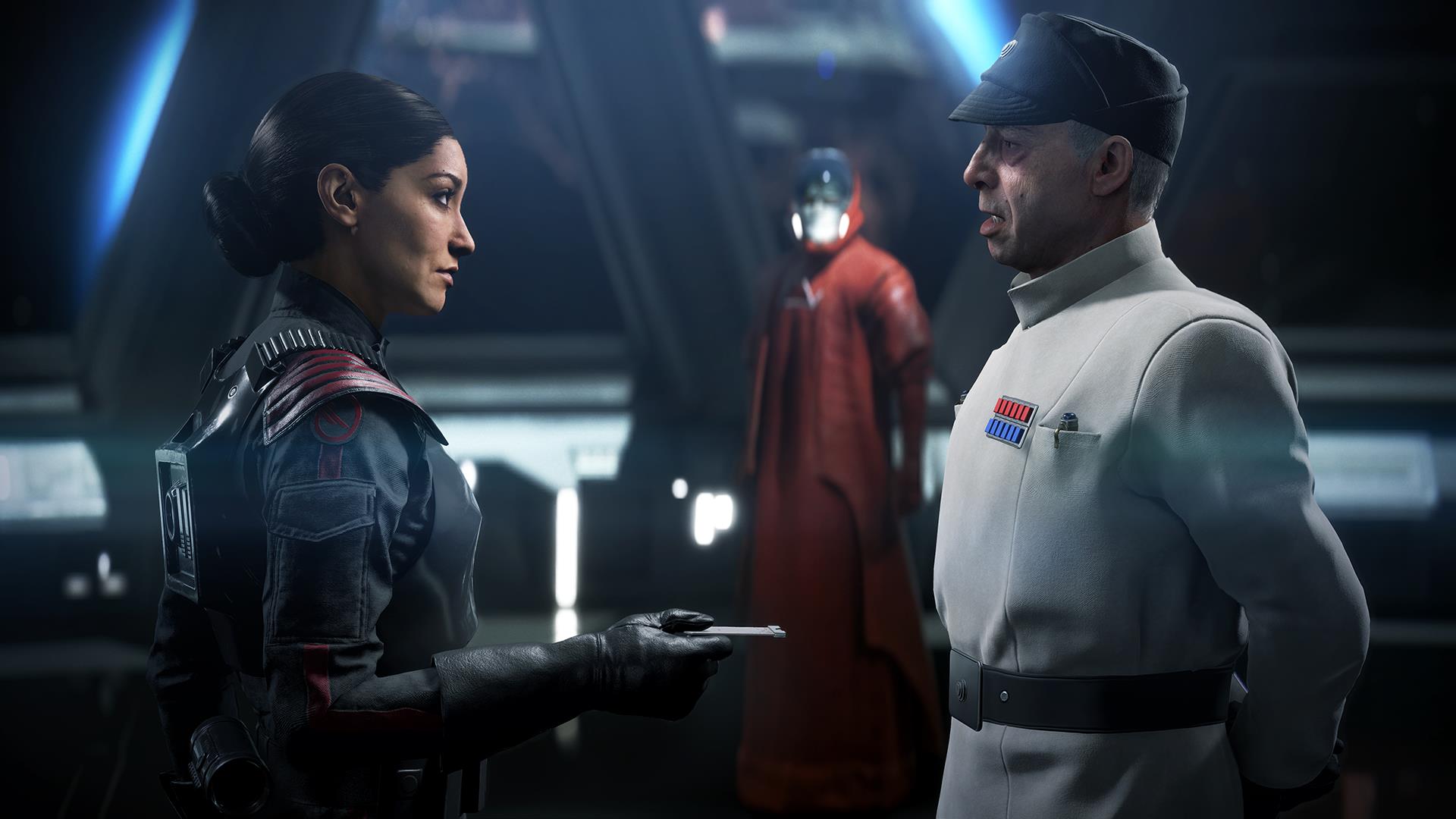
Battlefront II. (Image credit: EA)
“They just kept saying, jokingly I thought — ‘When are you gonna join our side of the fence, when are you gonna hop to the dark side?'” [I was like] ‘Dude, I write fucking news articles and review your games, what are you talking about? These are different skill sets!'” he says.
“But the thing I’ve learned about that over time is that, yes, writing a game is very different than writing an article, but the skills that you acquire from having a job, from working with a team, from having deadlines, from everything that I was experiencing, and the adaptability of having to learn new skillsets with video — all of that shit applies.”
He says it was Hennig who suggested he apply to EA to write on Battlefront II. Alongside that kind of support, he says it was invaluable to go in with a “curiosity” about the work that carried over from his time in games media.
“Sometimes, you have to cover every kind of thing, because your audience is bigger than your own interests, so you have to be open-minded about experiences that you might not traditionally enjoy, but you can find something interesting to talk about. So I think that that helped a lot with [games writing].”
He cites Star Wars: Squadrons as a prime example of that. The game follows the conflict between the New Republic’s Vanguard Squadron and the Galactic Empire’s Titan Squadron and actually has players switching between the two. It’s a novel concept, but outside of Dyer’s love for Star Wars as a whole, he admits that he historically hasn’t been into the franchise’s flight simulator space combat games like TIE Fighter or X-Wing.
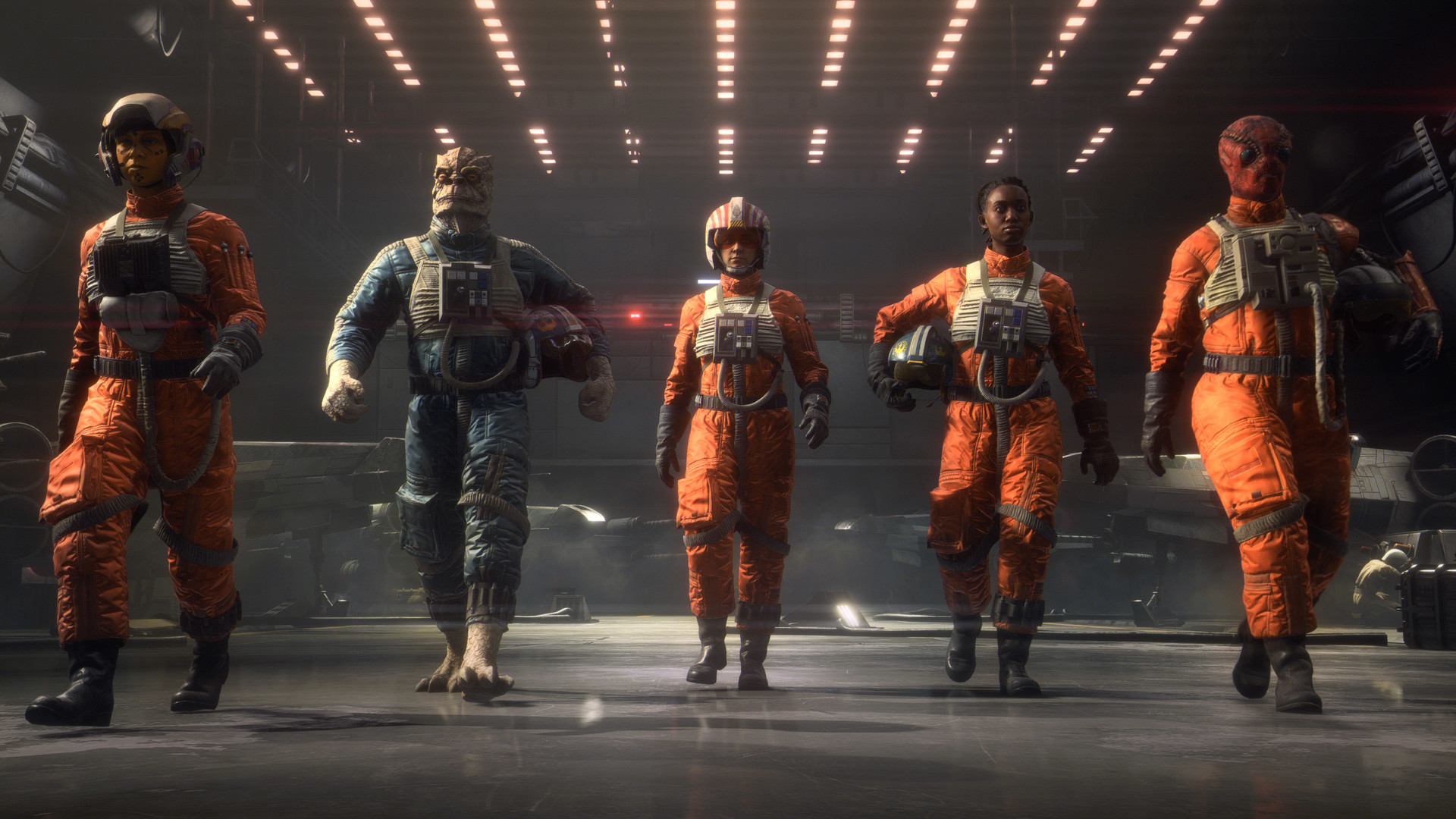
Star Wars Squadrons. (Image credit: EA)
“I’m not interested in the genre, but I’m working on this game anyway, and I think the curiosity and open-mindedness toward it allowed me to find my own place with it. And it became something that I loved,” he says. “You have to find something you can connect to on the project you’re on, the same way you have to find something you can connect to as a media person observing it and intaking it and communicating about it to an audience.”
Meanwhile, Dyer’s other Star Wars game, Battlefront II, allowed him to tap into his fondness for the classic Battlefront games. “It was genuinely ‘dream come true’ shit,” he says. Beyond that, he notes that he was excited to co-write the campaign with Spec Ops: The Line scribe Walt Williams. Dyer met Williams while at IGN and, after gushing to him about his love for Spec Ops, they became good friends. Years later, as it so happens, they would get the Battlefront II job at the same time. What’s more, the experience of making Battlefront II let Dyer give something back to his father, with whom he still watches new Star Wars media to this day.
“What I care about is I got to make a Star Wars story for my dad, who introduced me to Star Wars,” he says. “So I did Battlefront, and the whole time, it’s like Walt and I were doing it both for each other, but also my dad was my target audience. And the fact that other people really enjoyed it is wonderful.”
From Gotham to the frontlines
After two treks to a galaxy far, far away, Dyer would go on to have a couple of writing stints on Gotham Knights — initially some contract work for a few months after it was announced and, soon thereafter, a full-time gig during “the home stretch of production.” This meant that he helped pen some new cinematics and rewrite mission scripts.
As we start talking about the DC game, which received overall mixed reviews, I mention that I think it’s gotten a bit of a bad rap. “That might be true,” Dyer replies, “but every time I open the Reddit or I listen to a podcast and it comes up, that game’s got soldiers!”
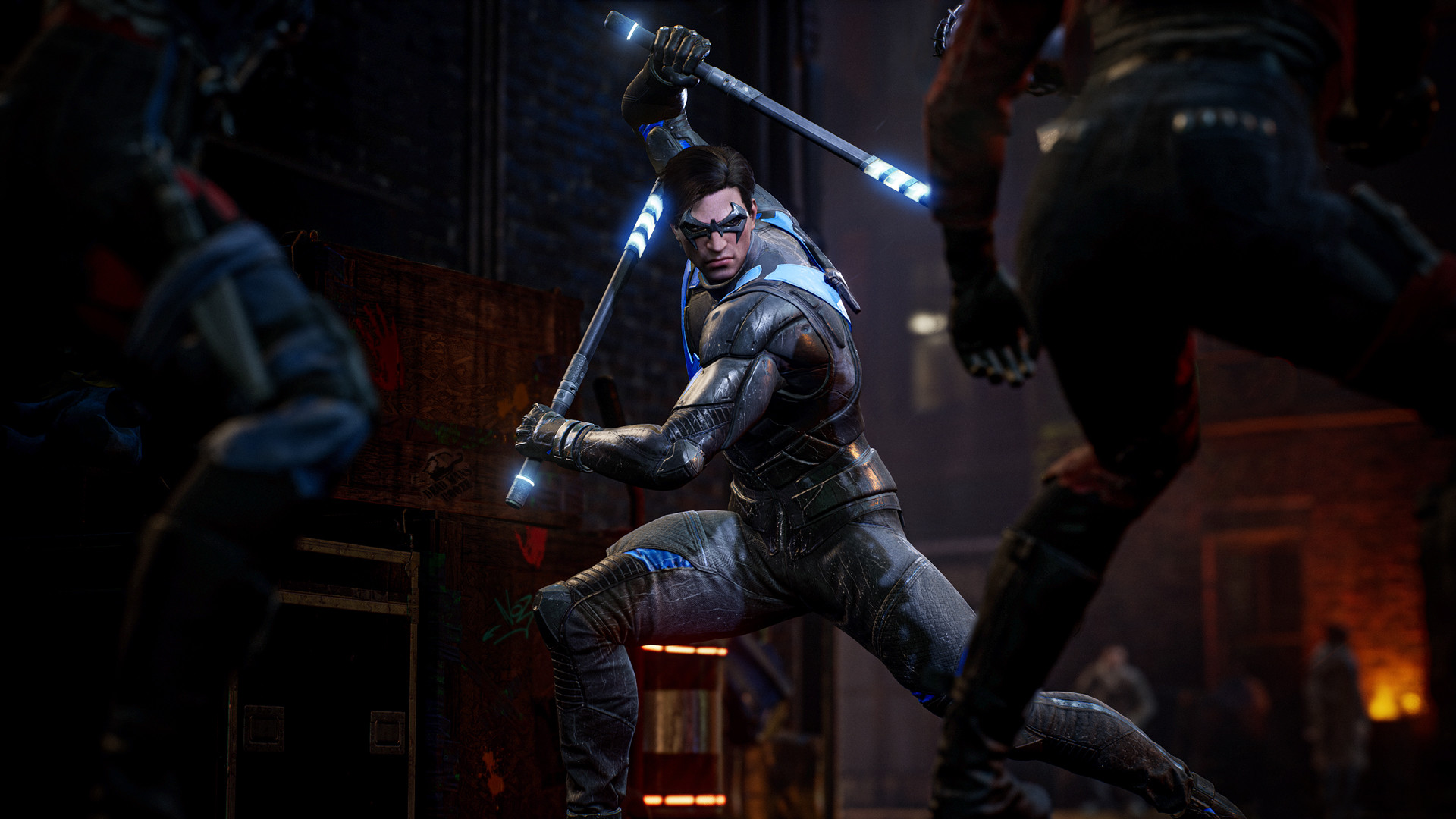
Gotham Knights. (Image credit: WB Games)
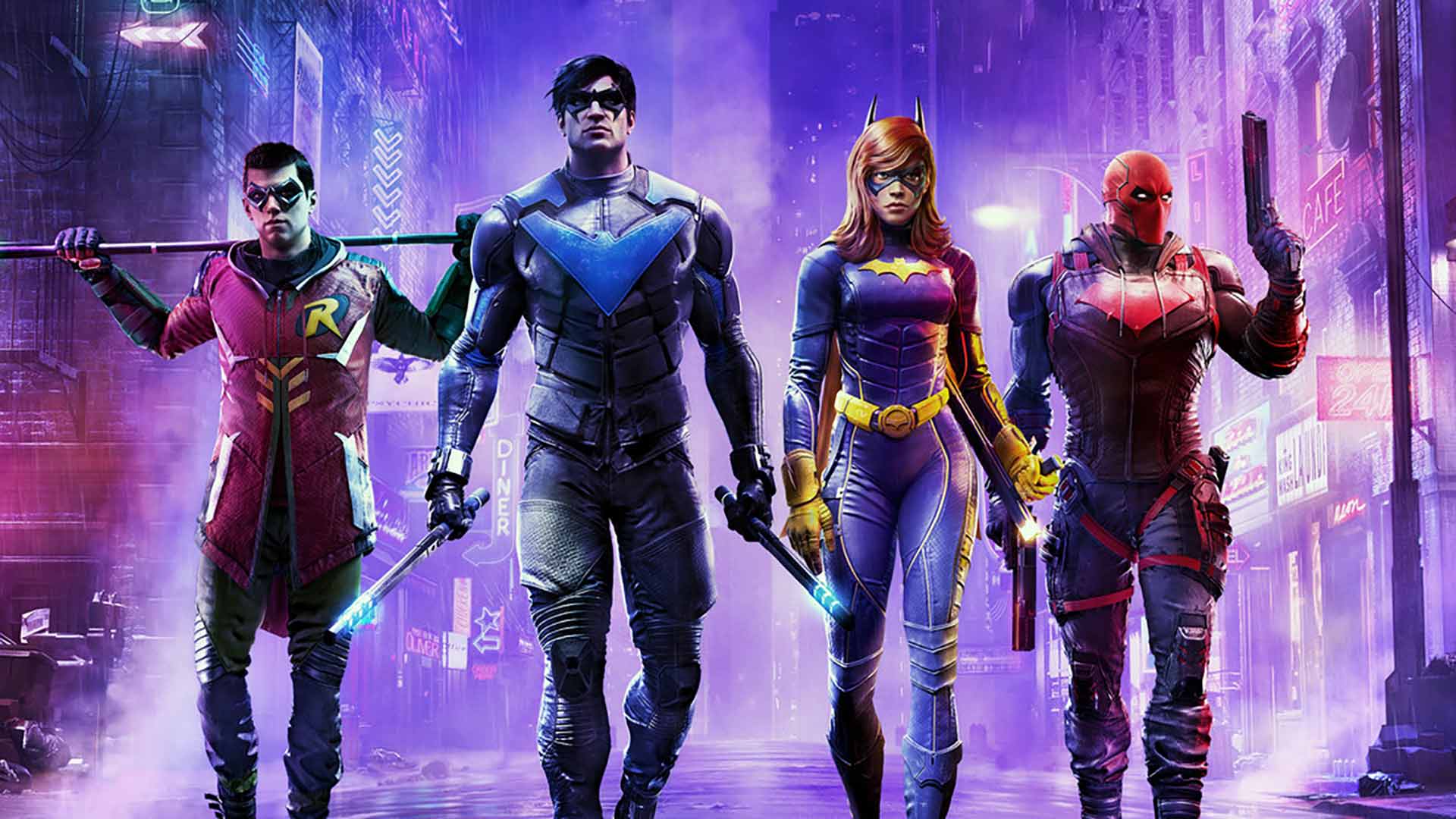
What’s always been notable about the game is that it follows Nightwing, Robin, Batgirl and Red Hood during a power struggle between two clandestine organizations after Batman’s death. Outside of the comics, it’s all too rare in media to see Batman’s supporting cast in lead roles, and Gotham Knights uses that premise to unpack the emotional impact that The Dark Knight’s demise has had on its superhero quartet.
“It was outside the expected bounds of what you’d want — or think you want from a DC game — which is Batman. I was really enthusiastic about: ‘What is Gotham without Bruce?'” says Dyer. “That’s a really interesting place to put it, because it allows crime to thrive, and it means these other four people who are grieving their father have to step up and fill that void in a way that is kind of impossible, especially when they’re knee-capped with this grief […] They felt human — like Red Hood going to therapy instead of just being the brute who was like, ‘Oh, he’s an asshole and he’s in jail and he’s a murderer.'”
In this way, Gotham Knights illustrates the unique storytelling potential of video games, as they can allow time for the player to discover smaller, more intimate dialogue scenes between characters that often just wouldn’t fit within a movie or TV show. In particular, Dyer credits narrative director Ann Lemay and lead writer Ceri Young for conceiving several conversation arcs between the Bat-Family that evolve over time, including one focused on a soap opera called Nights of Our Passion.
“It was basically Days of Our Lives, and it was like Barbara and Dick, ‘We’re getting really into this soap opera — Tim, have you seen this soap opera?’ And they get Tim aboard. And Jason’s resisting it, and Jason is a ‘tough guy,’ he doesn’t want to watch the soap opera. Night after night after night, you come back, you might hear them talk about last night’s episode,” he says. “It’s a small, silly thing, but on a long enough timeline on a [big] RPG, there’s a whole narrative arc of the team falling in love with a soap opera TV show.”
Gotham Knights. (Image credit: WB Games)
Each character also had their own email exchanges you can read, which would provide more insight into their inner lives and, even, some fun cameos from other DC characters. “That was a lot of [writer] Ashley Cooper. She was crushing it [with] snickerdoodle recipes and genuinely affecting [consoling] emails from Clark Kent — a way to cameo other DC characters in a natural way,” says Dyer.
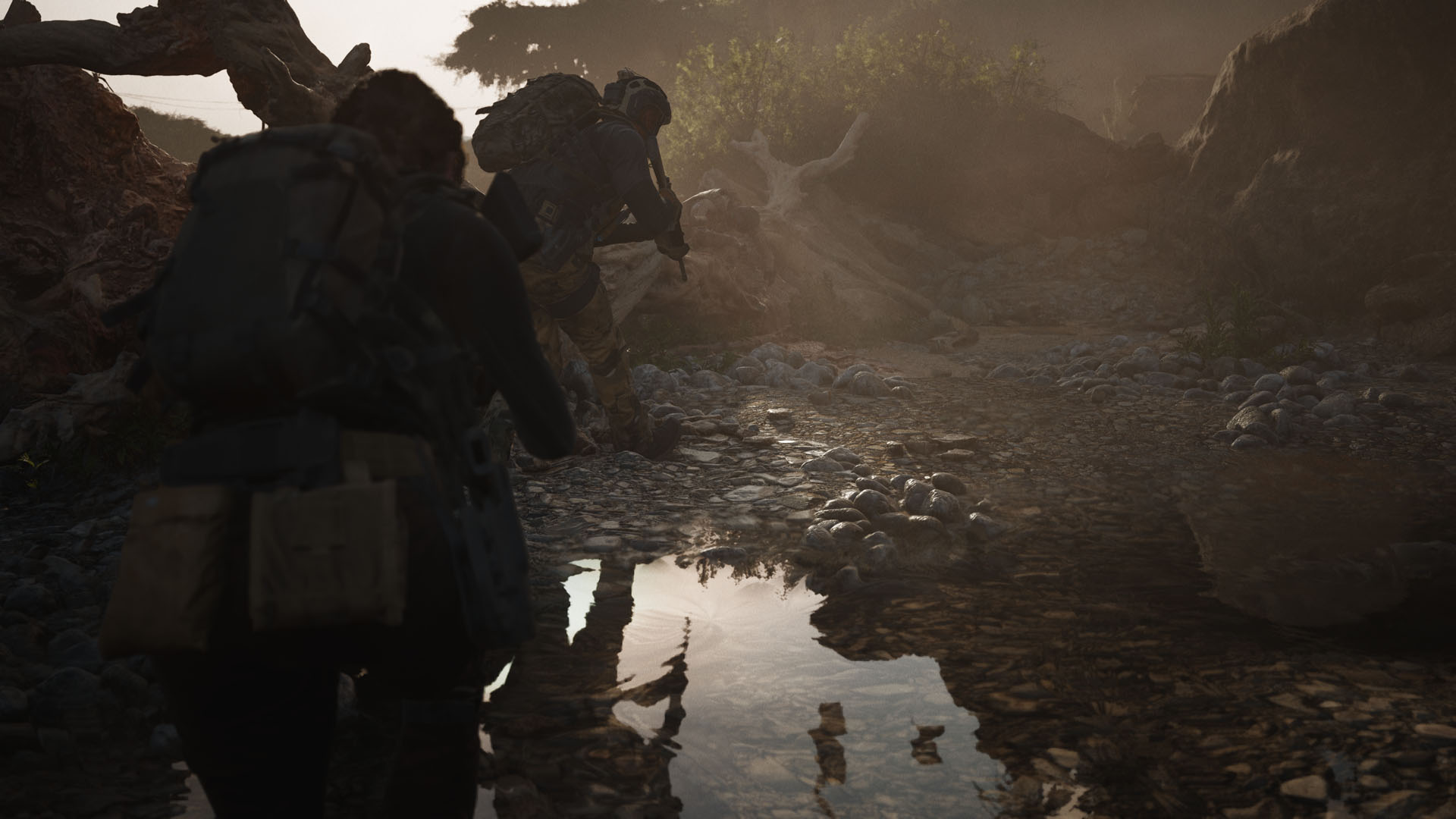
And finally, we come to Crossfire, a new entry in Smilegate’s popular shooter series of the same name. Working remotely over the past two-and-a-half years from his home outside of Calgary, Dyer has been the lead writer on the game at That’s No Moon, a studio formed by veterans from Naughty Dog, Infinity Ward and Bungie. Like Dyer’s other games, Crossfire is an established IP, but it’s markedly different from the more vibrant and fantastical worlds of Star Wars and DC. Inspired by the likes of Dunkirk and All Quiet on the Western Front, it’s a gritty third-person shooter about two opposing mercenaries named Layla Qassem (The Boys‘ Claudia Doumit) and Delroy Cross (American Gods’ Ricky Whittle) who must strike a fragile allegiance to survive.
“It’s a different tone, for sure […] The rules of each of these universes is very different,” he says. “Crossfire — very grounded narrative action game, militarized people, modern setting… It’s the first game I’ve ever gotten to write with profanity!”
Of course, he can’t say too much about the project yet since it’s still in development, but he does elaborate on the differences between writing for Crossfire and Battlefront II.
“As we put the player in a high-pressure scenario against an existential threat, and it forces these two characters together, that immediately creates a very different tone than something like Inferno Squad [in Battlefront II] where the characters coming together through circumstances is what we wanted — like, the Death Star explodes, they come together, Inferno is closer than ever, but then we rip them apart,” he says. “And Crossfire is a very different approach, where we’re trying to take people who are functionally hostile toward each other and turn them into temporary allies, so they can survive something greater than their moral opposition to each other.”
Crossfire. (Image credit: Smilegate)
He also praises That’s No Moon for being an “incredibly collaborative studio,” pointing out that its slogan, “We Are All Storytellers,” is a reflection of how developers across disciplines are encouraged to contribute ideas. “Our team is so smart,” he says. “I can’t tell you the number of times I had a cinematic or a gameplay sequence where I thought I had it figured out, ‘This is the solution,’ and somebody comes with, ‘Hey, I just had a really quick line of dialogue come to mind, take it or leave it, here you go,’ and it’s like, ‘Oh, that is just so much better!”
That openness to feedback and collaboration speaks to some of the biggest advice he gives to aspiring game writers. “You need to kill your ego. Get rid of it as fast as possible […] Because your ego will take a fucking beating during development, man. Production is hard,” he says. “You are going to throw away a lot of pages. Things are not going to go your way, because everybody who makes games bites off more than they can chew.”
He also recommends those interested in games writing should dissect their favourite missions in games.
“Every five seconds, pause it and transcribe what just happened — write what the character is doing, what the context is, what the dialogue is, transcribe, ‘plagiarize’ that mission,” he says. “And by the end of that, you’ll have a script that is basically a mission script, where it’s describing, ‘at this point an enemy appears, and it creates this new circumstance that requires the characters to react, and now they can engage in this situation however they choose…'”
He says writing that exhibits this sort of analytical thinking can add a lot to a portfolio and, hopefully, help usher in a new generation of writers.
“Just having anything like that in a portfolio shows that you’re thinking about writing games, not just being a writer. And I think it’s an important distinction, because writing a game is fundamentally very different than writing literally anything else,” he says. “It’s a good exercise to better understand how a game gets constructed, even if you’re not working on that game. I think that kind of exercise can be revealing.”
Star Wars Battlefront II and Gotham Knights are both on consoles and PC. Crossfire doesn’t yet have a release date, but it’s set to launch on PS5, Xbox Series X/S and PC.
Image credit: IGN/EA/Smilegate
MobileSyrup may earn a commission from purchases made via our links, which helps fund the journalism we provide free on our website. These links do not influence our editorial content. Support us here.